Those Who Have Volunteered

“. . . the growing good of the world is partly dependent on unhistoric acts; and that things are not so ill with you and me as they might have been, is half owing to the number who lived faithfully a hidden life, and rest in unvisited tombs.”
― George Eliot, Middlemarch
My post this week will be short, as I'm currently enjoying a getaway in the New Hampshire woods.
Recent research into my ancestor's Civil War diary, that I've written about here:
 Ruth Ann Smalley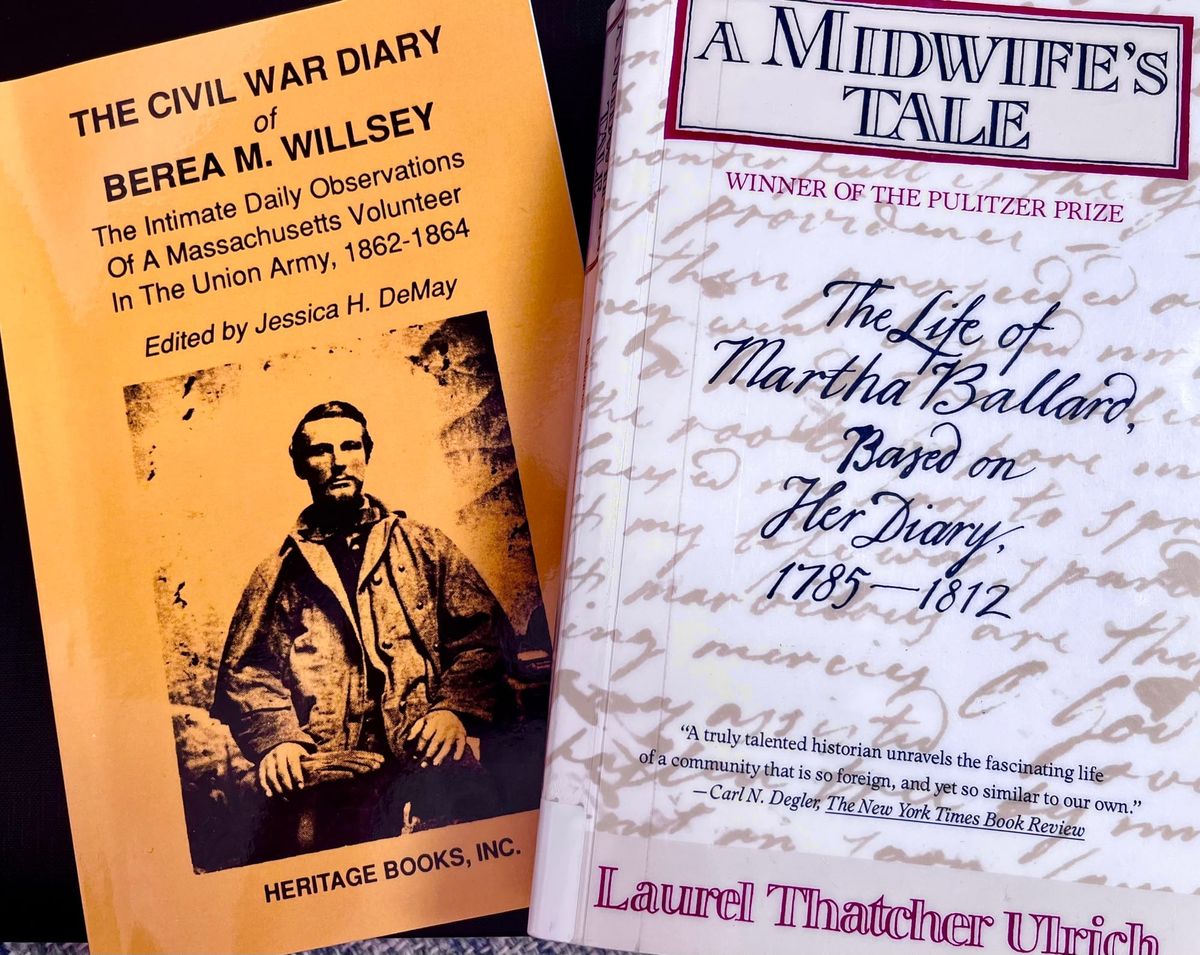
and here:
 Ruth Ann Smalley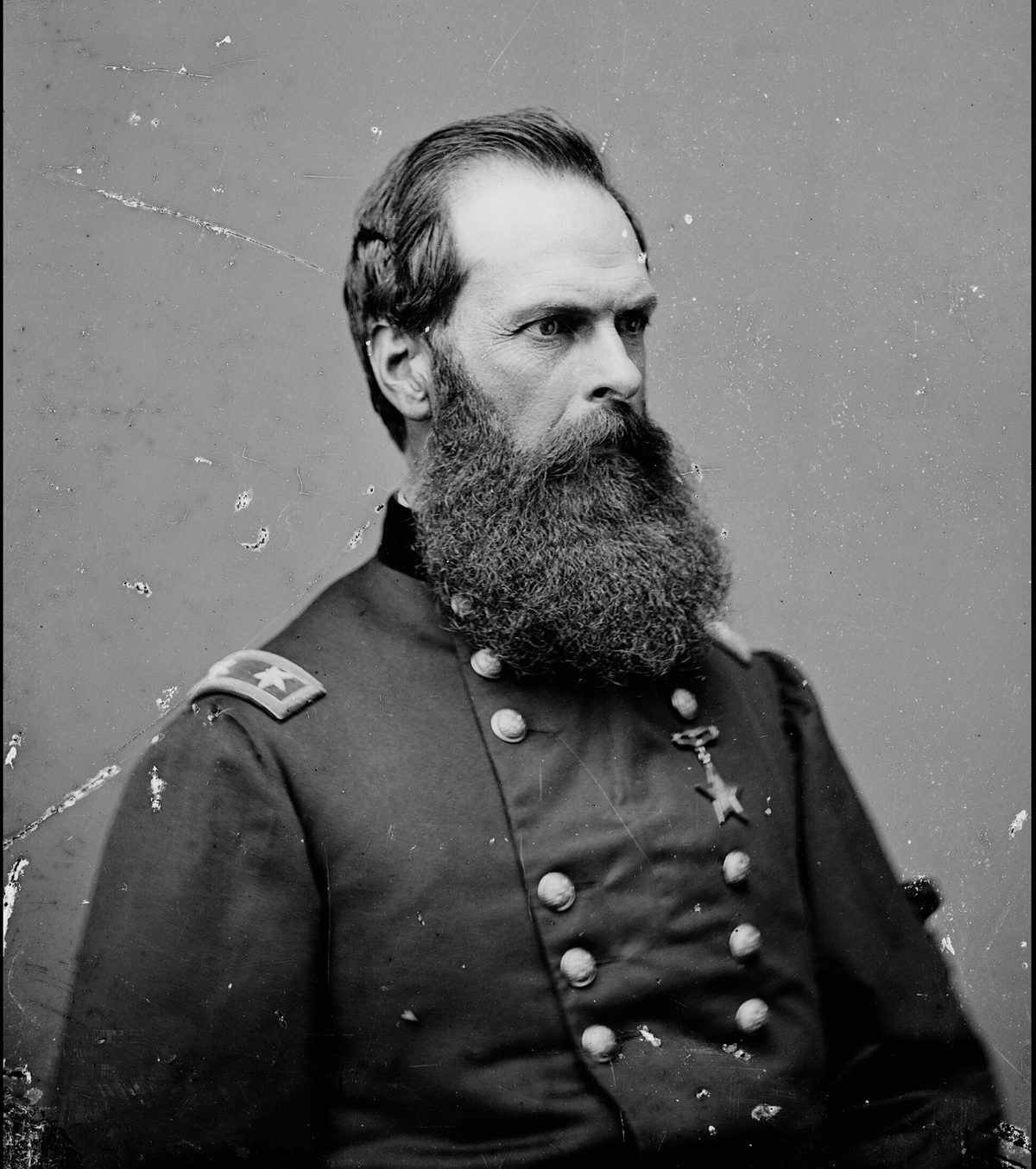
has made me curious about the lives of others in his volunteer unit. These were everyday people, who, to our eyes, mostly did live a hidden life, and by now "rest in unvisited tombs."
Berea Wilsey was a private in the infantry, Company C, Tenth Massachusetts Volunteers, Army of the Potomac. His diary was published with an appendix that records all the enlisted men he names, along with their ages and occupations.
It's fascinating to see the age range, and to think about the number of livelihoods that no longer exist. Most were very young. Many were manual laborers; there were fewer farmers than I had expected.
Perhaps the sons of farming families were less likely to volunteer and more often stayed home to help on the farm? Berea's branch had left their family's farms in New York before the war, moving to western Massachusetts for work in the textile mills there. I suspect that many young, unmarried men sent their pay home to their parents, as Berea did.
Ages and occupations of the volunteers of the 10th, mentioned in Berea's diary entries:
Hotel-keepers: ages 47, 43, 33
State pension agent
4 physicians/surgeons
pastor
music teacher: age 31
attorney: age 22
clerk: ages 18, 21, 21
bookkeeper: age 19
shoemaker: age 23
paper-maker: ages 20, 21, 22
machinist: age 18
mechanic: ages 21, 24, 34, 38
molder: age 21
painter: age 24
carpenter: ages 20, 24, 27, 37
engraver: ages 24, 24
stone mason: age 35
baker: age 20
miller: age 21
merchant: ages 24, 31
laborer: ages 37, 43
dresser: age 36
wool manufacturer
carder: age 24
weaver: age 20 (Buel), age 22 (Berea)
wool sorter: age 22
manufacturer: age 30
cigar-maker: age 27
broom-maker: age 23
brass finisher: age 20
tinner: age 24
plane-maker: age 35
hack driver: age 21
baggage master: age 23
farmers: ages 19, 21, 21, 30
Alfred S. Roe, a Civil War veteran himself, compiled these brief regimental records. Two particularly poignant listings made me want to know their untold stories.
One was the bootmaker, Edmund Toomy, aged 22. In 1862, he is "said to have died of homesickness."
Another was John Falvey, 18-year-old laborer, born in Cork, Ireland. Falvey enlisted in June of 1861, and “on the visit of the allotment commission, he made over to the State Treasury in Boston, all of his wages except one dollar per month, the remainder on interest until his discharge."
But in 1862, when his regiment arrived at a Virginia courthouse, "he fell ill of fever," and died on the first of May. They buried him "near the center of the village, he left no relatives in this country.”
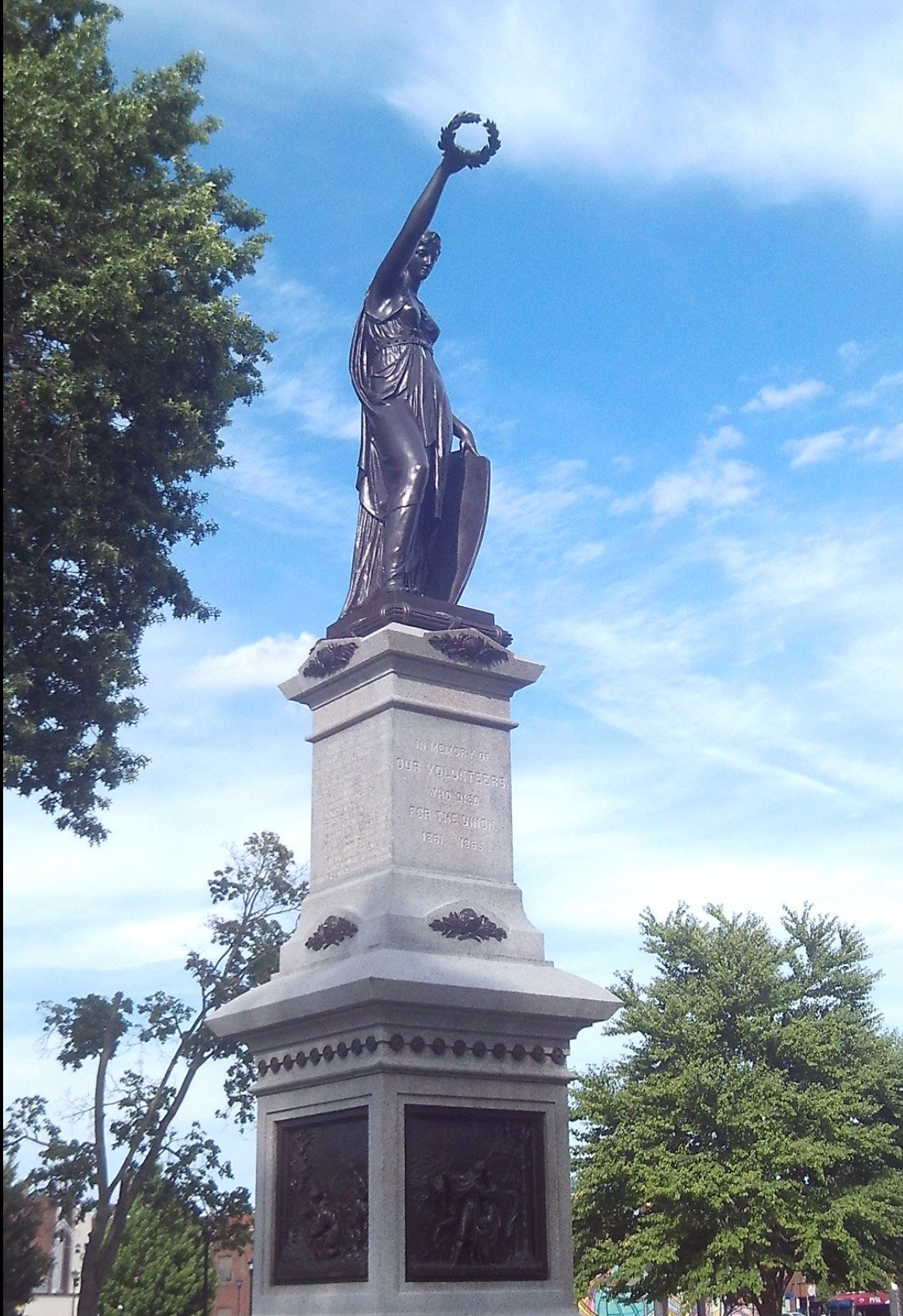
Falvey is memorialized, along with other volunteers, by the monument pictured above. I hope he had relatives back in Ireland who mourned him, and that they received the wages he saved so carefully.
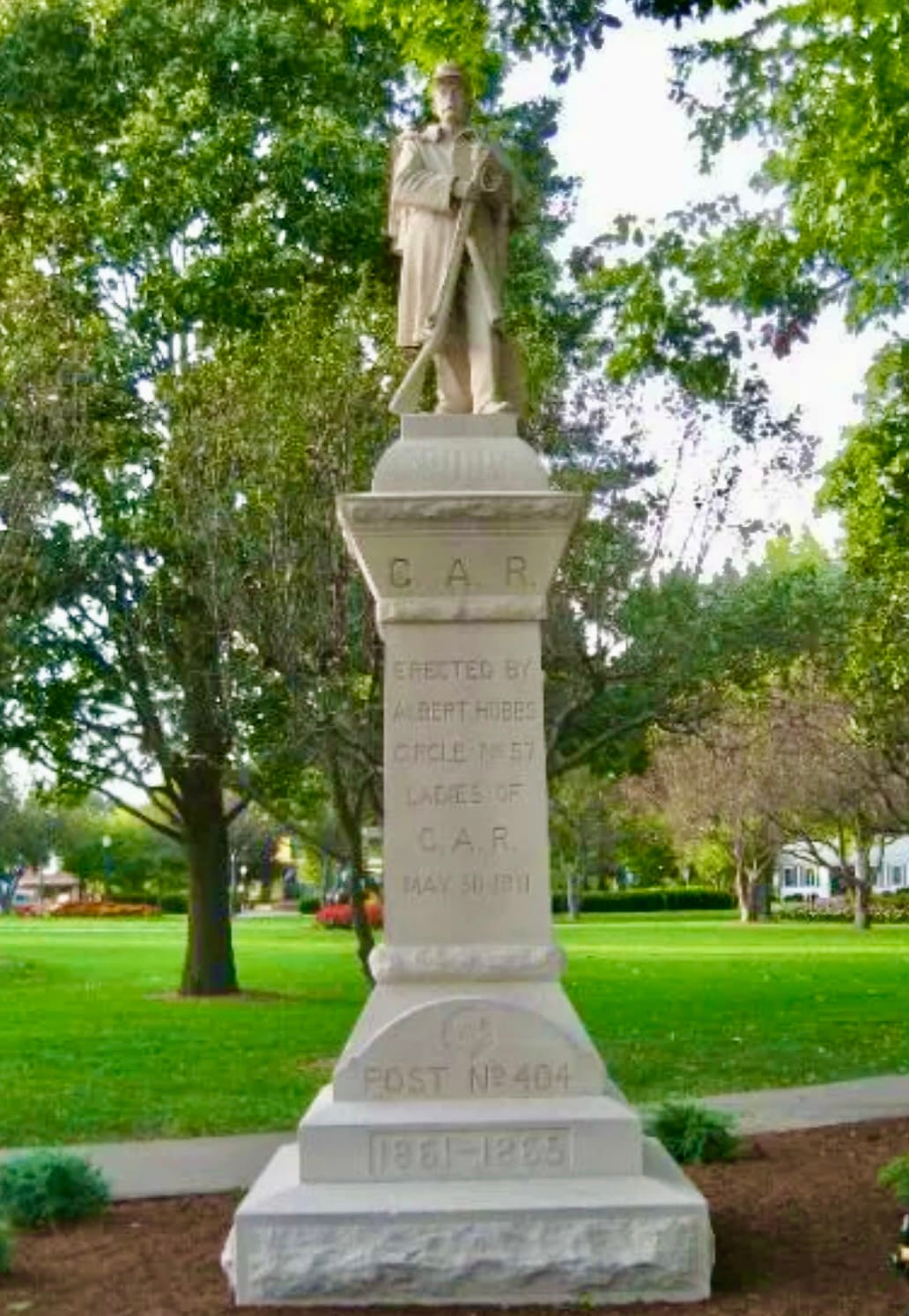
A hundred years later, I grew up walking past this memorial on the square in my hometown of Pella, Iowa.
I was completely ignorant of my two young forbears who fought in this war, one born in Ireland and the other born on a tenant farm in upstate New York. Although my father taught at Pella's small college where I attended, I never knew that nearly all the young men there—many newly-immigrated from the Netherlands—had volunteered for the Union army. I suspect this ignorance is not unusual for white northerners of my generation. How many of us have truly reckoned with a great deal of this country's history?