Bearing Witness: Family Records of Bloody Revolutions
"You and I have both been parts of faculties and faculty senates and understand that the left has taken over our institutions. The reason that they are apoplectic right now, the reason that so many anchors on MSNBC for example, are losing their minds daily is because our side is winning . . . . We are in the process of the second American revolution which will remain bloodless if the left allows it to be."
Remember when Kevin Roberts, Heritage Foundation president, said this to former Congressman Dave Brat on Steve Bannon's podcast, The War Room? I do. An election denier and major player in creating Project 2025, Roberts' assertion came in July of 2024. It definitely seemed a foreshadowing of what was to come. (see him here: https://www.youtube.com/live/D-2NWBVxUh4?si=QDhTX5sbGOsG6_xs)
At the time, I found his declaration simultaneously laughable and chilling: a weird distortion of history, and a dark threat. So, in a supposed bid for freedom, America is taking on an all-powerful enemy—the left— and it is up to that imagined left to make sure this revolution doesn't turn bloody?
Given Roberts' white supremacist beliefs, the conflict he expects his side to win resembles not a second American revolution, but a second Civil War.
Remember those Confederate flags brandished by insurrectionists? Brasher points out that this photo from January 6 includes "portraits of two Civil War-era U.S. senators – one an ardent proponent of slavery and the other an abolitionist once beaten unconscious for his views on the Senate floor."
 Jordan Brasher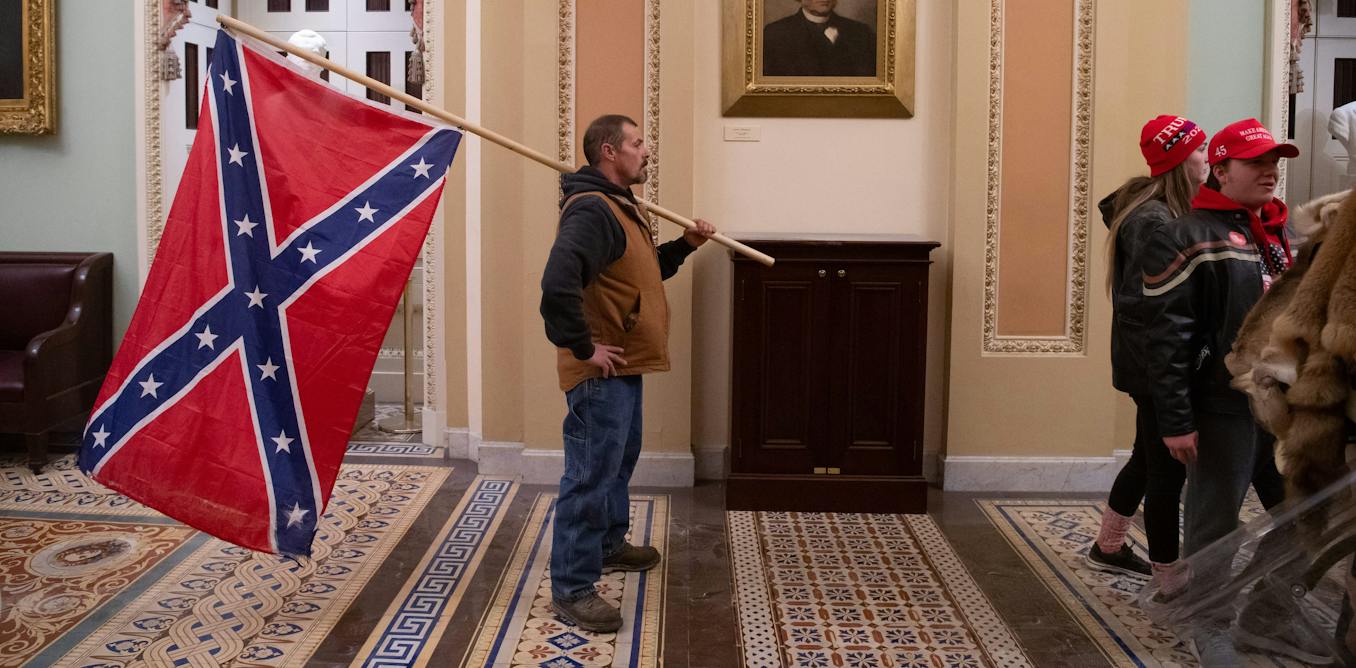
That abolitionist was Charles Sumner. And let's ditch the passive voice: in 1856, South Carolina Representative Preston Brooks nearly killed Sumner, publicly bludgeoning him with a cane:
"The cane Brooks used was broken into several pieces, which he left on the blood-soaked floor of the Senate chamber . . . . Southern lawmakers made rings out of the other pieces Edmundson recovered from the Senate floor, which they wore on neck chains to show their solidarity with Brooks, who boasted "[The pieces of my cane] are begged for as sacred relics."[34] (https://en.wikipedia.org/wiki/Caning_of_Charles_Sumner).
Convicted but merely fined, Brooks served no jail time for a vicious assault he implied was part of a holy war.
Kevin Roberts' weird assertion about who will be responsible for bloodletting has been on my mind lately.
I learned that Edgar, nephew of my direct ancestor Eliphalet Wilsey, served in the Seventh New York Heavy Artillery. So I've been working my way through the Regimental Roster in the appendix to Robert Keating's Civil War history, Carnival of Blood.
It has been interesting to compare it to the select roster included in the diary of Edgar's cousin, Berea. Those records offered me glimpses of the lives of the 10th Massachusetts Volunteers in Company C, where Berea served as a nurse. I wrote about a sampling of their ages and occupations, here:
 Ruth Ann Smalley
Edgar's unit was primarily made up of men from Albany county. The majority identified as farmers and laborers. Teamsters, boatmen, and carpenters were also heavily represented.
Other occupations offer insight into how much of daily life was made by hand: hatter, miller, cooper, sawyer, broom maker, chair maker, brick maker, iron roller, potter, harness maker, carriage trimmer, canaler, spinner, weaver, printer, stone cutter, gilder, silversmith. There were also cartmen, hostlers, sailors, musicians, drummers, newsboys and newsagents, a printer's devil, distillers, firemen, teachers, barbers.
Many foreign-born soldiers appeared in the roster, and I started trying to keep a tally. Among them were men born in Canada, France, Scotland, Germany, Ireland, England, Wales, Switzerland, and Holland. I'm barely through the "D" names in the alphabet: the Irish were the most populous group. I counted sixty-five, compared with numbers in the twenties for England and Germany.
This makes sense, given the large influx of Irish immigrants due to famine in the 1840s—the very reason my great-great grandfather came here. Earning his living as a traveling peddlar in his early twenties, William met and married Eliphalet's grand-daughter, Harriet, on his route through Indiana. The fact that I started life in a small Dutch immigrant town in Iowa is partly due to them settling in Illinois after the Civil War.
Like so many women of her time, Harriet watched multiple family members go off to war. Within months of their wedding, William joined Harriet's brother in enlisting. Both survived to come home, as did Harriet's cousins still back east, Berea and Edgar.
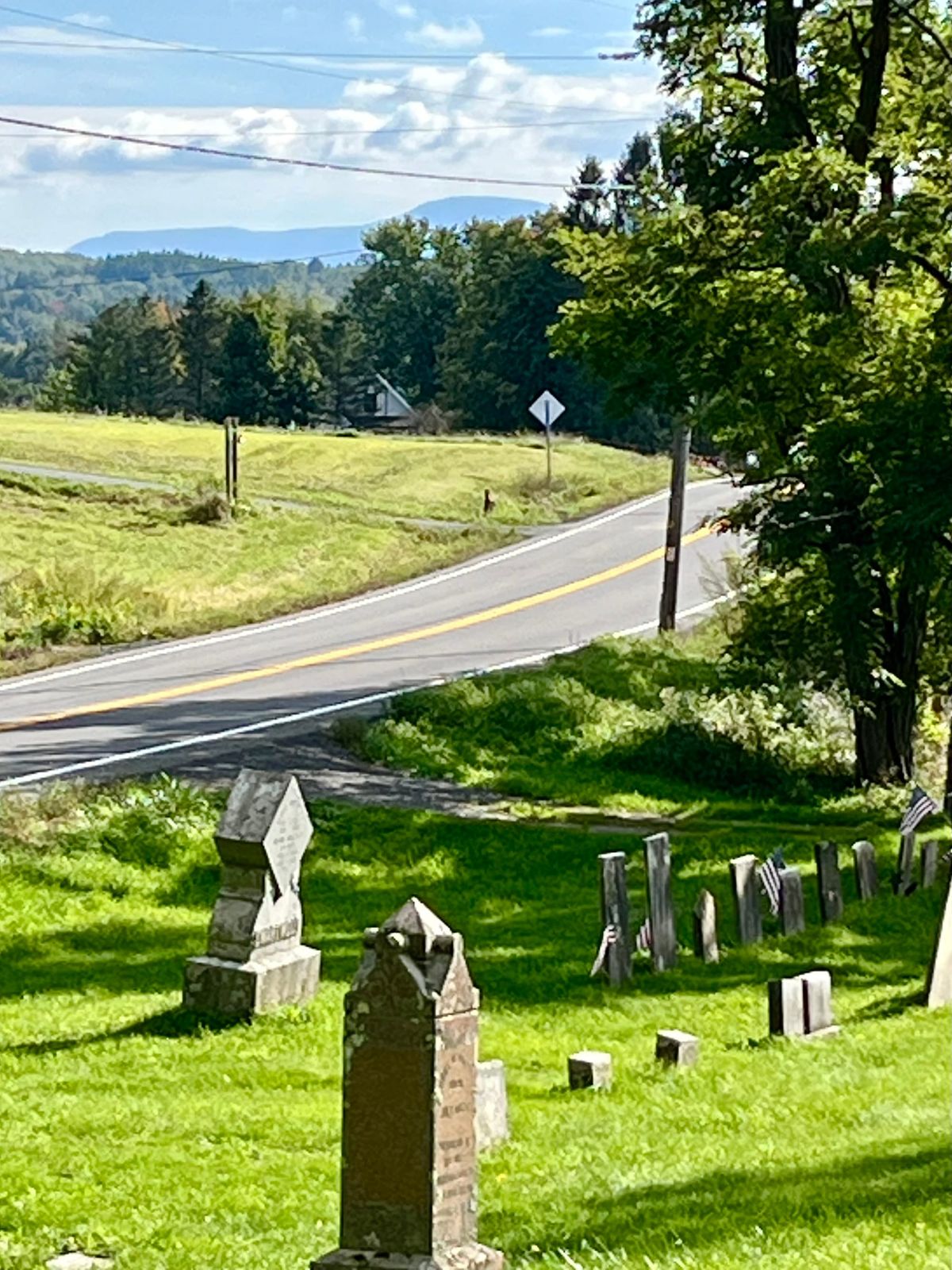
When I went to see Edgar's grave this week, I found some other veterans who were not so fortunate.
I learned of this rural cemetery while I was on the trail of ancestors involved in the Anti-Rent Rebellion. A couple of weeks ago, I'd discovered Ezekiel Wilsey's name on the Helderberg tenant farmers' letter to landlord Stephen Van Rensselear IV, protesting semi-feudal rent conditions. That Ezekiel is probably Eliphalet's older brother. Brother Ezekiel (whether the signee or not) was buried in Westerlo next to his son, Edgar, a Civil War veteran.
So, on a brilliant fall day, I made the short drive through the countryside to their burial site. It is so rural, in fact, that it's easy to imagine how the land looked 160 years ago. When I found what turned out to be three generations in one plot, I pictured the repeated funeral processions through time, pulling up under the Yew trees.
Traversing the cemetery on foot, I found several more Civil War graves. These two survived serving in other regiments.
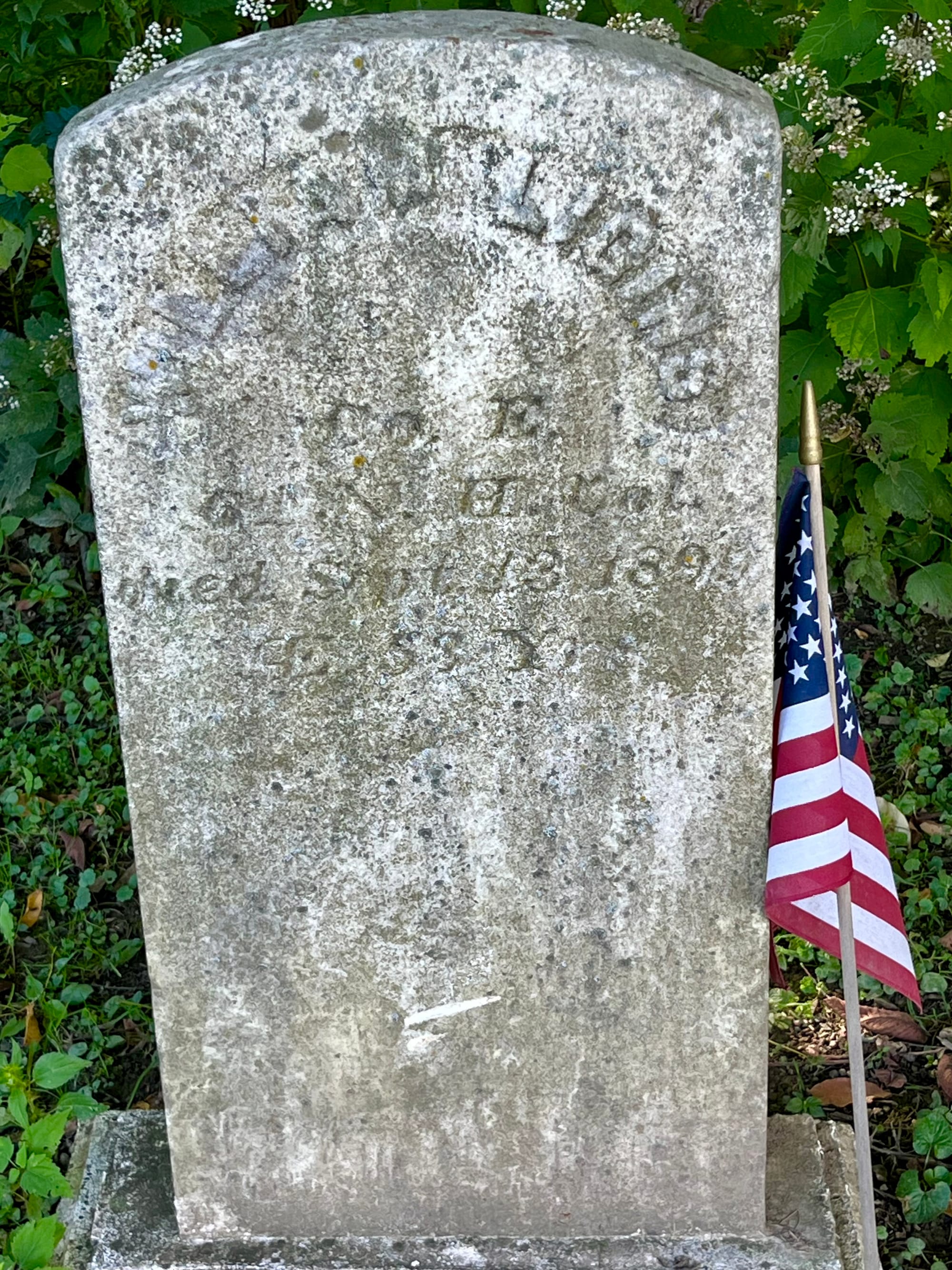
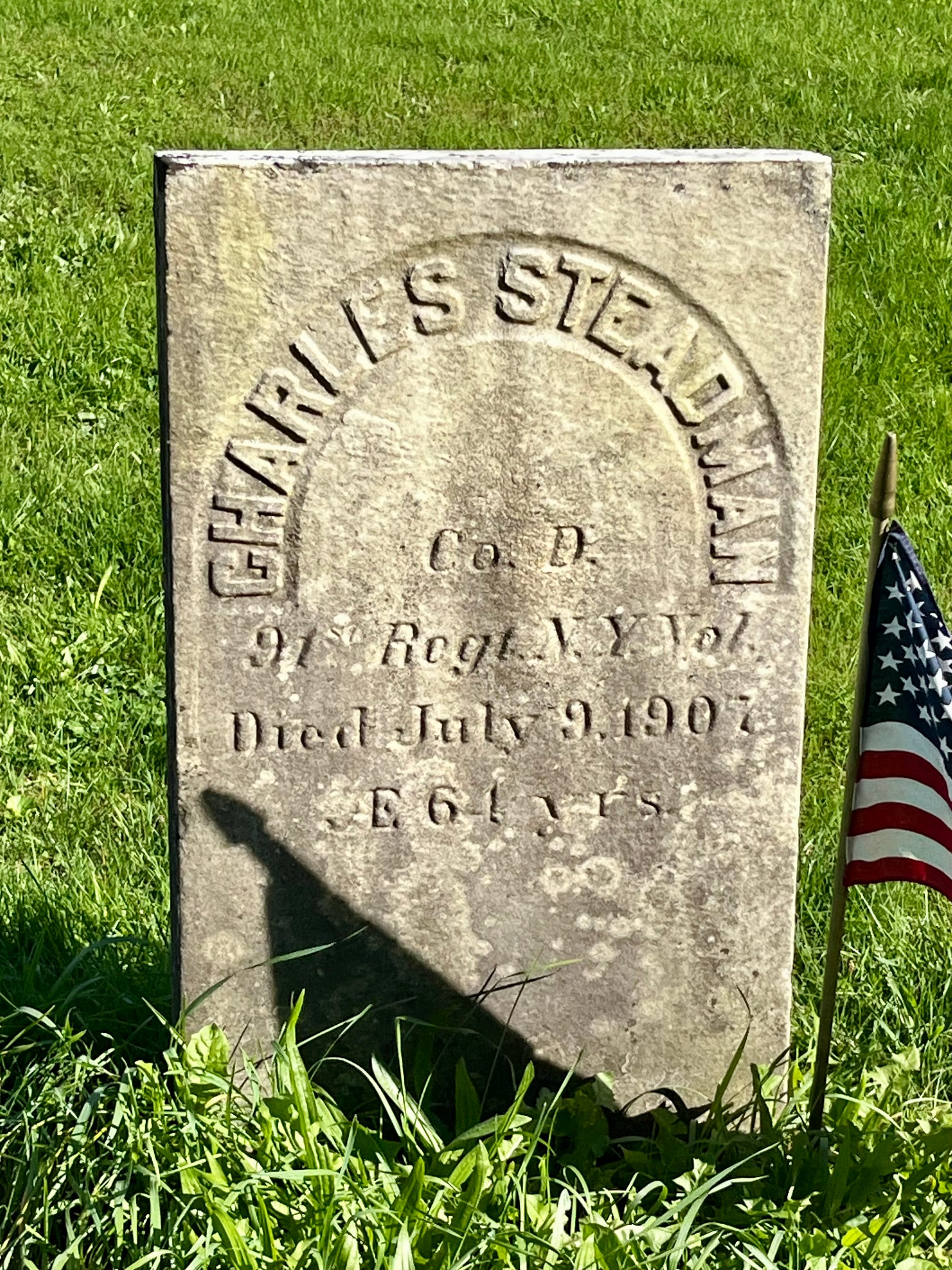
William H. Liggins, Co. E, 1846-1899, and Charles Steadman, Co. D, 1843-1907, died in old age.
The second two were both from Edgar's regiment. Alfred Laupaugh died of disease at age 43, on July 6, 1863. William Lamoreaux was killed in action on June 16, 1864, at the Seige of Petersburg.
Their fates resembled so many others', in a conflict that killed an estimated 700,000 soldiers, along with tens of thousands of civilians and enslaved people.
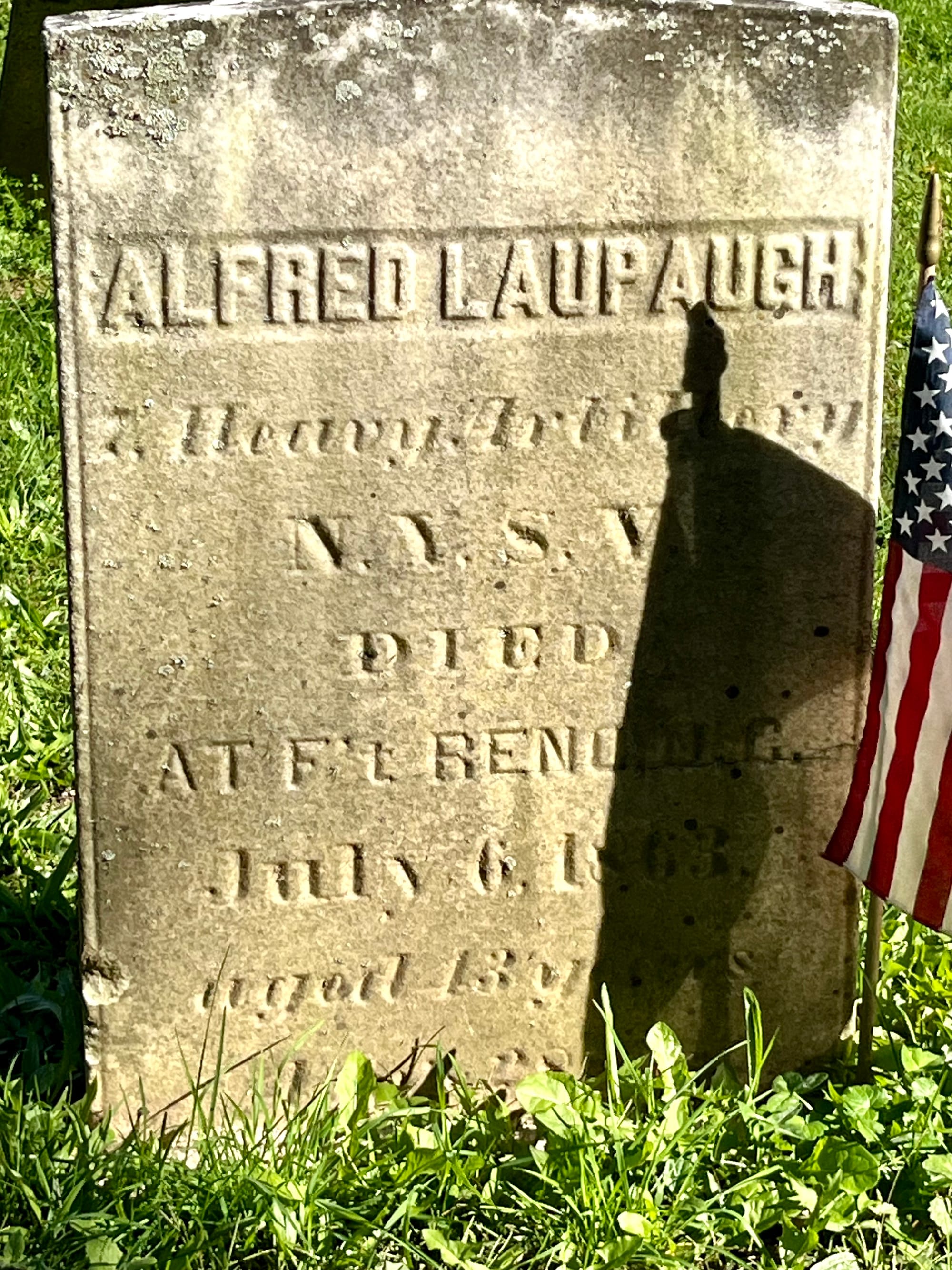
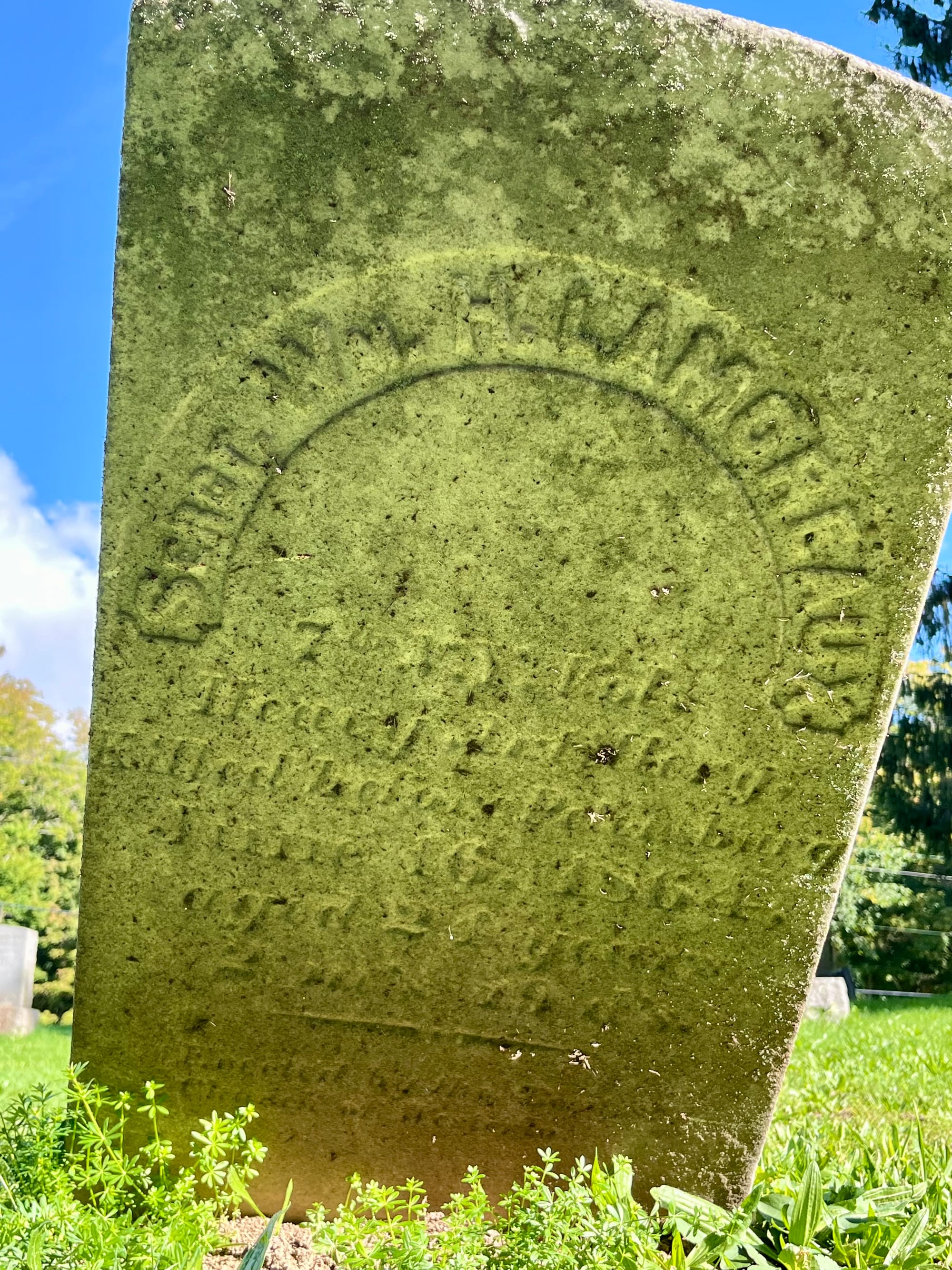
Two veterans who did not survive service, both in the 7th New York Heavy Artillery.
As a nurse, Berea had witnessed pain and suffering up close. He was no stranger to battlefield gore. But the Seventh's somber list of 2,623 men conveys the varied and cumulative horrors of warfare in a way that Berea's diary had not prepared me for.
The roster is a blunt record of disfiguring wounds, amputated limbs, chronic diarrhea and deadly dysentery, disease, desertion, and captivity. It cites discharges due to disability, as farmers and manual laborers lost hands, fingers, eyes, arms, legs. Soldiers wounded in battle sometimes died much later, or were released from hospitals too weak to survive long.
Those taken prisoner often couldn't survive conditions of captivity; many on the roster died of scurvy and chronic diarrhea while prisoners of war. George F. Crounse, a 27-year-old farmer from Albany, is one example. Captured at Petersburg on June 16, 1864, he died in Salisbury, N.C. on January 5, 1865. There, according to the Guilderland Town records, he "starved by inhuman treatment." Others imprisoned at Andersonville, Georgia were also listed as having died of "starvation and exposure."
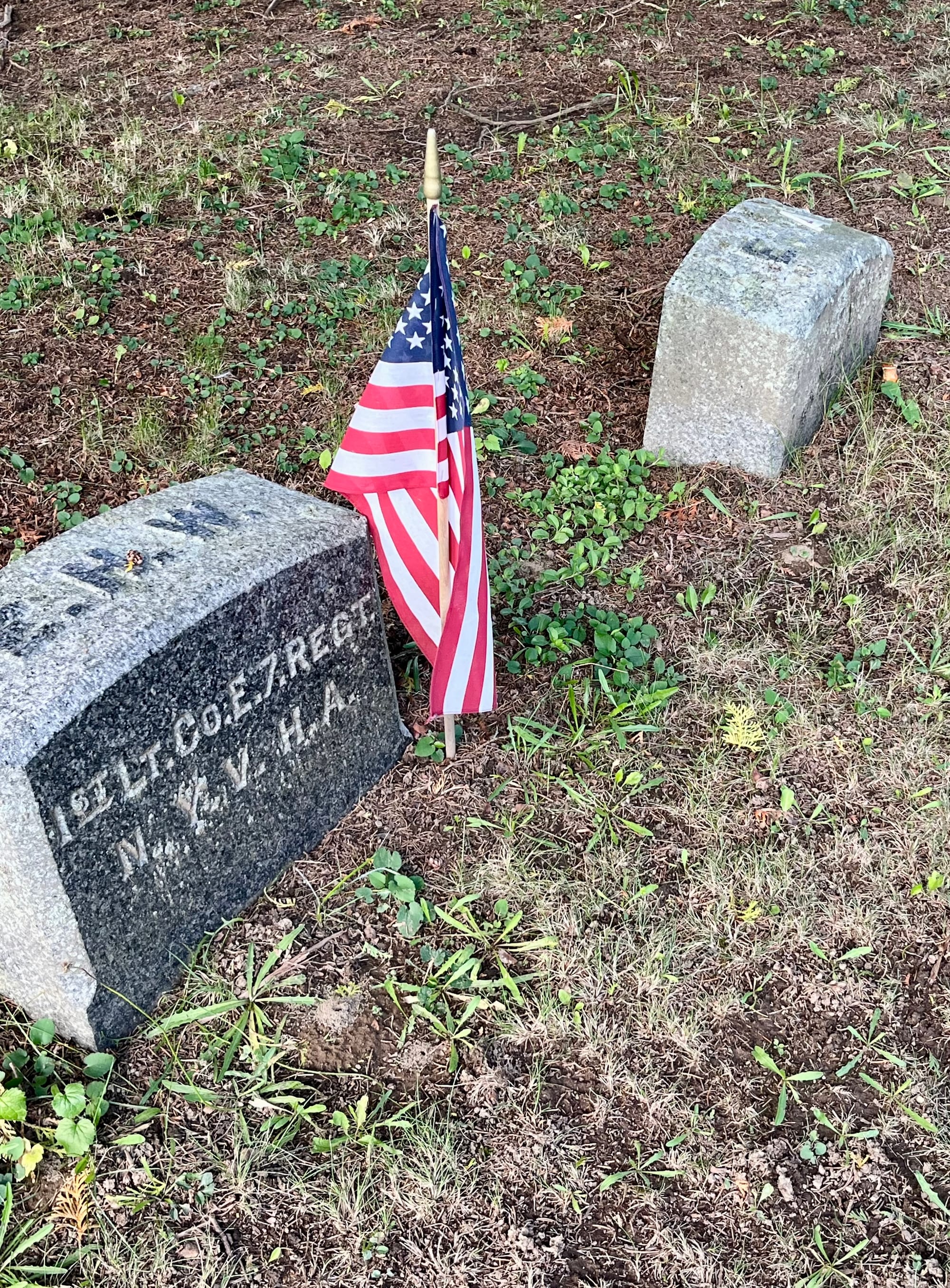
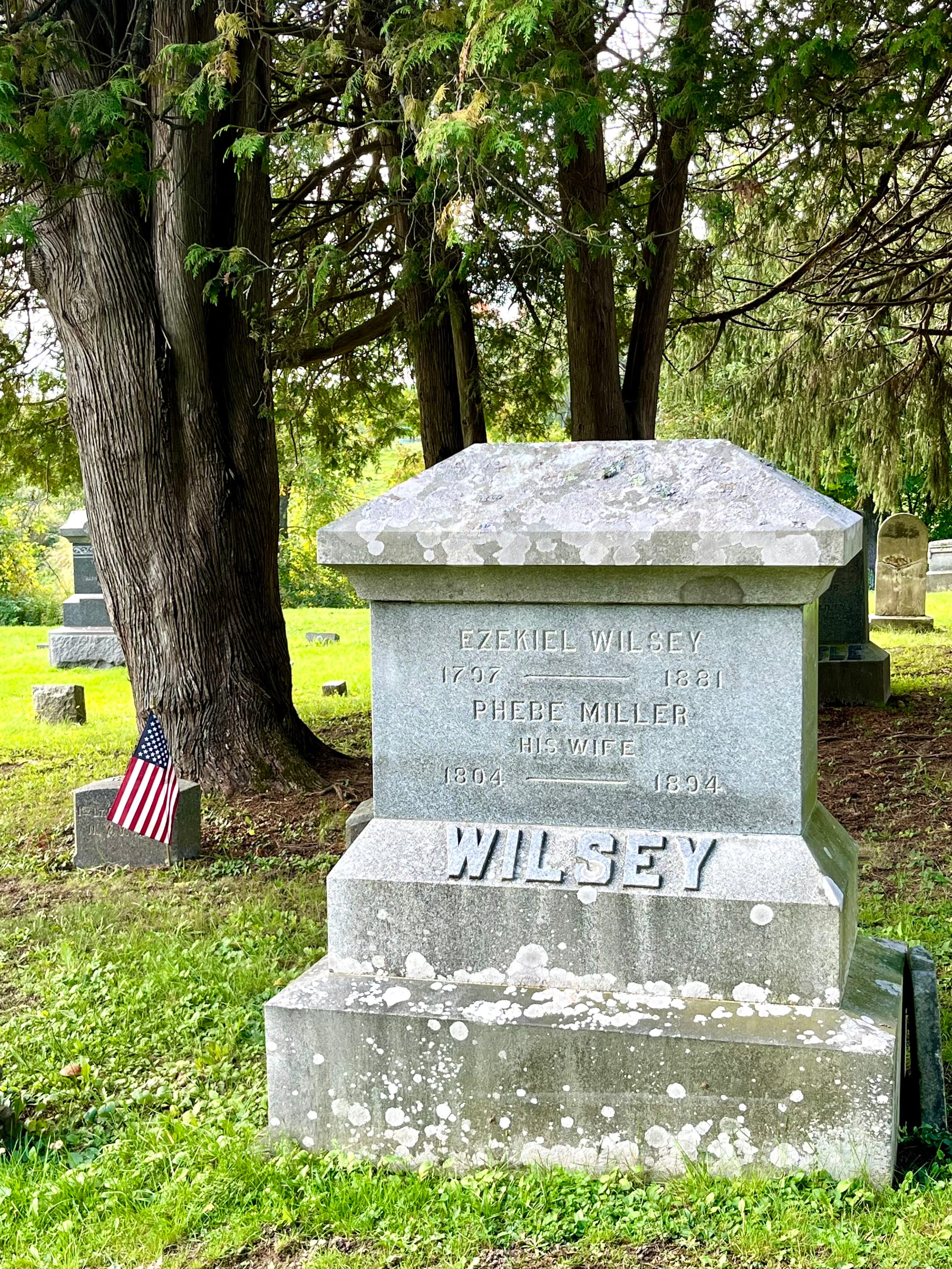
Three generations of Wilseys: tombstones of Ezekiel and Phebe, their son Edgar and his wife Emma, and their son, Edward A.
It is both strange and marvelous to wonder about the emotions of these families as they endured the long wartime separations, the losses, and the reunions with their battle-scarred loved ones. These are ancestors I never knew I had before this summer, and they've opened a new window on history.
Civil War levels of violence and atrocity are nearly unimaginable to me. I suspect politicians and academics such as Roberts have completely mythologized the actual horrors. And they are the type who would have gladly sent other people's sons.
Fueled by such mythology, bloodlust like Preston Brooks' still lives on. One need only watch videos of the violent January 6 attacks to witness it. Furthermore, the continued propensity for mass cruelty is evidenced by recent reports on detention centers such as "Alligator Alcatraz."
Who and what, exactly, is a patriot, when members of the same country go forth to slaughter each other? Alliances and notions of loyalty are much more complex than simplified versions of the Civil War that many have absorbed through popular culture.
In fact, just this week, I confronted another gap in my education: the thorny issue of "which side" different Native Americans decided to fight on. I knew that natives were heavily represented in the U.S. armed forces in the twentieth century. But I'd never learned about the estimated 20,000 who served as soldiers in the Civil War.
These questions about patriotism, loyalty, and alliances also apply to that first American revolution. The Wilseys started out as Wiltzes—Dutch colonists who settled this area when it was under Dutch control. In 1664, with a show of military might, the British took over New York without a battle. Maybe that's the way Kevin Roberts wants modern Americans to accept an authoritarian government.
But New York's tenant farmers continued to labor under descendants of the original Dutch manorial system. This was the case, even after they had joined the fight against British rule in the American revolution.
Such feudal contracts would drive farmers like Ezekiel Wilsey to join the Anti-Rent movement in the 1840s through 1860s. See my posts from June 19 and 26, for more about this campaign.
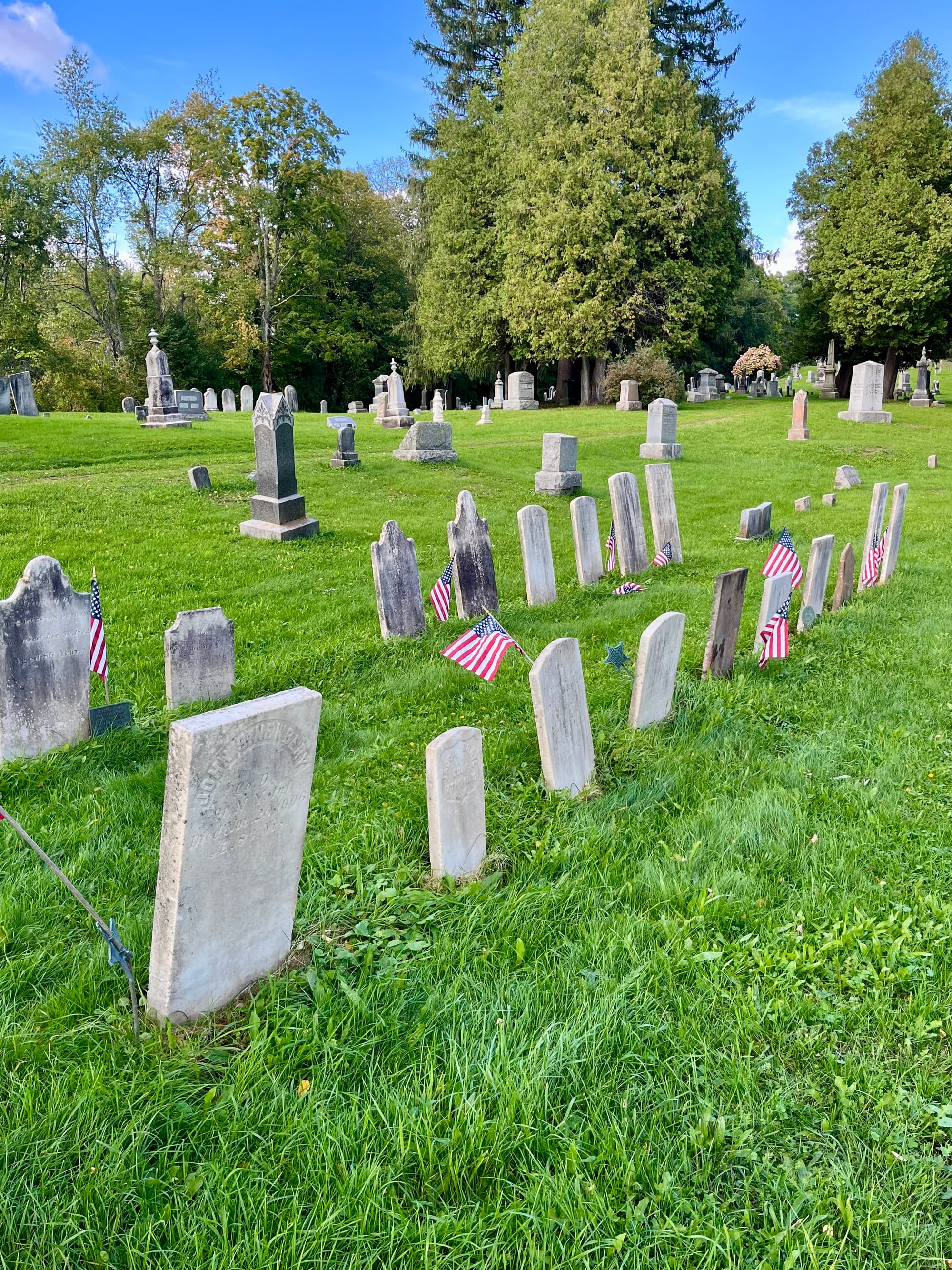
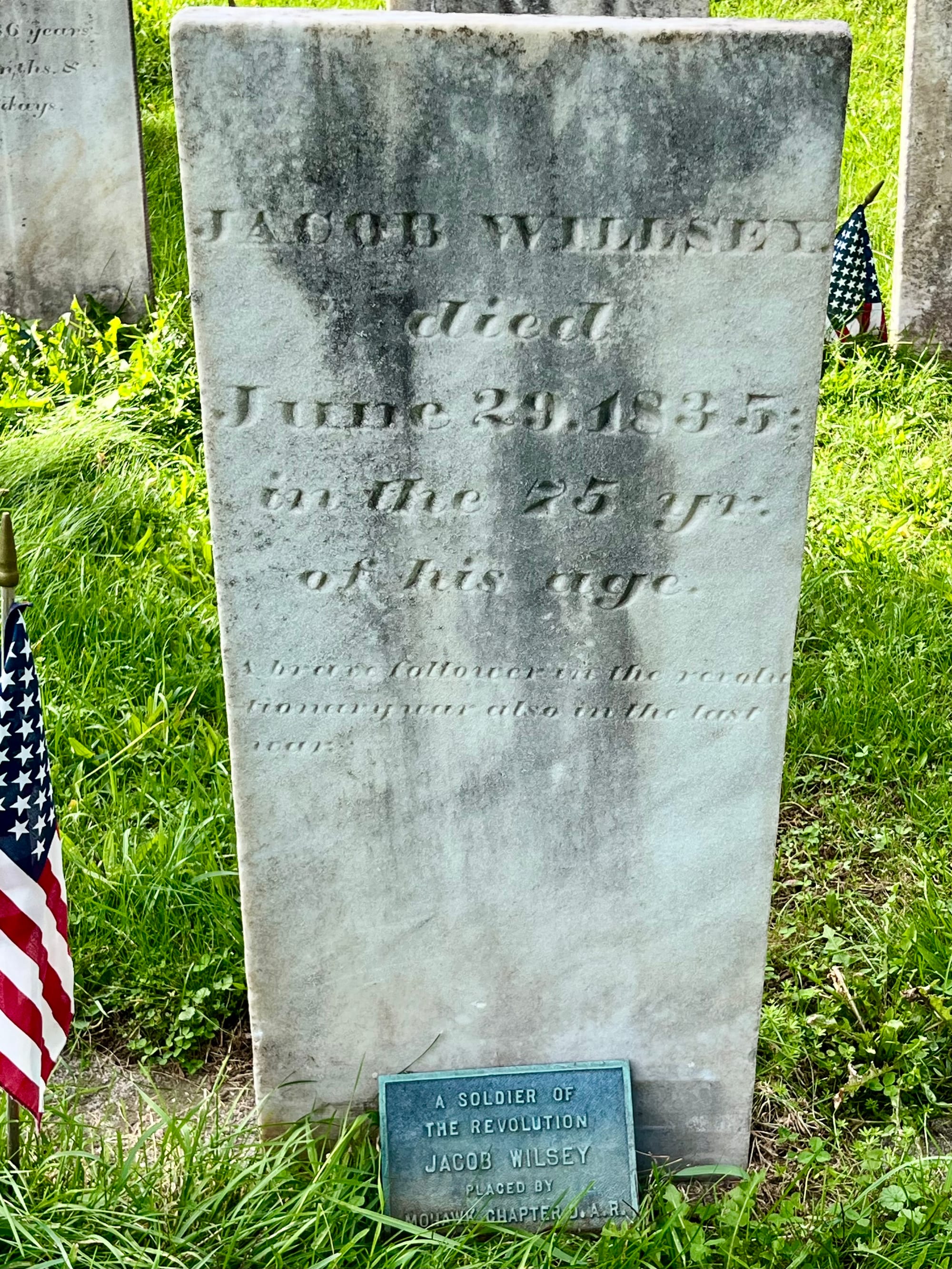
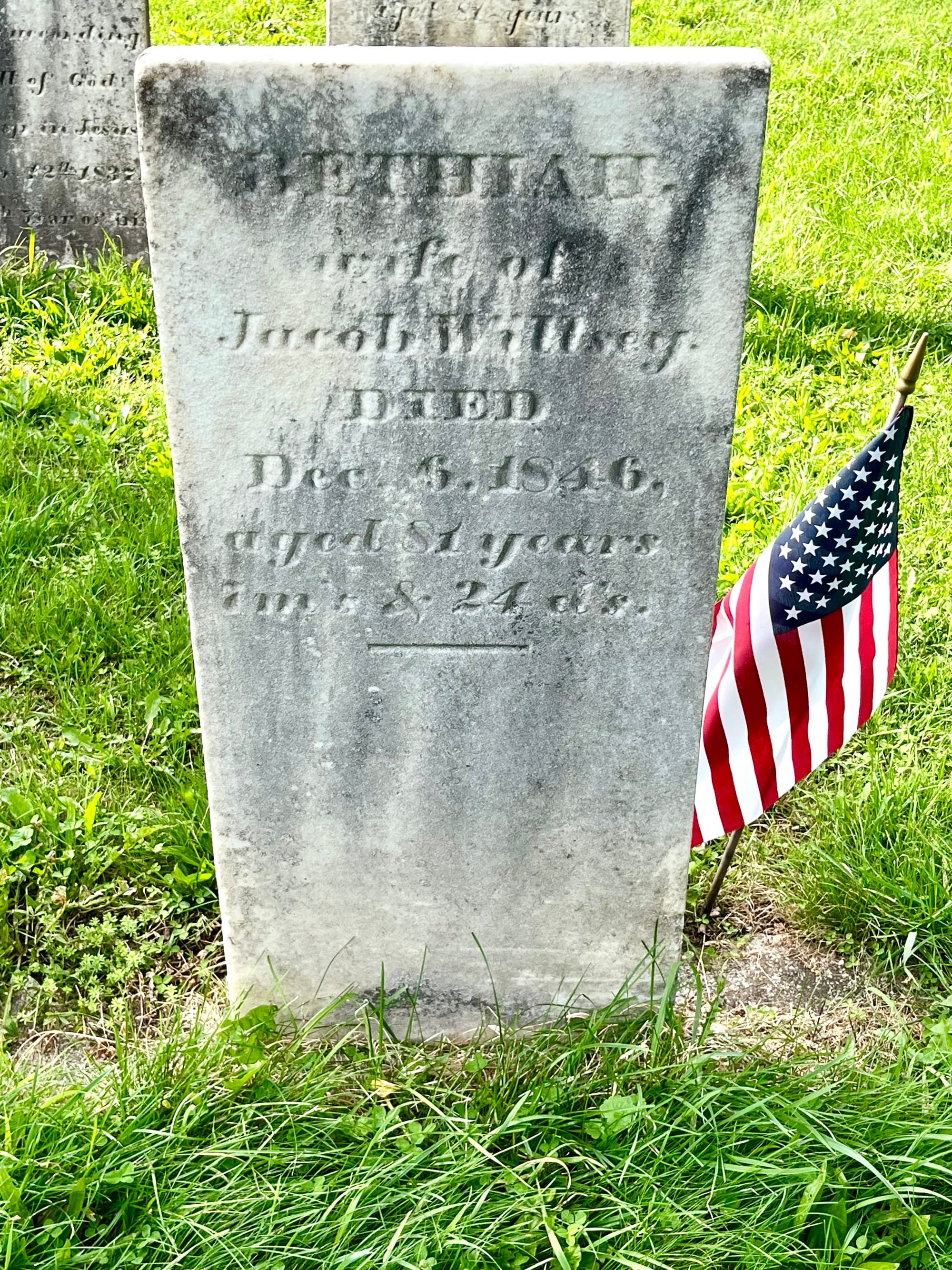
The Revolutionary war section: Jacob Willsey, 1759-1835, and his wife Bethiah, 1765-1846.
Before leaving the cemetery, I was surprised to find the graves of Jacob and Bethiah Willsey. Jacob and his father Isaac—Eliphalet's uncle and grandfather —both fought in the Revolutionary War.
This country hillside holds the memory of all three of these rebellions. Each left representatives there from my own family.
If you've stayed with me this far, thank you. Maybe during this 250th anniversary year, you, too, have gained insights and made discoveries about this country's throughlines to today? I'd love to hear about them.