Plot Lines: What We Know About Where We Live and How We Landed There

"President Abraham Lincoln signed the Homestead Act on May 20, 1862. The act provided settlers with 160 acres of surveyed public land after payment of a filing fee and five years of continuous residence. Designed to spur Western migration, the Homestead Act culminated a twenty-year battle to distribute public lands to citizens willing to farm. Concerned that free land would lower property values and reduce the cheap labor supply, Northern businessmen opposed the act. Unlikely allies, Southerners feared homesteaders would add their voices to the call for abolition of slavery. With Southerners out of the picture in 1862, the legislation finally passed." (https://guides.loc.gov/homestead-act/digital-collections)
This description on the Library of Congress website compresses a lot of political history into a few lines. We see an alliance of interests between Northern businessmen and Southern enslavers around maintaining access to laboring bodies. The Civil War changed all equations. Certain land then became "free," except to those who had "borne arms against the United States government." Native Americans were also excluded.
Within a few years, the Southern Homestead Act of 1866 would be passed, "permitting Confederate veterans to file homesteads in the South." But the Indian Homestead Act was not passed until 1875. They could attain "free" land on the condition that they "relinquished tribal affiliations and severed communal ties." (https://www.battlefields.org/learn/articles/homestead-act-1862)
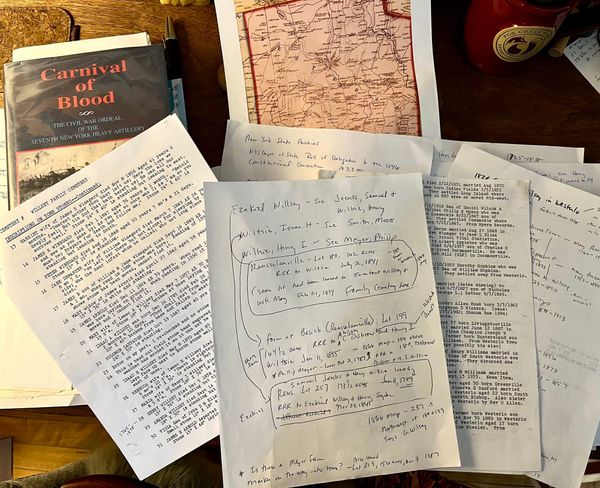
During that same twenty-year period before passage of the 1862 act, the tenant farmers of upstate New York, including my Wilsey ancestors, had been fighting to gain clear title to lands some had been farming since the Revolution. As the fourth-born son, my ancestor Eliphalet decided his prospects would be improved by heading west. His family had reached Ashtabula, Ohio by 1840.
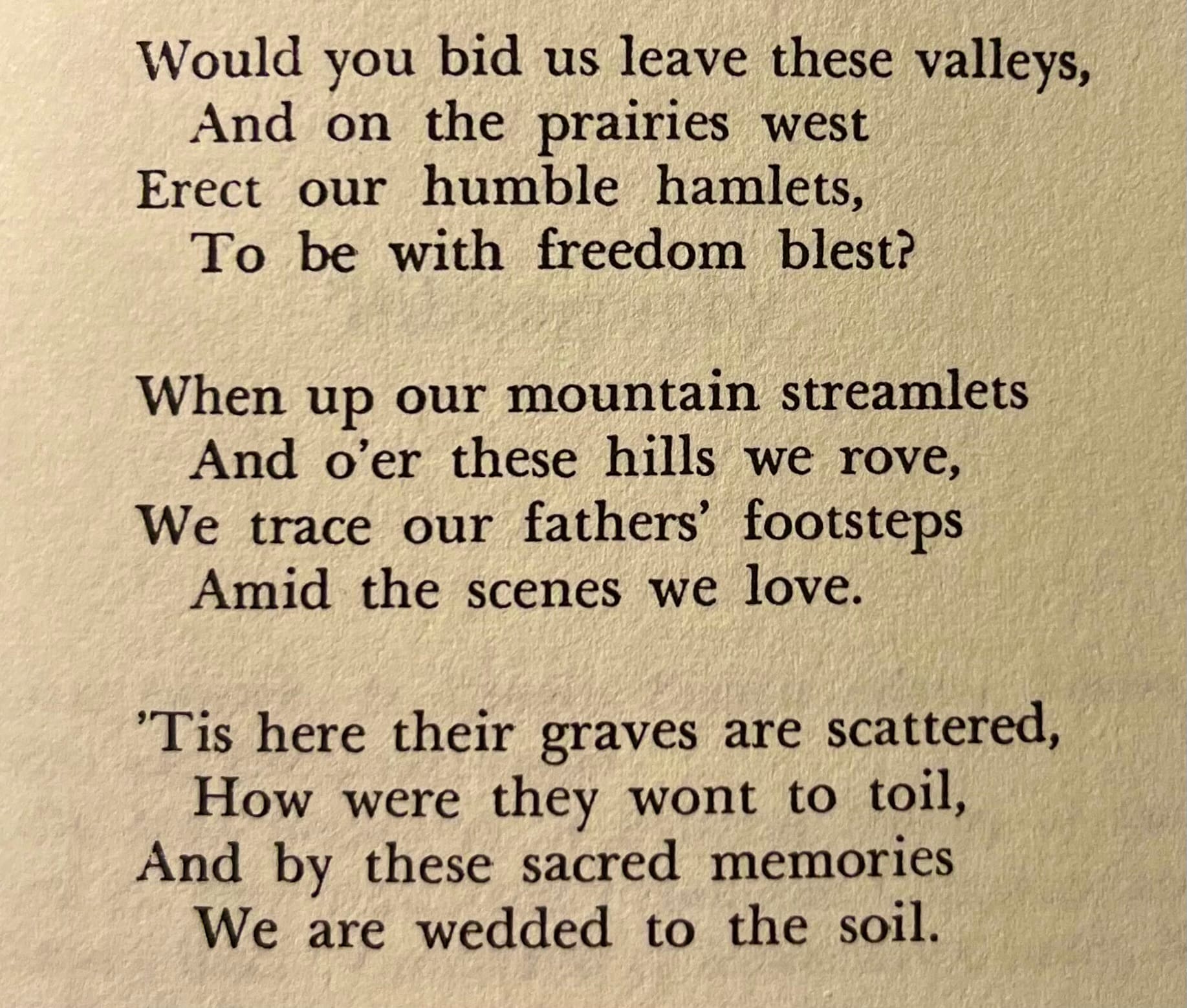
His brother Ezekiel stuck it out, perhaps holding sentiments like these lines from the Anti-Rent song, "Lay Down the Musket":
The youngest brother, George, made a try at relocating to a Massachusetts mill town. He and his sons worked in textile production there, though he seems to have also maintained a farm. Then in 1861, his son Berea and Ezekiel's son Edgar enlisted in the Union army for three-year terms.
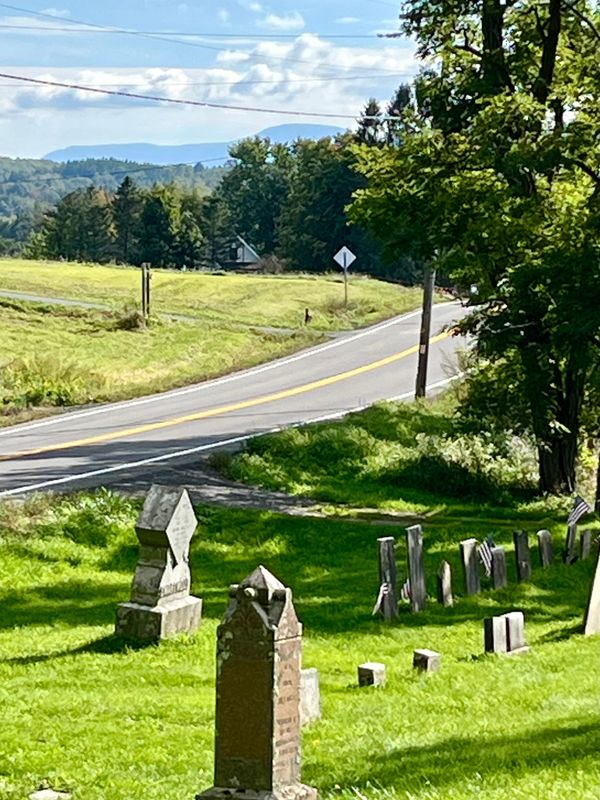
Berea chose to leave the valleys for the prairies west not long after he came back from the war. He eventually was joined in Nebraska by his youngest brother and his father. So, while Sabra Wilsey (1814-65) is buried among the scattered graves on the farm in Westerlo, her husband and sons are part of the Nebraska soil.
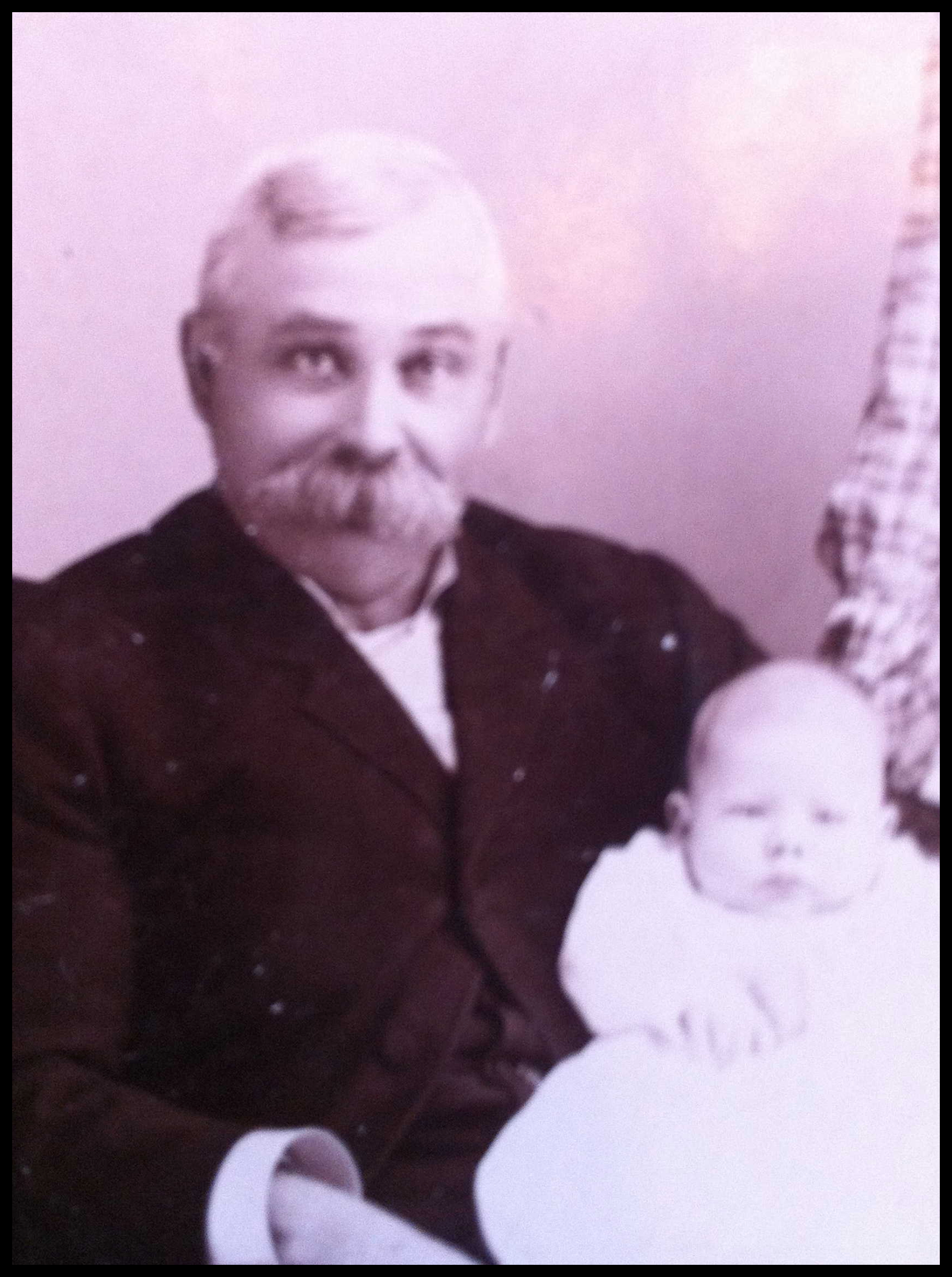
Here is Berea, pictured with a Midwest-born grandchild. According to the American Battlefield Trust website, "today, over a quarter of the U.S. population, some 93,000,000 Americans, are estimated to have descended from homesteaders."
I'm thankful that archiving systems, combined with modern technology, make it possible to piece together the individual personal stories that together constituted this huge societal change.
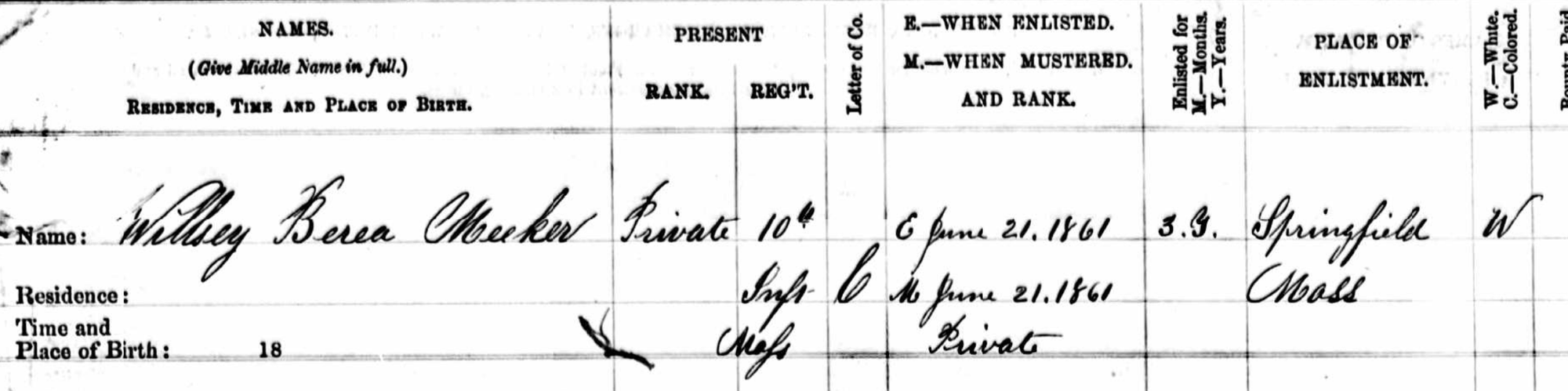
From my laptop, I can look at Berea's enlistment information. Recorded in the fancy cursive of a Town Clerk's register are all the battles he saw:
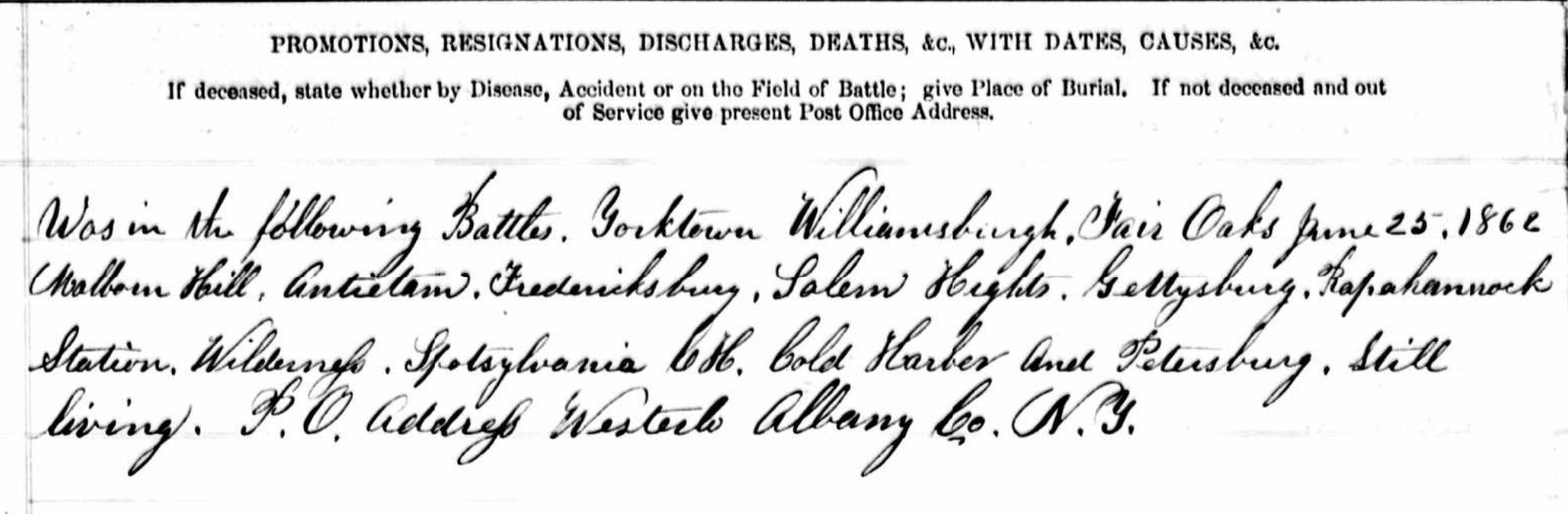
I can also access the nearly twenty pages of documentation for his land applications under the updated sections of the Homestead Act. The file includes affirmations of his Civil War duty from the Adjutant General's office, and his receipts for the $14 filing fees.
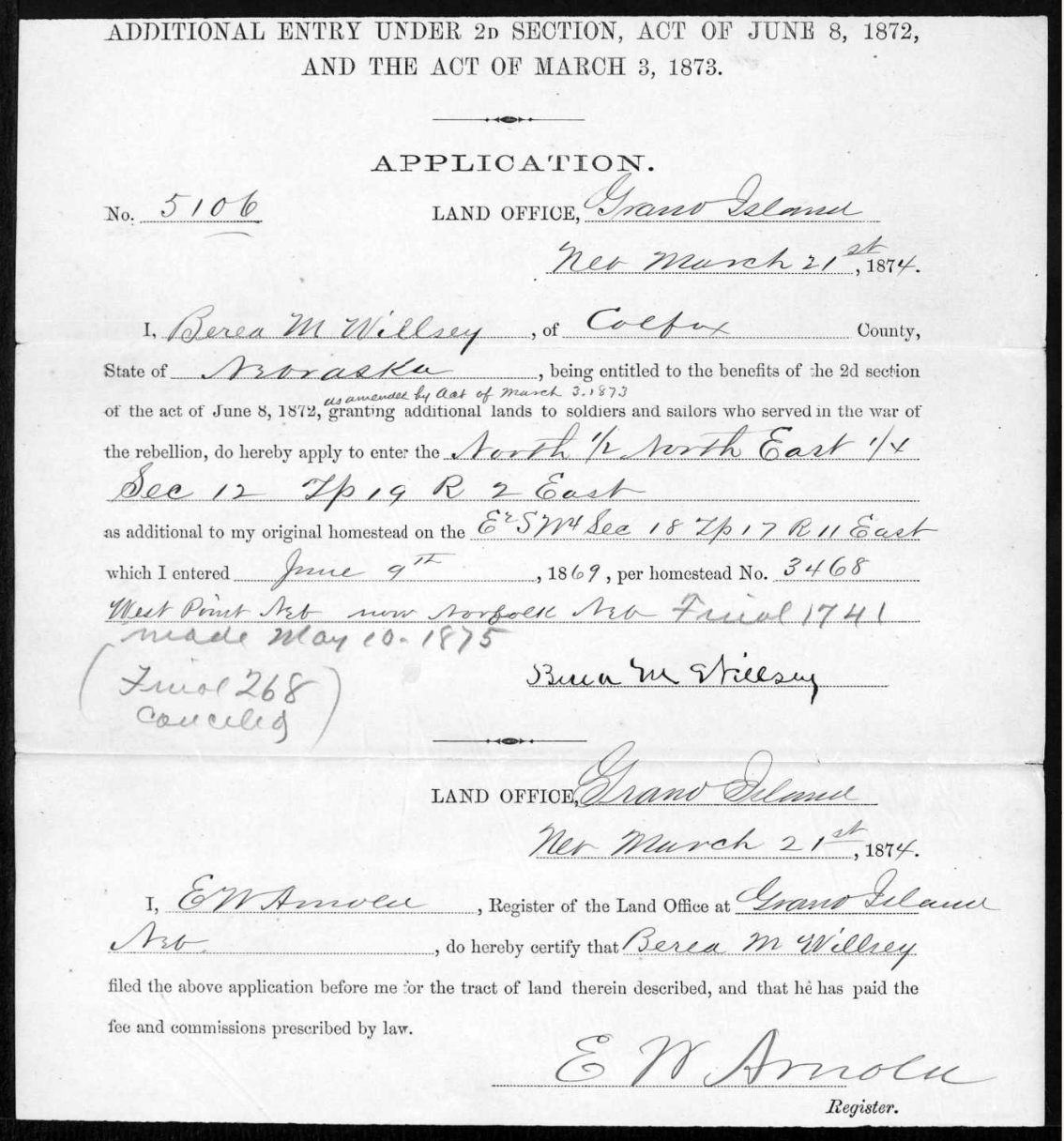
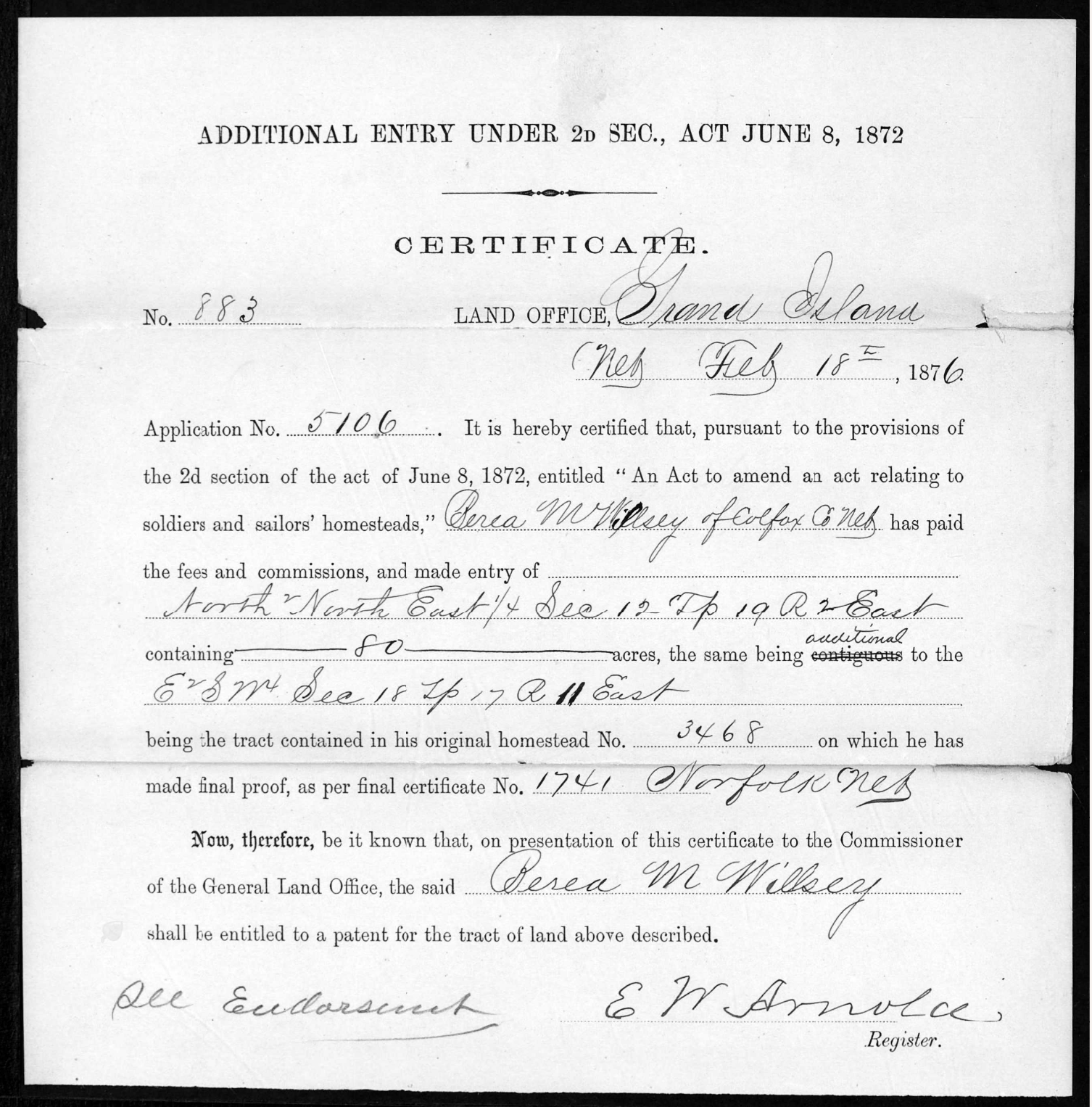
Soldiers could use their service time toward the five years of occupying the land that were required of other settlers. Given the undeveloped nature of so much of the available public land, I'm curious how often people stuck it out long enough to fulfill their occupancy requirement.
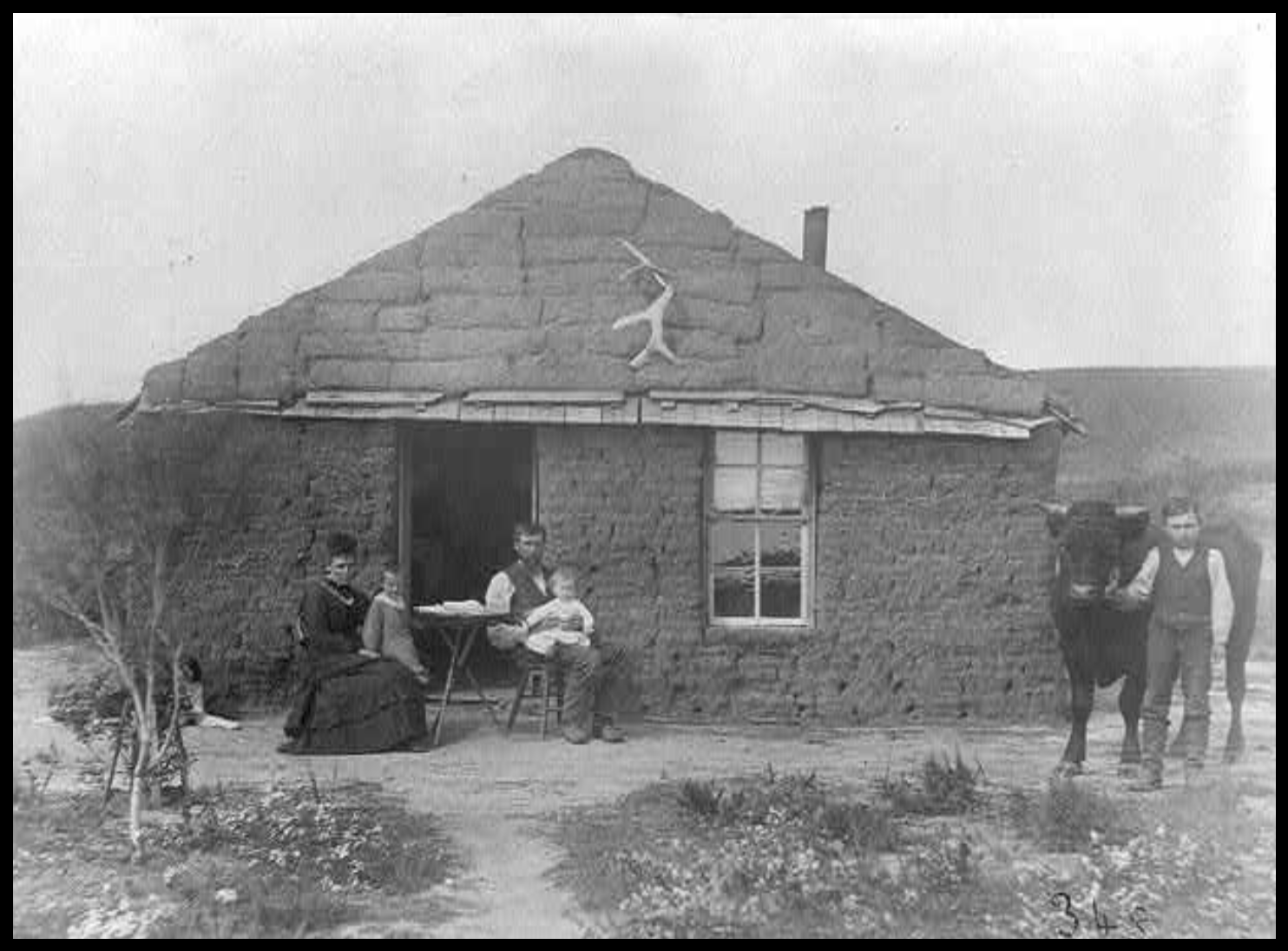
Here's how some farms looked by the end of the century:
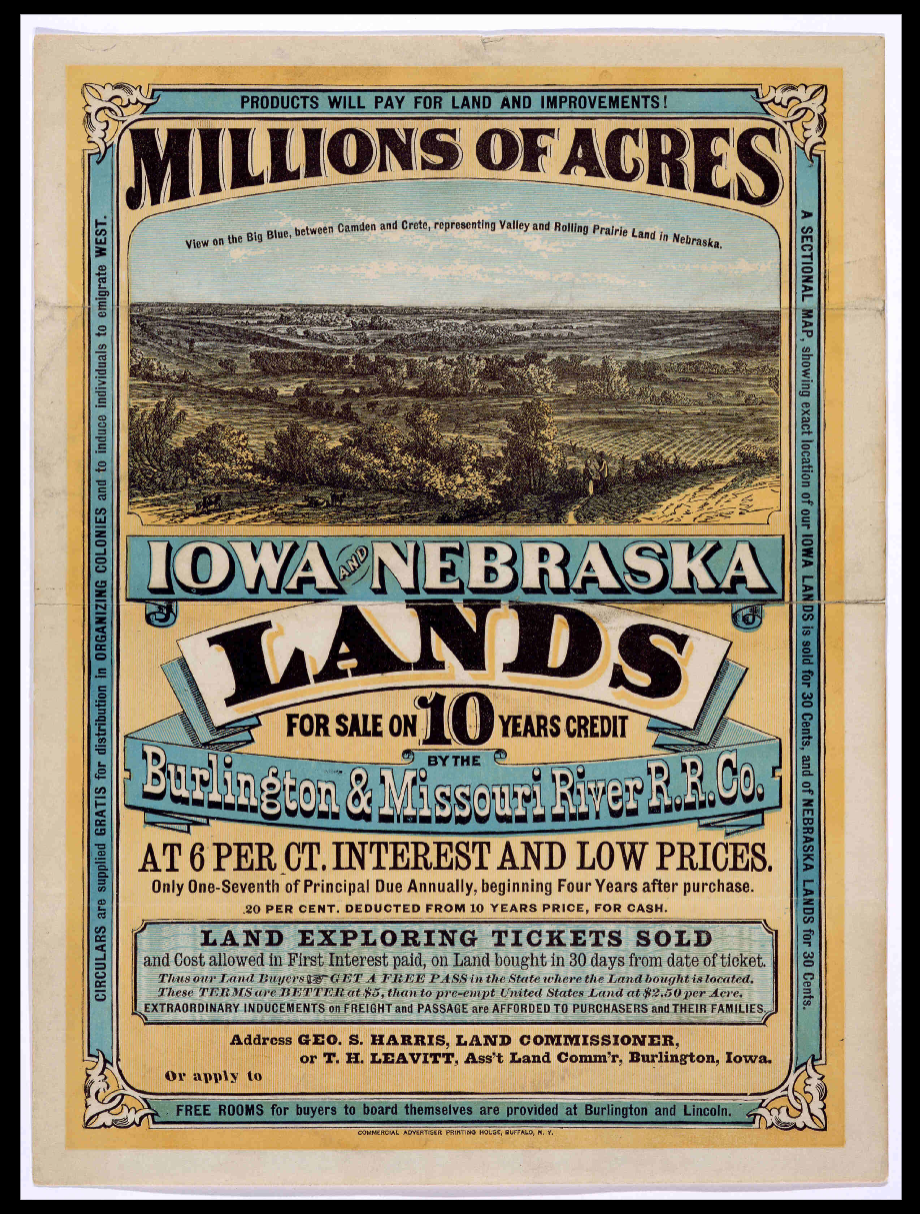
As the 1872 advertisement from the Burlington & Missouri River Railroad Co. illustrates, land was also available under other terms. The promise of progress brought by the railways was presented in glowing language, as in this news item, predicting that due to the Homestead Act and the Pacific Railroad, "emigration will certainly be very large even before the War is over":
"The construction of the Road will require a vast amount of labor, and consequently vast quantities of provisions.—Whenever the road is commenced, Nebraska will furnish a better market for produce than any other portion of the United States West of the Allegheny Mountains. Not only will the laborers need provisions, but the emigration that comes into the Territory each year will have to procure their living; large cities will spring up as if by magic, and will create a home demand for all that can be produced. We think the "good time coming" for Nebraska cannot be much longer deferred. We have a bright future ahead of us." (Nebraska Advertiser (Brownville, Nemaha County, N.T. [Neb.]), May 29, 1862 Library of Congress, www.loc.gov/item/sn84020109/1862-05-29/ed-1/)
Much is being glossed over here, since the "we" and "us" contemplating this bright future are primarily white settlers (I haven't yet explored the stories of black homesteaders, but here's a place to start: https://www.nps.gov/home/black-homesteading-in-america.htm).
This brochure from the Department of the Interior spells things out more overtly:
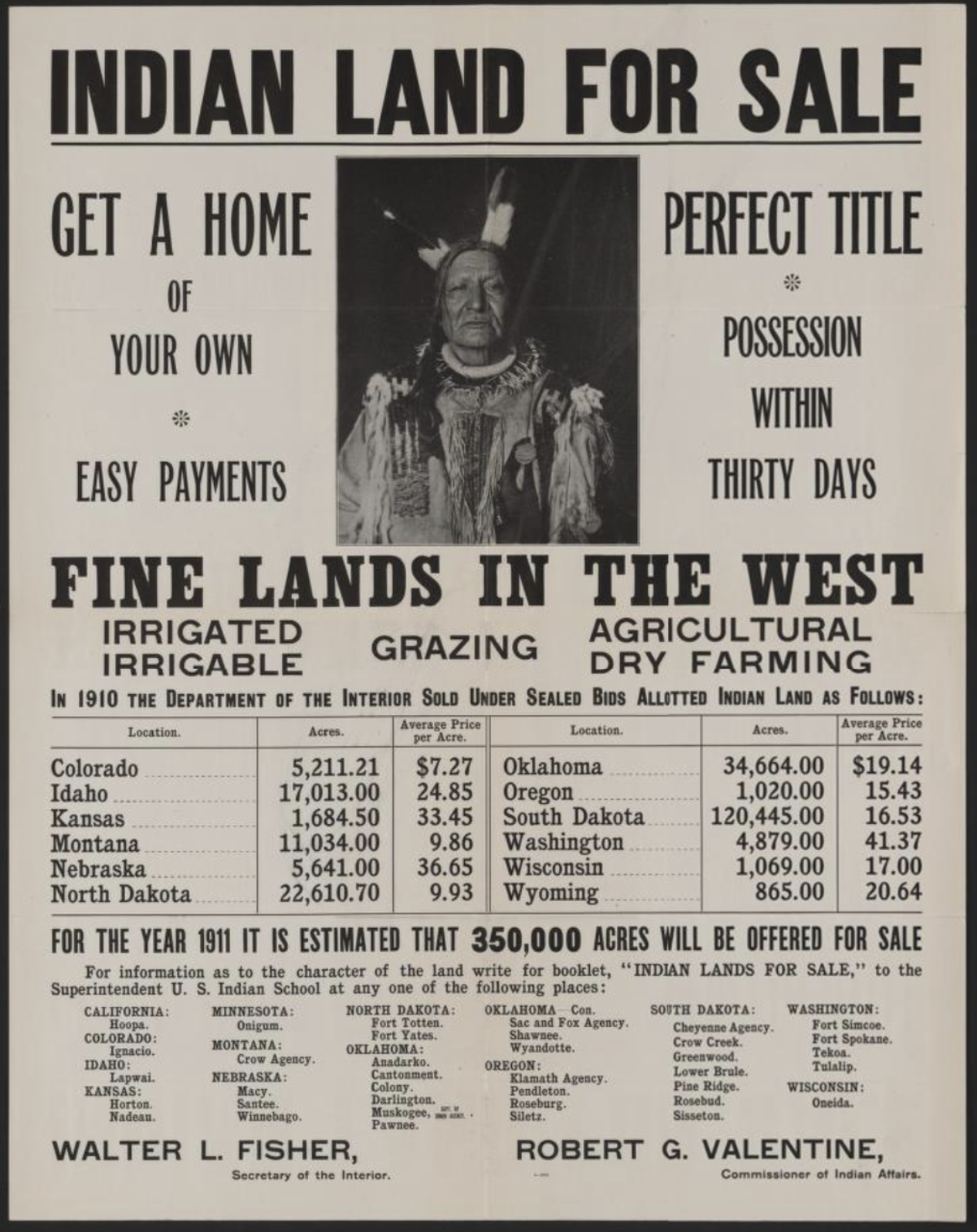
I have a lot more to learn, to understand the details about how the government became the real estate agent for those acreages. But while reading about it on the National Park Service website, I found this description of how the Homestead Act impacted native peoples:
"In Homesteading the Plains: Toward a New History (2017), the researchers found three major patterns across the western states: virtually no impact, minor impact, and direct impact.
- Nebraska- “most Indian land titles were cleared before 1862, and forces other than homesteading produced virtually all dispossession."
- Colorado and Montana- "dispossession preceded homesteading by several decades, and the primary drivers of dispossession were mining interests, railroads, land speculators, and big cattle ranchers, with homesteading playing a very minor role."
- Dakotas and Oklahoma- "homesteading was an important driver of dispossession.” https://www.nps.gov/home/learn/historyculture/native-americans-and-the-homestead-act.htm
Even for areas considered "no impact" or "minor impact," these patterns don't really reflect well on the Homestead Act. As I read it, it simply means that prior impacts of colonization had already depredated indigenous communities.
Documenting, Portraying, and Interpreting Histories
As much as I appreciate that so much information and valuable archival material is at my fingertips, I have doubts and concerns. Recent governmental attempts to re-write history are raising questions:
How long will we have access to primary documents, and how much of the information given about those primary materials and the events they document, can now be considered reliable?
We've already witnessed last year's firing of the Librarian of Congress. Then there was the attack on Kim Sajet:
 Léonie Chao-Fong
The Smithsonian has been under extreme pressure since then:
 Deena Zaru and Elizabeth Thomas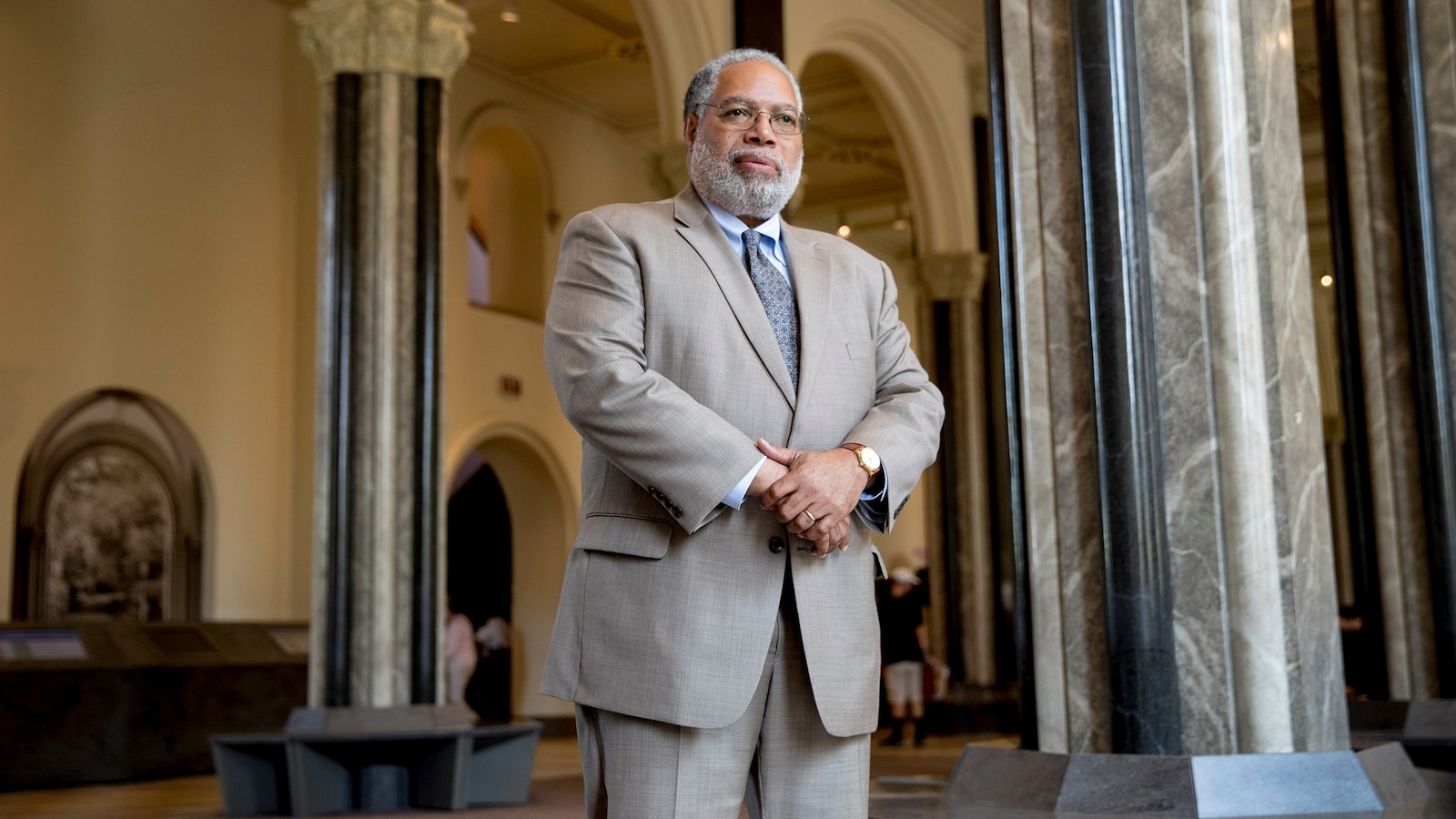
And here's what's threatening the National Archives right now:
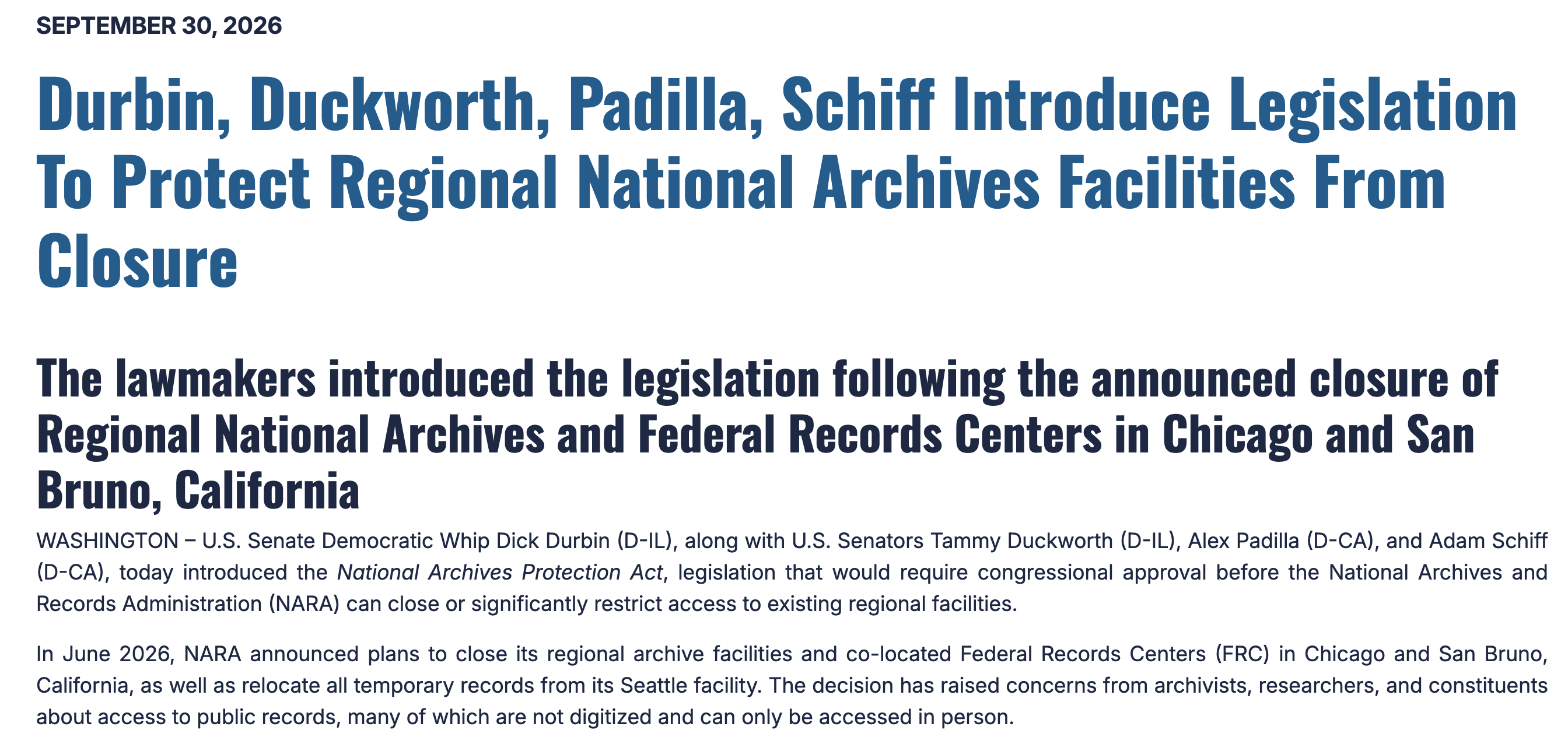
Full article here: https://www.durbin.senate.gov/newsroom/press-releases/durbin-duckworth-padilla-schiff-introduce-legislation-to-protect-regional-national-archives-facilities-from-closure
This governmental interference isn't limited to staffing, or what happens inside museums and galleries, but is impacting all kinds of information. This is especially noticeable when it comes to interpretive signage in national parks:
 Amy Qin and Flávio Pessoa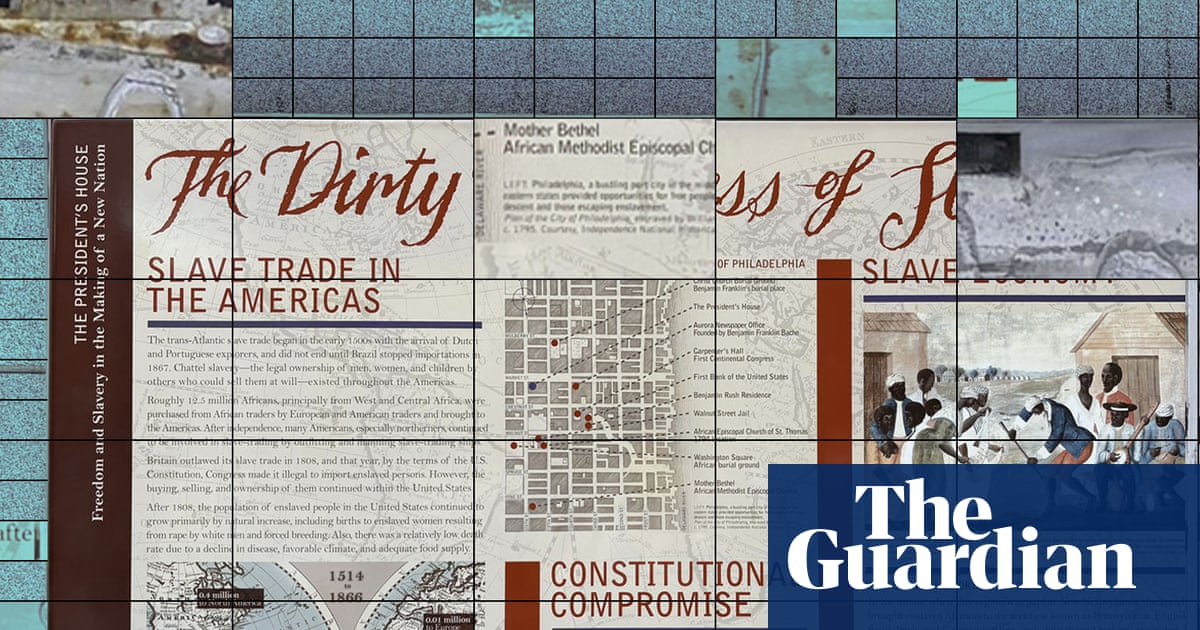
The Guardian article led me to this website that is collecting photos from park visitors, to help document the changes:
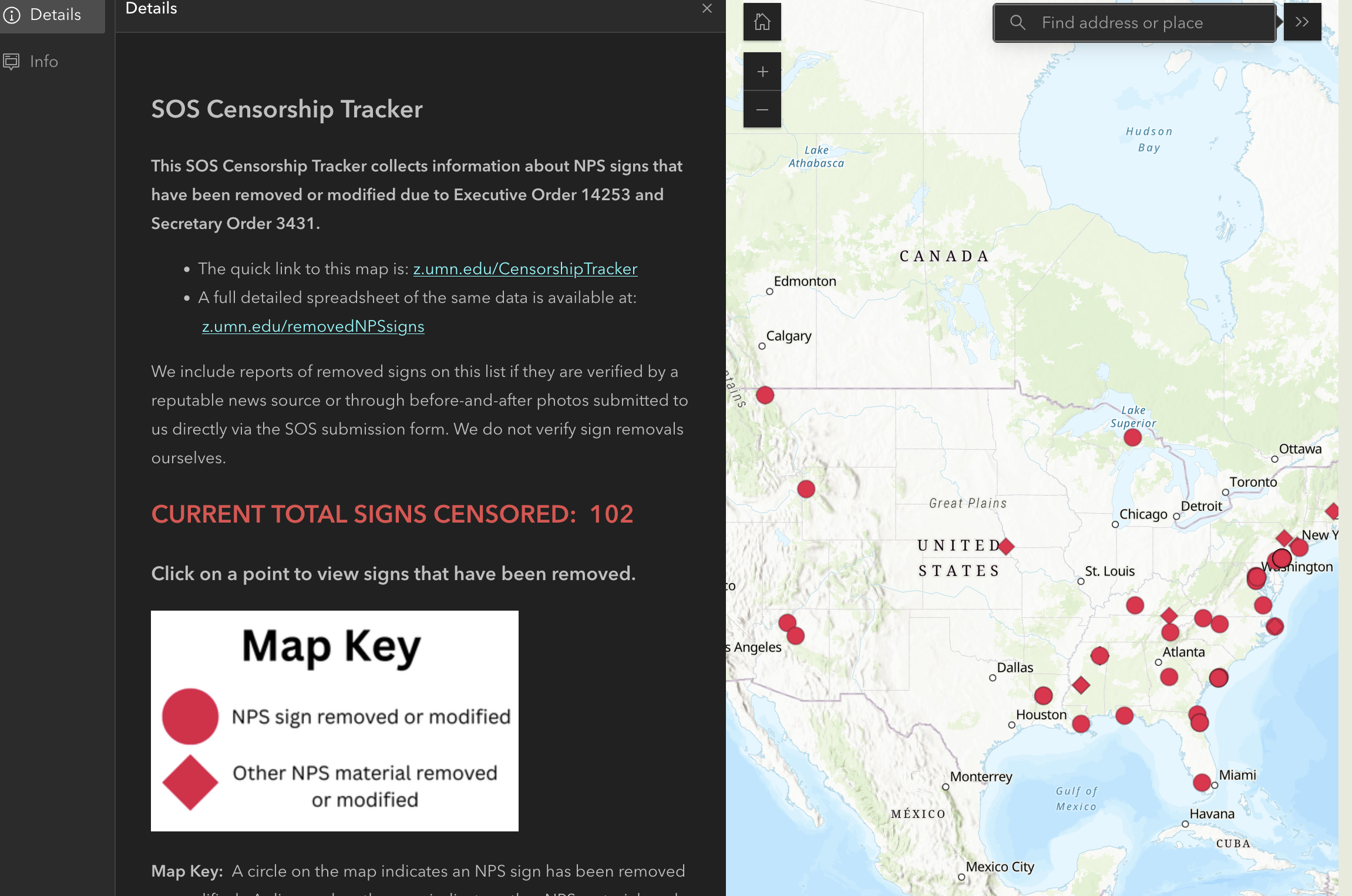


You can send your photos to them, as one small way to document the issue.
This article provides more information about the range of changes being implemented: The 19th News, National park signs on women and LGBTQ+ history are disappearing. Librarians are preserving the record
And this offers additional tracking of the scale of the problem:
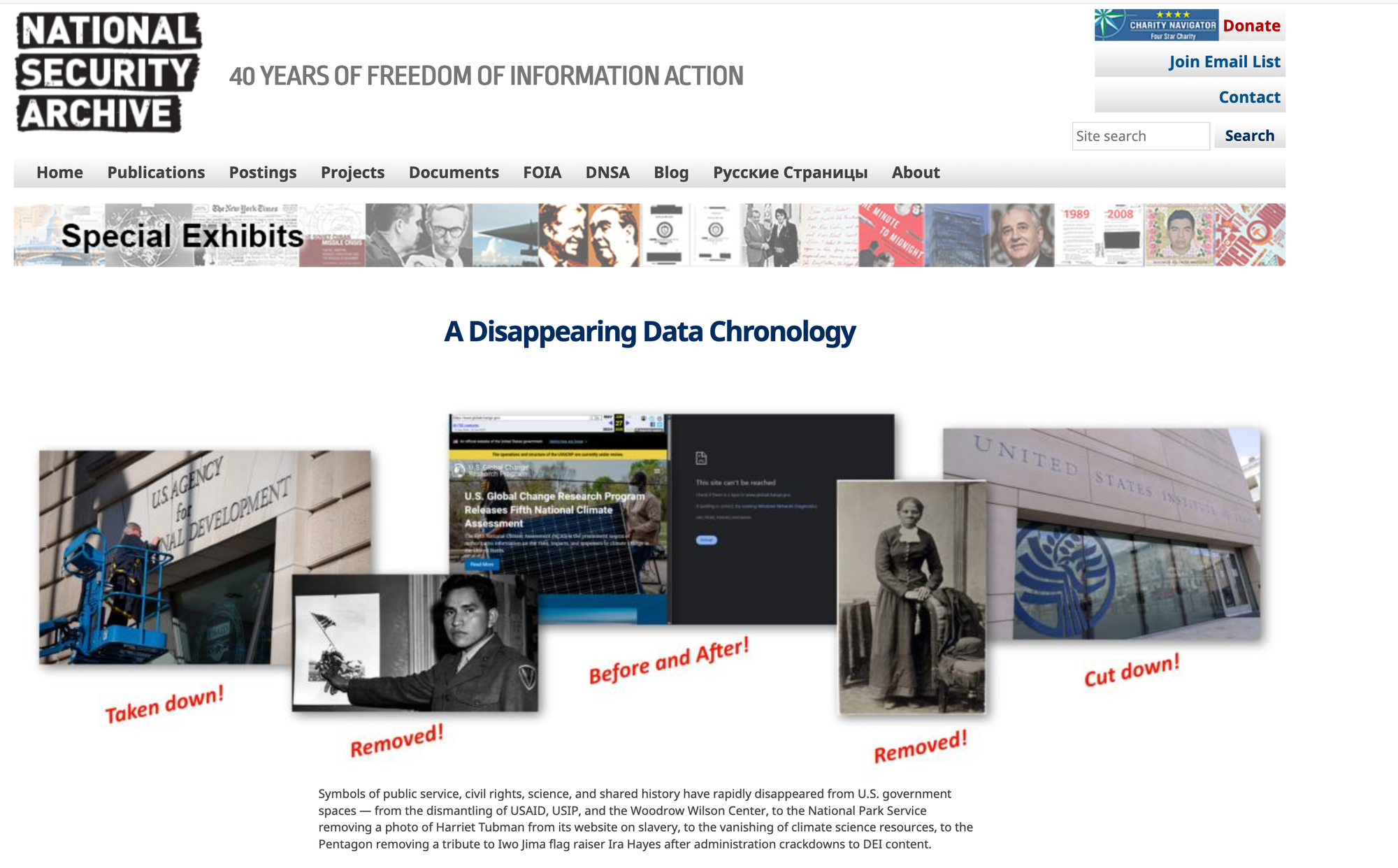
 nsarchivgwu.edu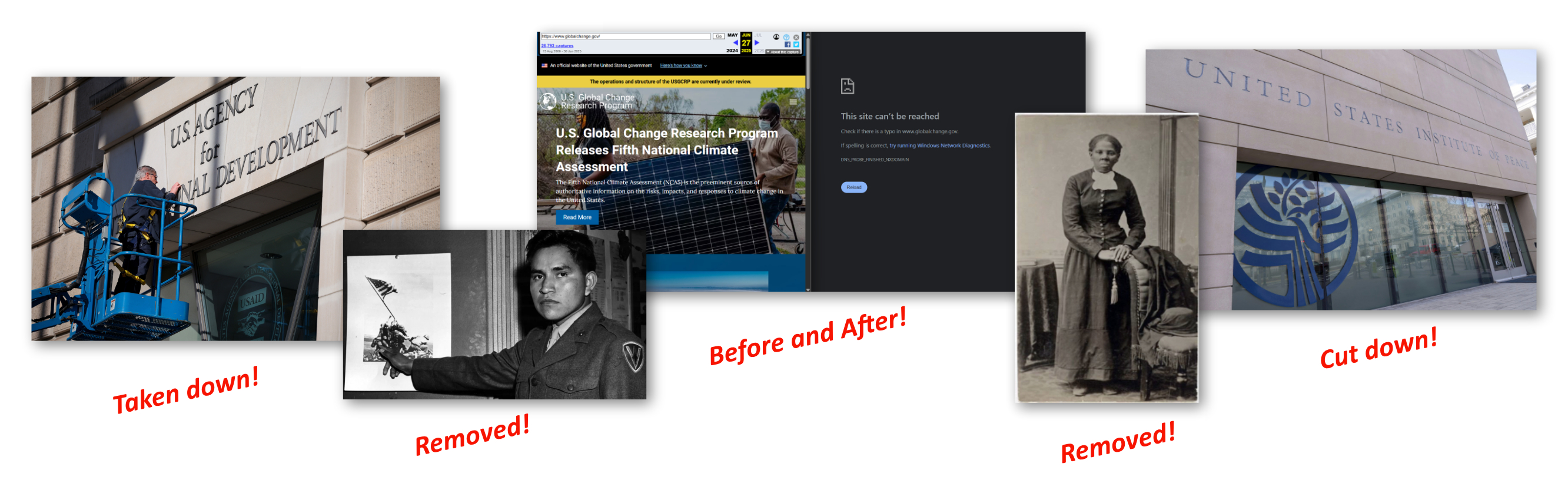
Without public resources provided by the National Archives and the Library of Congress, I would be missing a huge part of the picture of my ancestors' experiences as immigrants and emigrants in this country. These institutions also offer educational resources to teachers, thus influencing the way history is presented in schools.
The removal and alteration of materials on websites, in museums, and at national parks does a grave disservice to the public, and to our ability to imagine and act our way into a more just, equitable, and environmentally sustainable society.
This last image shows how these changes are part of a larger effort to alter the relations we have with the rest of the world:
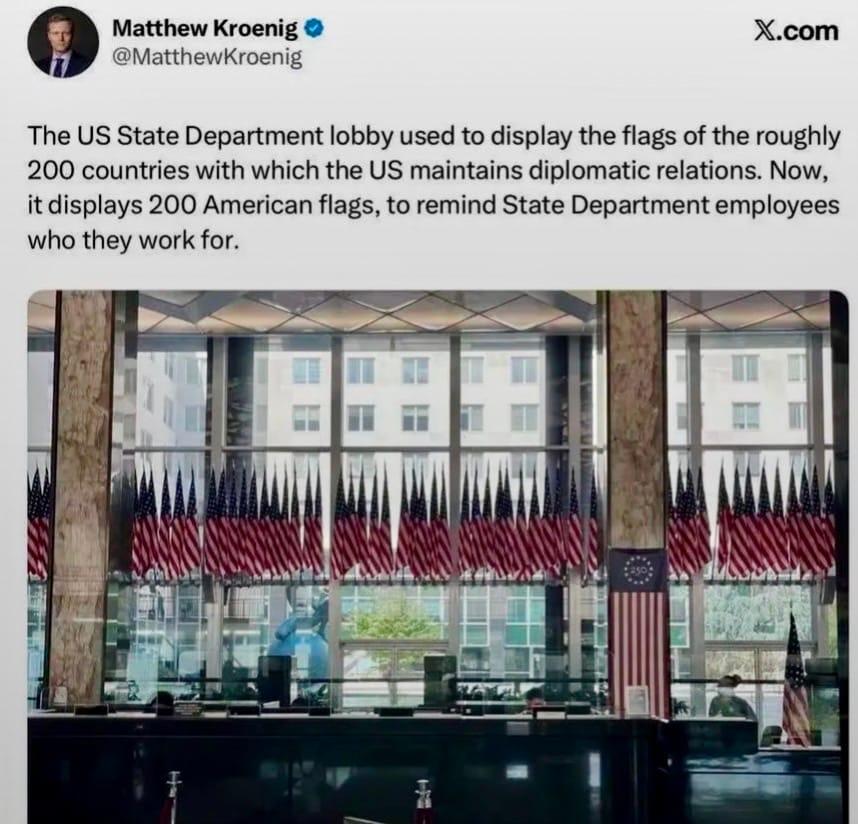
I hope you'll consider how you might personally respond, whether it is through your votes, your calls to elected officials, your donations to organizations, your conversations with others, or your photos of park signage. If you know of other resources or avenues for action, I invite you to share them here. Thank you so much for reading!