Nations within a Nation: Perspectives on 250 Years
The Executive Order to change the Gulf of Mexico's name in January 2025 foreshadowed more "Donroe Doctrine" to follow. In a year and a half, the president has proclaimed his designs on many countries. He's declared aspirations to absorb, govern, renovate, conquer or subjugate Greenland, Canada, Gaza, Venezuela, Iran, and Cuba. Oh, and let's not forget the Panama Canal. I guess we shouldn't be surprised that one who admires strongman leaders and desires kingly powers also has imperialist urges. Plus, such urges have a long history here.
While cities and towns, museums, and organizations observe the 250th anniversary, it's a good time to take a hard look at the already-seized lands. As a person of settler stock, I've been seeking perspectives from the people over whose homelands the United States has long-superimposed itself.
I've already shared some thoughts about this, here:
 Ruth Ann Smalley
Since I've begun studying the history of the places I have lived longest—Pella, Iowa and Albany, New York—I've become ever more curious about what, exactly, most of us settler descendants actually know. How well-informed are we, not only about land history in the country as a whole, but also closer to home? How much do we know about what's happened in the precise lands we live upon?
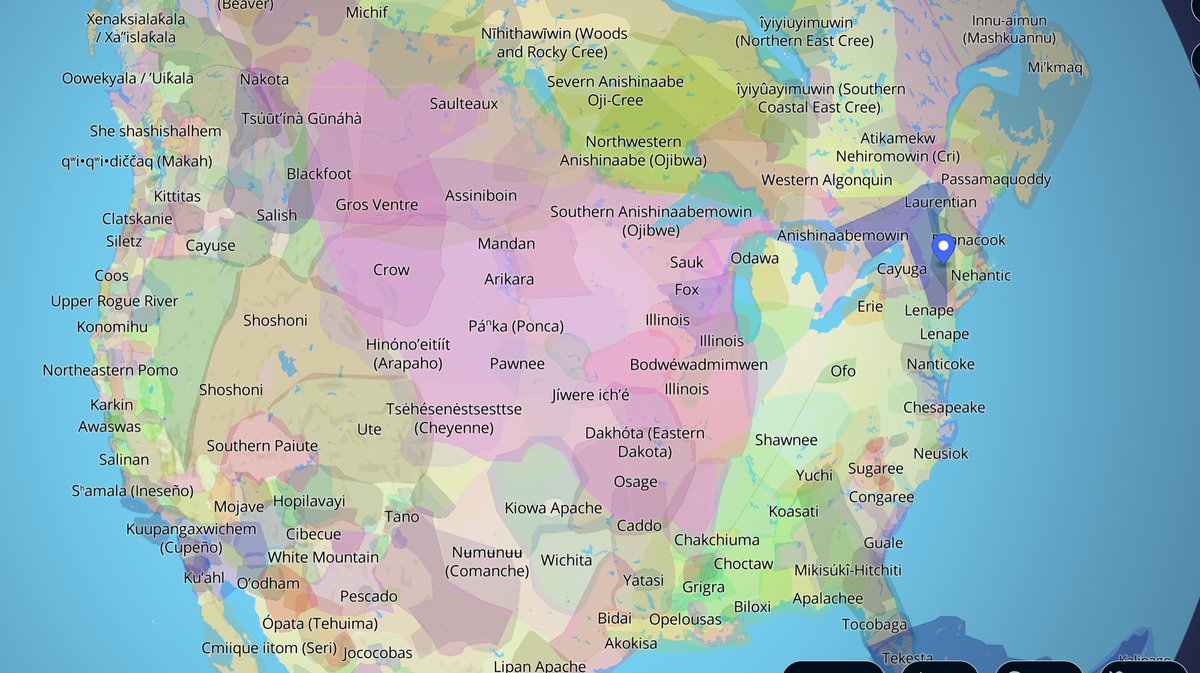
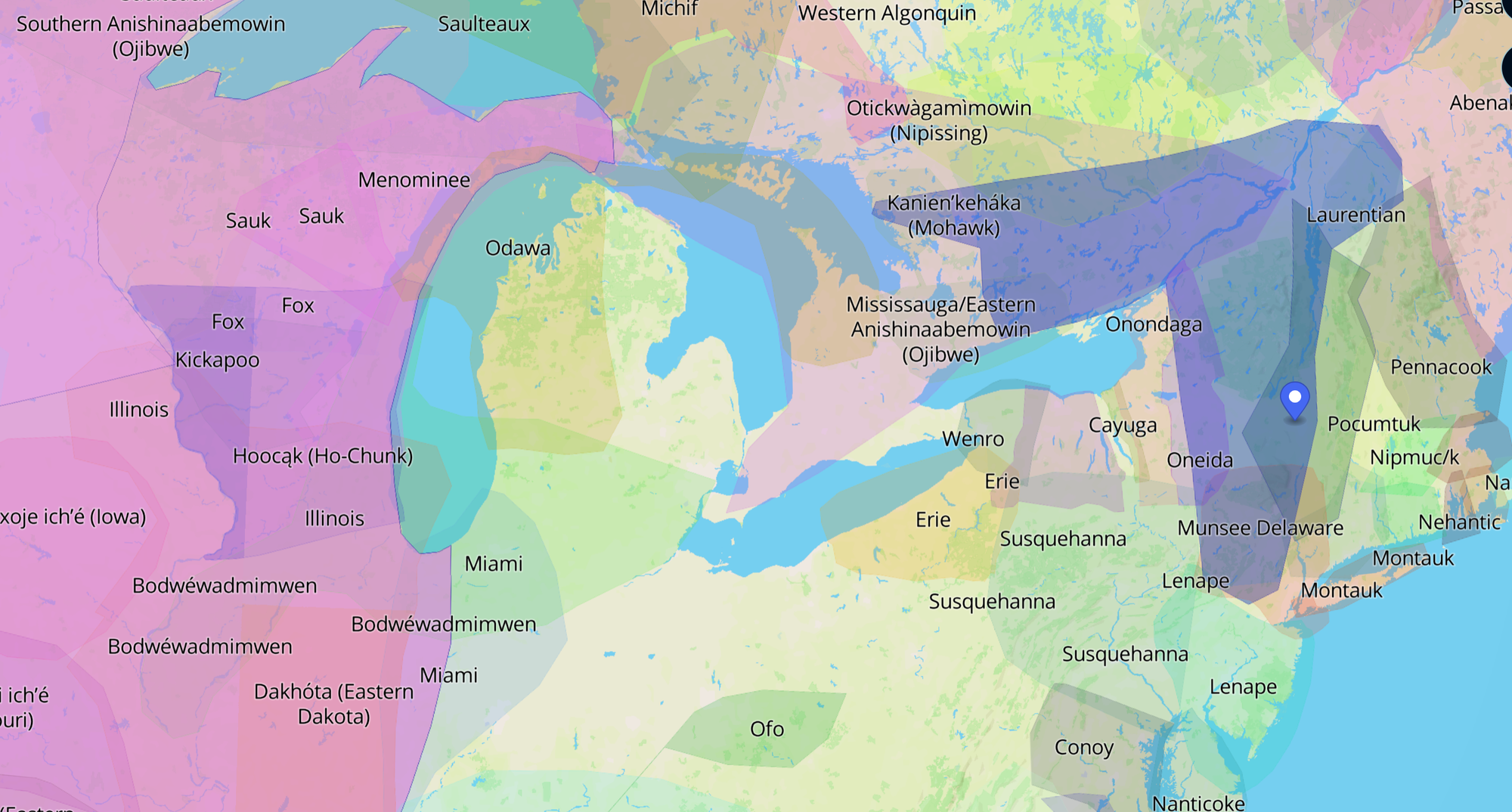
One good place to ponder this is Native-land.ca. I've been looking at their set of interactive maps, showing native territories, languages, treaties, and networks of interactions. So far, my personal answers to the above questions are "not very, and not much." There's so much I never learned about.

Here's the area I've been exploring through my family's personal history. When you zoom in on-site, additional groups show up in deeper layers. The sheer number of tribes gives the lie to the myth many of us were raised with—that this country started as a mostly-empty wilderness with a few scattered tribes.
Starting Close to Home
Last weekend, we visited the Iroquois museum about 45 minutes away. I'd been there once, twenty years ago; I was curious about this year's exhibit. This line describing "Talkin' bout A Revolution: A Haudenosaunee Response to the 250th," struck me:
Parades, reenactments, and commemorations of the founding fathers focus on the hope and heroism that have come to symbolize the birth of a new nation, while largely disregarding its decisive impact on Indigenous nations.
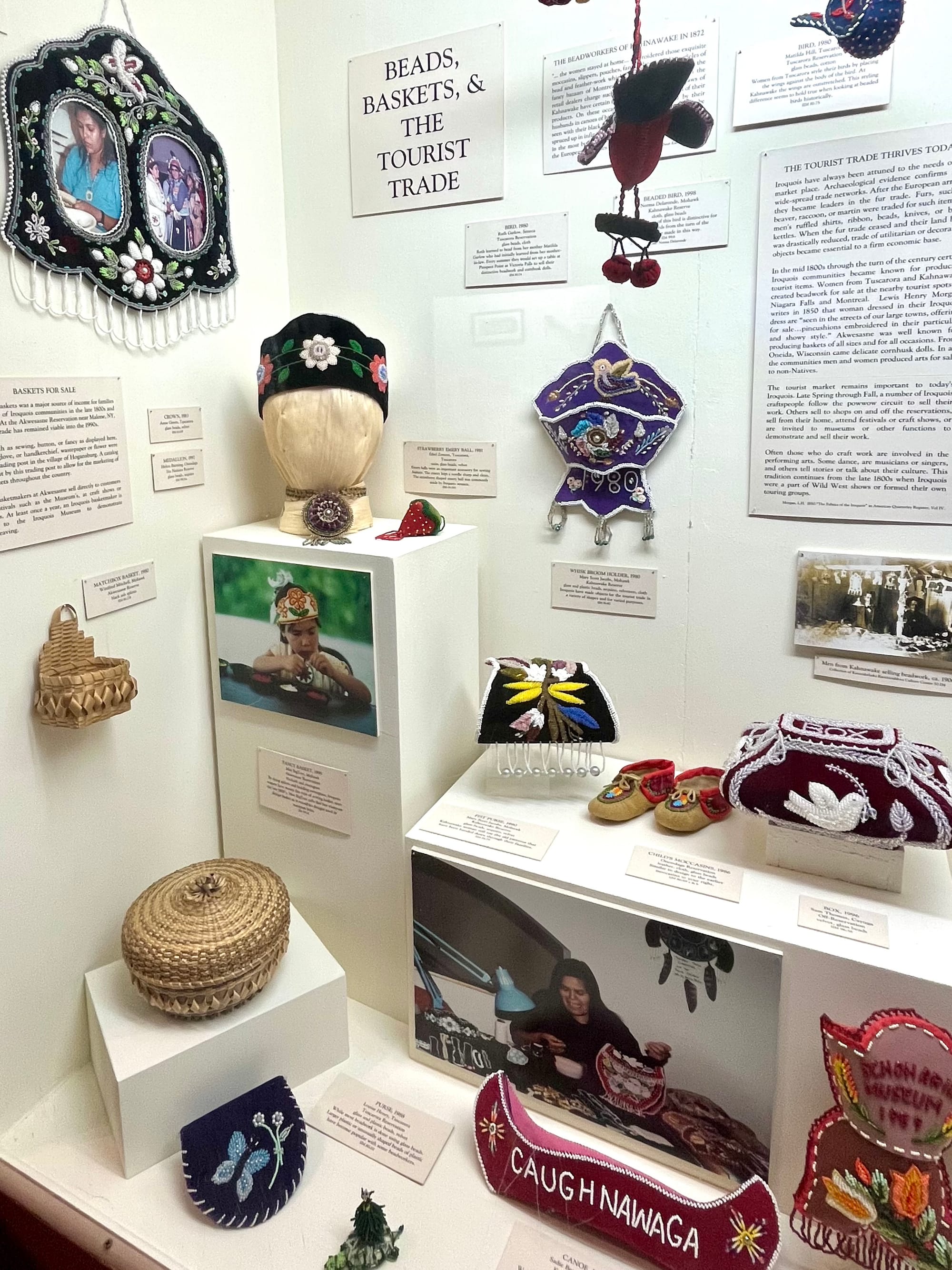
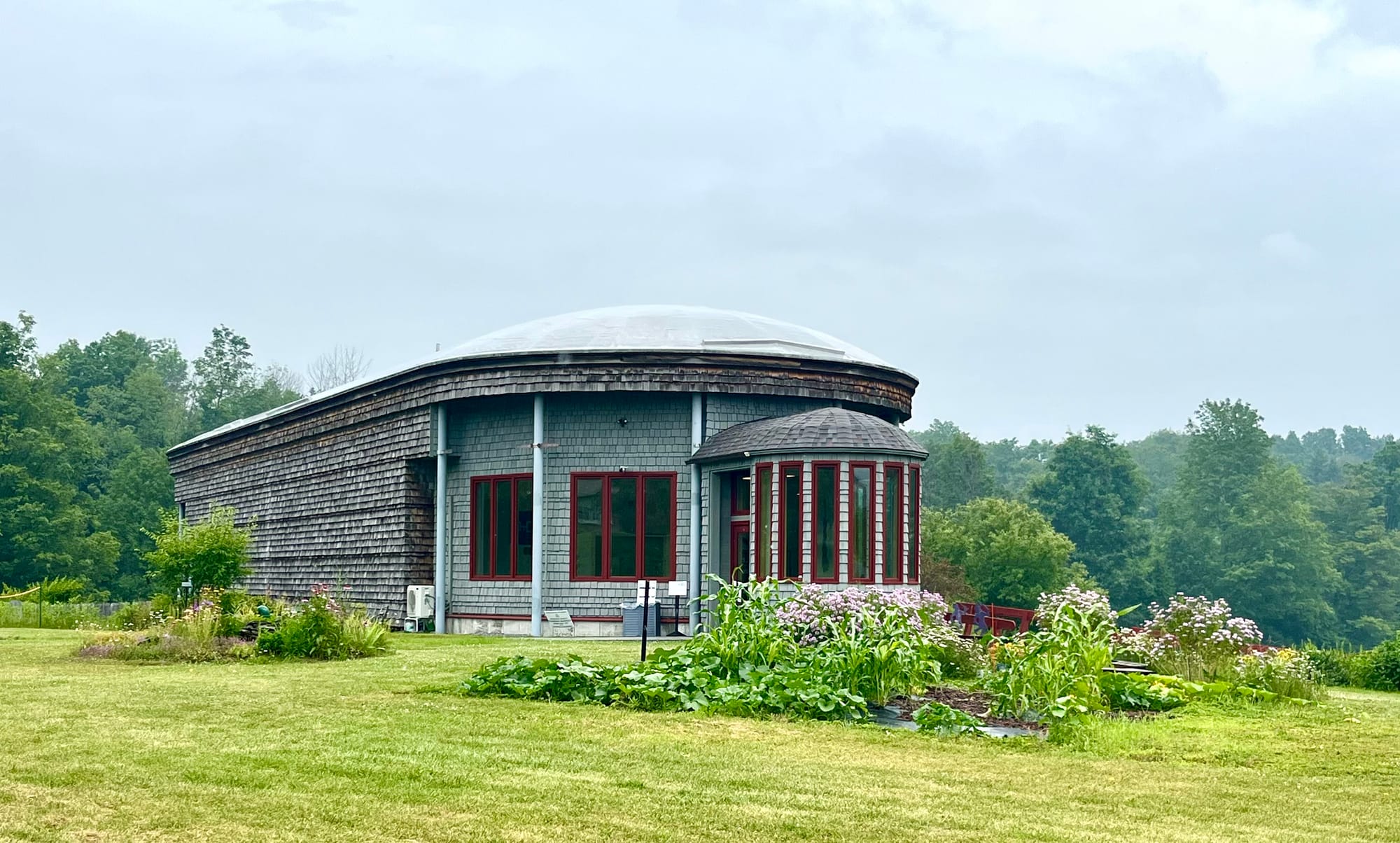
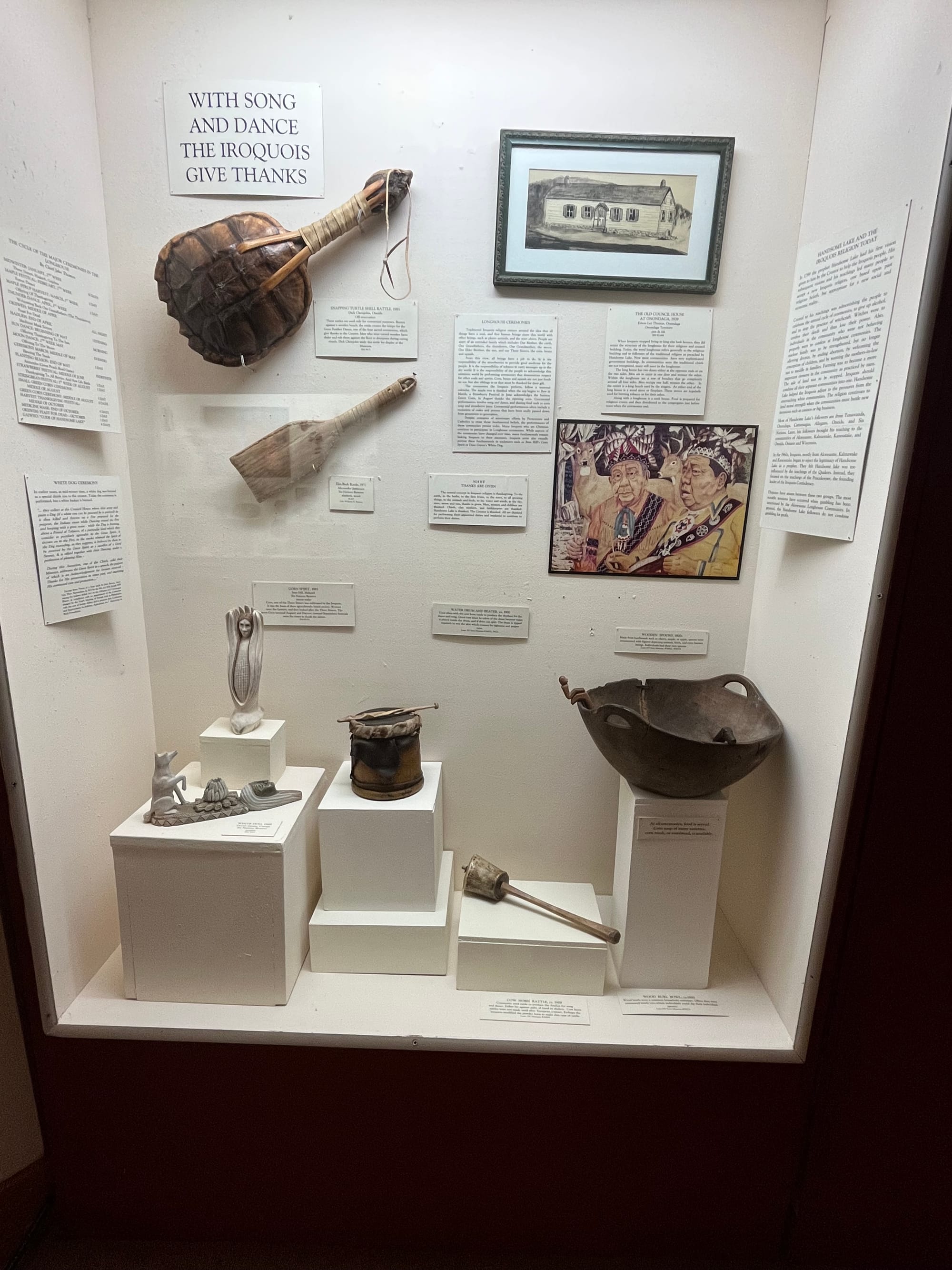
The Iroquois Museum at Howes Cave, NY. highlights past and present Iroquois lifeways and artists in its longhouse-inspired building.
An exhibit on residential schools, held over from last year, speaks incisively to these impacts. Ben Franklin and Thomas Jefferson blatantly articulate the governing attitudes, pretty much from the beginning. One caption quotes Franklin's assertion:
"And, indeed, if it be the design of Providence to extirpate these savages in order to make room for the cultivators of the earth, it seems not improbable that rum may be the appointed means."
Jefferson describes a deliberate strategy for land grabbing. It's a campaign of pressure and debt:
"[W]e wish to draw them to agriculture, to spinning & weaving. . . . when they withdraw themselves to the culture of a small piece of land, they will perceive [sic] how useless to them are their extensive forests, and will be willing to pare them off from time to time in exchange for necessaries for their farms & families. To promote this disposition to exchange lands which they have to spare & which we want, for necessaries, which we have to spare & they want, we shall push our trading houses, and be glad to see the good & influential individuals among them run in debt, because we observe that when these debts get beyond what the individuals can pay, they become willing to lop th[em off] by a cession of lands."
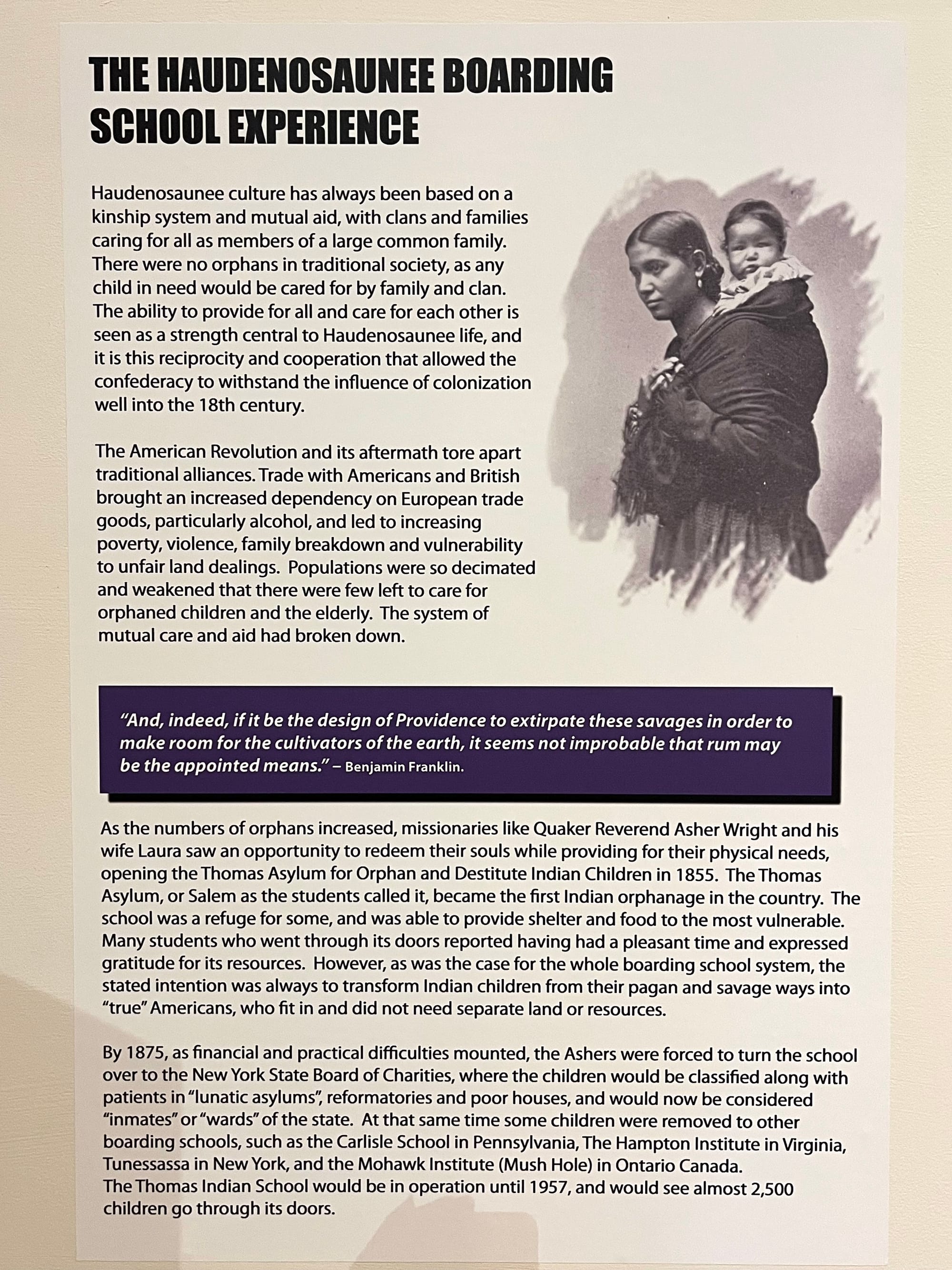
Exhibit caption at the Iroquois Museum's special exhibit on residential schools that operated well into the 20th century
Truths Pieced into Quilts, Quilts Promoting Peace
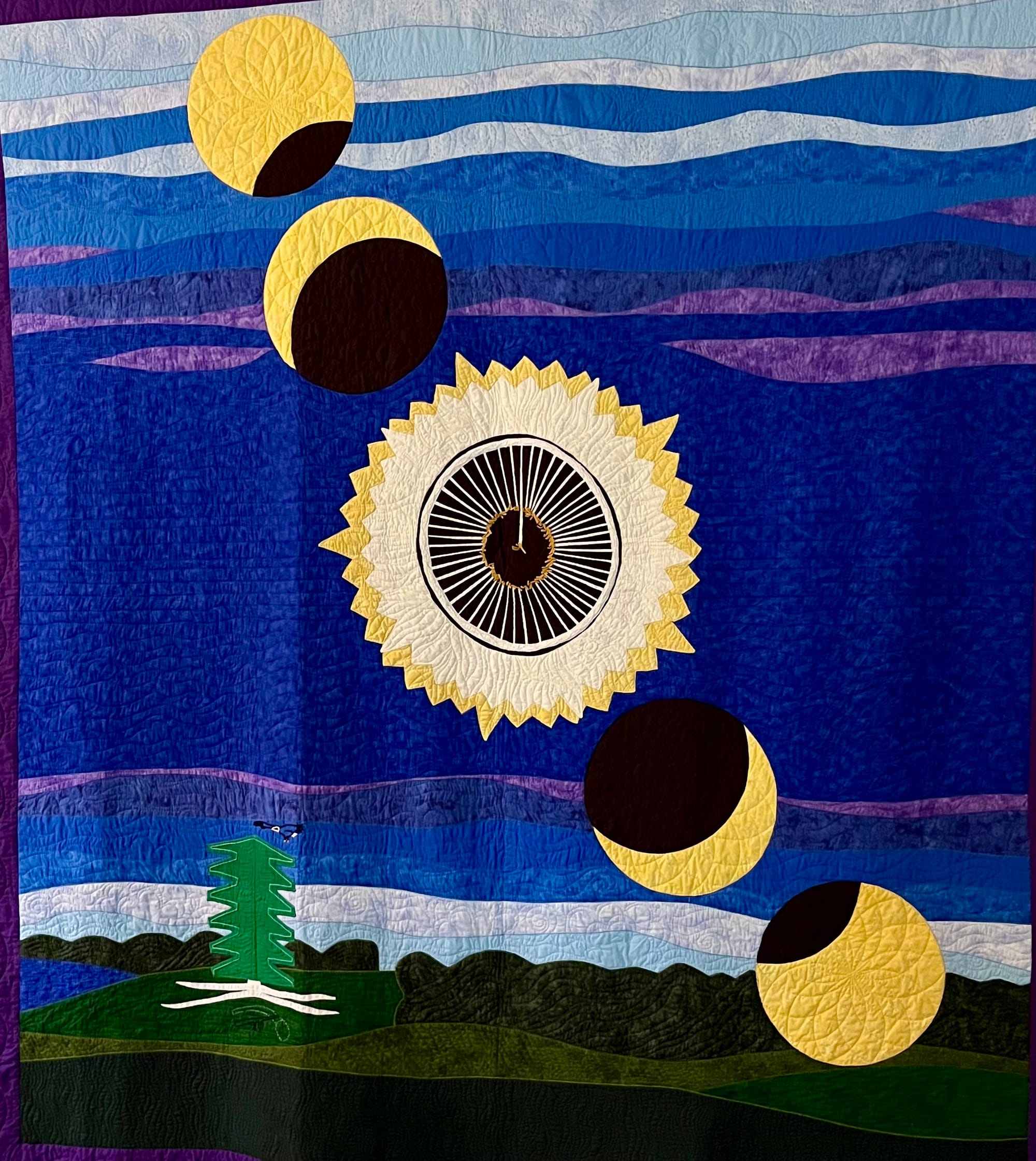
We were fortunate to be there just in time for an artist's talk by Iakonikoniriiosta (Sarah Peters). She described her quilting practice, particularly her large quilt on display, called Sken:nen Tsiotensawe, A New Beginning. It depicts the Great North American Eclipse of April 2024, in the context of the present and deep history (zoom in to see the AK-47 buried beneath the Tree of Peace). The caption notes that it shows,
"an astronomical event foretold by the Peacemaker as an indicator of the strength of the Great Law of Peace. This extraordinary phenomenon would support the launch of the Haudenosaunee Confederacy . . . Established 1,000 years ago, the Confederacy would come to serve as the basis of the US Constitution drafted in 1787."
Iakonikoniriiosta made another quilt to teach about the plight of American eels in the St. Lawrence River. This stunning piece depicts their untimely deaths due to power dam turbines.
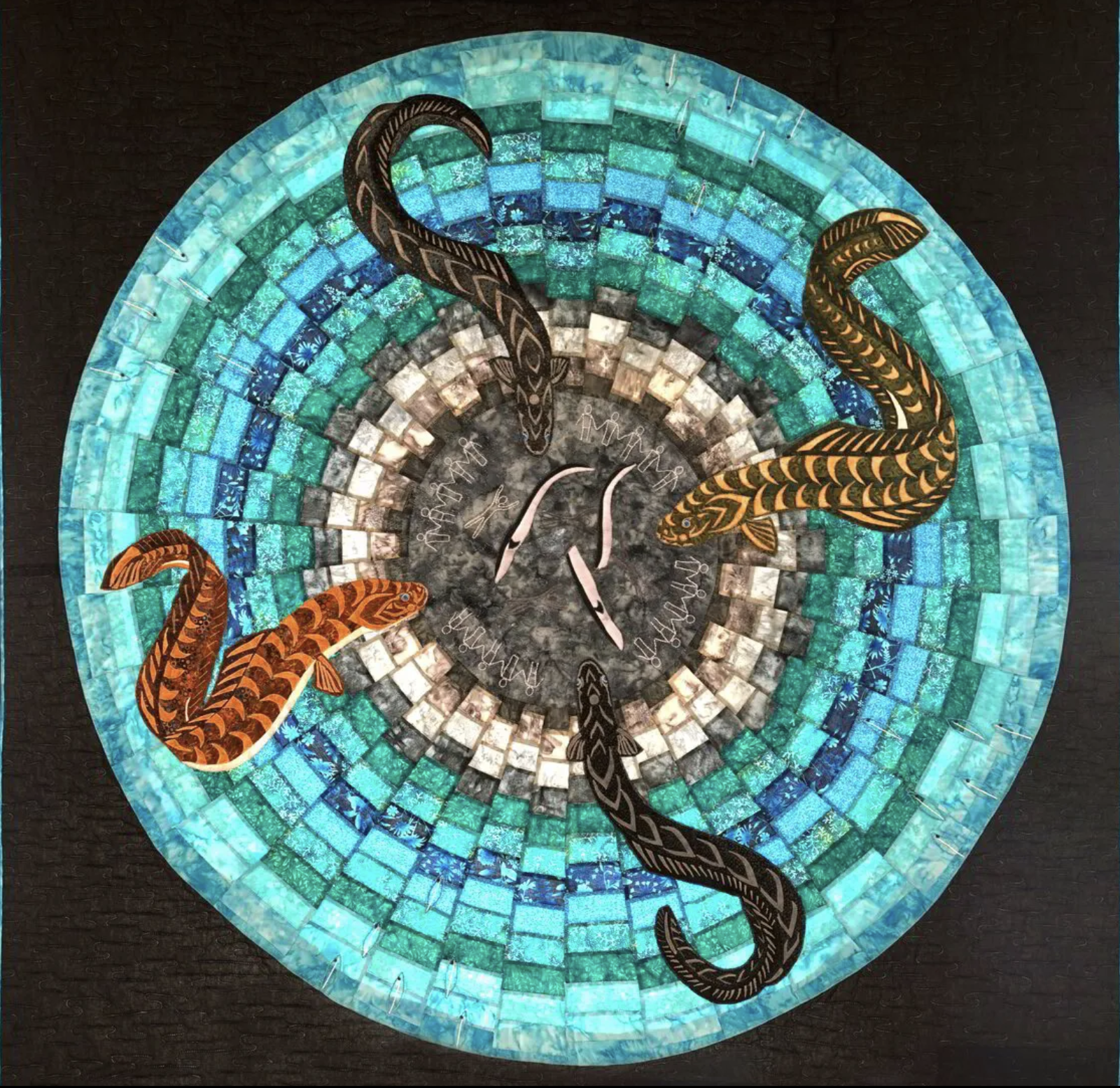
You can see close-ups at https://talkingrivers.org/sisters-in-survival, part of an amazing site concerned with the Rights of Nature. Along with the story of the eels, called Kiaweron:ko, Guardian of Oceans and Rivers, it describes work being done—work we can support—to protect and restore rivers, including around Data Center issues.

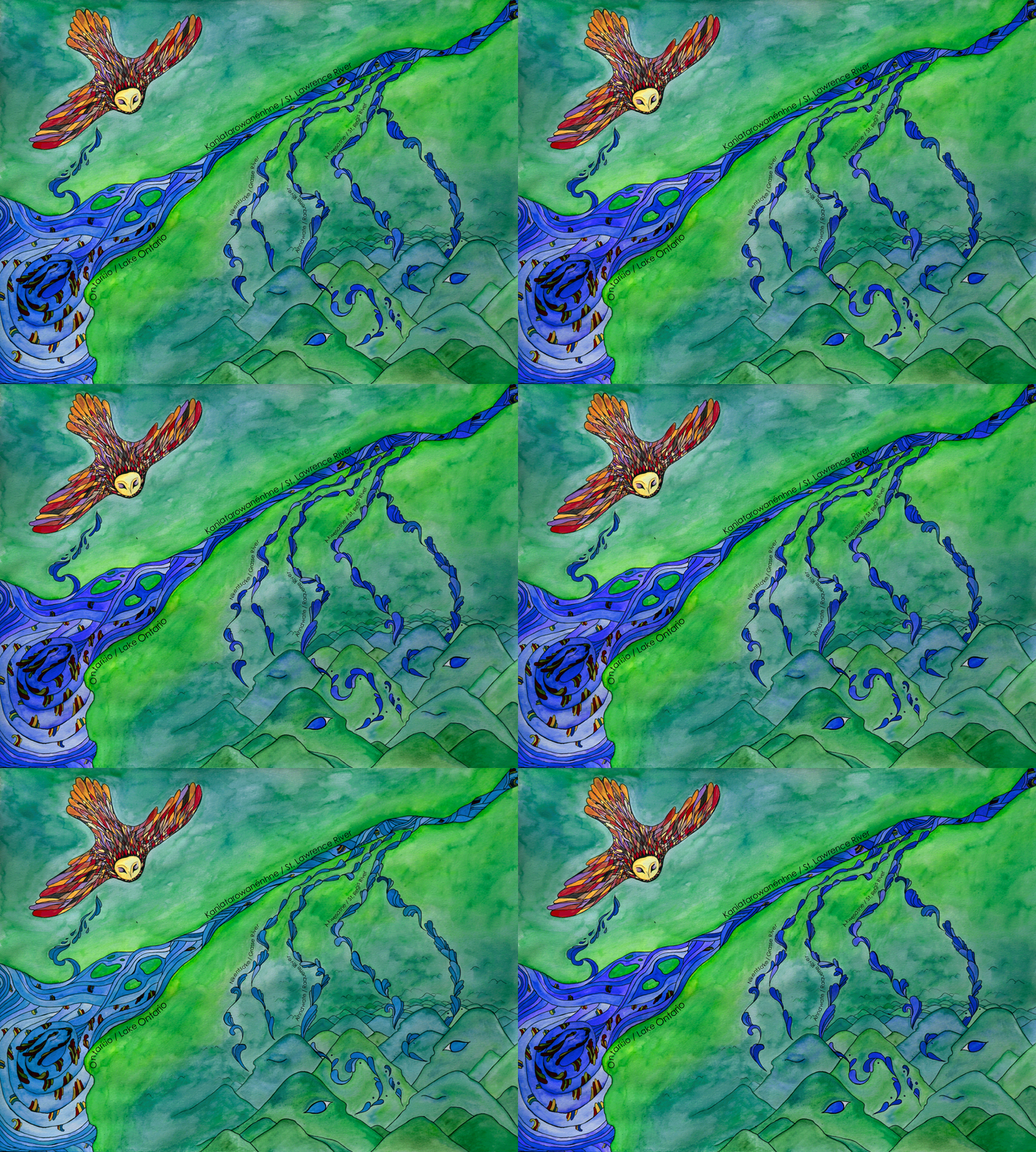
You can see more quilts here:
 - Iakonikonriiosta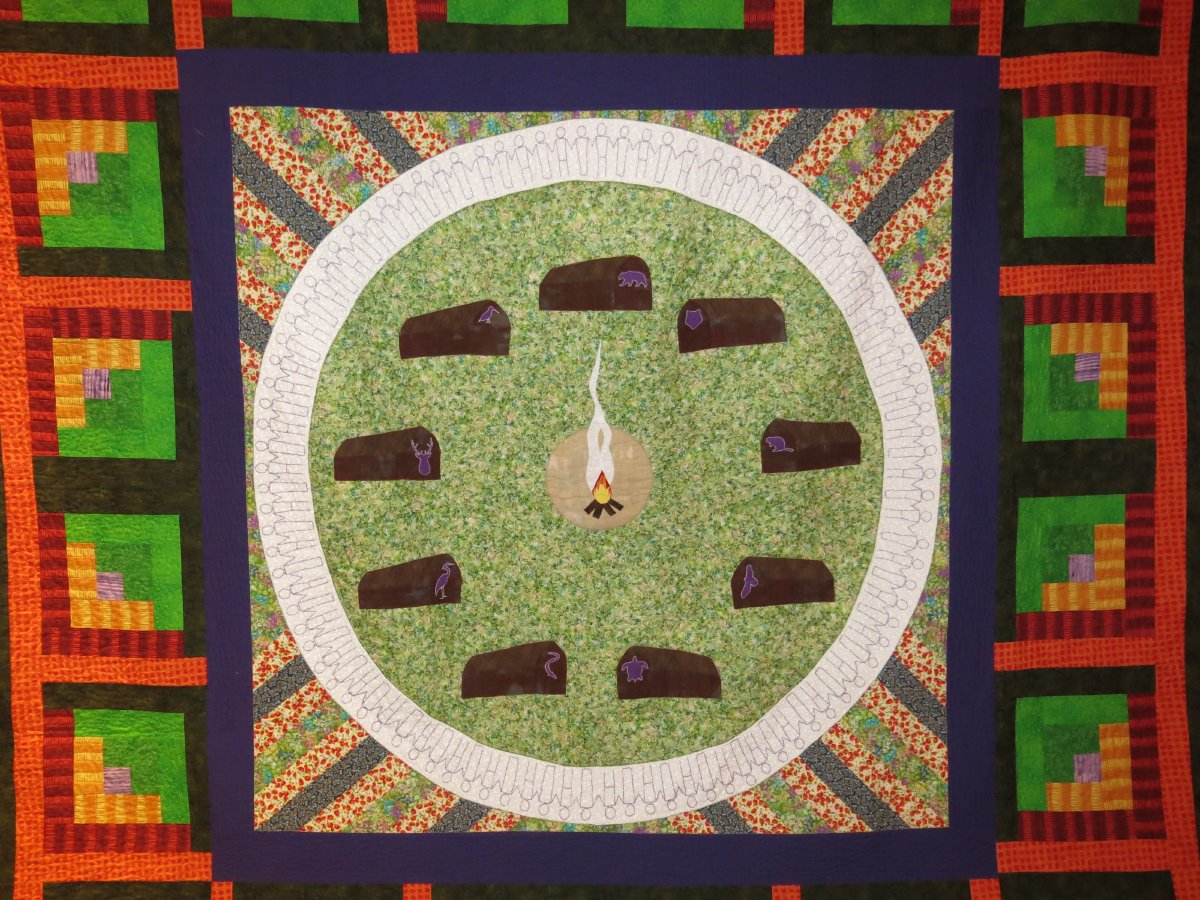
More Exhibits to Visit, Online or In Person
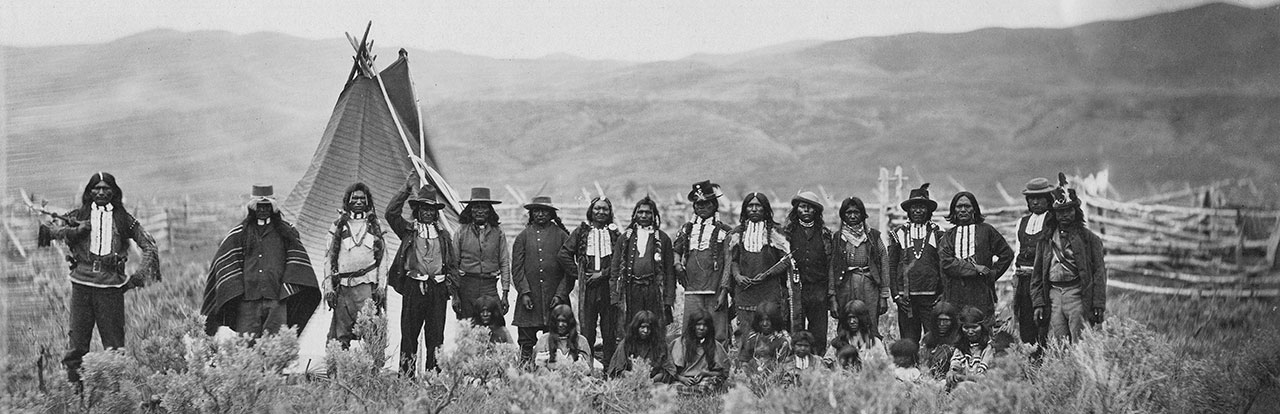
If you can't get to a museum, check their online resources. For example, here's the Heard's boarding school exhibit:

I've just scratched the surface at the Smithsonian's site for the National Museum of the American Indian, with its many interactive online exhibits:
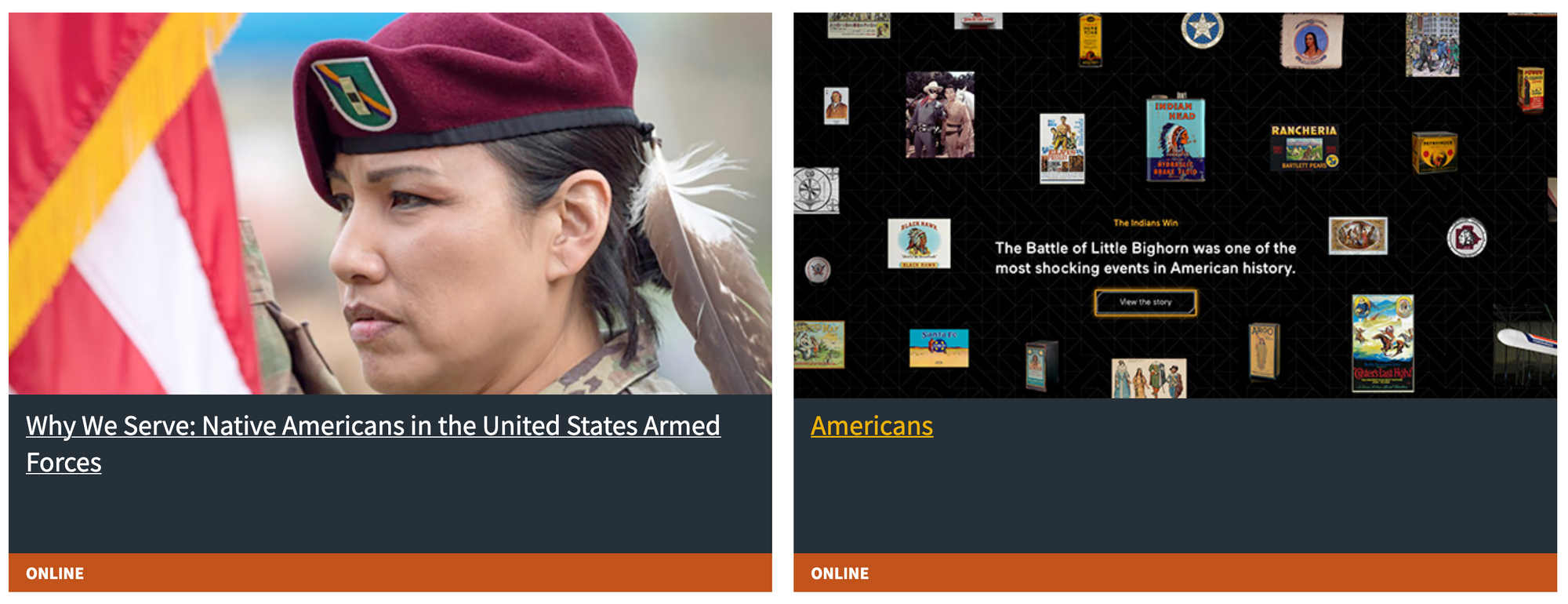
(https://americanindian.si.edu/explore/exhibitions/online, especially https://americanindian.si.edu/americans/. )
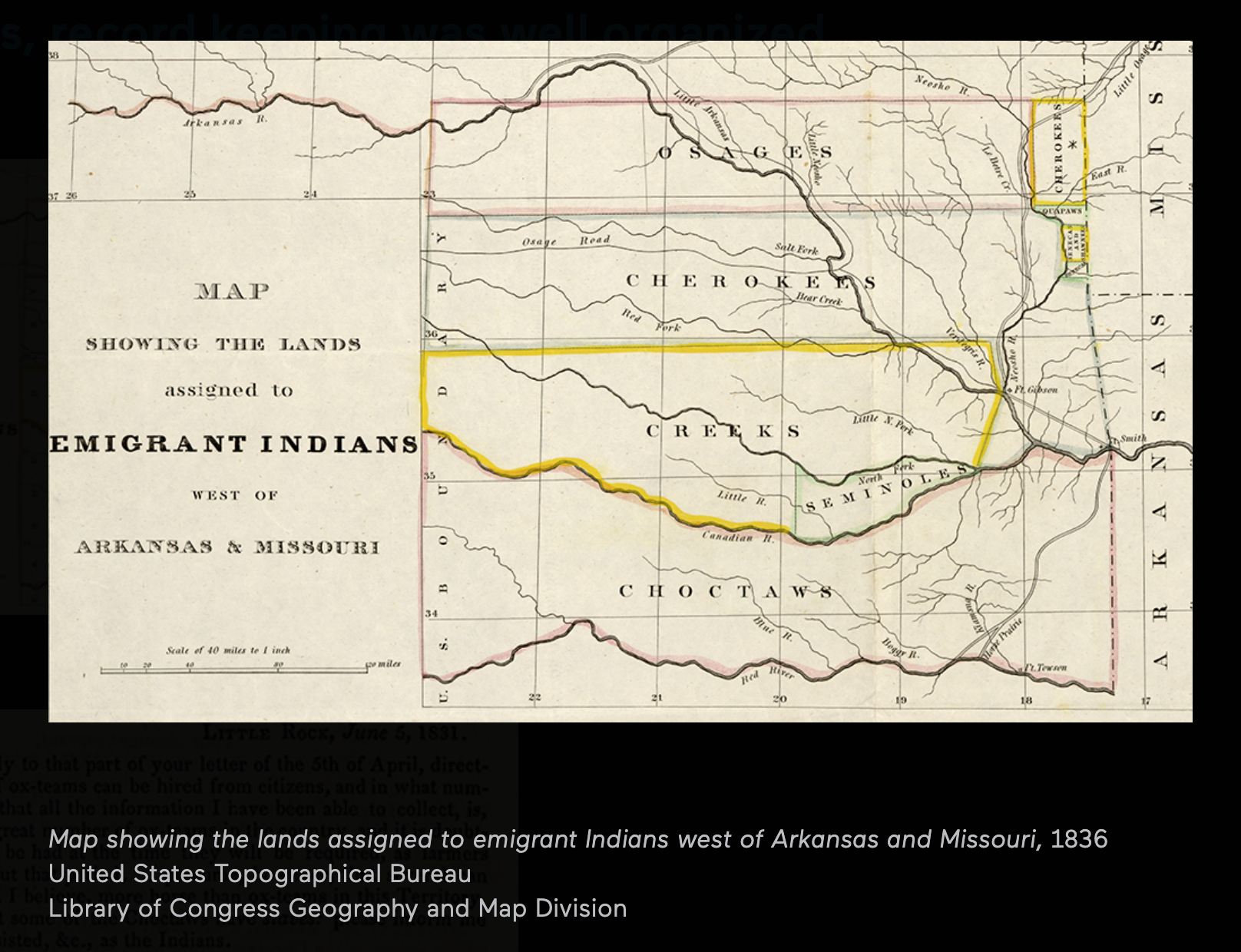
The Removals exhibit is a good place to start. I'm finding that materials in various formats sometimes cause unexpected insights, as they enter awareness in different ways. Take this 1836 map of land re-assignments, for example. Only tribe names and rivers are shown. They look like they are being filed into a set of drawers. Wouldn't it serve the purposes of states, the federal government, and land speculators to consider them boxed away like this?
For more possibilities, this guide highlights several other museums. (Note typo: the Pequot War date was 1636, not 1967!)
 Written byMichelle Palmer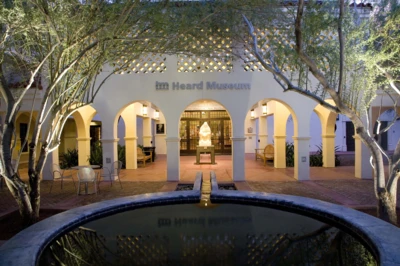
Finally, I recommend an inspiring speech by Cherokee activist, Jasmine Smith. Speaking at a Bioneer's conference, she reports on indigenous youth efforts working on the Rights of Nature, especially rivers. This movement gives me hope. I urge you to find out more and get involved.