Long Strange Trips

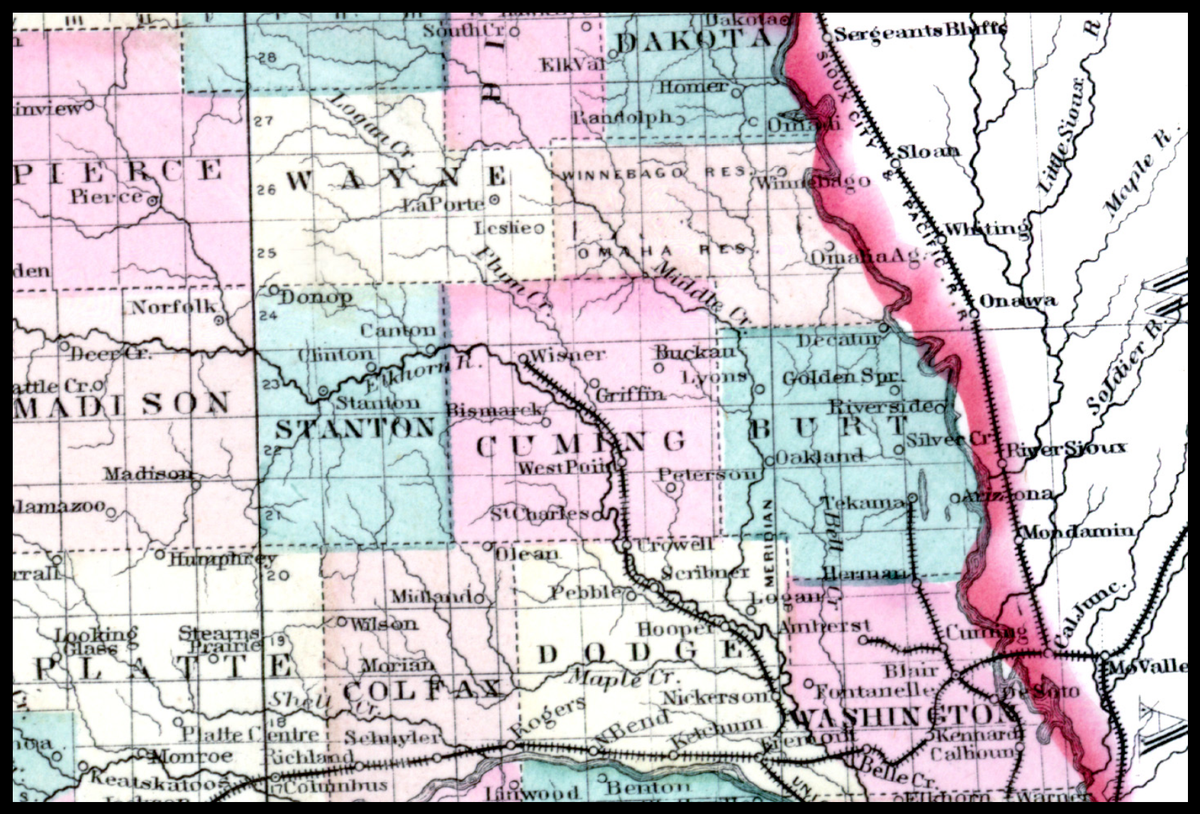
This week, while technology glitched, infrastructure ground to a halt, and even our water heater died, I tumbled down a weird historical rabbit hole. How did a map of Nebraska lead to writing about subjects as divergent as Indian Removal and Jesus Freaks? Read on to find out!
It's related to this post about my ancestor Berea Wilsey's frontier land claims:
 Ruth Ann Smalley
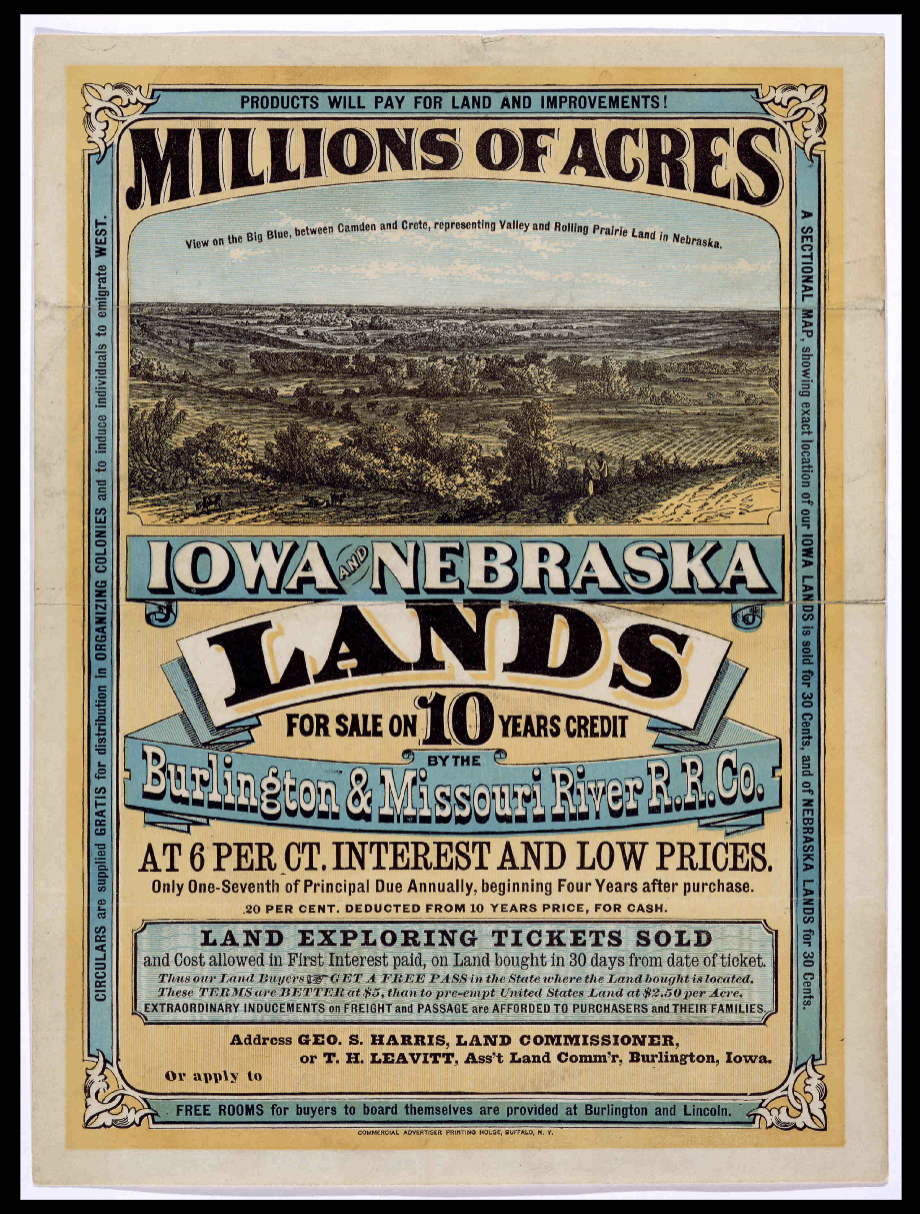
A Civil War veteran, Berea and his wife Lucy joined the stream of Northeastern settlers heading west due to the Homestead Act of 1862. They ended up in Blair, Nebraska.
Despite having grown up in Iowa, I am ignorant about Nebraska. Blair rang no bells, so I zoomed in and out on Google maps for a look around. When I caught a glimpse of some reservations, an old memory suddenly acquired new meaning.
I'd been to Nebraska once. To a reservation.
That trip puzzled me as an adolescent, and made me cringe as an adult. I was about thirteen, member of the Second Reformed Church's youth fellowship group. Our choir worked up a musical for a one-stop tour. I can't remember what we were told before our bus headed on that 6-hour round trip. I didn't even recall the reservation's name.
But according to our youth group leaders, we'd be spreading the good news. That good news: Christian worship could produce an altered state without drugs. A group of white teenagers was going to sing "Natural High" to a Native American audience.
Who ever thought this would be a good idea? How had it been arranged?
Back to the Google map. Finding that the Winnebago reservation was just north of Blair felt like a strong nudge. A look at the Reformed Church of America website confirmed it: there's an RCA church there. Time to explore this uncomfortable through line.
That Dutch denomination was planted in New Amsterdam in 1628. Like the empire they represented, the church sought to expand their reach, as described here:
"Long a pioneer in overseas mission, the church has consistently made a contribution beyond its size. The first RCA mission programs began in America in 1796, when the RCA and other denominations formed the New York Missionary Society that primarily reached North American Indians."
Within a few decades, they had missionaries in Africa, China, and India. Fast forward a century and a half: thirteen-year-old me had unwittingly been used to do missionary work.
My parents were not devout. My mother was uninterested in religious doctrines, though she spoke of her work with the disabled as a calling. We alternated between the Baptist and Reformed churches, whenever my freethinker father disagreed with the preaching.
Around the time I joined the choir, Dad handed me Thomas Paine's book on deism—a far cry from Calvinism. Called The Age of Reason; Being an Investigation of True and Fabulous Theology, it was published at about the same time RCA missions started. So, I'm not sure my parents knew what my church group was up to.
Turns out we were part of a much larger effort to tap into youth music culture, by churches desperate to get us into the pews.
My first hit on a "Natural High" search was a Facebook post from Australia. People shared recollections of performing, while the photo of young white faces could have stood in for my choir.
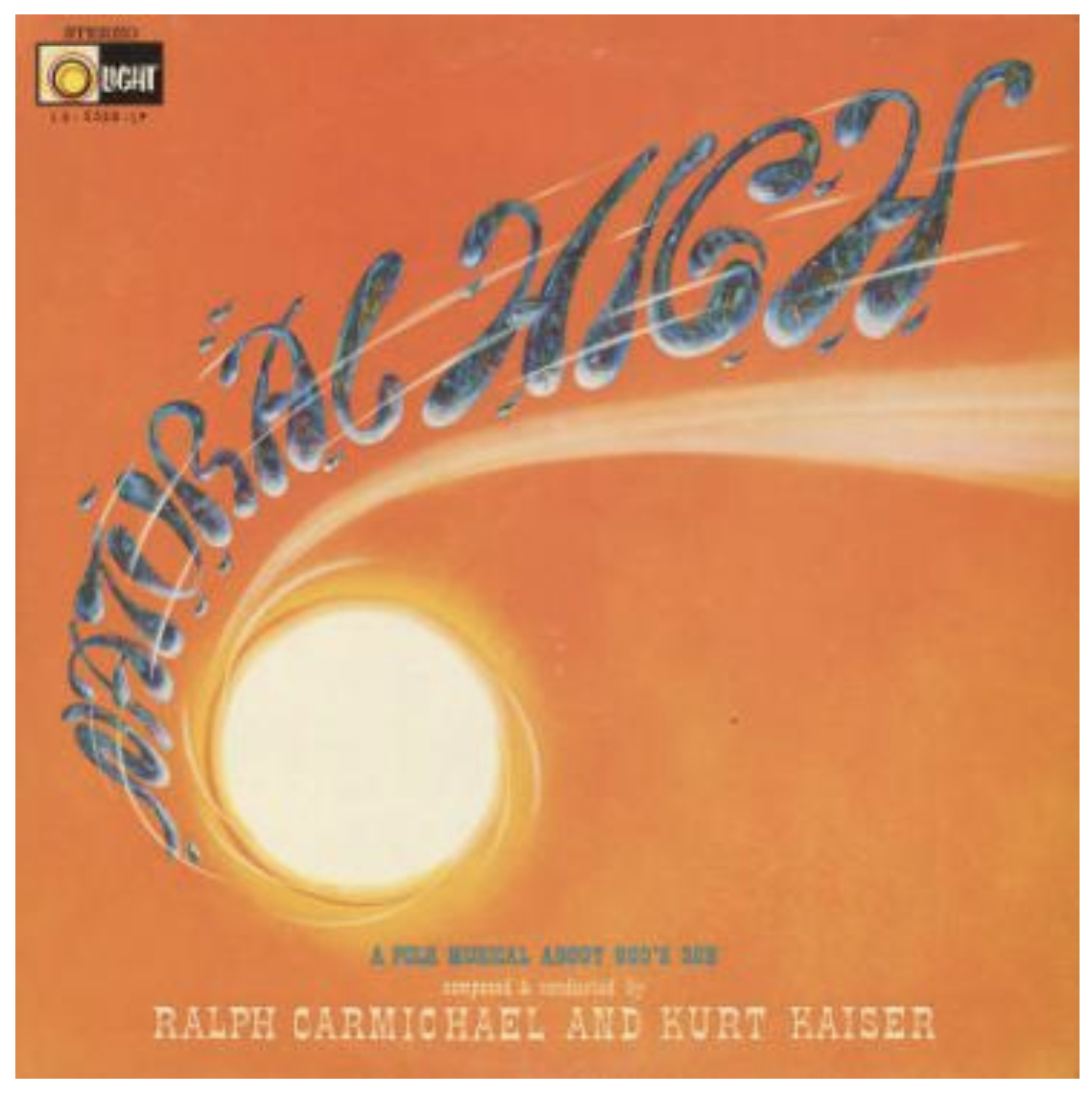
Creators Carmichael and Kaiser represented a widespread attempt to appeal to youth, and, in fact, to hippies.
They were riding the coat tails of the burgeoning Jesus People movement. Many claim that today's Contemporary Christian Music (CCM) had its roots in the Sixties counterculture.
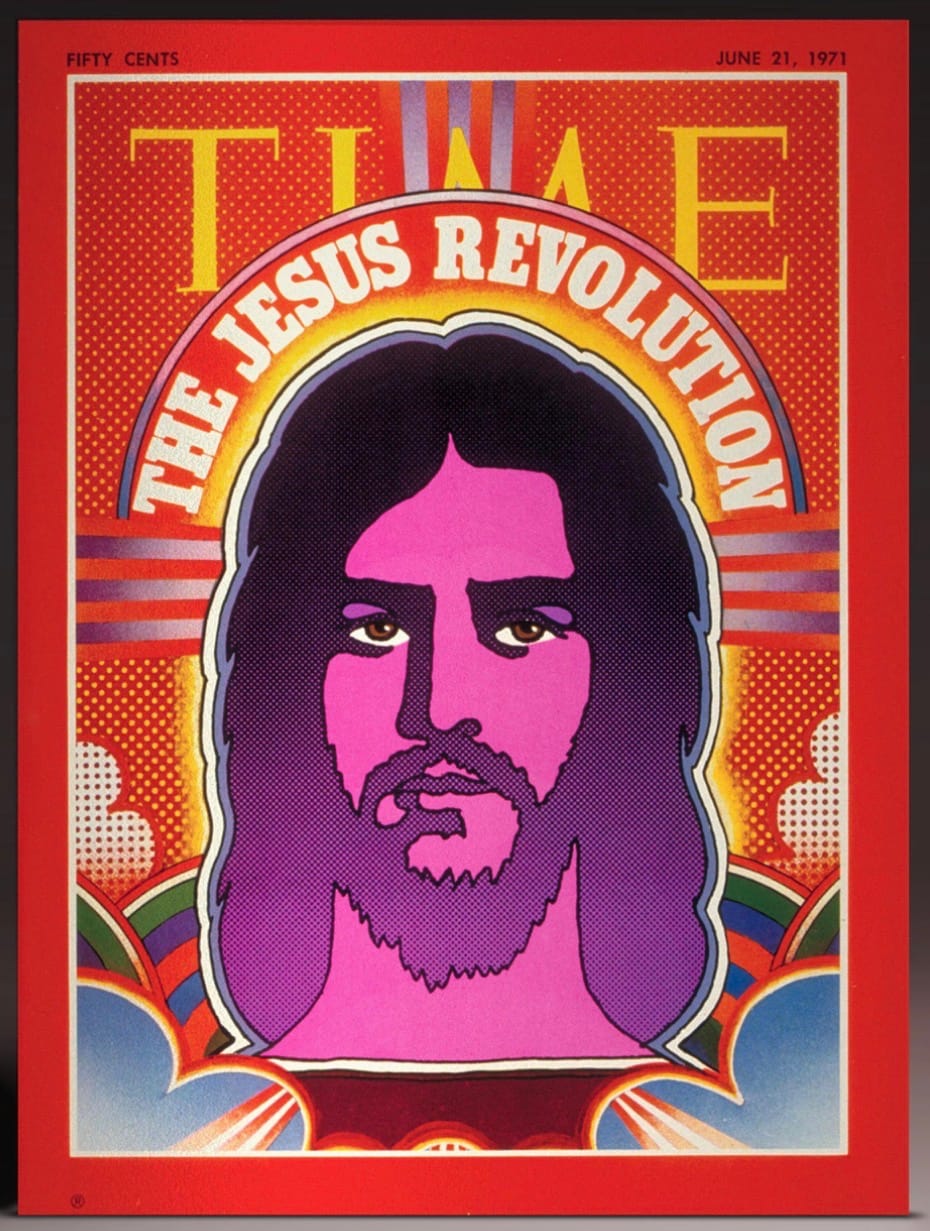
This is all a little hard to square with the straight-laced Pella congregations I'd known. Especially the well-heeled of Second Reformed Church, which we jokingly called the "Second Reformed Fashion Show."
Some disapproved of this shift toward "soft rock." One screed inveighed against the sensuality of drums, claiming "unresolved chords" in rock and jazz-influenced music produced devilish excitement. He called CCM negatively "transformative," because it infiltrated the moral structures of the congregation, turning them into hedonist charismatics.
The evangelical impulse, though, seems primed to seek and exploit potential inroads. When youth ministers found their choirs expanding overnight from 10 kids to 100, the uptake for this musical genre came swiftly.
Some Jesus People drawn to the music were absorbed into the mainstream church. Others developed more cult-like formations. They seemed so fringe, I assumed they'd disappeared. I was wrong. Jesus Freaks persist:
 Jesse Hyde

I was just blocks from my church when I encountered them as a twelve year old. I was on my way to the Tulip Time festivities, which had begun attracting Jesus Freaks in the early seventies. Long-haired young men with intense eyes approached me from the back of their van, asking if I was ready to accept Jesus into my heart.
I said yes, to get them to stop bothering me. Now, considering that performance at Winnebago, I wonder. How many people there might have felt the same way about us?
The native women who now chair the Native American and Indigenous Ministries Council feature prominently on the RCA website. What might church-reservation dynamics look like today?
This made me curious about missionary responses to the Indian Removal Act. I admit to skepticism about churches; historically they've acted as an arm of the colonizing process. Years ago, in conversation with a colleague specializing in Native American writers, I said something critical about assimilationist educators. She paused, then replied, "They were just trying to help." That professor happened to be a nun.
Help or Harm?
This week's readings suggest that all missionaries claimed they were trying to help. Some truly did.
Salvation aside, most viewed assimilation pragmatically—necessary for survival in a white-dominated society. And while some indigenous people may have willingly absorbed Christian teachings, others primarily accepted Christianization for protection. Could church membership raise them to human status in the eyes of hostile whites? It might have helped sometimes. It didn't stop the massacre at Gnadenhutton, Ohio.
John Schermerhorn exemplified the first kind of missionary. An RCA minister from Schenectady, he leveraged his position to become a destructive force. When the American Board of Commissioners for Foreign Missions opposed Andrew Jackson's push for Indian removal, Schermerhorn supported him. He and other "Dutch Church leaders organized and funded the 'Indian Board for the Emigration, Preservation, and Improvement of the Aborigines of America,'" (Van Hoeven, James W. “Salvation and Indian Removal,” Western Theological Seminary. https://repository.westernsem.edu/pkp/index.php/rr/article/download/1047/1139/)
Jackson appointed him United States Indian Commissioner. When Cherokee leadership split over removal from Georgia, he conducted underhanded negotiations with only one faction. Even after arranging a dispossession that killed over 4,000 Cherokee people, Schermerhorn claimed,
"My goal . . . was always to preserve the Red man from further degradation and final extermination and ruin; to secure to them a permanent and peaceable home; to deliver them from state oppression and aggression . . ." (267, Van Hoeven).
But another missionary, Presbyterian Daniel Buttrick conveyed the horrors of this removal:
"Buttrick . . . was an eyewitness sojourner on that westward march. He writes of American soldiers bayoneting pregnant women to death, pushing aged Indians into the river to drown, and abandoning small children at campsites, because these could not keep up." (266, Van Hoeven).
Missionaries like Buttrick spoke out on the tribes' behalf. Some acted as a bridge between segments of white and native societies. Some were jailed for resisting governmental edicts.
They were supported by the religious periodical press and the work of women. In spite of the U.S. history of genocide, racism, settler greed, religious imposition, and political corruption, Jackson's Indian Removal Act was widely reviled.
Hershberger notes that the religious press, papers with readership in the tens of thousands, often took an unequivocal stance:
"The Missionary Herald declared that Georgia state officials were engaged in a massive land grab and told its readers that 'now is the time when every Christian, every philanthropist and every patriot in the United States ought to be exerting themselves to save a persecuted and defenceless people from ruin'" (21, "Mobilizing Women, Anticipating Abolition: The Struggle against Indian Removal in the 1830s" Mary Hershberger, The Journal of American History)
Catherine Beecher and Lydia Sigourney launched a "women's petition campaign." Hershberger gives the impression that this was unprecedented as female activism; Miles argues that "More than a decade before . . . Cherokee women had fought removal on their people's behalf. " ("Circular Reasoning": Recentering Cherokee Women in the Antiremoval Campaigns, Tiya Miles American Quarterly)
Many in the white women's campaign had a history of sending donations and corresponding with missionaries and tribal members. They felt connected through personal relationships, and flooded Congress with their signatures.
The religious press also became incensed when Georgia demanded licensure for missionaries living among natives, on threat of imprisonment. This requirement "included swearing an oath of allegiance to all of Georgia's laws, and most of the missionaries refused to do so. In repeated incidents over a dozen missionaries were chained and marched to prisons . . ."
Two were imprisoned for sixteen months. In the meantime, "Female missionaries were not included in the legislation . . . they took over the running of mission operations."
Vice President Martin Van Buren later blamed public anger at the jailing for a sizeable loss of votes in 1832. His own niece "fiercely denounced him for his role in removal," telling him she thought he and Jackson should lose the election because "'such a result ought to follow such acts!'" (32, Hershberger).
A historic description of these missionaries from The Herald moderates my skepticism. I'm reminded of those clergy members who have, in this past year, endured pepper spray and physical abuse for putting their bodies on the line at immigrant detention centers:
Our citizens have been accustomed to see offenders against the laws arrested by civil officers, acting in obedience to the warrant of a civil magistrate; but now see armed soldiers, without any civil precept, scouring the country, arresting whom they please, detaining them as long as they please, and releasing them when and where they please....They see those who make no attempt to resist or escape, loaded with irons, forced to travel great distances on foot, vilified, reproached, and threatened by their captors. Such scenes as these are strange and unexpected in this country" (32, Hershberger).