Will We Be Strong Enough to Acknowledge Wrongs?

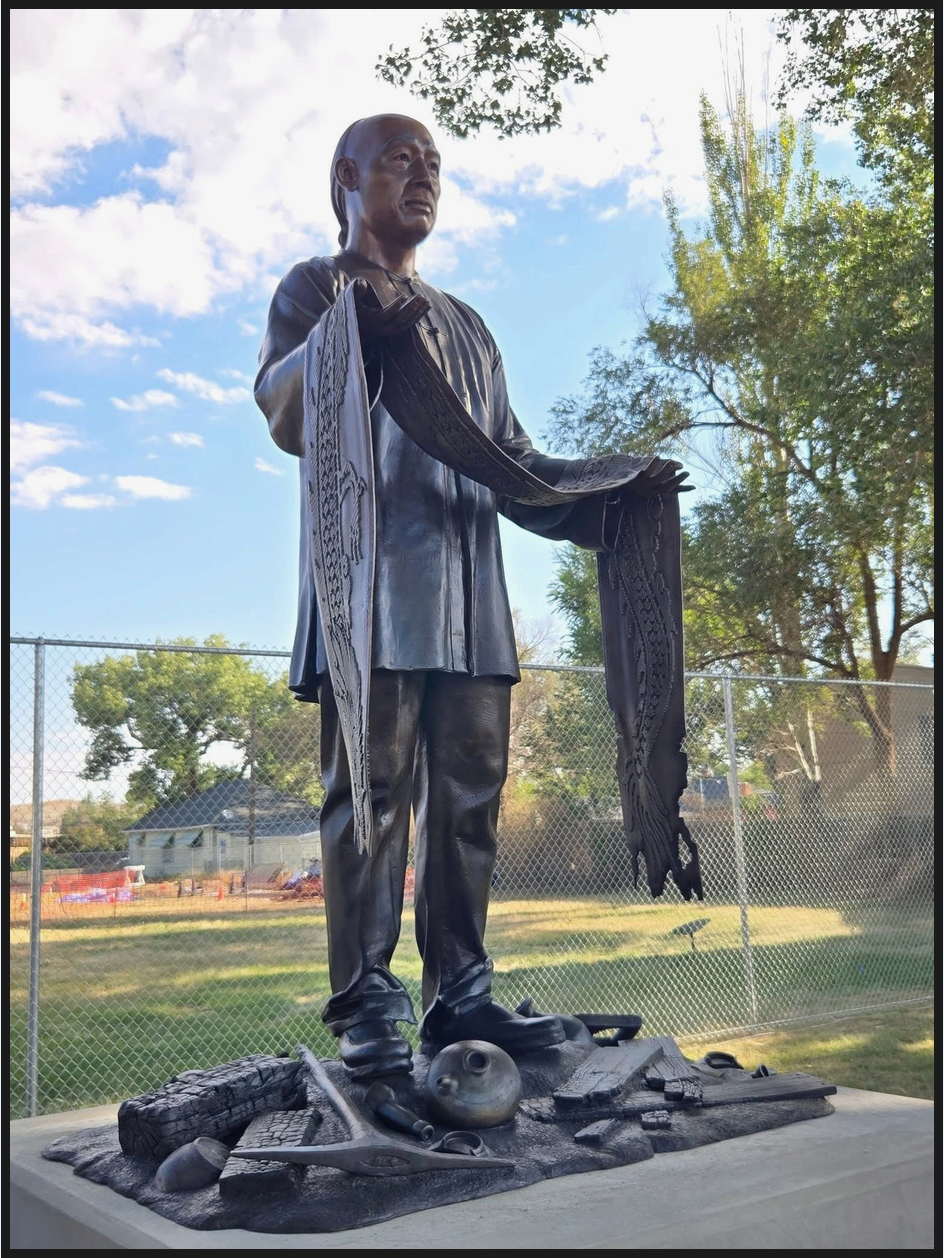
"A group of local coal miners, business men, and their wives formed an armed mob and marching on Chinatown brutally murdered, looted and finally set fire to the Chinese miners homes." https://www.rswy.net/departments/museum/help_support_the_requiem_sculpture.php
On a quick of scan this photograph, you might pick up mistaken impressions. A closer look confirms that it is not a solemn native man holding a ragged hide or wampum belt. For the uninformed viewer, though, the objects scattered at his feet might not provide many clues either.
The artist calls it a "distillation of several things that happened" during an 1885 event in Wyoming. The statue represents a Chinese coal miner. Standing among the charred remains of the Rock Springs Chinatown, he holds a partly burned ceremonial dragon flag. The event, memorialized at its 140th anniversary last year, was a massacre.
"The Rock Springs Chinese Massacre of 1885 is one of the most violent and least acknowledged chapters in Asian American history." Huy Pham, Executive Director of Asian & Pacific Islander Americans in Historic Preservation. (Rep. Judy Chu's press release, 5/26/25)
So unacknowledged, in fact, that even some of the descendants of those attacked hadn't known about it. Archeology professor Laura Ng and a group of Grinnell students have been excavating the destroyed neighborhood as part of her research on the Chinese diaspora. Ng connected with several descendants, some of whom attended last year's ceremony. One, Robert Lew, is now seventy-five years old, and the information was new to him:
"'In terms of [learning about] my great-grandfather and 1885 in the massacre, that was only two weeks ago, three weeks ago,' Lew said. His daughter Beth Lew-Williams is an esteemed scholar of Chinese-American history." (https://www.npr.org/2025/09/28/nx-s1-5519752/wyoming-town-erects-new-monument-to-violent-anti-immigrant-history)
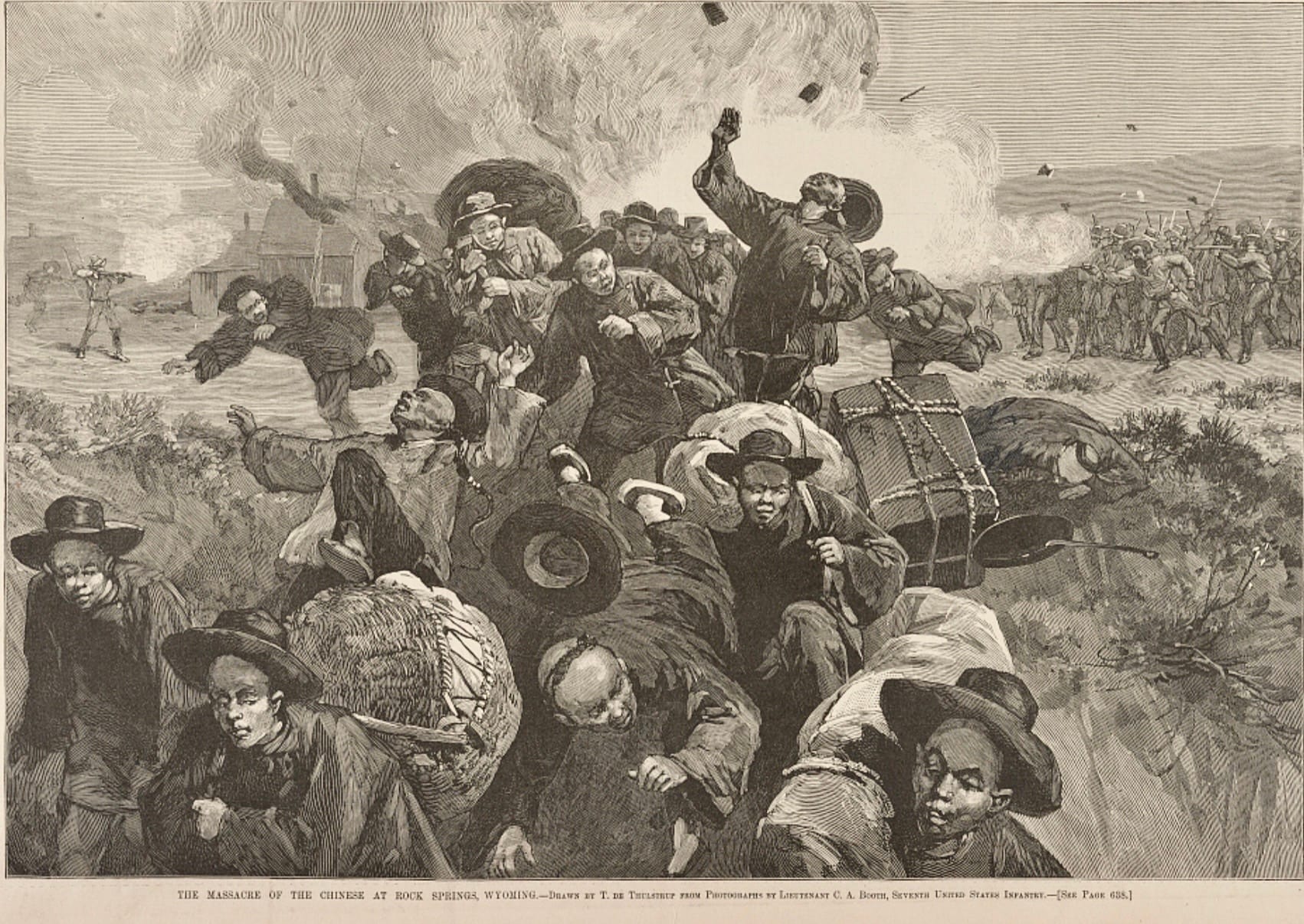
I came across the story just this week, in a chapter called Nativism: Hostility and Nostalgia in this book:

A seasoned scholar, Foner has written extensively on U.S. immigration throughout her career. This book has provided a valuable starting point for me, as it lays out the different phases and issues clearly and concisely. She sorts through common myths and misunderstandings, offering corrective facts and figures. Foner devotes less than a page to summarizing the massacre, though. She characterizes the instigators as white coal miners and railroad workers. From further reading, I now know there were other townspeople involved, including women.
I also now know that these white workers—who believed the Chinese were unfairly competing with them for jobs and lowering wages—were themselves primarily immigrants. Mostly they were Irish, English, Welsh, and Scandinavian.
Last week I lamented the problem of ugly truths. The previous week I'd celebrated the collective efforts of working people to stimulate reform and gain rights. The Rock Springs massacre illustrates the first and casts a pall over the second.
In this case, aggrieved immigrant laborers combined to vent their rage, not against their powerful and wealthy oppressors, but against their migrant co-workers. Foner's summary wasn't her main focus, and did not convey the degree of the brutality committed by this lynch mob. As always, the full context is much larger than will fit in this post. But I'll try to sum up what stood out to me when I went looking for more.
Initially, a fight broke out over a preferred working area. That ended with a Chinese worker's death after his attacker struck him in the head with a pick-axe. Later, a mob of over one hundred assembled, some of whom had joined a new union, the Knights of Labor. They armed up, and headed for Chinatown to carry out a deadly attack.
They proceeded to rob, beat, and shoot the residents as they attempted to flee. They set fire to homes in Chinatown with people trapped in them. The butchery rivals anything we might have associated with white-native massacres, including scalping, dismemberment, and mutilation of genitalia. Five hundred Chinese residents were chased from the town. When it was over, 28 were found dead and 15 injured. Many were never accounted for, so the death toll might be much higher.
Congresswoman Chu offers more context in her resolution:
"These Chinese immigrants were brought to the United States to work under harsh and exploitative conditions in Union Pacific Coal Company mines, where they were paid less than white workers, excluded from labor unions, and subjected to rampant anti-Chinese discrimination fueled by the Chinese Exclusion Act of 1882, the first federal law to ban immigration based on race and nationality."
In the aftermath, Union Pacific was solely concerned with getting their work force back into the mines. They tricked the Chinese workers who had taken refuge in a nearby town's Chinatown, by promising to put them on a train to San Francisco.
Instead, they loaded them into cars that took them back to Rock Springs. There they found the burned and decomposing bodies of their fellow countrymen still scattered about the roads. In the face of inadequate law enforcement, more reprisals against Chinese workers were feared in surrounding areas.
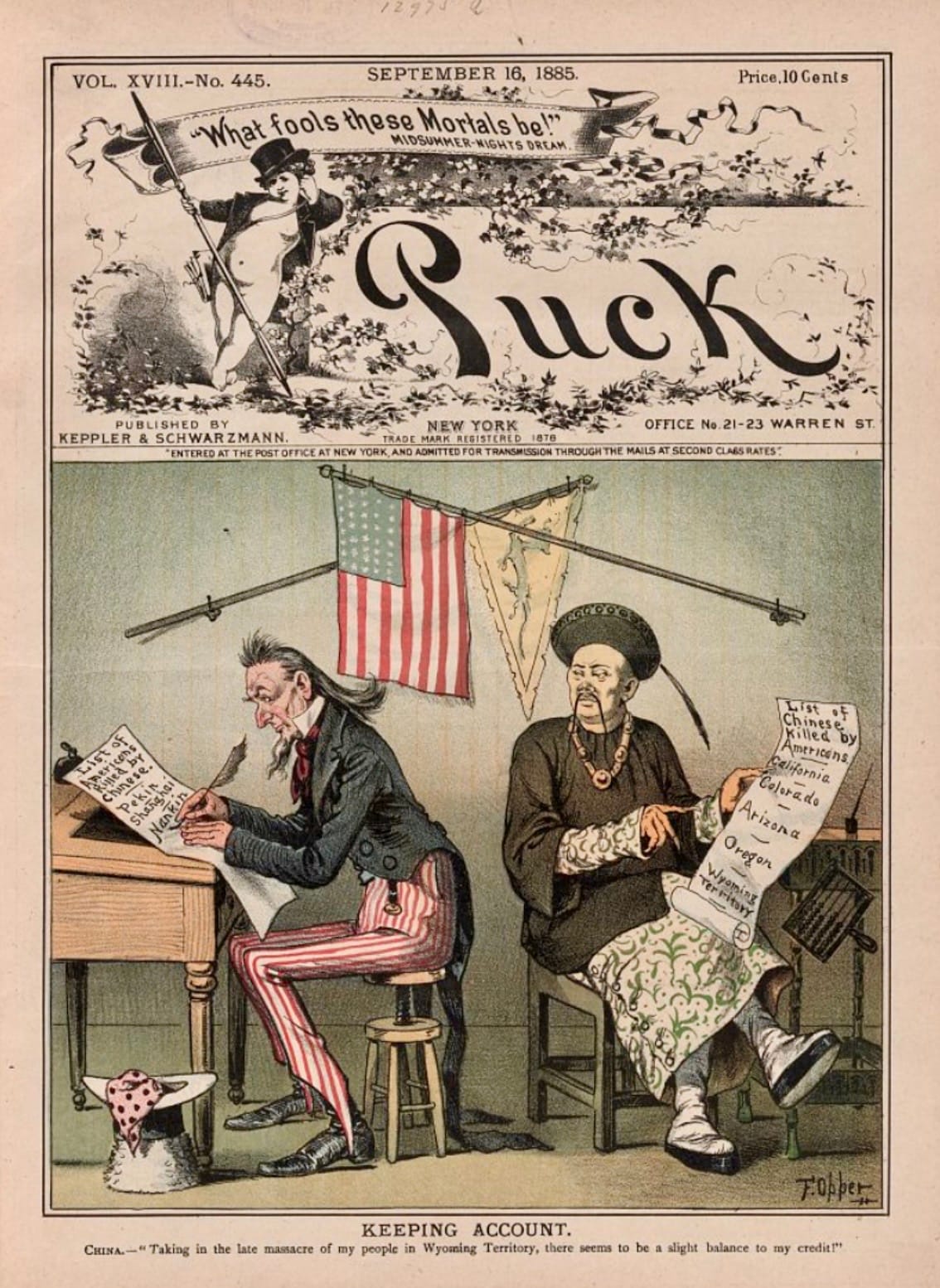
The press predominantly sympathized with the white workers. Some even claimed the Chinese were to blame for their deaths because they kept to themselves. Here's one of the few publications that differed slightly, by offering a "both-sides" style satire:
When the government finally sent in troops to keep the peace, they stayed for 13 years. Much later, at the demand of the Chinese government, the U.S. government offered a small financial reparation.
No one was charged. No justice was done.
As Chu points out:
"None of the perpetrators were held accountable. In fact, many celebrated the violence. That is why I am proud to lead this resolution to preserve the truth of what happened in Rock Springs, honor the victims and survivors, and ensure future generations understand this painful chapter of our history so that hatred like this is never repeated."
She continues:
". . . the resolution condemns efforts to erase or distort the history of the massacre, supports educational efforts related to the Rock Springs Massacre and the broader history of anti-Asian discrimination in the United States, and recognizes Congress’s responsibility to confront and learn from this history."


“'This resolution is important at many levels. Two stand out: It demonstrates that our nation is strong enough to acknowledge wrongs and, at a second level, we understand that building our future together, we must know our history,' said Ted Gong, Founder and Board Chairman of the 1882 Foundation."
Foner introduces the key phrases "group-status threats" and "threat narratives" in her chapter on nativism. These converge around the notion of race "replacement," which is still a strong throughline we must confront.
While many associate lynch mobs only with attacks on black individuals and communities, this form of white terrorism has also been directed at Italians, Mexicans, Jews, Asians, and others. Whites often viewed these attacks as necessary self-defense and vigilante justice. White fear of being replaced seems to have been accepted as a grounds for murder.
That fear is conveyed in bald terms by an op-ed which appeared in the Rock Springs Independent after the slaughter. Writing about the Union Pacific's reinstatement of the Chinese miners, reinforced by soldiers, local Alex Guinness interprets events this way:
“It means that all the white miners in Rock Springs, except those absolutely required, are to be replaced by Chinese labor. It means that the company intends to make a ‘Chinatown’ out of Rock Springs...It means that Rock Springs is killed, as far as white men are concerned, if such program is carried out.” (qtd at https://www.history.com/articles/rock-springs-massacre-wyoming)
In our times, politicians stoke fears that white voters are being intentionally replaced by non-whites. Foner notes that "according to a 2022 Associated Press poll, [white replacement theory is] accepted by roughly one in three American adults" (76, emphasis mine). The figure makes me curious about the demographic mix of that poll.
Foner also cites a 2019 Pew Research survey on the question of whether immigrants "strengthen the country." Only 38% of Republicans agreed, while 83% of Democrats did. Additionally, "half of Republicans saw immigrants as burdening the country by taking jobs, housing, and healthcare" (70).
Discussing the current tendency toward nostalgia about the 1950s period, Foner points out a highly relevant fact: "economic inequality in the 1950s was lower than it is today." It is true that the rich have always been with us. And politicians have long known how to benefit by pitting the rest of us against each other. But in spite of a century's worth of gains in education, information, and technology—and perhaps partly because of them—these wealthy, powerful forces have now gained a remarkably outsized influence. They've convinced many that immigrants are to blame for our massive income disparity. And people who've never learned to question our country's myths are unequipped to disbelieve this one.
The dominating presence of Union Pacific in Rock Springs continued to draw in immigrants from all over the world, to the point where the town now claims descendants from 56 nations. Even after the massacre, people like Don Aoki's ancestors from Japan went there at the turn of the century to find work. Like so many other Asian laborers, his family didn't put down roots there, but his short documentary, linked below, helps bring that period to life for modern viewers.
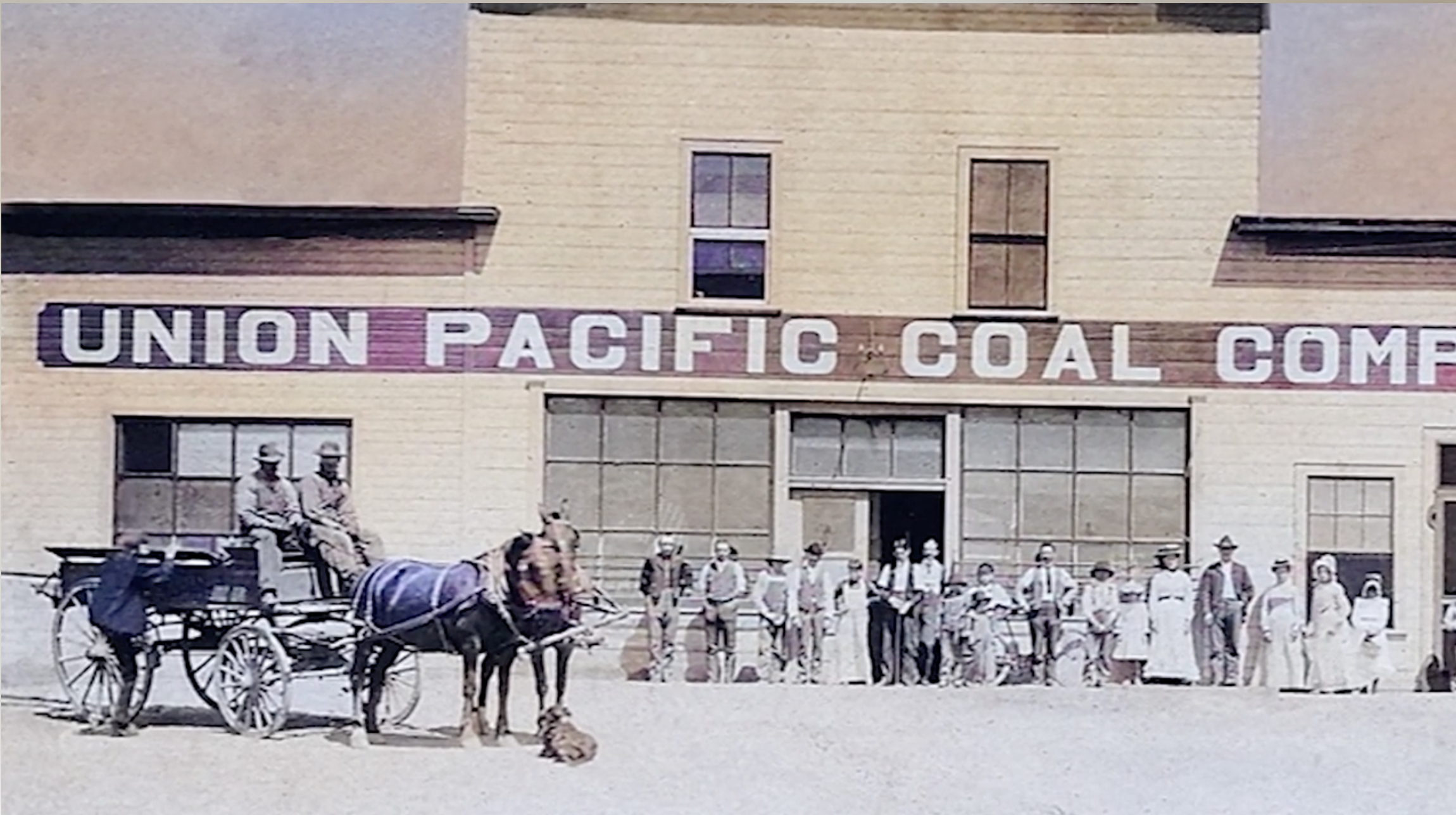
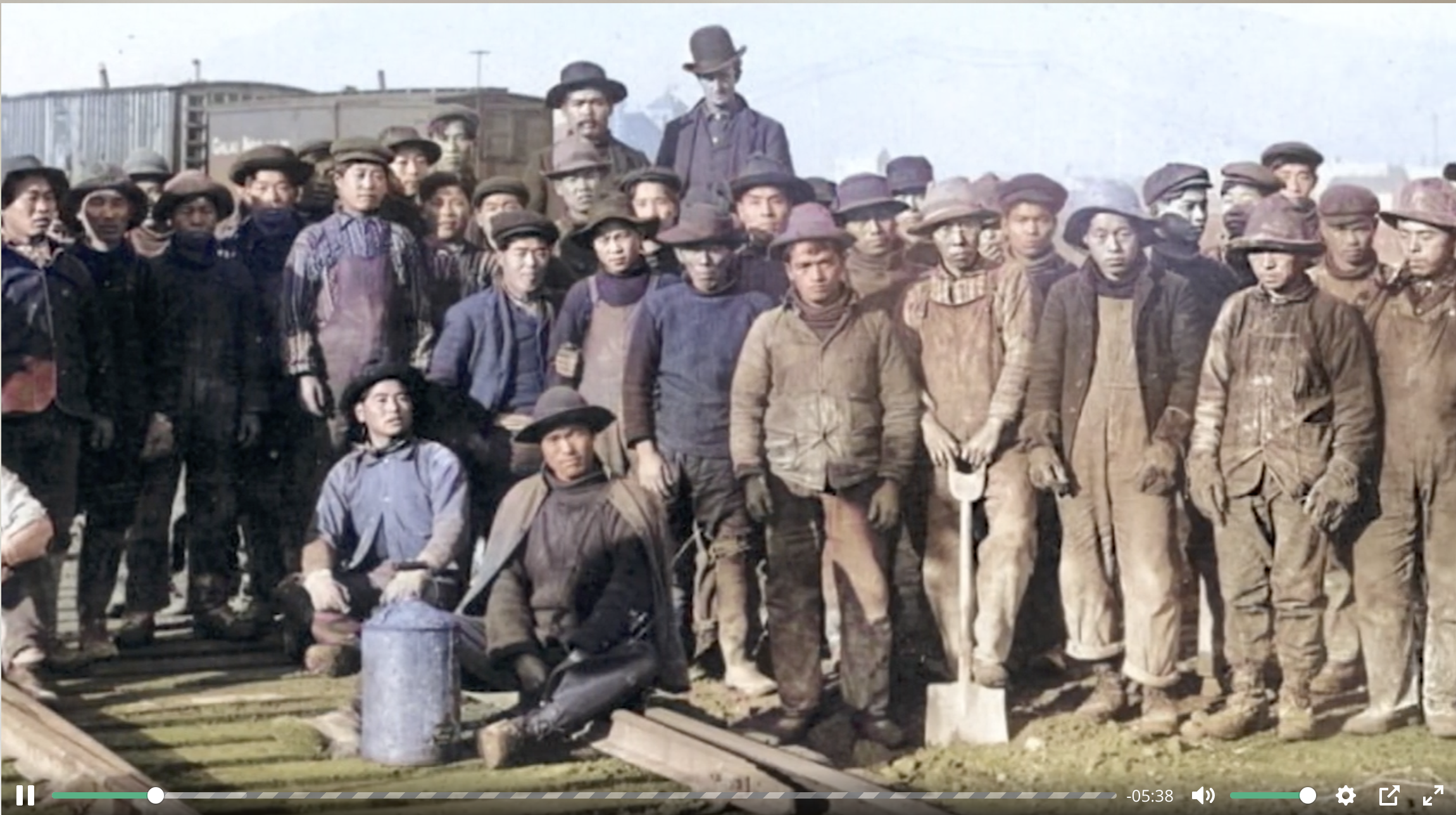
Screenshots from Don Aoki's short documentary about his early 20th century Japanese ancestors in "Pioneers of Rock Springs" (watch at https://filmfreeway.com/PioneersofRockSprings)
Rock Springs is to be commended for its effort to acknowledge this horrific event.
Let's hope it poses profound questions for white settler descendants—questions about what made it possible for their European immigrant forbears to carry out such atrocities against their fellow laborers. After all, these are the immigrant stock that, as Foner points out, are now so often mythologized as being the "good ones," the ones who are (mistakenly) believed to have come here the "right way," and succeeded through honest, hard work.