Honoring Histories: Setting Stories in Dialogue With Each Other

Last month, after I participated in Montreal's annual March to the Stone, I wrote about that tragic hidden history. The famine walk honors the site where an estimated 6,000 Irish immigrants—most of whom died of "ship fever" (typhus) in the summer of 1847—lie buried in a mass grave.
 Ruth Ann Smalley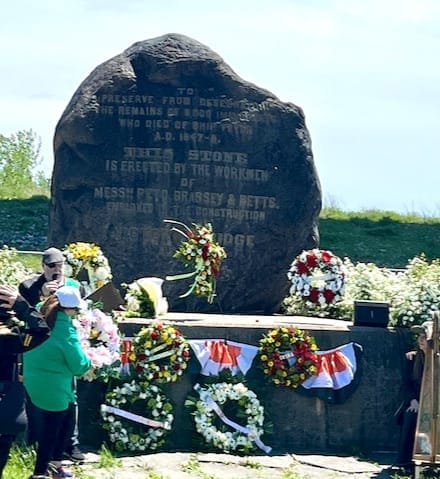
This is not the only famine burial site in the city, and all these graves are at risk of erasure or excavation due to development. This is an active concern for the local Irish Canadian community, as well as others around the world who believe in honoring ancestors.
The scale of the Great Hunger; its continuing impact on lives in the present; and the unceasing, even enlarging, presence of the dynamics that created it—massive wealth imbalances, avarice, human-created famine, nationalism, disdain for the poor and laboring classes—these are all reasons to keep acknowledging, learning from, and protecting these vulnerable sites.
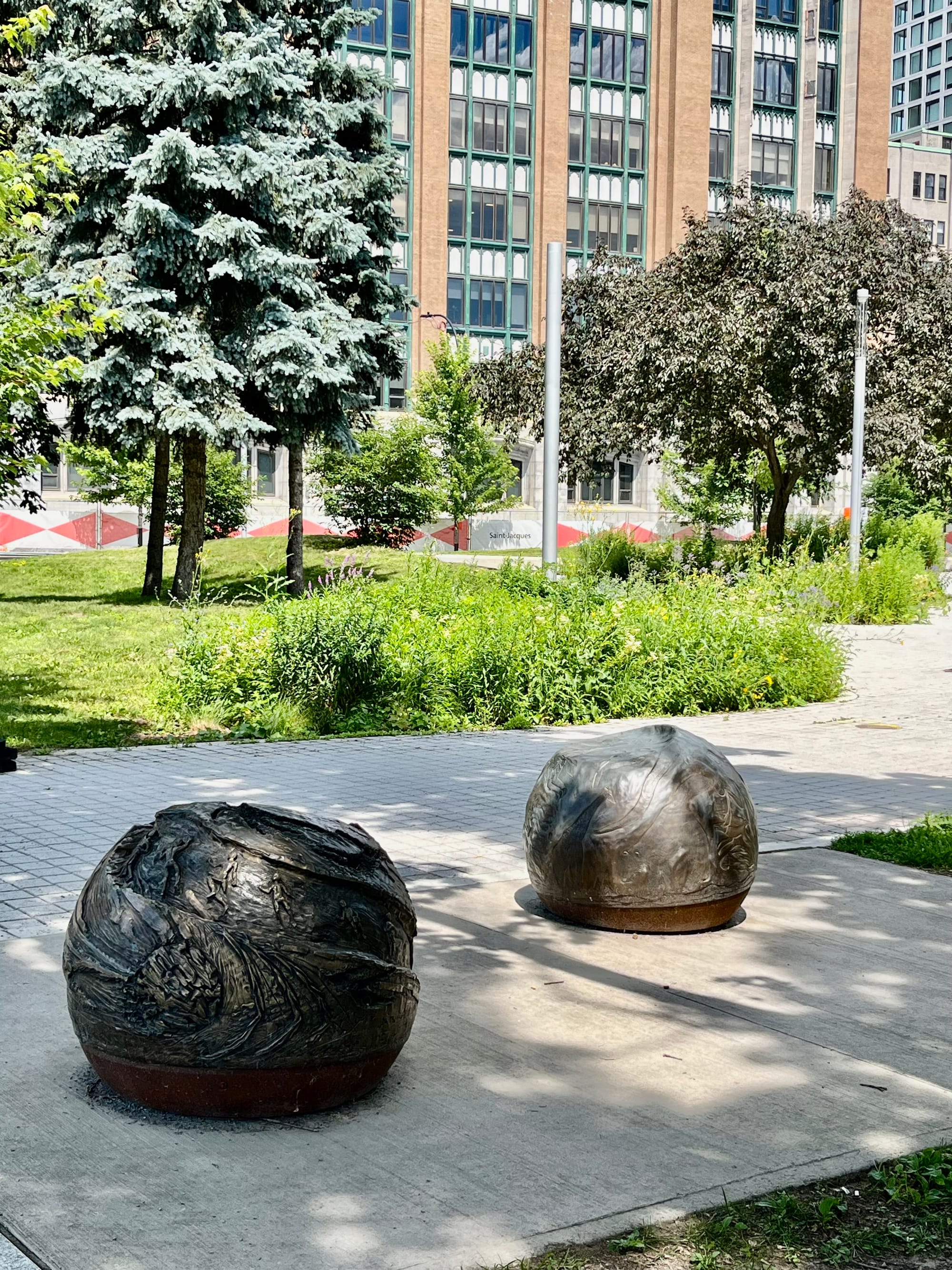
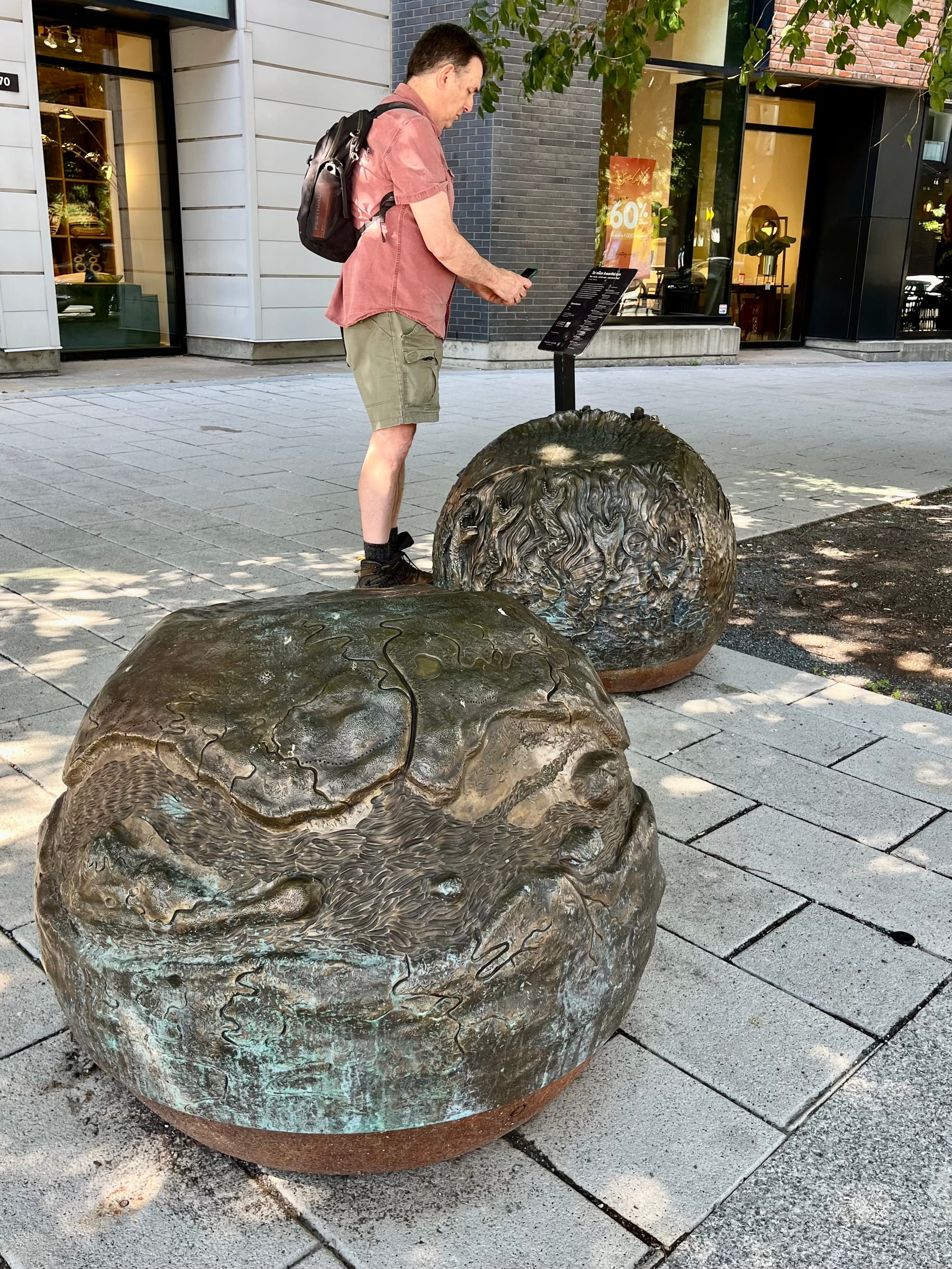
One of the speakers that day advocated for a public art project, exemplified by one recently installed on Rue Peel. A collaboration between an indigenous artist and a "newcomer," these works record, and promote dialogue about, past and present encounters between diverse value systems. I was eager to find out more about this project. Last weekend we got to walk up Rue Peel far enough to see the first five "stations."
There is a striking breadth and depth to the sculptures and the feelings they evoke. I look forward to continuing our route up Rue Peel to see the other six pairs during future visits with our son, who now lives nearby.
The project responds to excavations in the vicinity which have yielded evidence of centuries-old indigenous settlements. Artifacts from these sites have been preserved and have served as inspiration for design treatments on the street. For example, patterns from pottery shards have been echoed in the grates placed around sidewalk trees.
 Ville de Montréal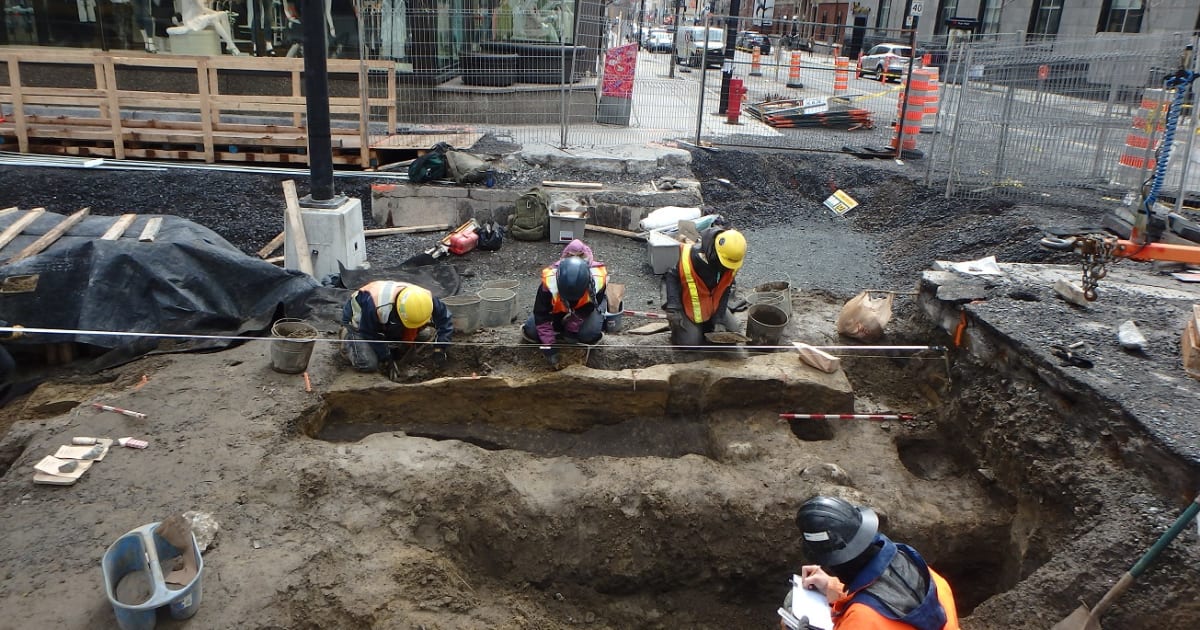
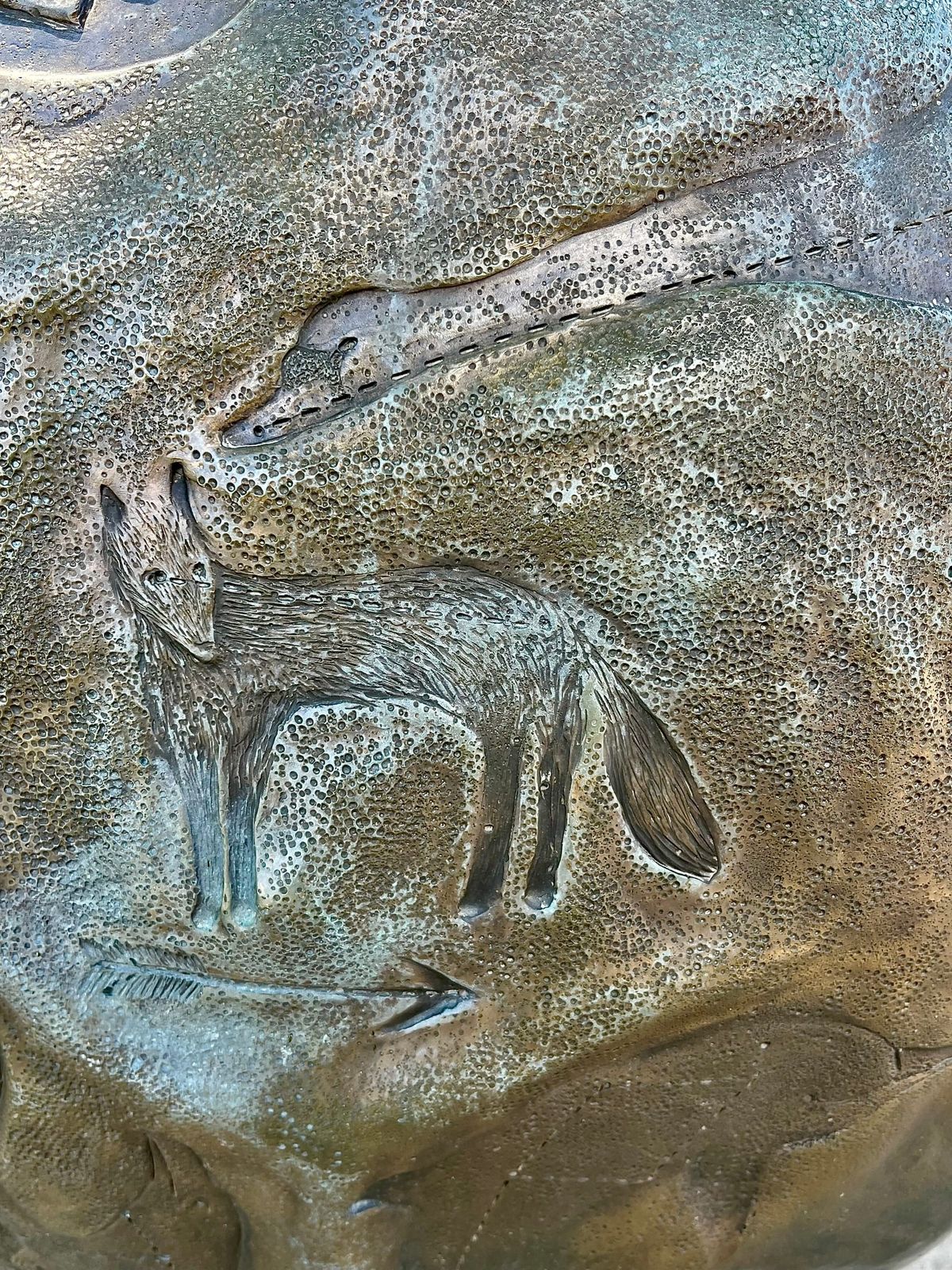
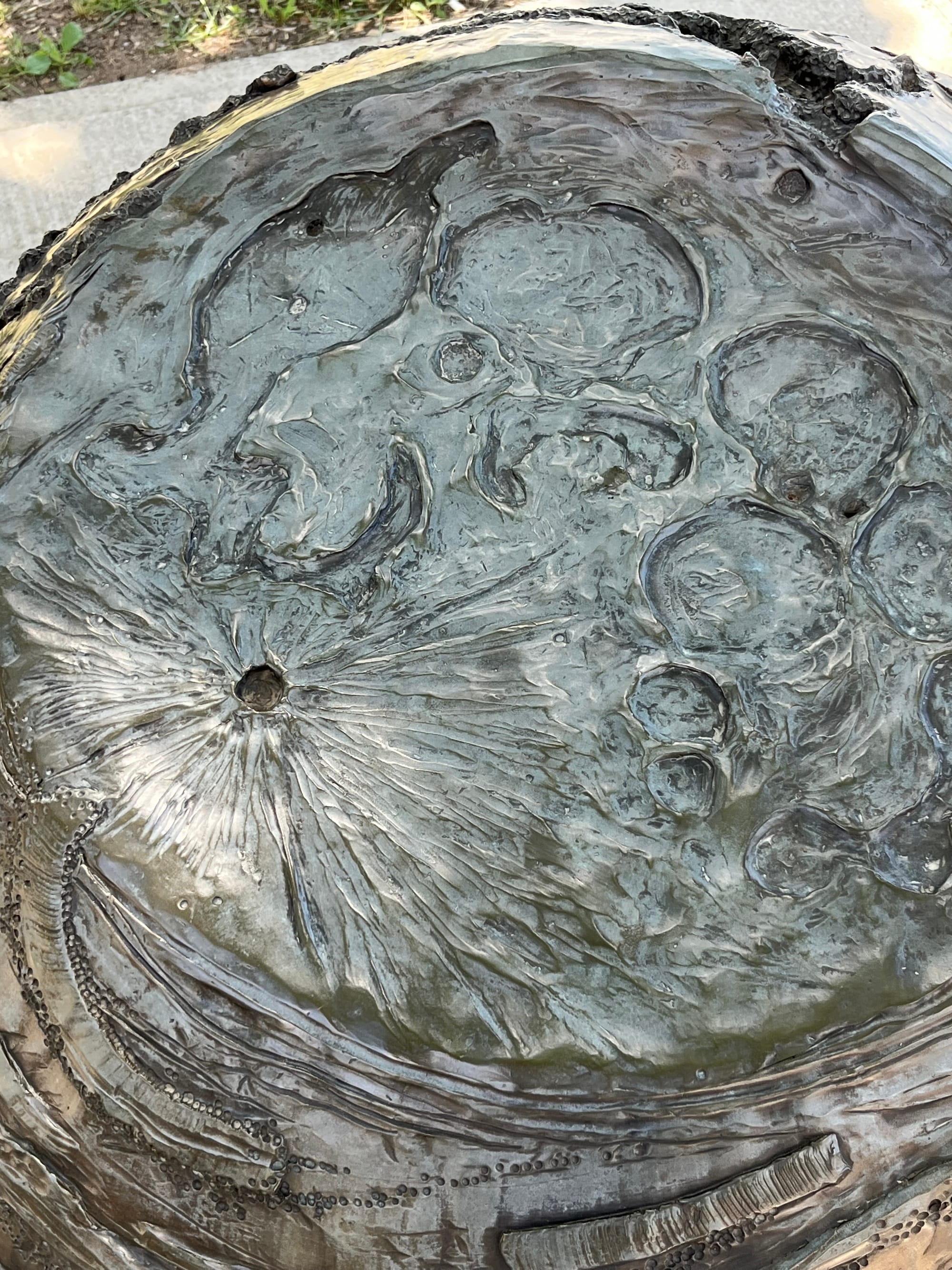
Artists Kyra Revenko and M.C. Snow worked together on these bronze sculptures, guided by concepts laid out in the Mohawk traditional prayer of thanksgiving, or Words Before All Else.
As The Eastern Door writes,
"Oral and written tradition; balance and equilibrium; and creation; spirituality; and marine life, were among the concepts encapsulated throughout the stations with relevant symbols, notions, and characters carved into each sphere."
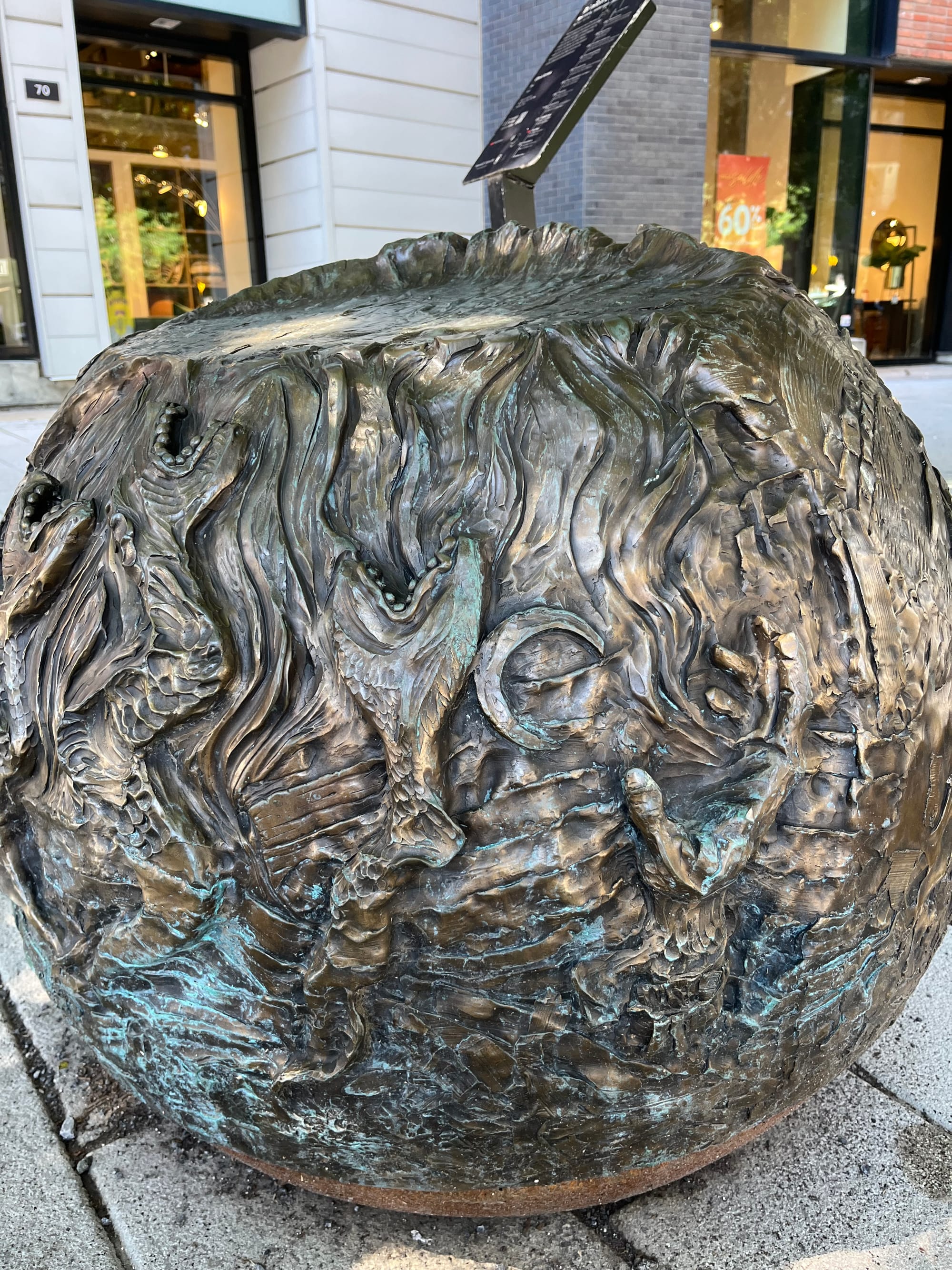
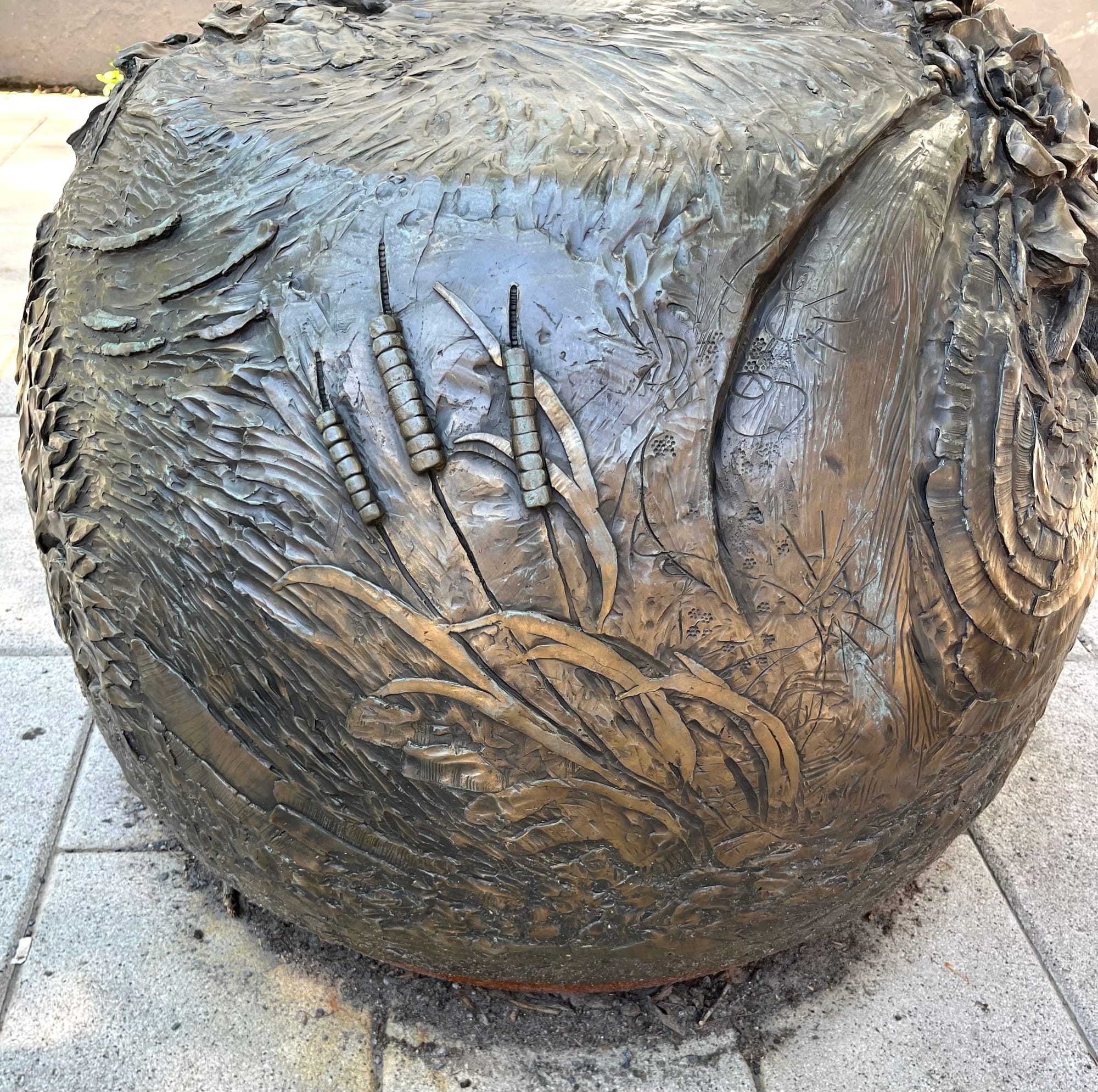
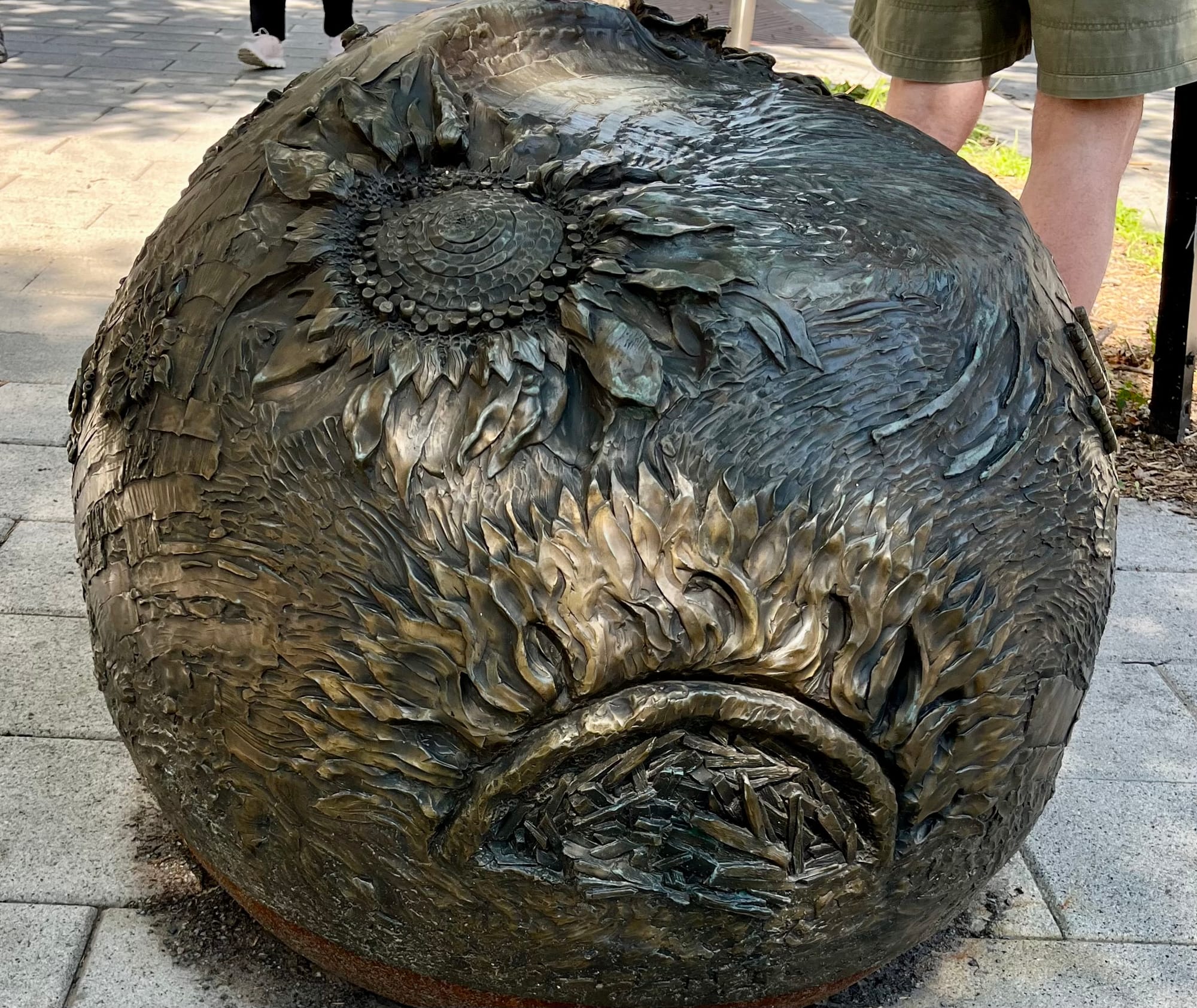
M.C. Snow explains that the sculptures are “about the importance of discovering the past and holding on to it and memorializing certain things so that we don’t forget about the past . . . to give ourselves a place to read, and to talk about these things in a safe space.”
 Read more by Nanor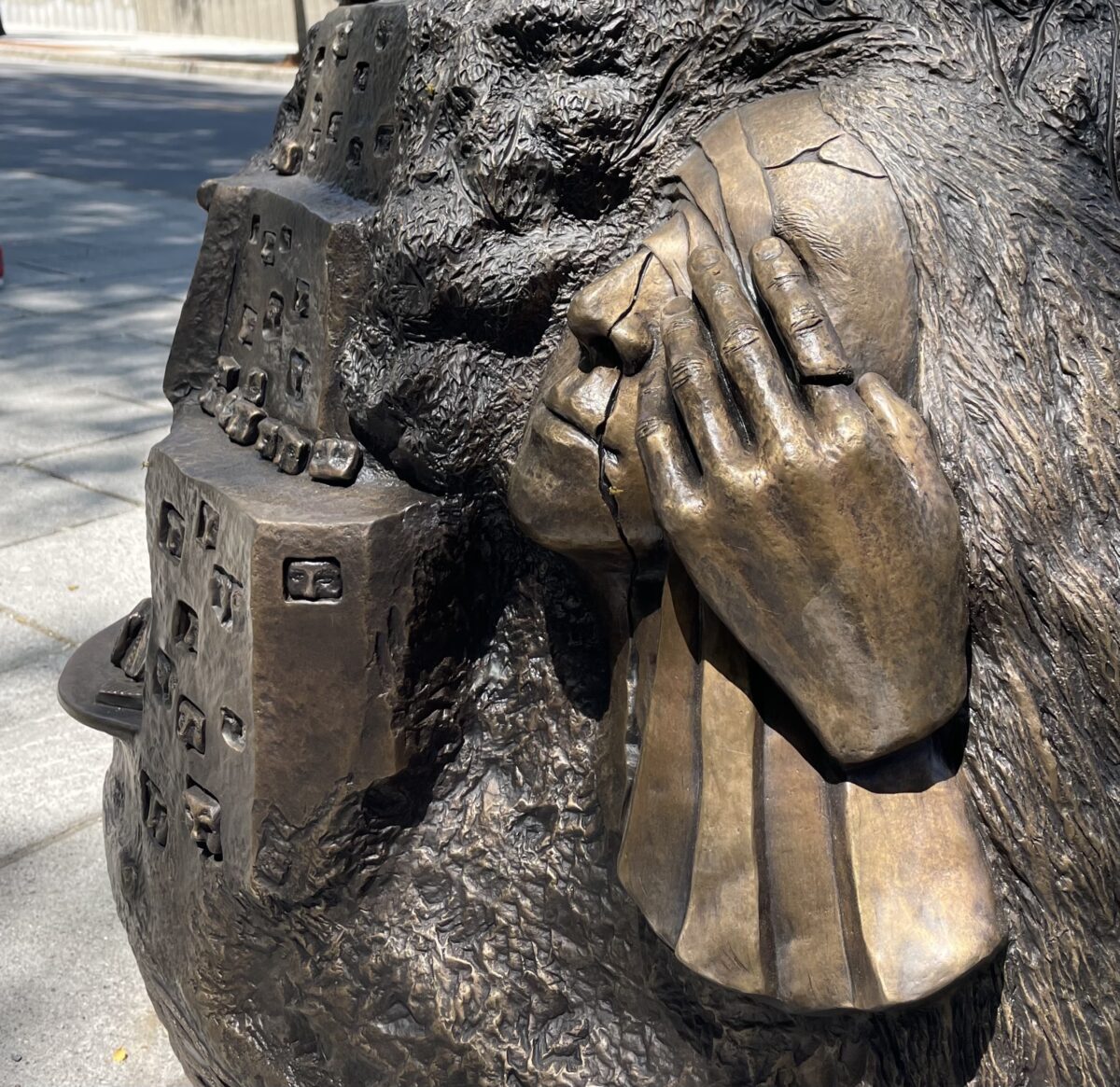
“'It’s a project built on dialogue,' said Aurélie Arnaud, senior advisor for intergovernmental relations office for the City of Montreal . . . the sculptures demonstrate both artists’ visions in interaction on different themes tied into the words before all else – putting forth the Indigenous and the non-Indigenous perspectives." The Eastern Door
It also feels like the project is in dialogue with the cityscape. At times it seems almost overwhelmed by the scale of surrounding buildings.
Each sculpture, nonetheless, holds its own as an intricately-inscribed story about our world. I wonder how many passersby have opened themselves up to this experience, which demands such a different kind of attention in this cosmopolitan space?
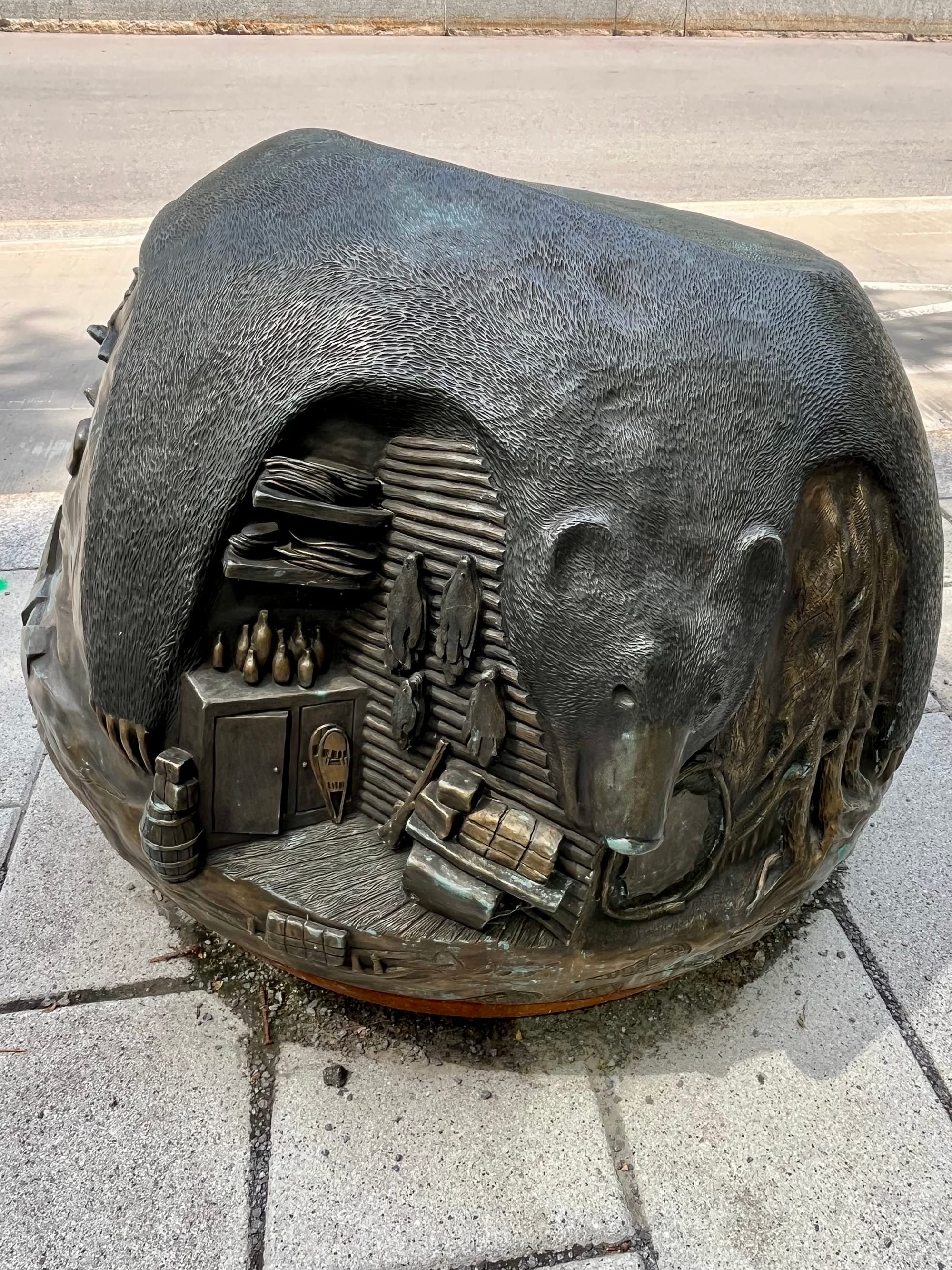
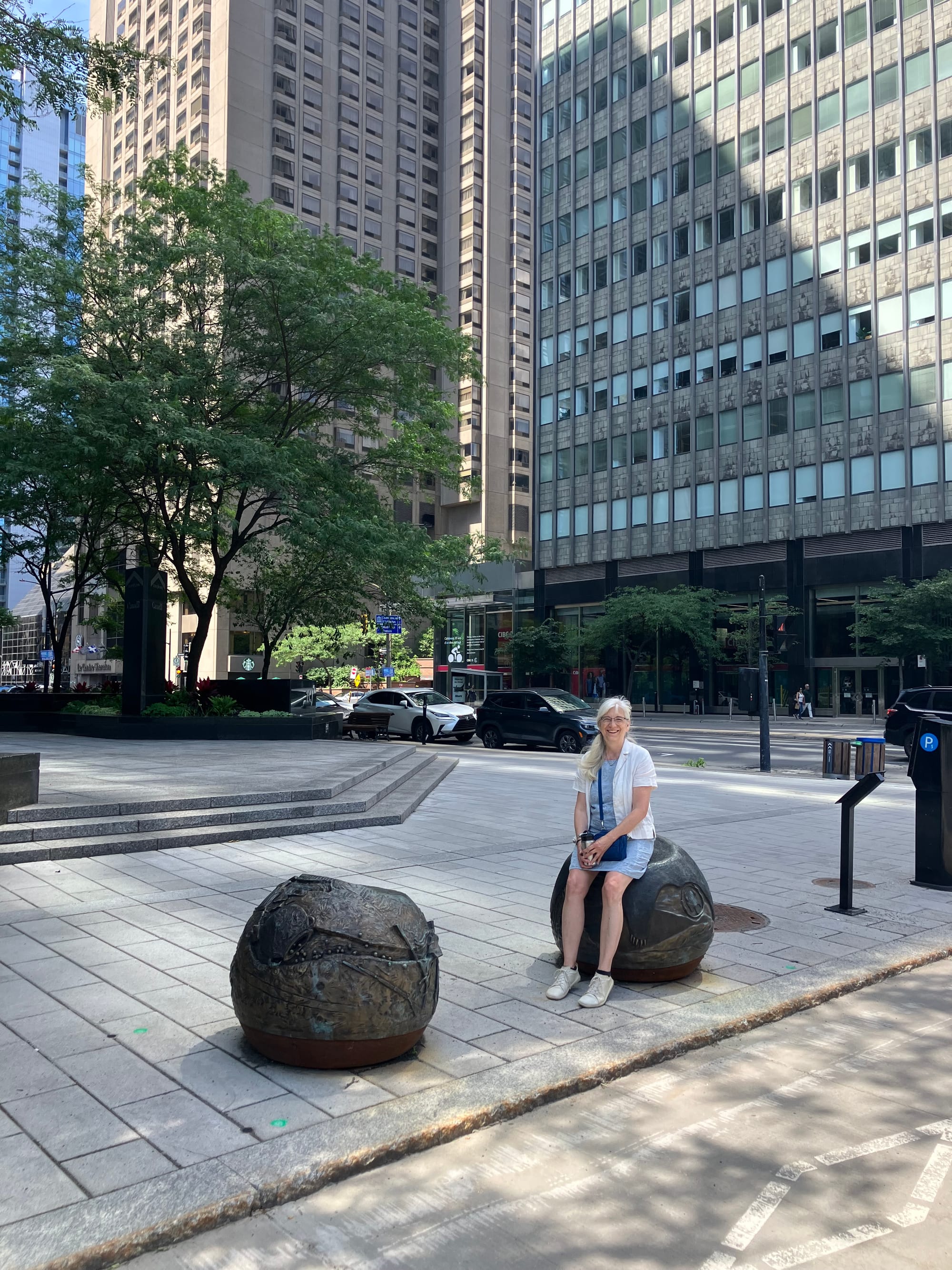
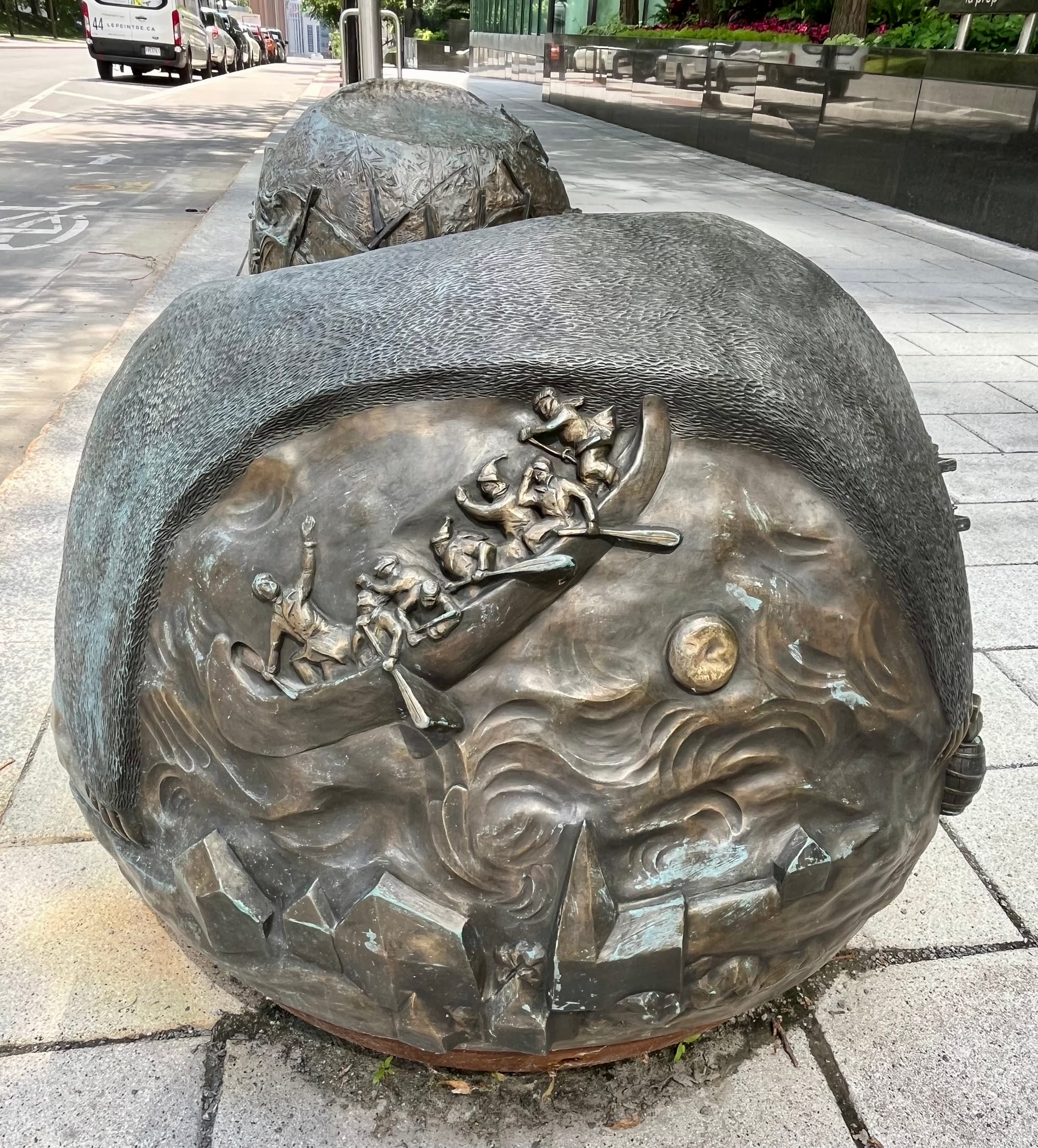
I'm impressed by the artful intentionality of this installation, and I love this way of seeding the understandings carried in the Words Before All Else.
Here you may read one written version of this beautiful address to the natural world, the elements, the universe, and all its gifts, teachers, and teachings: https://americanindian.si.edu/environment/pdf/01_02_Thanksgiving_Address.pdf
Here you can hear it spoken by a group of indigenous students at the University at Albany: https://share.google/gLLACGSAUPw8uRSbA
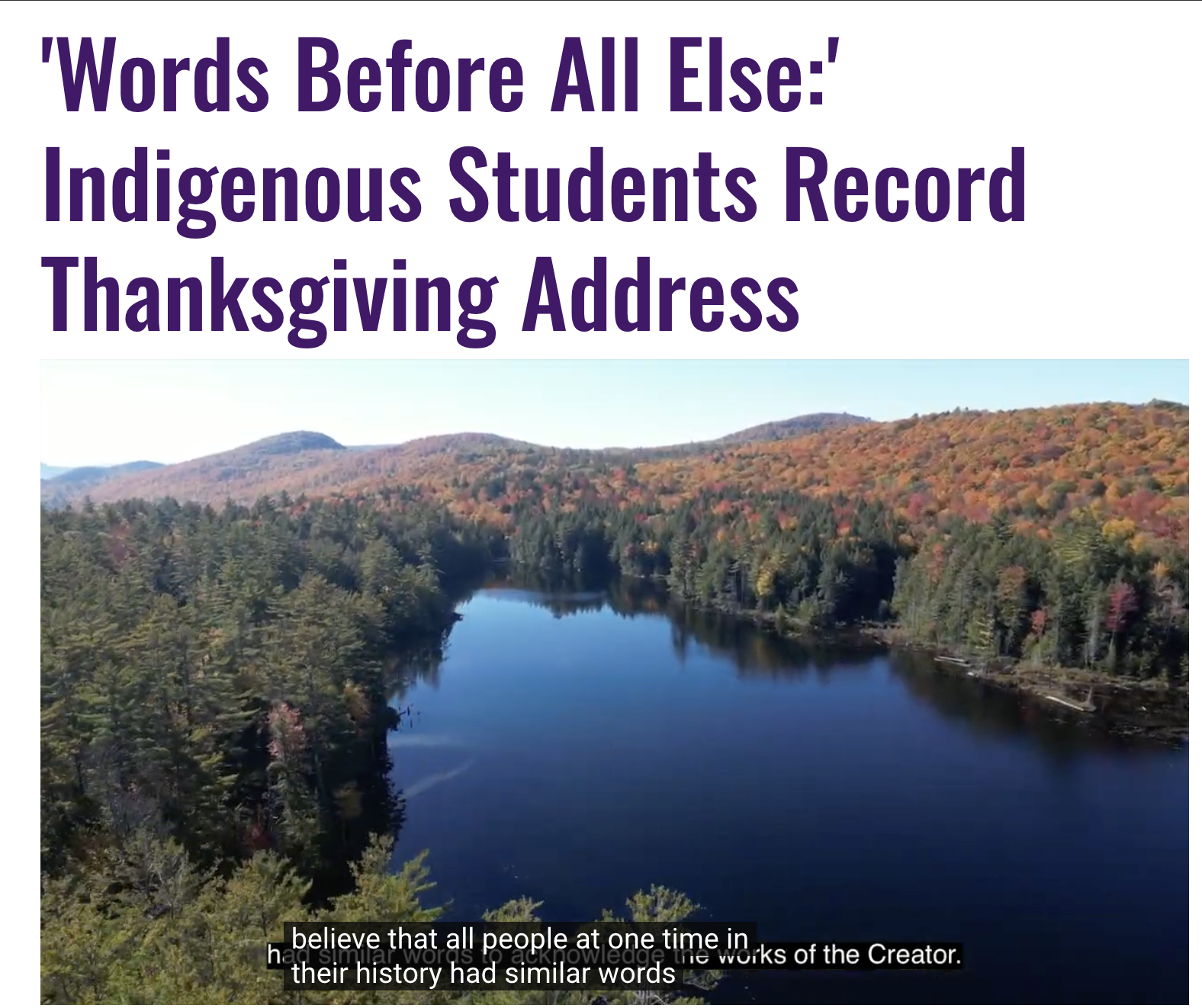
This gorgeously-filmed, longer version features many speakers, from grandparents to children:
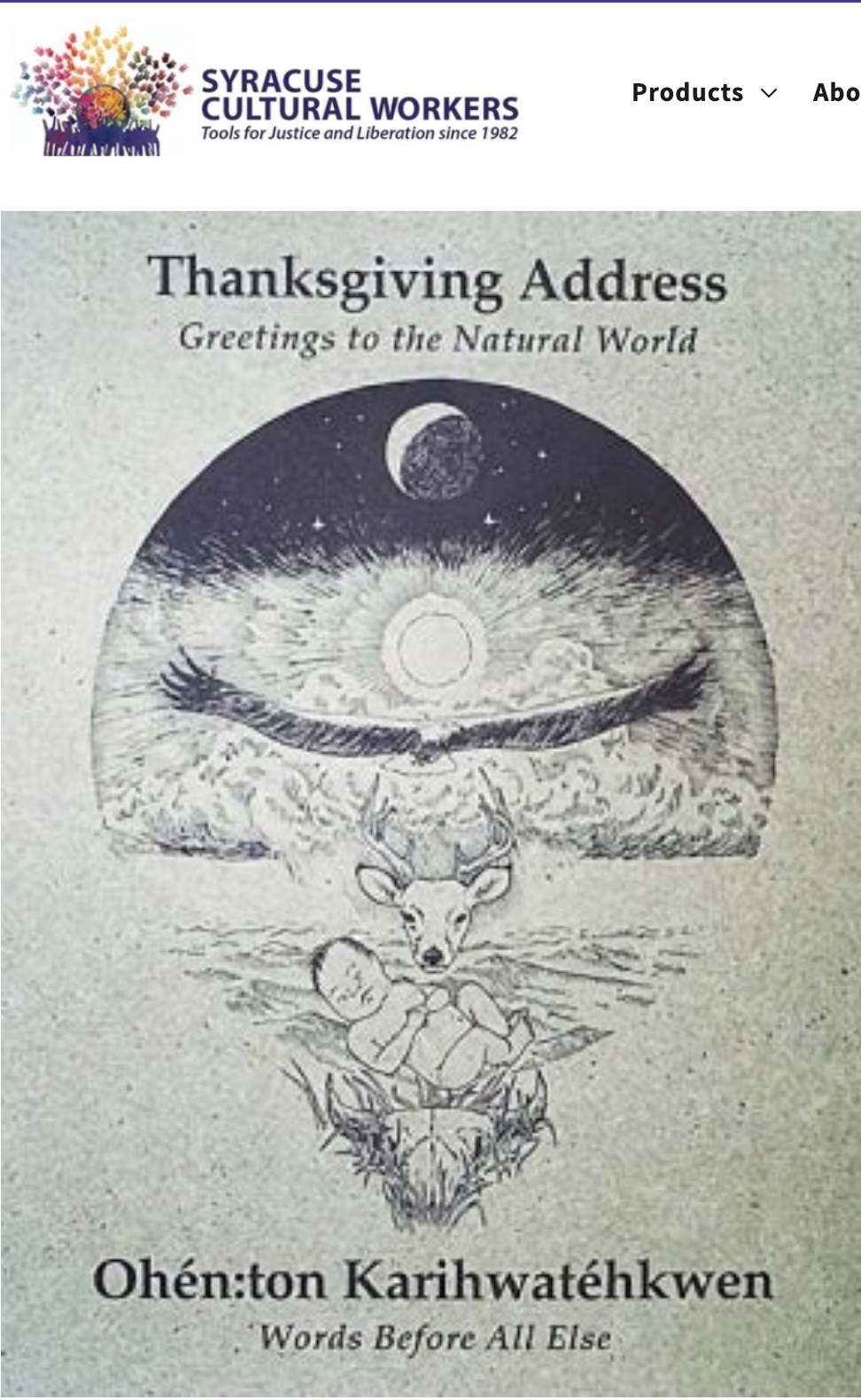
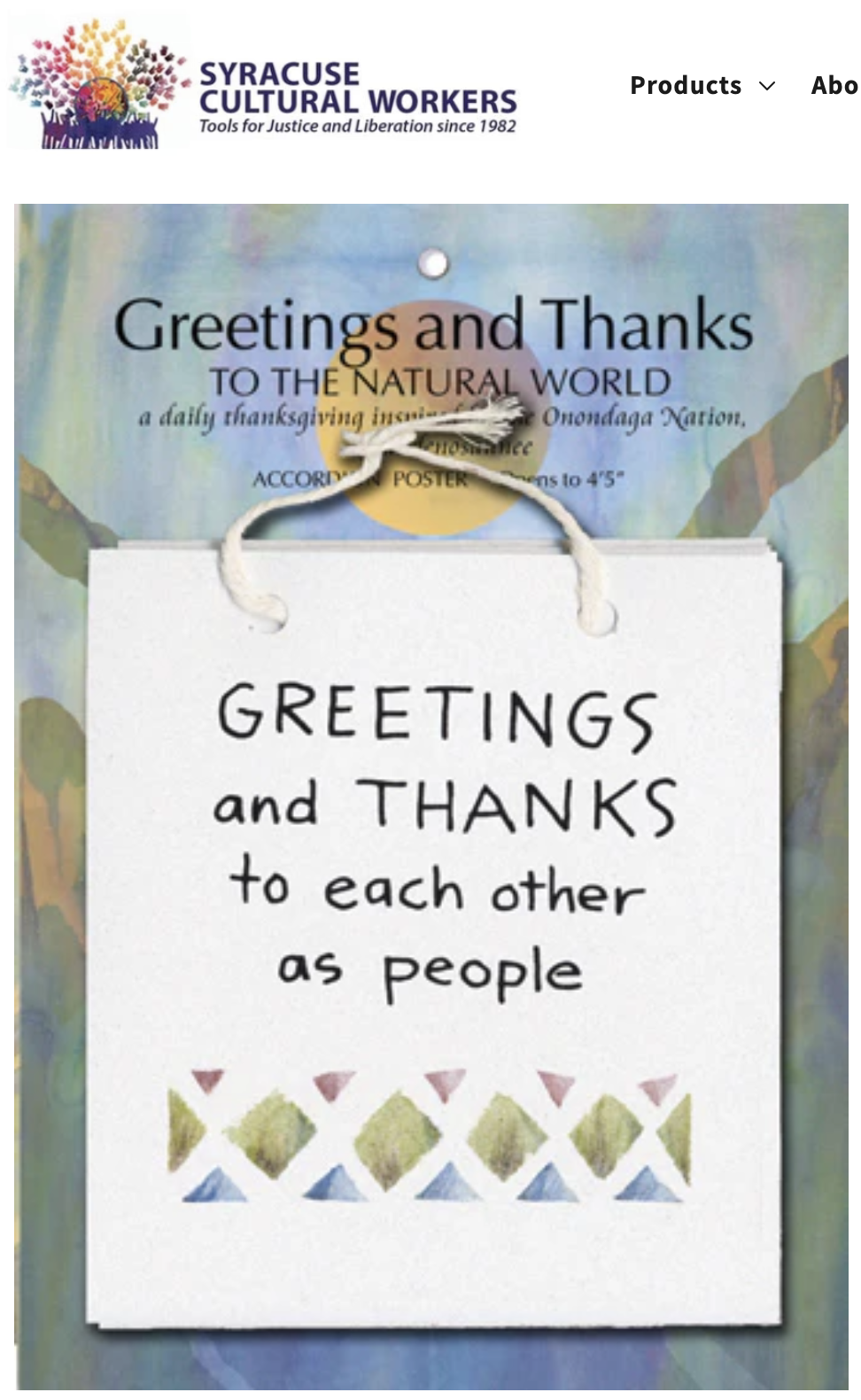
And if you would like a copy for your home, Syracuse Cultural Workers offers it in two versions, as a book and as an accordion poster. The proceeds from the poster go to the Onondaga Nation. (https://syracuseculturalworkers.com/)
Subtle, Constant Signals
Our built environments are sending messages to us all the time. Many of those messages urge us to hurry, spend, and consume. They work to distract us from our roles as stewards of the landscape and carers for each other. Public art projects like Snow and Revenko's are important expressions of alternative values.
We may not be consciously aware of some messages, especially the kinds of "branding" cities have engaged in as they promote a specific identity through time. We are so accustomed to these kinds of symbols, we often look right past them. But they, too are telling stories that would be good to dialogue about.
The official seals of the cities of Albany, NY, and Montreal, Quebec are interesting cases in point. These, too, are cast in metal and can be found on our streets in the form of manhole covers.
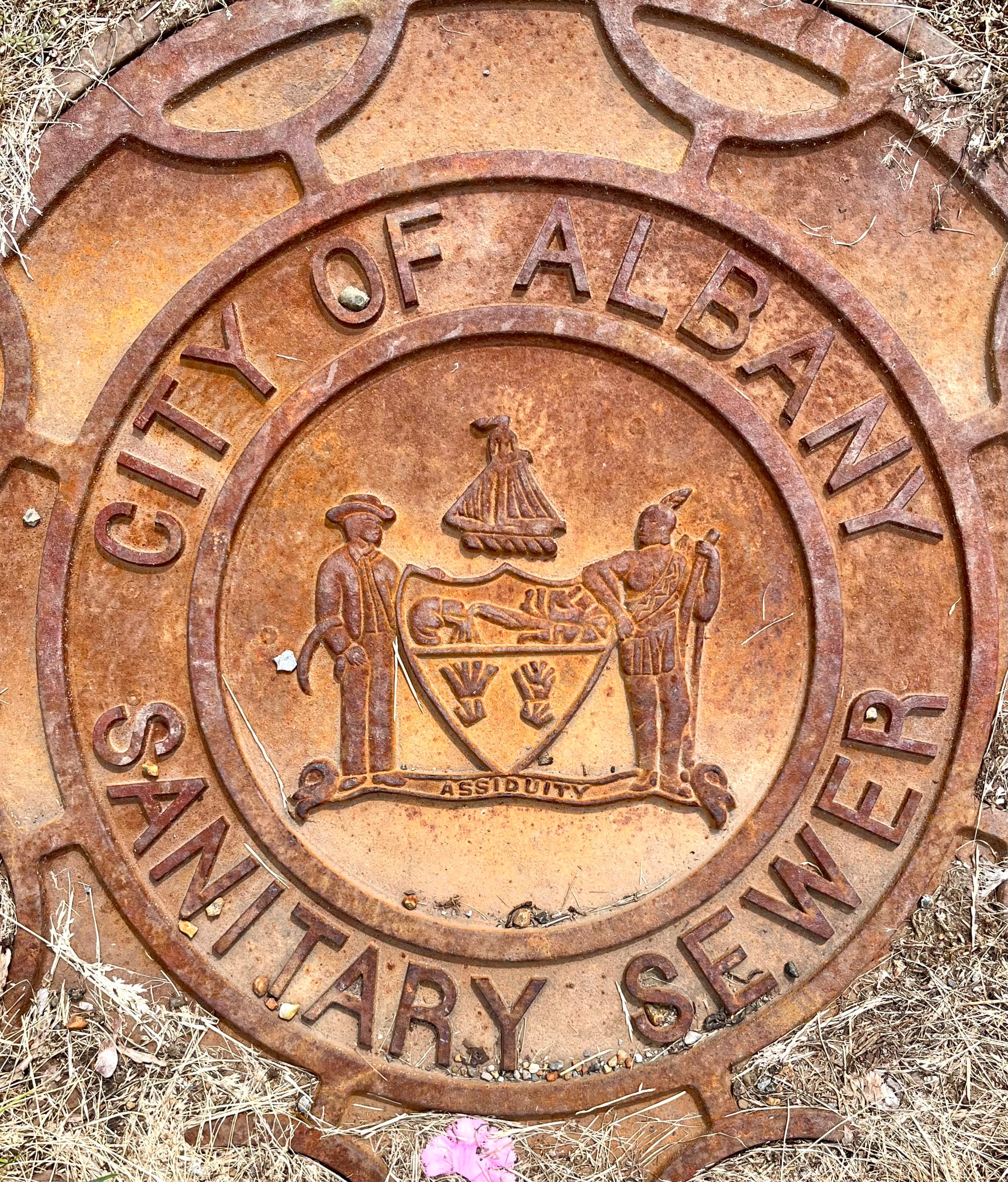
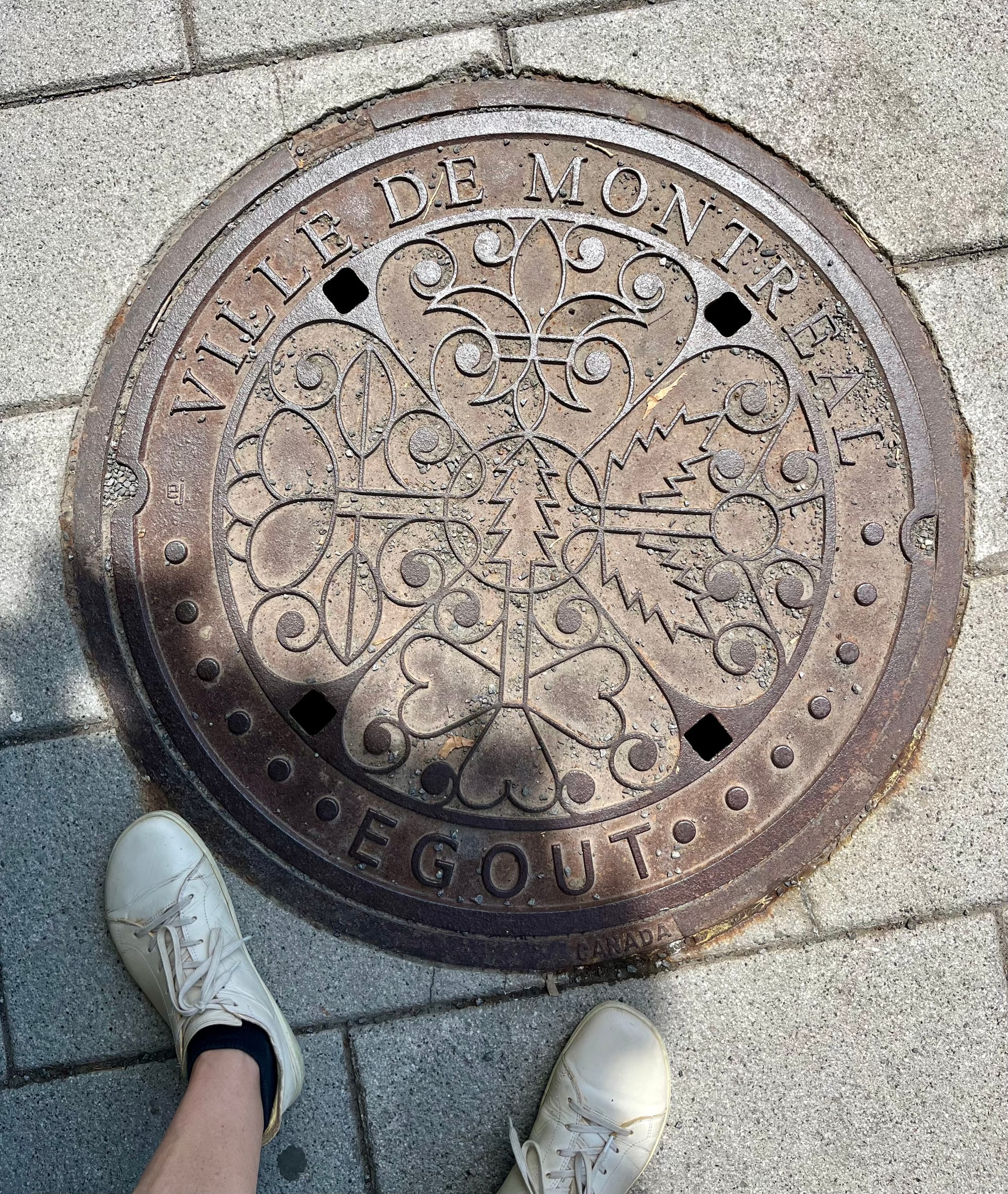
Albany and Montreal's seals, as seen on manhole covers for the sewer and for the potable water supply
A quick search indicates that Albany is currently taking submissions for updates to its symbol. The city's coat of arms has been around since 1789.
Interestingly, that was the year after the "extinguishment of the Indian title" (see Names Mapped onto the Land, 5/29/26). That's when the state opened Six Nations lands in western New York to white settlement.
The coat of arms gestures to Dutch and later, English ships; the trade in beaver pelts that drove Dutch relations with the resident Mohawks and Mohicans; and the agricultural history of the state under colonial settlement. Doesn't it give the impression that all of that had just gone great for everyone involved? It occludes the death and displacement suffered by the native people here, as well as the beaver population.
The Montreal seal was first adopted in 1833, with the most recent update in 2017. (Here's a fun piece about something most of us probably have not paid much attention to: https://macleans.ca/news/montreal-might-have-canadas-most-beautiful-manhole-covers/). Though not shown in the design below by Luc Melanson, Montreal's seal also has a beaver.
The new version stylizes the traditional symbols of the French Fleur de Lys, the English rose, the Scottish thistle, and Irish shamrock. But take a moment to consider who had been missing from this list.
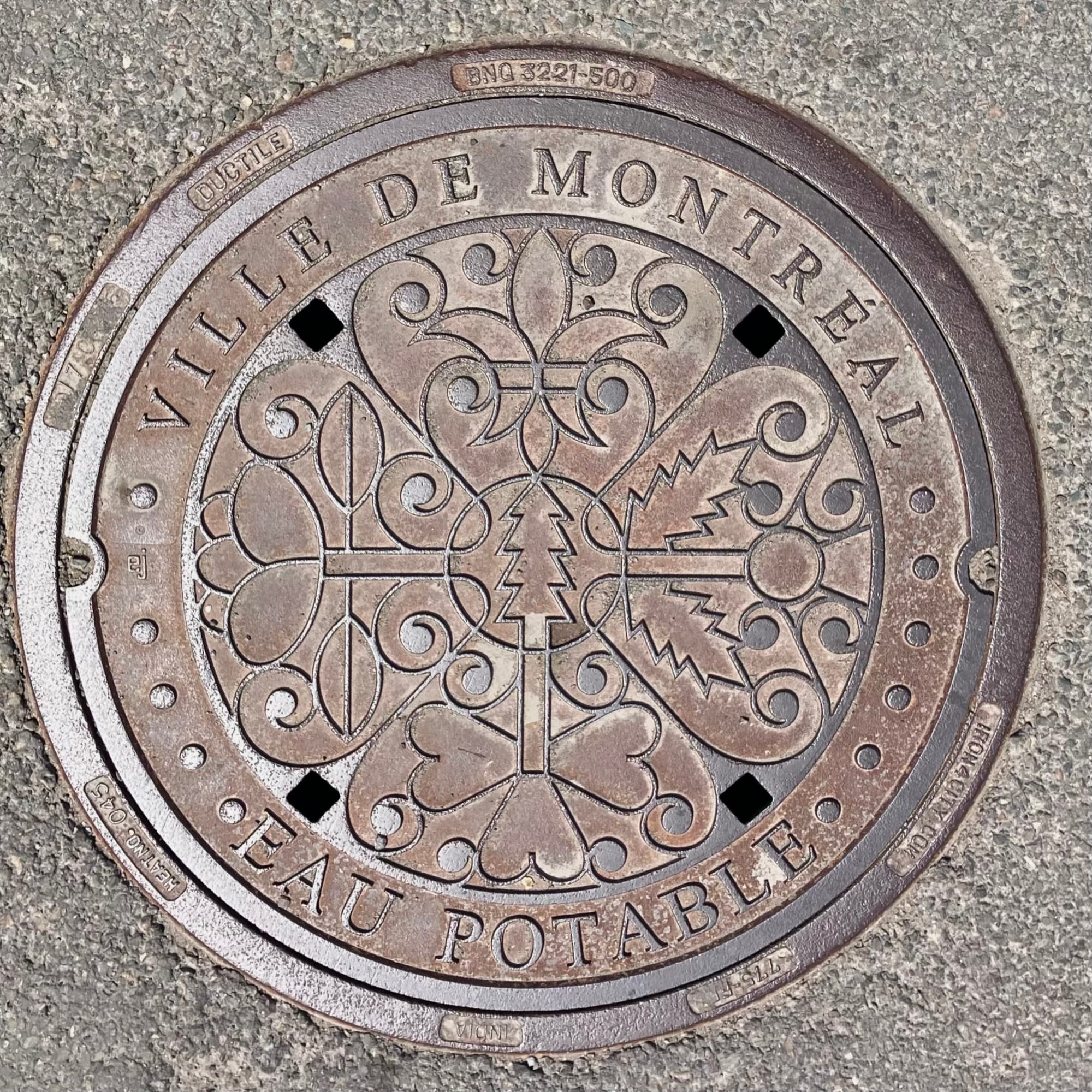
Through the white pine in the center, the 2017 update corrects the omission of native people. It is at a strangely smaller scale than the other plants, however.
As meaning-making creatures, it is part of our character to be constantly engaged in portraying our worldviews. We communicate stories about ourselves and our values in a variety of ways. What, and who, we leave out are as important to notice as what we include.
We need the awareness and dialogue encouraged by artists like Snow and Revenko to be part of our attempts to update our symbols, so that they can be more than a glossy, superficial brand label.
Let's acknowledge how our histories have involved acts of hurting and acts of helping, along with interactions that we can be thankful for, and others for which we need to ask forgiveness.