The Deeds of Our Ancestors

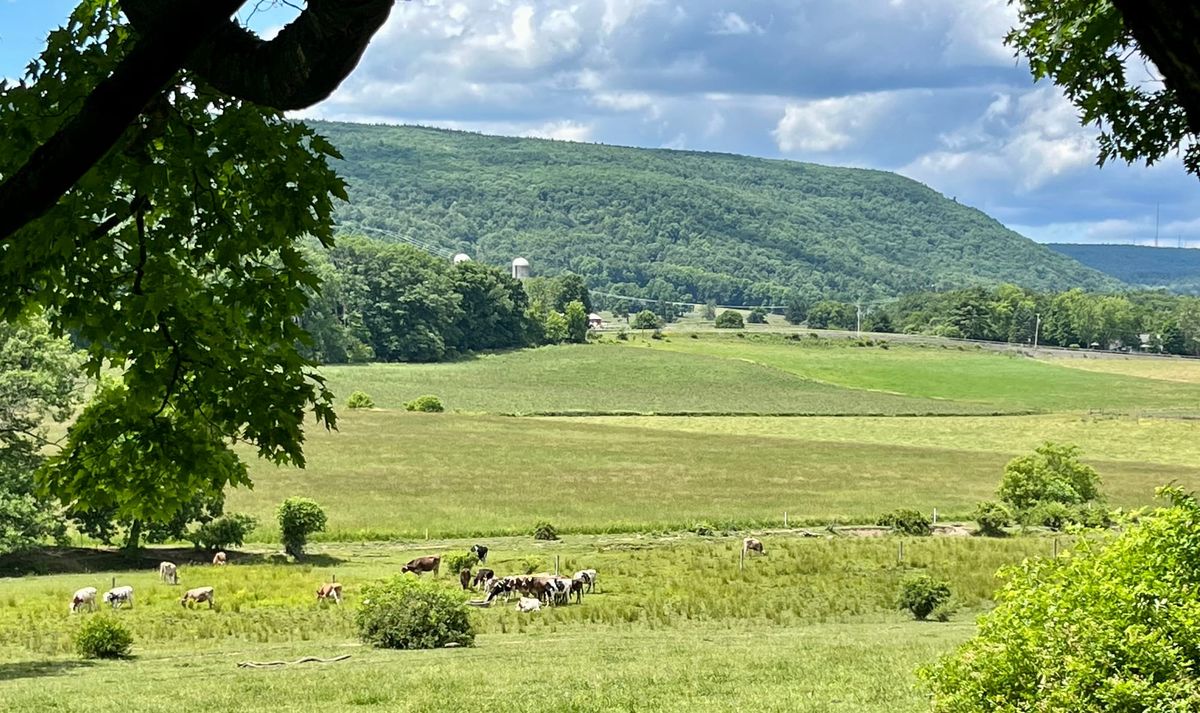
"The economy then was almost 100 percent agricultural. Other vocations existed in the community, but they were service vocations intended to supply the needs of the men and women who actually produced saleable items from the land. Every little hamlet aimed at self-sufficiency, with its own general stores, asheries, distilleries, blacksmith shops, shoe-repair places, millinery shops, undertaking parlors, lawyers, doctors, barbers, and the like. Farmers occasionally traveled to the cities to market their produce, and peddlers often appeared in back-country communities to supply the needs of housewives, but there was little travel on the part of the average citizen." T.H. Blaisdell, Town of Westerlo, Then and Now, Bicentennial publication, 1976.
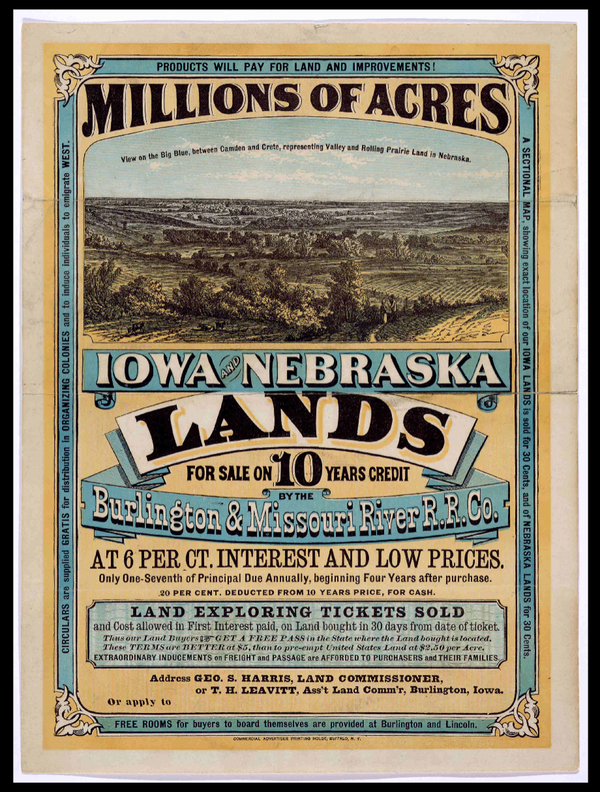
It is easy to believe that in those times and places people stayed put. But in many cases, they very much did not. Some crossed continents or oceans looking for better conditions.
I found Blaisdell's quote particularly interesting since my great-great-grandfather from Ireland found his way out to the Midwest on his extensive route as a peddlar. That's how he met Harriet. And her family was in Indiana because my ancestor, Eliphalet, had left the rest of his tenant farming family behind in a Helderberg hamlet.
In an exciting recent development, I've made contact with a fourth cousin in Indiana. She is a descendant of my great-great-great grandmother's brother. We hadn't known of each other's existence, but both of us are retired English teachers, so that's fun.
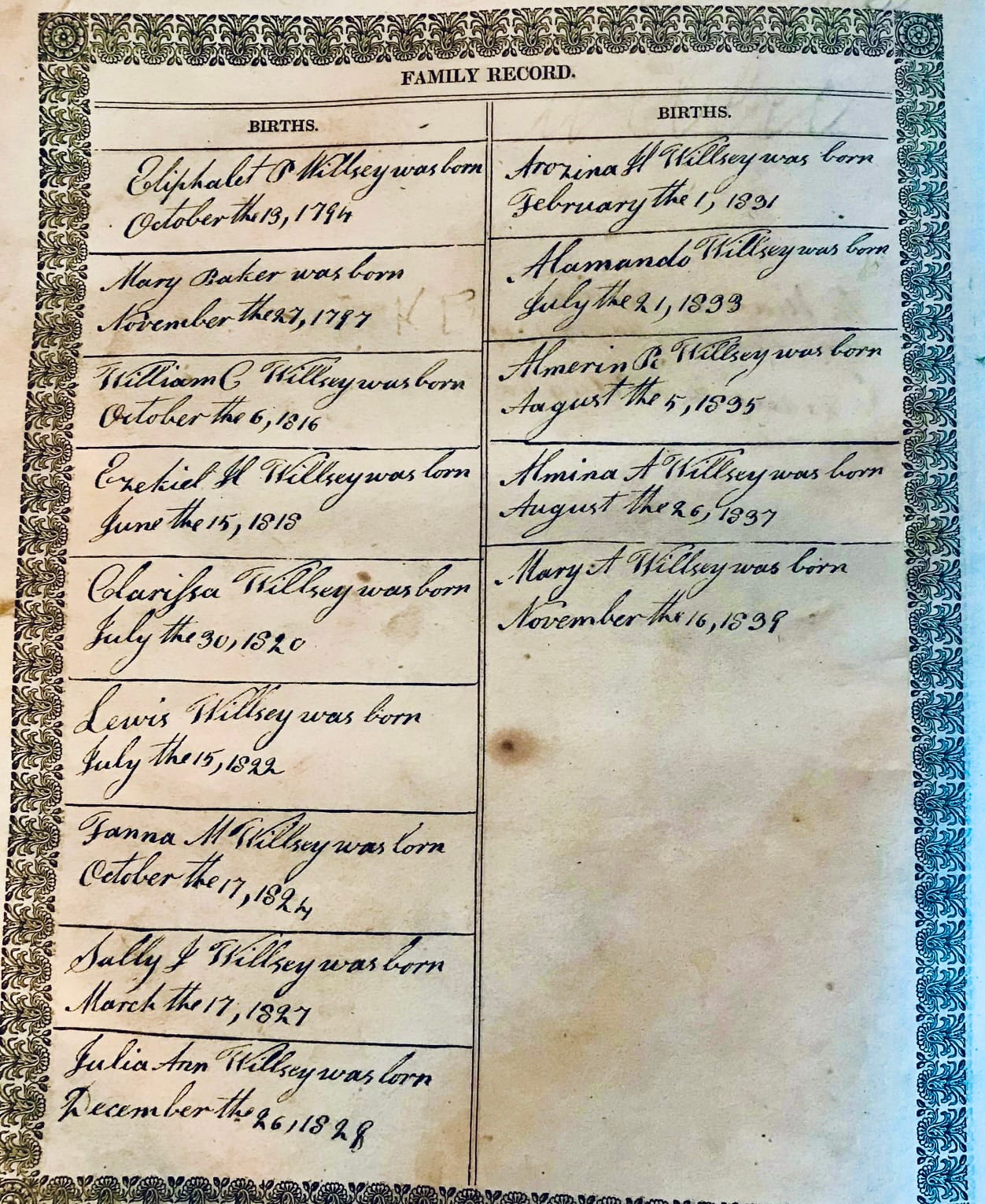
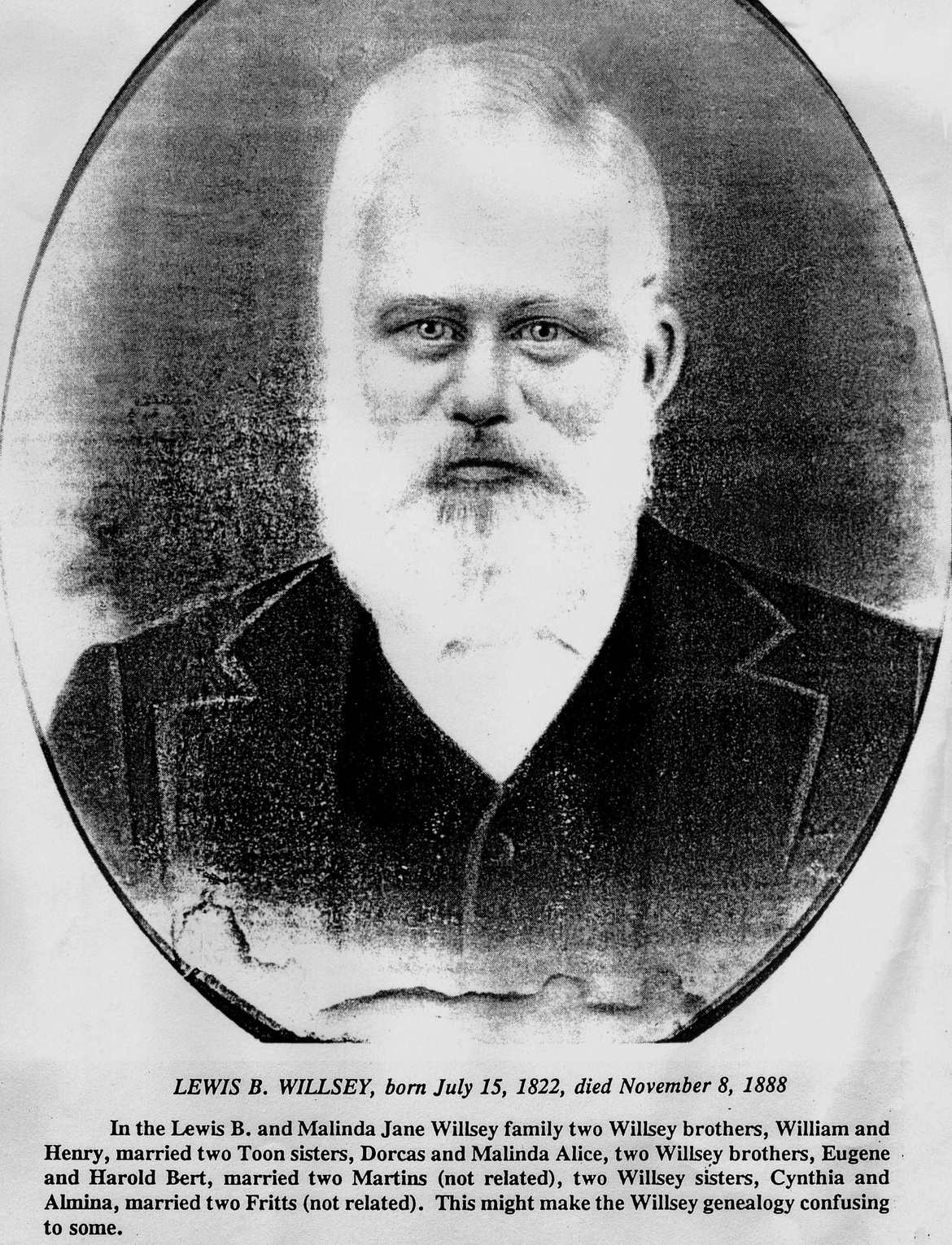
From her, I was able to acquire this photo from the family bible, listing the birth dates of Eliphalet, Mary, and their children. Also, this photo of Fannie's brother, Lewis. The amusing caption about confusing marital records is true in so many cases.
I'm thrilled my new-found cousin has so much documentation of the Indiana branch, because I'm still out here searching for more information about those they left behind.
This week found me poring through old tomes and squinting at blurry documents on microfilm. I wasn't at the New York State Library this time, though, but rather the County Clerk's office. The first morning was more about getting the lay of the land, so to speak—finding a good parking spot, getting through the metal detector, and connecting with someone in a back office who could tell me how to proceed with record-finding.
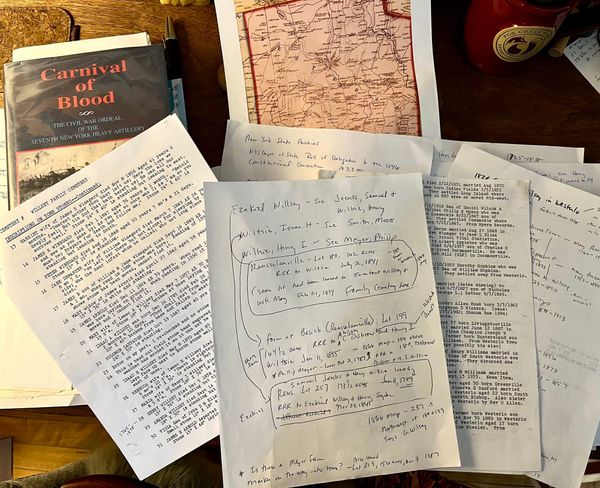
From a wall of big directories, I pulled one for "grantees," with a starting date of 1630, searching for when the Wilseys might have acquired their plots on the Van Rensselaer Manor. Later, I pulled one for "grantors," as I tried to get a sense of how land might have changed hands within the family. I was trying to stay focused on three family members: Henry Isaac Wilsey (1765-1838), and his two sons, Isaac Henry (1786-1870) and Ezekiel (1797-1881). I went home with some very messy notes and lots of questions.
I got my notes in better order, and returned the following day. The next step took me to drawers full of microfilm reels containing the property records. As of that visit, I haven't managed to look at every transaction I found in the directories, and I'm not sure I'm interpreting some of the legal language correctly. There are many snippets of information to consolidate as I try to reconstruct a timeline. I still have many questions!
My overall impression, though? This family was doing a lot of land dealing. The soil up in the hill towns wasn't great, and it was probably desirable to have as many acres under cultivation as possible.
It looks like farmers may have also divided their land with relatives, or sublet to each other, parceling out smaller amounts. Here's some evidence of the quality of the land:
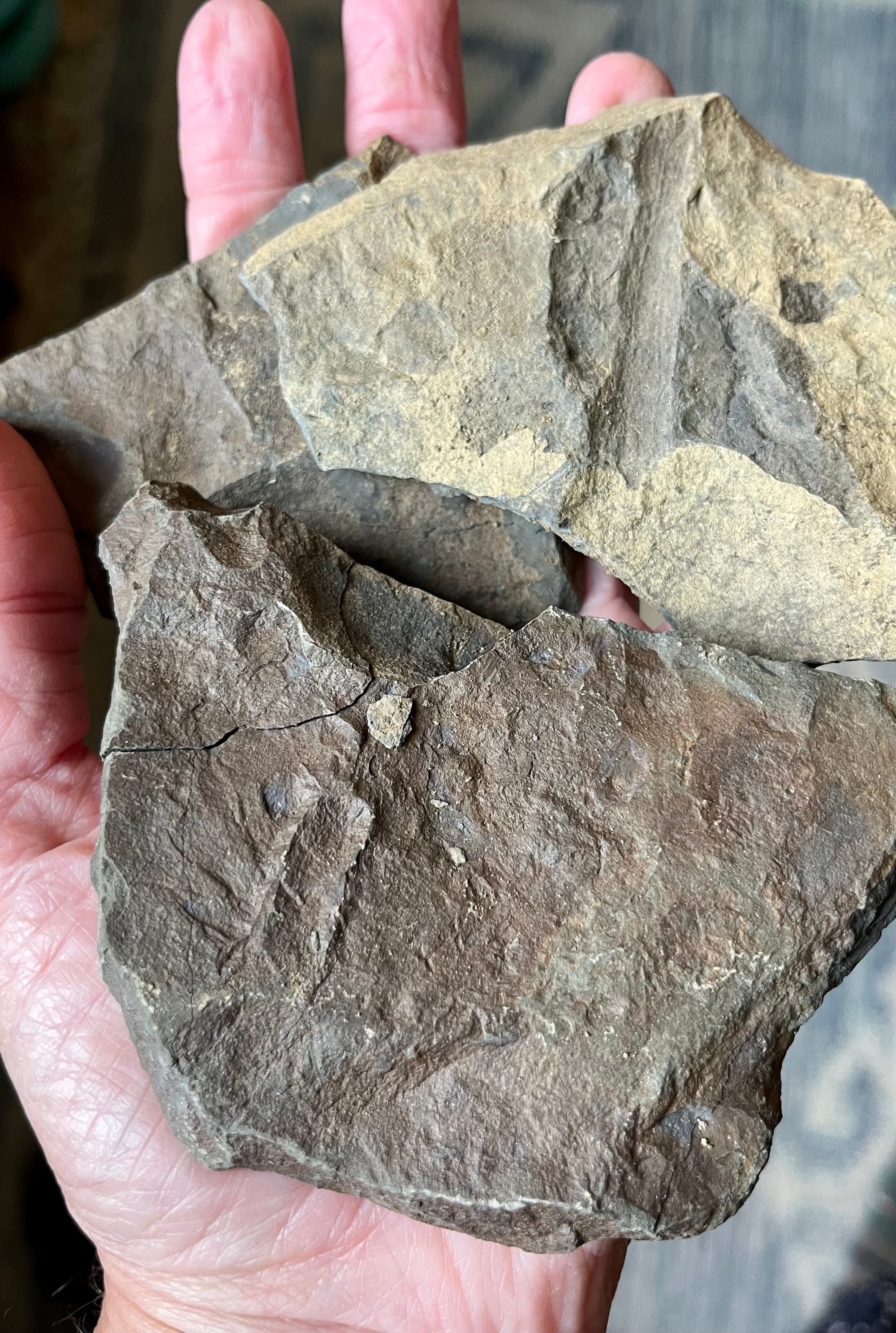
On a recent drive past the old homestead, I jumped out and grabbed several chunks from some disturbed soil near the lane. Funny, I guess I just wanted a piece of the family farm, too. Now I need the help of a friendly geologist. Is this shale, or hardpan, or something else?
So far, my record search has uncovered multiple dates for transactions, spanning from 1799 to 1873. This is interesting, given that the burials in the family plot on lot 180 start in 1823 and end in 1893. And my momentous discovery: it looks as though Isaac actually managed to buy lot 180 outright—members of Henry Isaac's generation had rented it since 1814—from Stephen IV and Harriet Van Rensselaer in July of 1841. I still don't know the details of lot 199, that he also farmed at least part of.
Just as momentous, his brother Ezekiel (and another farmer, Henry Snyder) seems to have bought lot 257 from the Van Rensselaers in June.
I say "seems" because I'm confused by the amount these brothers paid, enumerated in documents that declare that their payments have "remised, released and quit claims." In my earlier writings about the Anti-Rent Rebellion, I've mentioned that I found Ezekiel's name on the list of men representing the farmers' grievances to Stephen IV, after Stephen III's death brought on a concerted effort to collect back rents from the farmers. That was in 1839.
During their attempts to negotiate, the farmers asked to buy their land outright for $2.50 an acre, but the fresh young landlord scoffed at that offer. He demanded $5.00. However, according to Henry Christman in Tin Horns and Calico, by 1847, Van Rensselaer was so worn down from the rent strikes, uprisings, and legislative and legal battles, he "slashed his selling price to a dollar an acre, but there was little response to his offer"(279).
So, in 1841, Isaac and Ezekiel must have gotten in at the lower-than-five but higher-than-one rate. For acreages between 162 and 173 acres, each paid the same amount: $640.00. In 1863, when Isaac sold lot 180 to William Lawrence and William Winegard, he did so for $5,500.00.
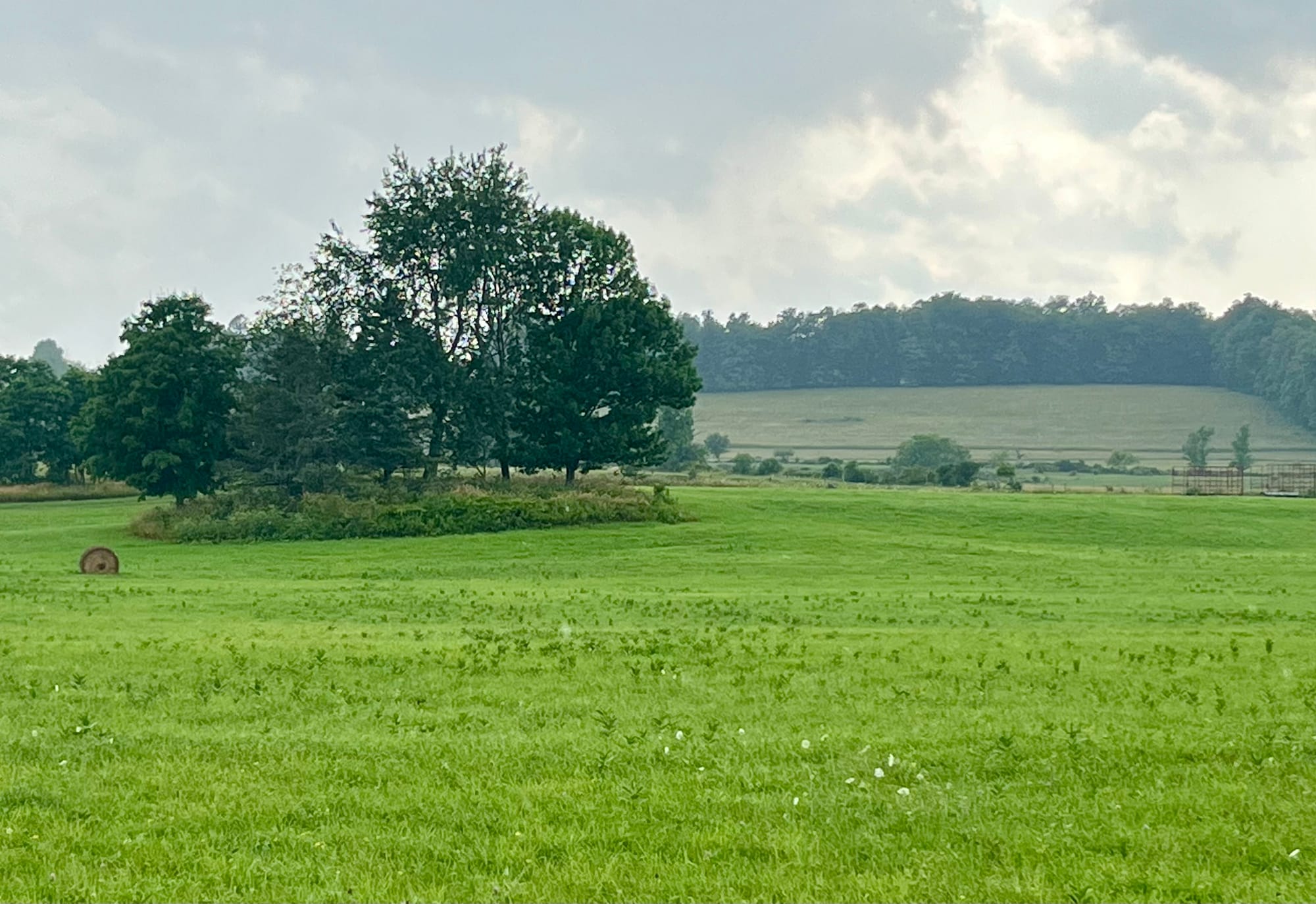
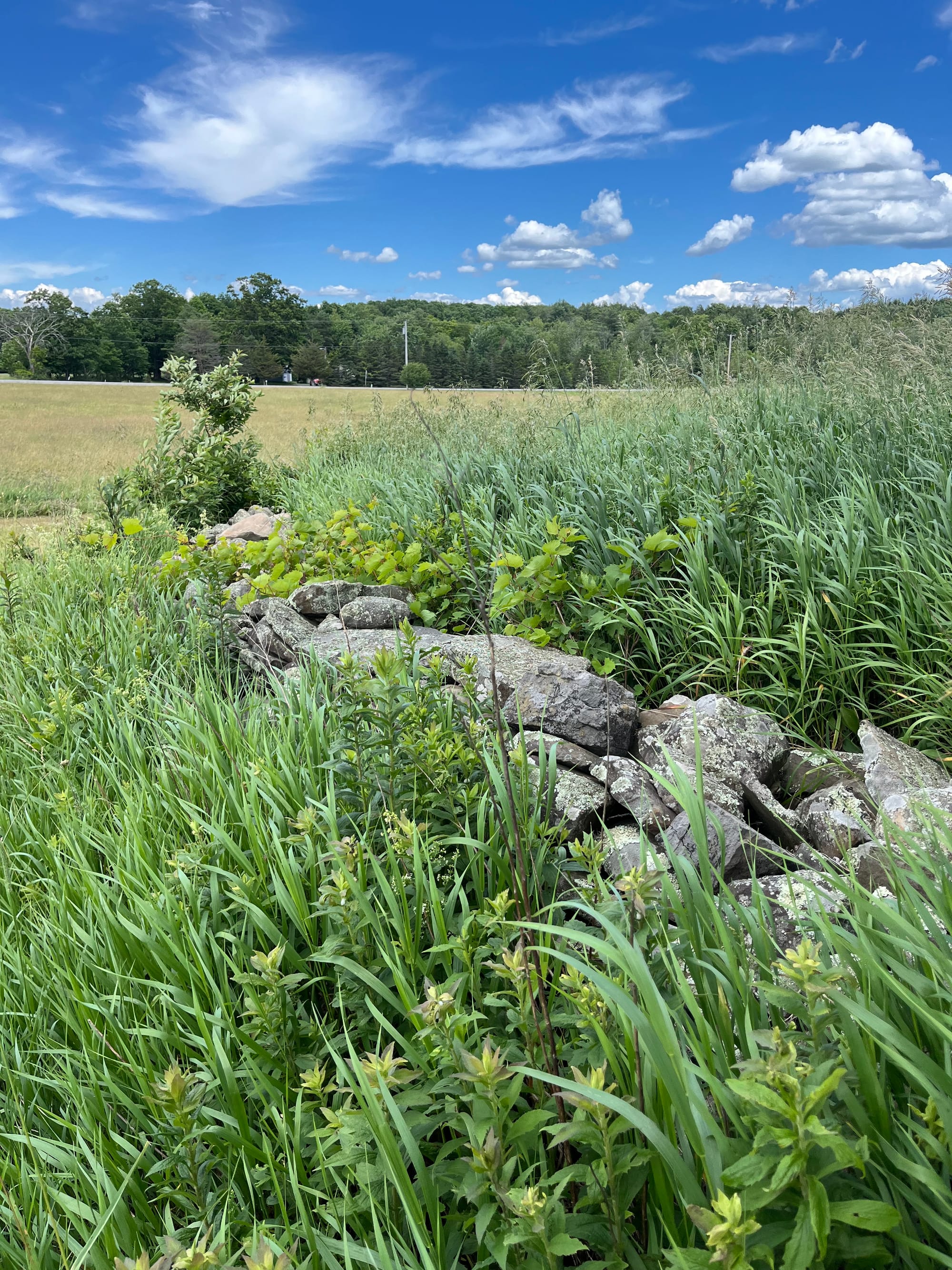
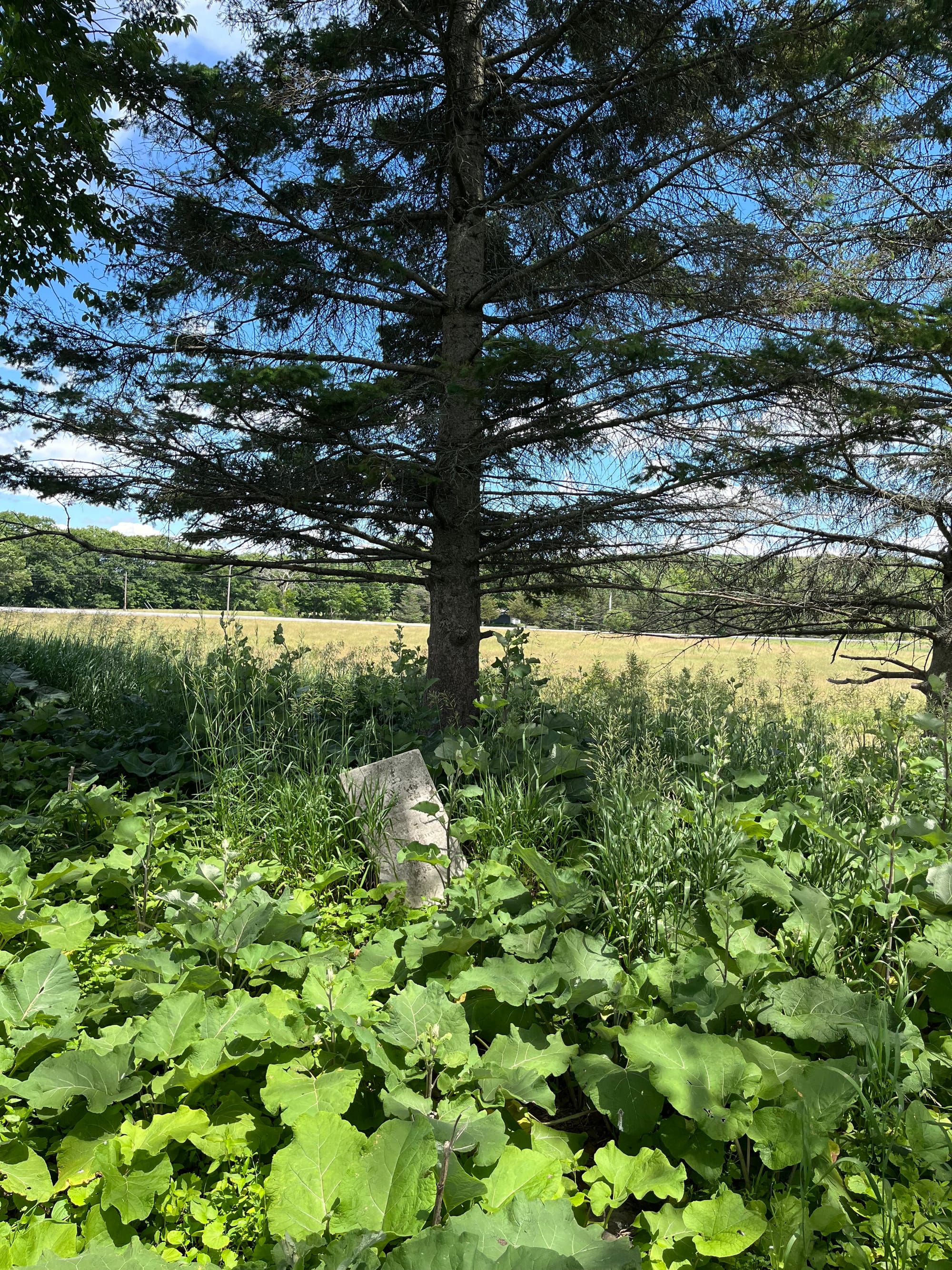
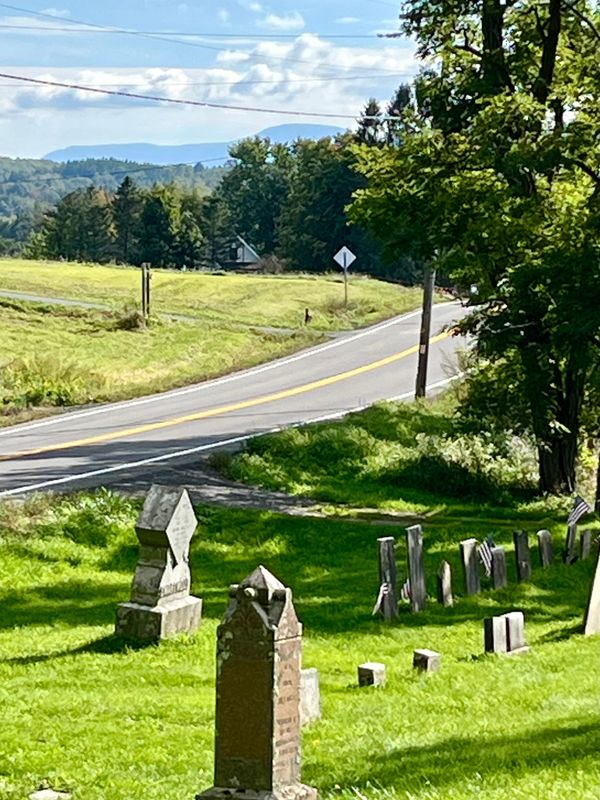
Current state of the family burial ground in the grove of trees. Used as a cow pasture part of the year, the plot is partly demarcated from the field by an old stone wall. Few gravestones are still upright.
And he carved out access to the cemetery. Isaac's record states,
"the party of the first part forever excepts and reserves the following pieces and parcels of land from the above described premises. First, that piece or parcel of land used as a family buryal [sic] ground also the right of way to and from said ground is to be used for the purpose above mentioned and no other containing one fourth of an acre."
Ten years later, Anna M. and Charles H. Willsey, heirs at law of Isaac, show up in the records in a "release of interest" statement for his estate. This release is given to William Lawrence "in consideration of the sum of One Dollar to us in hand paid by William Lawrence." My guess is that farmer Lawrence was then free of any obligations regarding the graveyard.
There's more to be learned about what ultimately happened to Ezekiel's land. The fact that both brothers bought their land in 1841, though, partly answers my questions about how they were affected by the Anti-Rent movement. Whether or not they joined the rent strike, it appears they had decided to sidestep the issue through their purchases. They may have lent their support to their fellow farmers, but I have yet to find evidence beyond Ezekiel's 1939 involvement.
I'd like to think that they attended Anti-Rent Association meetings, rallies, and parades, lobbied their legislators, and joined in general solidarity with their neighbors through the many years it took for reform to occur.
But it seems just as likely that because they possessed the financial wherewithal to buy their property, they may have simply minded their own business, focused on producing those "saleable items from the land" that Blaisdell wrote about.