Post 46: Acknowledging Ignorance, Making Amends

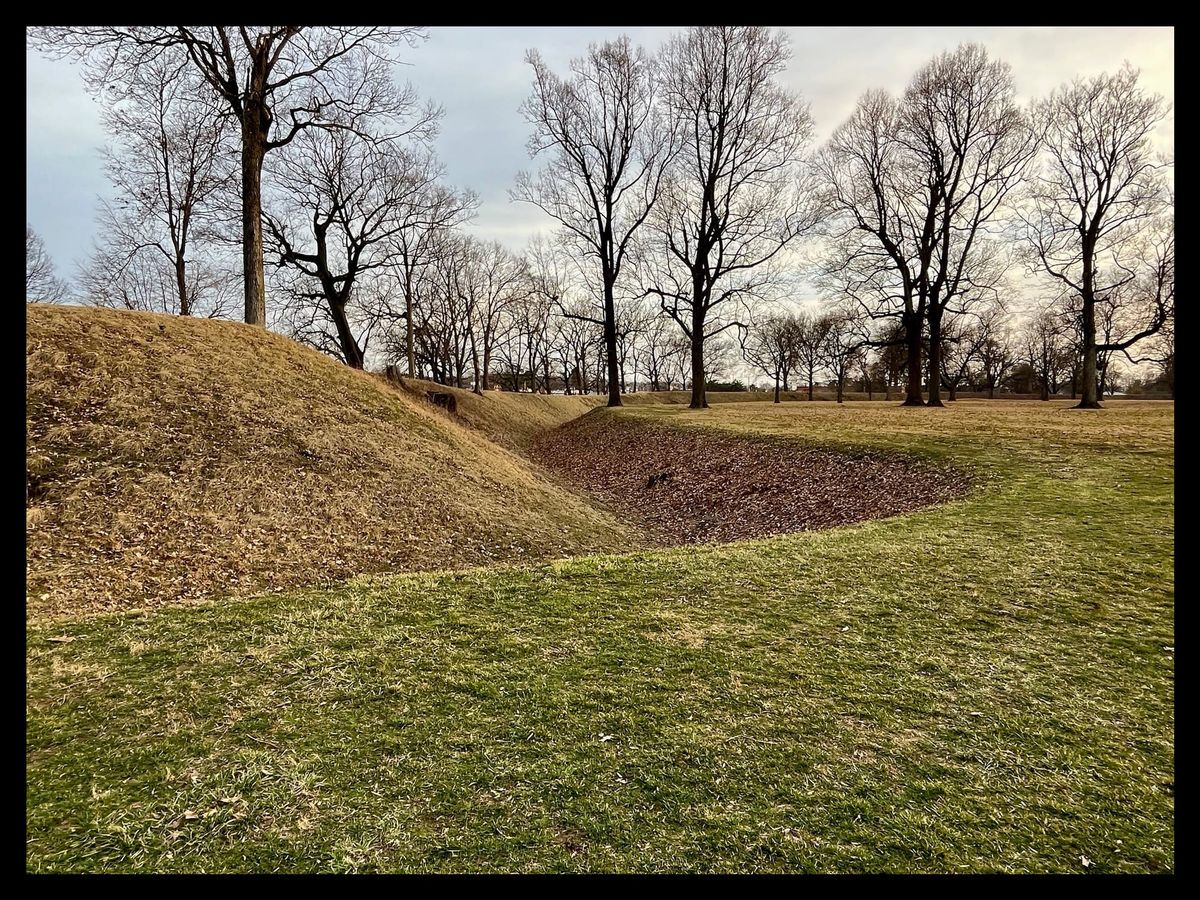
"I'm not asking you to bear the weight of all your ancestors' indiscretions and negative occurrences. What I am asking is that you advocate for those truths to be brought to the surface, and for you to share that we recognize that these occurrences have happened." Kanyon Sayers-Roods, Mutsun Ohlone/Chumash
This week had me reeling from recent atrocious events, on top of the combined weight of the past year's assaults. Some, though, are holding tight to their small personal denial bubble. Even saying things like this quote I saw on social media: "I ask you again, how is this worse than under the two previous presidents?"
Confronted with such a question from an upper middle-aged, mid-western white woman—a demographic rather similar to mine—I wonder about the person's knowledge base. Where are they getting their information? But way before that: what did they grow up learning about the world? How might the pedagogy of their education have primed them to preclude further learning, to avoid new facts or alternate perspectives? To actively cultivate ignorance by their ongoing choices about their information sources?
And then I have to ask questions of myself. How has my own education steered me in particular directions? What do I need to know more about?
I'm still reading We Are the Middle of Forever, the collected interviews with indigenous people I last wrote about. My response to what I'm learning is very much "in formation." And probably will be for quite some time. Because the subjects of indigeneity and colonization require us to consider the pedagogical issues I mentioned, but also basic aspects of personal identity and responsibility.
These individuals' experiences, tribal histories, and struggles for federal recognition, or any recognition at all, expose how little I've known of their lives. But inadequate education was one reason for this project in the first place.
Being this ignorant is embarrassing and painful. Being able to say "well, I'm not alone in this" isn't a consolation. That just means we have a huge problem to solve.
A call to those from settler lineage
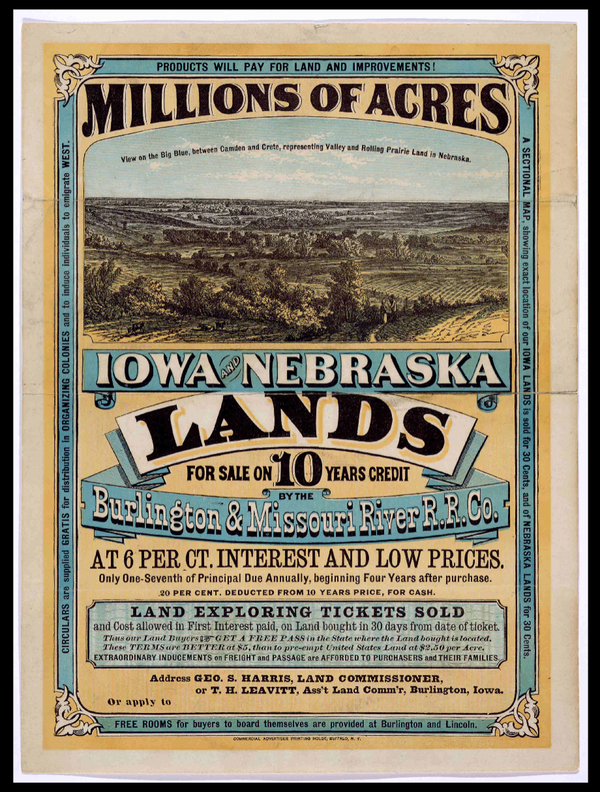
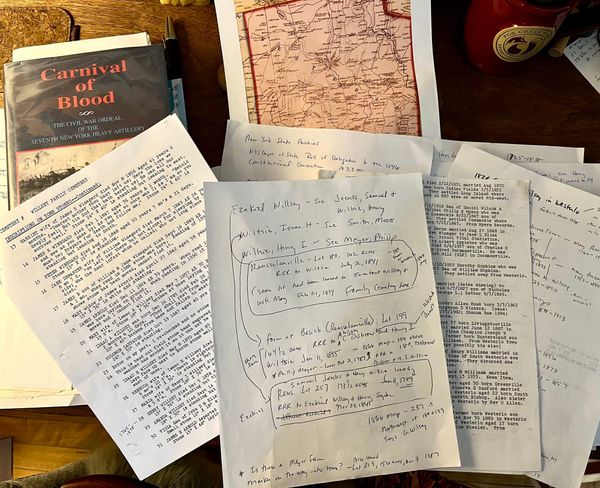
Let's take a quick look back at how Finding Throughlines opened. In my first post from last March, I described myself as "from settler stock through and through, though I'm aware of only the vaguest details." I outlined centuries of immigration, as my family of origin moved in the 1960s to a Dutch immigrant settlement founded in the 1840s. Before that, ancestors had arrived from Britain in the 1840s, and before that, from other parts of Europe in the 1600s.
I mentioned discovering a bill of sale for an enslaved adolescent. I left out a pair of ancestors purportedly captured by natives around the turn of the 18th century. That may simply be the stuff of settler legend. I shared my sense that "these threads, painful and sketchy as they are . . . represent not only my familial throughlines, but also this country's, with our history of colonial invasion, immigration, enslavement."
For me, it all relates to the present, to the disregard we're seeing for human rights, bodily autonomy, and morality. As I said in that post:
"Now, the current administration is attempting to force through measures that reverberate with these lines. A long-avoided reckoning needs to be faced—that of how infiltrated with the past our present is. The facts of our particular history undergird and fuel the political structures, personal assumptions, and social arrangements we navigate daily. Many of us from this settler lineage are feeling called to reflect and reorient."
This week I've been trying to learn a little more about the mid-west, where I spent the first 32 years of my life.
There's so much I don't know. About the place as it was when my parents arrived in that Dutch village. And before that, when it was the vast prairie, before being broken into corn and bean fields by Dominie Scholte's followers and their descendants. Also, about Illinois, where my great-great-grandfather ultimately settled after fleeing famine in Ireland.
And not just Iowa and Illinois, but parts of Indiana and Ohio that we traversed in yearly visits to my mom's home place in eastern Kentucky. Places where the KKK re-emerged in the 1920s, described in Fever in the Heartland (see post 19).
I've also been pondering a road trip we took to Columbus, Ohio for a conference last March. It reminded me that the country is vast, and hosts diverse pockets of culture and discrete bubbles of existence. The journey helped connect more dots, and influenced my decision to set up this site. In the spirit of deep time and reflection, as conveyed by We Are the Middle of Forever, let's focus now on that trip, not 1960. Because Ohio took my time-travels much further back.
Two colonizer tropes: "You don't exist," and "We own your bones"
Last week I spoke of Greg Castro's experience of being told he was extinct; I'll consider more about that next time. Today I want to think about his father's reply: "Well, if you're dead, they won't try to kill you."
That's small consolation, considering how the dominant culture has taken ownership of even the indigenous dead. They have taken the land, the children, and then even the bones, for their collections. A different version plays out now: the seizure of the bodies of immigrants and others, removing and relocating them; taking their phones, wallets and identification; sometimes selling their stolen belongings; using their children as bait; and even abandoning uncharged and vulnerable people by cruelly releasing them to the winter elements at night.
So, let's trace some older, body-snatching throughlines, because many settler descendants don't know those stories.
"Please Don't Sled Down the 2,000 Year Old Burial Mound"
That's a recent headline from a Columbus news outlet. Seems like it wouldn't need to be said, but it illustrates the ignorance problem.
The Adena burial mound sits beside a busy thoroughfare in a residential neighborhood, near the Scioto river. I'd heard of Serpent Mound, nearly 2 hours away. I had no idea I'd stumble on one without leaving town.
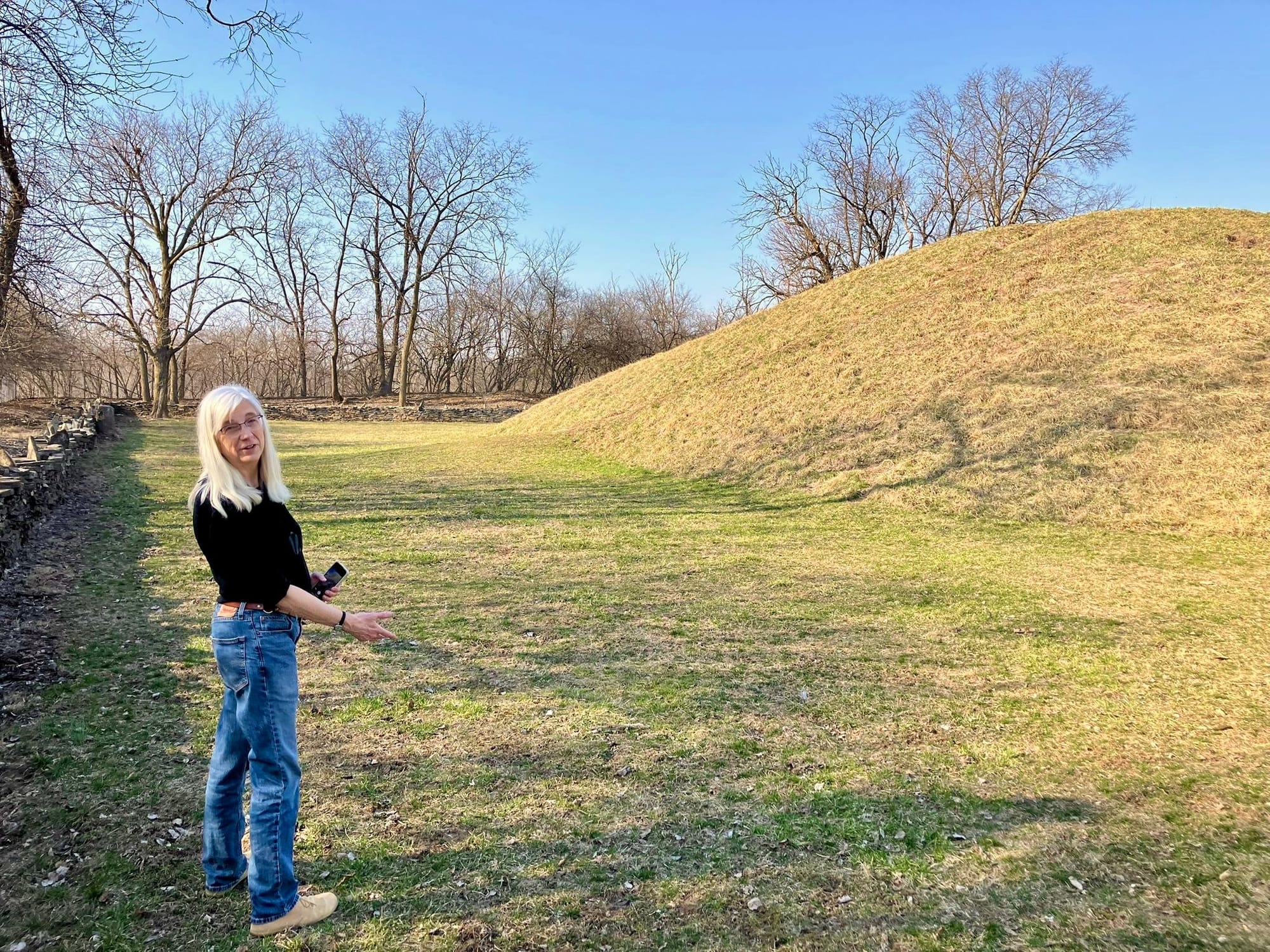
I also had no clue multiple earthwork complexes exist just outside Columbus.
The Newark earthworks are so large, photos can't do them justice.
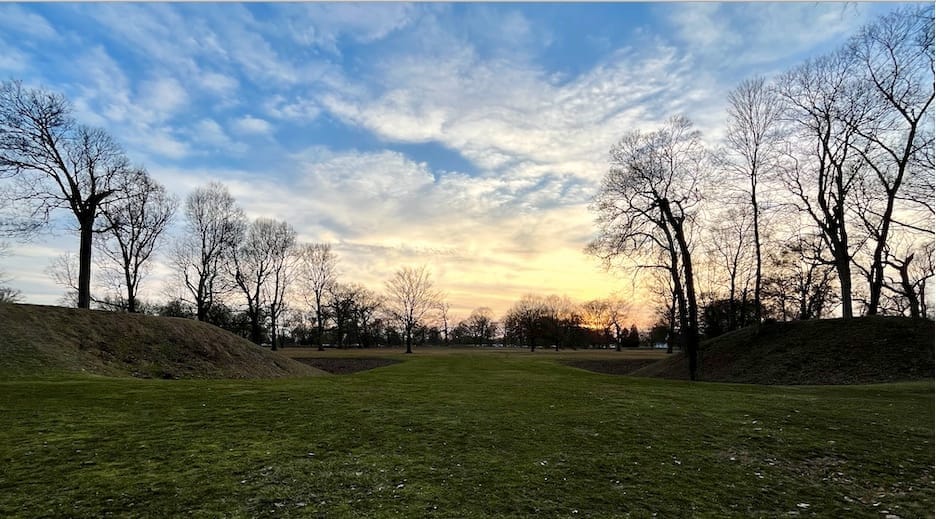
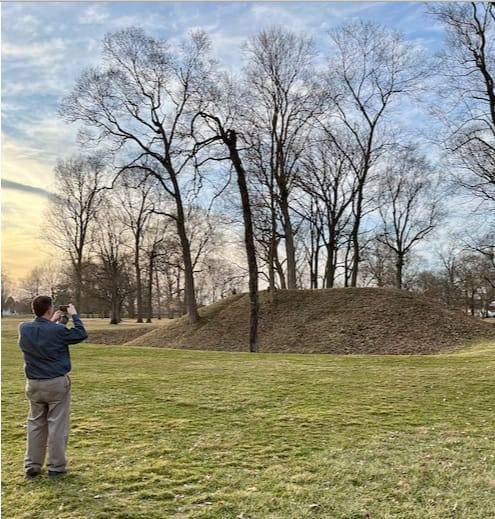
.
It's a portal into deep time. If you understand and respect what you're looking at, that is. I doubt golfers on the private course atop another nearby site have given it much thought. Hopefully, the recent UNESCO recognition will increase awareness.
This short video introduces the story well, and includes great aerial views:
 pvandyke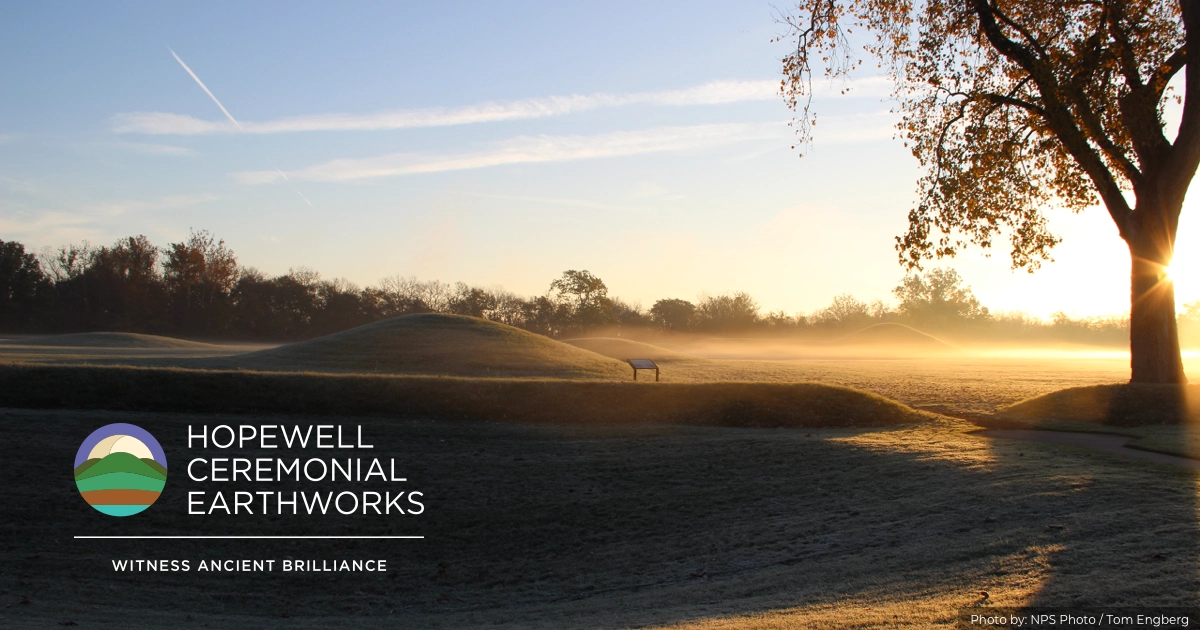
As for the Columbus mound, I'm not sure what it will take to discourage sledding on that sacred site. It lacks good signage and is hidden under other names. Called Shrum, for the family who formerly owned the land, it sits in Campbell Park, named for a governor (1890-92).
I wonder—does the hushed feeling around the spot relate to burials? Is it to avoid attracting practices we already have ample, terrible history of? Does it arise from tension between preserving the mound from development and preserving it from being tomb-raided?
In the chapter called Recognition, Corrina Gould (Confederated Villages of Lisjan) describes having to "clean up a mess of a developer destroying a cemetery," part of an effort to "stop a housing development on the West Berkeley Ohlone shellmound, a 5,700 year old sacred site" (267).
Her organization works to raise awareness:
"the shellmounds are places of ceremony and burials, created over countless generations, but no one living around them knew this, as they have been part of the erasure of Bay Area Native peoples" (271).
Expropriation of indigenous bodies is part of the threat to burial sites. I have a small personal connection here. Once or twice in late sixties or early seventies, my family visited an Illinois site. Then under the auspices of the state museum, it started as a road-side attraction. It had been monetized by a white landowner who partially excavated it in the 1920s.
My childhood memories are shadowy. I wondered why I was allowed to peer directly into the grave. My Kentucky relatives had a small family graveyard on their property. I couldn't imagine someone uncovering that site for strangers to gawk at. But in Illinois, separated by a particular cultural construct of time and racial identity, and a railing, I could view exposed skeletons of other humans.
These remains constitute a small portion of the tens of thousands held across the country. The issue of repatriation is fraught and complex. I'd especially recommend these two articles in ProPublica's in-depth series:
 Logan Jaffe
 Mary Hudetz
Only since the early 2020s have institutions taken serious steps.
Colonial era roadblocks are baked into the process. Gould explains one: "Because we're not a federally recognized tribe, we don't have a land base, and we've been praying for the ancestors to come home." She explains that "UC Berkeley itself has over 9,000 of our ancestral remains and funerary objects. If they were to give us those ancestors, where are we going to put them?" (274).
That question looms even larger today, as funds are slashed and history is sanitized. The truths had been being brought to the surface. It's going to take our advocacy to revive that upward movement.