Post 45: Time to Reflect
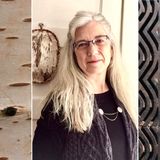
"Today we're just operating in what must be a smidgen of all of the time that ever existed." Dr. Kyle Powys White
Unless we're in a bubble or in deep denial, most of us are aware that we're being subjected to an intentional destabilizing political strategy, known as "flooding the zone." They've even told us that's the plan. We've seen ample evidence that they are carrying it out.
Terrible suffering is being inflicted on people's lives and the repercussions are global. Even for those less directly-impacted (yet), the tactic makes it more difficult to simply function—it is hard to focus and carry on with basic aspects of daily life. Mounting any kind of positive response to the chaos requires that we cut through the noise. We need discernment to find the appropriate levers of action at any given moment.
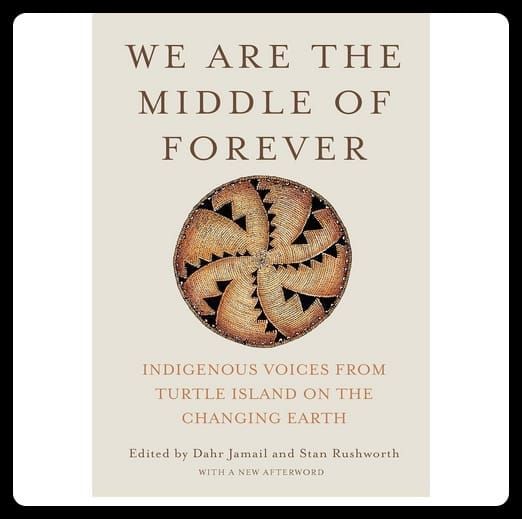
Last week I shared some thoughts regarding the choices we make about how to direct our time and attention. This week I'd like to expand on those themes, with the help of my recent reading of We Are the Middle of Forever. In interviews with people young and old and from many different regions and walks of life, Jamail and Rushworth highlight twenty different indigenous voices in these chapters.
As the title indicates, our relationship to earth's climate, to history, and to deep time is a main focus of the conversations in the book. Dr. Powys White, Potawatomi professor of environment and sustainability, points out that indigenous perspectives of time can open up more ways of conceptualizing both problems and solutions. He explains that "when we talk about deep time, when we talk about the fact that we're currently living in a small period of time in relation to other eras, it gets us thinking about other things" (81).
Powys White advocates looking beyond Euro-centric tellings of history, to stories long passed down by elders. These can offer possible forms of guidance, as well as a larger context for current events. "Deep time is one way of telling time," he notes, "and one of the things that it gets us out of is the panic that whatever is happening right now is completely unprecedented" (82).
We do urgently need to take actions to address the many ways earth's systems are becoming imbalanced. But we shouldn't rush ahead to answers with the same kind of hasty, blinkered mindsets that have helped create our dilemmas.
Ilarion Merculieff, an Unangan from St. Paul Island, is interviewed in Chapter 3: Living from the Heart. He holds the role of Kuuyux, or cultural message-bearer. He has also authored essays and books, and served a commissioner post in the Alaska state cabinet.
Speaking of the more than two hundred Alaskan tribes, Merculieff describes how "one thing that is very distinct in all of them is that they walk, talk, and act slowly." He explains the significance of this:
"We call it the Earth-based pace. They're slowing down to move at the rate of hearing Mother Earth. Going faster disconnects us from our relationship to Mother Earth. Another thing that it teaches is that we must take stock of what we have done" (39).
The velocity of modern life—even while this period itself constitutes a mere smidgen of time—does seem to make it difficult for many to stay in the moment, let alone take stock of what we have been doing.
This stock-taking needs to happen on many levels. In the chapter entitled Awareness, nineteen-year-old Raquel Ramirez (Ho-chunk, Ojibwe and Lenca) observes that "we're all carrying the wounds of our ancestors, and this can be seen in our actions and our thoughts" (48).
When asked, "Why is it important for us all to go back and really acknowledge what was done to Indigenous populations on this continent?" she refers to "the nature of cycles and the circle, like our medicine wheel. There is a constant cycle in human experience of struggle and growth."
Ramirez continues, "We experience the most amount of growth if we allow ourselves to reflect, and we can start reconstructing. For generations of Europeans not to reflect and reconstruct, they're not participating in the cycle of human experience" (54). Instead they are breaking it, and that means they will also continue to "carry the generational wound of genocide," which harms them as well.
The individuals in this book all give us important insights into the paths of healing they have been walking, whether they are offering sweat lodge to prisoners; offering ceremony or hospice care; speaking publicly about the environmental crisis; or learning/teaching traditional earth stewardship methods such as controlled burns to prevent wildfires. Many have been involved in the difficult work of retrieving their cultural identities, including the rituals, songs, and skills practiced by their ancestors.
They all deal with the trauma of their people's physical and psychological erasure. Chapter 2: A Sense of Permanence, describes what this is like for Gregg Castro (Salinan/Ohlone). He is "invisible in the sense that his people have no reservation, no federal or state or local recognition, no existence as defined by the American culture surrounding them" (16).
Castro's connection to place, and his sense of deep time give him strength: "He is a native man who can sit on a spot on a mountainside and look back in time for at least fifteen thousand years and see a long chain of ancestors working on that very spot, chatting, dancing, praying, and living in away they had evolved for a very long time, a way that worked well for them and their surroundings"(17).
As a child in school he was told "the California Indians are dead, they're all extinct." His father's answer could only try to make the best of this attitude: "Well, if you're dead, they won't try to kill you." Fortunately for Castro, his father always made it clear to him who his family and people are.
This is something that came as a late discovery for someone like Edgar Ibarba (Chicano, Yoeme, Tarahumara), incarcerated from age 14 to 24. He describes an incident in prison in which a stranger recognizes the heritage Ibarba wasn't even aware of himself: "I walked into my first talking circle and this Uncle sat there and looked at me, giving me the rundown, looking at me with, 'Hey, are you Indian? And I looked at him with, 'Oh hell no, I'm not. I'm Mexican.' And he looked at me, 'Oh, you're Indian. Go ask your grandma, and go ask your mom where you guys come from"(166). He does, and the Uncle was right. This discovery ultimately changes Ibarba's trajectory.
Reflection, awareness of history, knowledge of deep time, and action toward healing. All are so very needed.
I'd like to close by sharing a few resources that might help. They illustrate some of the distinct throughlines and repeating patterns of our history, and suggest ways we can, in Ramirez's words, "reconstruct."
In my January 23rd post, "Taking Action," I shared this article as part of my discussion of Native responses to the occupation of the Twin Cities. It is important to know the story of this place and what is happening there now:
 Amelia Schafer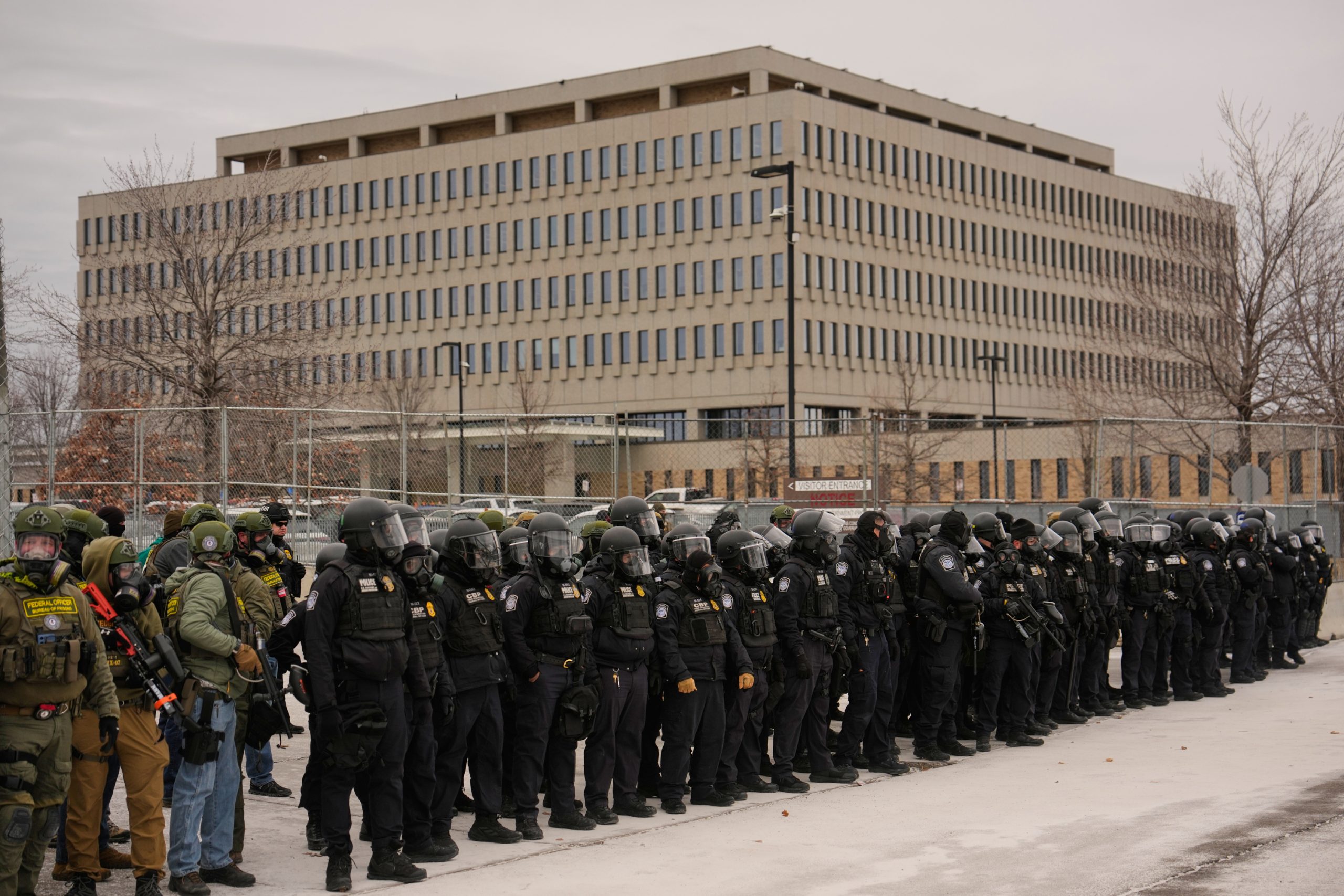
In recent weeks, a prayer encampment has been created across from this building:
This opinion piece exposes a particular kind of flooding the zone that seeks to sweep away history:
 britney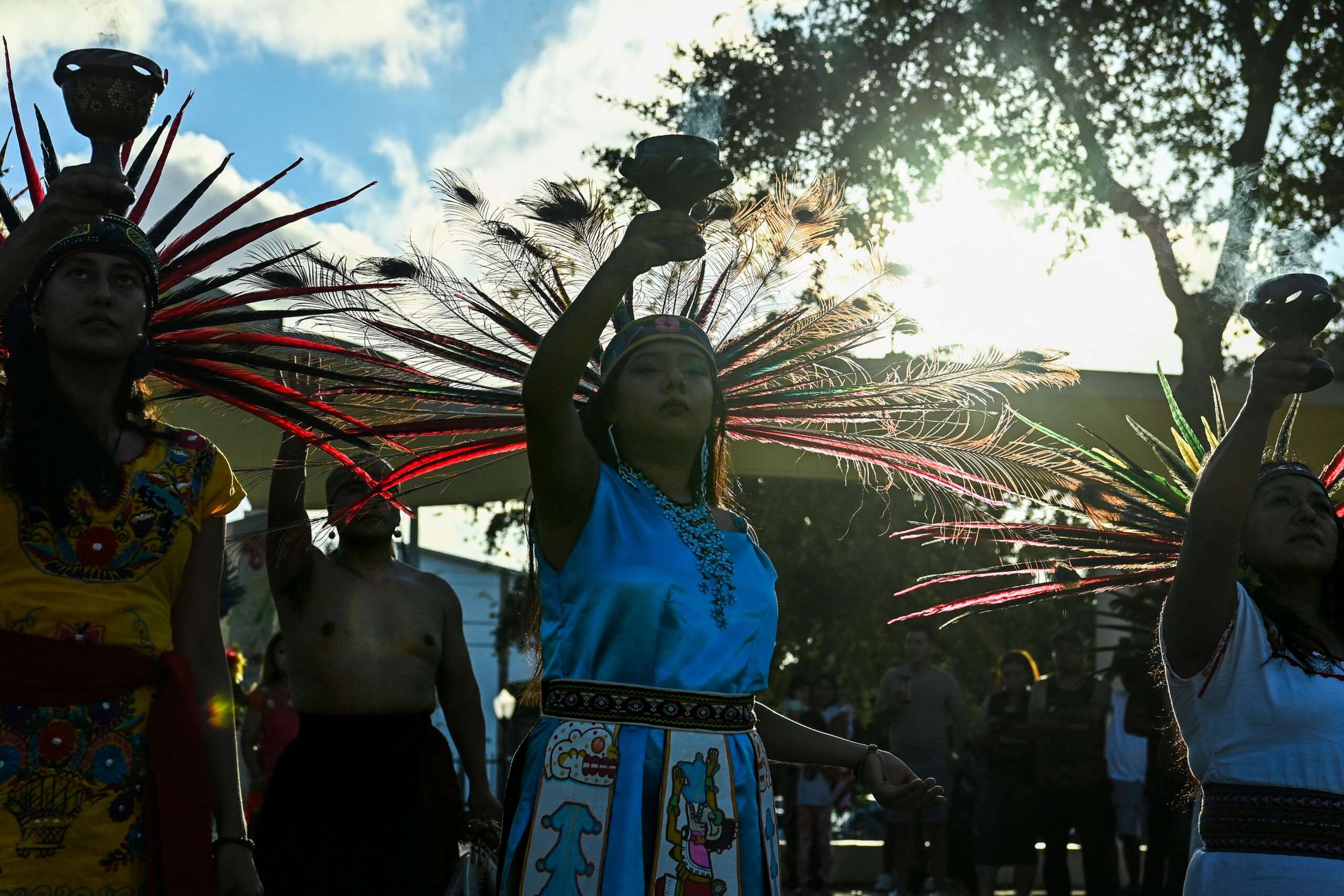
This TedTalk by Lyla June Johnston—interviewed in the chapter entitled Trust—offers profound answers from deep time:
And this interview with Ashley Fairbanks (Anishinaabe) by Kelly Hayes (Menominee) shows how organizing can help people take thoughtful, rapid action in a time of urgent need. They discuss how Fairbanks created the website, Stand with Minnesota, to enable a whole range of aid to flow in from around the country.
 Kelly Hayes
Wishing you time to reflect and reconstruct.