Post 44: Where Is Your Attention Going?


Have you heard someone say, or perhaps said yourself, lately, "I'm struggling to read books or longer articles anymore"? Often followed by, "I'm distracted . . . I'm just scrolling . . . I'm having trouble concentrating."
There are many possible reasons for this. Among them: time pressure, unconscious endorphin-seeking, escapism, and having become trained by digital communication to take in text in short bursts.
Add in the fact that most people's nervous systems are a wreck. Constant scanning seems like a reasonable adaptation to overstimulation, or to the sense of being under relentless, unavoidable attack from the world around us. Who can settle in for a long read with everything that's going on?
This seeming adaptation creates a vicious cycle, though. The more we scan, the more we widen the threat horizon. When we constantly take in multiple bits and bytes—random, incoherent assemblages of pixels that don't all add up to anything—we further alarm the nervous system.
That then triggers an urge to keep scrolling. We're driven onward by the false hope that we'll see something that helps us get on top of the threat, or helps us feel less threatened. But we're following too many separate tracks.
We may reason that we're reading fewer books because we have less time, but I suspect many of us now spend as much time scrolling as we might have spent reading long-form genres in previous years. And I think the emotional and intellectual fruits of reading vs scrolling are quite different. While I continue to work in both modes, I've generally looked to books and longer articles as the anchor for my Learn, Imagine, Act project.
As congressional figures so often assert in hearings when they aren't getting straightforward answers to their questions, "I'm reclaiming my time."
That's because I've begun to recognize my own "scrolling indigestion." Coming out of a long scrolling session I feel—to quote Strongbad, the comic internet commentator—"my focus is all . . . crocused." If you could use a little comic relief right now, I'd recommend watching it. The episode, while silly, accurately depicts how our digital and media landscape can intrude on and derail our creative intentions in ways that often feel out of our control.
In light of this, I'd like to share a concept I've found grounding. A few years ago I discovered artist Ellsworth Kelly's beautiful, spare, gesture drawings of plants. He described these drawings as records of his attention.
As someone interested in throughlines and wayfinding, this resonated for me. We are awash in the flood of digital input that constantly streams toward us. It can be difficult to keep track of one's attention. It can feel as though our attention record is a breadcrumb trail, instantly snapped up by seagulls. Or sand tracks that wash away with the tide.
Have you ever found yourself looking back at how you spent your time online and been a little confounded? What even are the records of your attention from your day? What do you have to show for all those comments, videos, and posts you looked at? How many times did you pick up your phone intending to look one thing up, but got distracted and derailed by six other things before you even got there? What if now, on top of nervous system hyper-vigilance, you also have a mind full of digital clutter?
Even our language offers hints at the problem. We "spend" our time, we "pay" attention. These kinds of attention "tax" us. They can take a toll, and the tollbooth is owned by large commercial interests who grow ever richer and more powerful from our engagement.
So, I've been trying to be more conscious of what records of my attention I'm creating. These records can be very simple, but that does not mean they are trivial. What might be some of yours?
It might be a garden or even a single houseplant you've successfully tended for years. A journal you write in, however sporadically. A well-sorted refrigerator and pantry. A distant friend or family member you stay in regular contact with. An exercise regimen you've maintained. That pile of freshly-washed and folded towels. A meditation or prayer practice. Those blueberry muffins you've just pulled out of the oven. A pattern of volunteer work. Those clothes you've knitted, sewn, or repaired.
Visible or invisible, these are all records of your attention. The attention economy devalues them. It wants to pull you away, soak up your time, get you to buy what it is selling, whether that is shoes, or vacations, or worldviews, or your consent.
Your personal records of your attention can be part of your "long haul plan." Finding Throughlines is one part of mine.
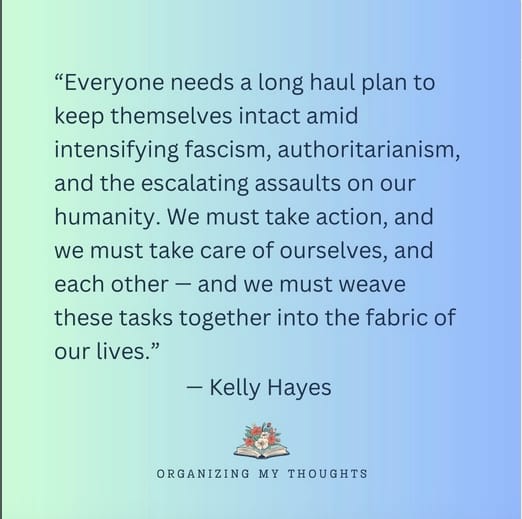
This brings up another question: what to read that is worthy of our attention? So much of the media ecosystem is now so embedded in this attention economy. Finding information that isn't compromised has become challenging.
I'm increasingly looking to independent reportage. People such as historians Heather Cox Richardson, Timothy Snyder, and Anne Applebaum; lawyers such as Joyce White Vance, Sherrilyn Ifill, and Asha Rangappa; writers and journalists such as Marisa Kabas, Kelly Hayes, and Andrea Pitzer.
Most of these sources have published books available, along with immediate commentary through online media, both long and short. I follow them on Blue Sky, but I've also started subscribing to their newsletters. I try to open those from my email account, avoiding the barrage of other voices competing for my attention when I get on social media.
I realize there is still a chance these individuals will bring a biased or narrow lens to their subjects. But by focusing on their work over periods of time and comparing it with that of others, I can gain a better understanding of their level of expertise, note where they might have personal biases, and seek out additional sources. And I'm always seeking more sources, so please send recommendations my way if you have them.
If my Learn, Imagine, Act project was actually taking place in a college setting, professors would be helping direct my reading and offering guidance. I'm relying on these writers—with more experience at the front lines, more training in analysis, more background knowledge for these subjects—to be the filter through which I take in this content.
These experts can help mediate the more emotionally-harrowing information, and I'll admit I need that help. This week, my attention has been drawn to the two major networks of cruelty and abuse that we are hearing so much about: the Epstein files revelations and the activities of Homeland Security. The news coming out of both fronts is truly the stuff of nightmares.
It's up to each of us to decide how much we need to know. But I believe our actions can be more effective when we feel well-informed and have clarity around our values and goals.
That's really the crux of these musings on attention: the corrupt and power-hungry benefit when we are distracted, unfocused, stuck in endless scroll mode with our nervous system in tatters. Chances are lower, when we're in that state, that we'll add up all the evidence and act against their agendas.
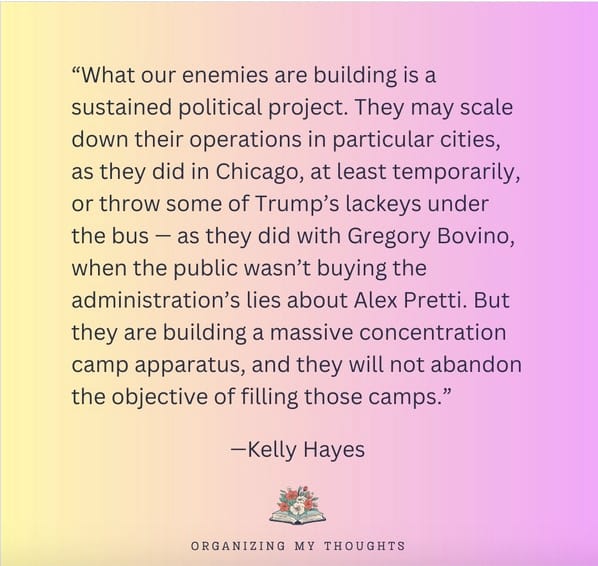
I have more thoughts about time and attention, but I'll save those for another newsletter. Right now, I'd like to call your attention to an important conversation between two of my "professors," Menominee activist Kelly Hayes, whose book, Let This Radicalize You I've referenced in several of these posts, and Andrea Pitzer, whose work on concentration camps I have shared here several times as well.
In their interview below, they discuss what is currently happening with the massive camp buildout plans, how our timeline compares with that of other regimes, and what we need to be doing to counter these efforts before they become too entrenched.
 Negin Owliaei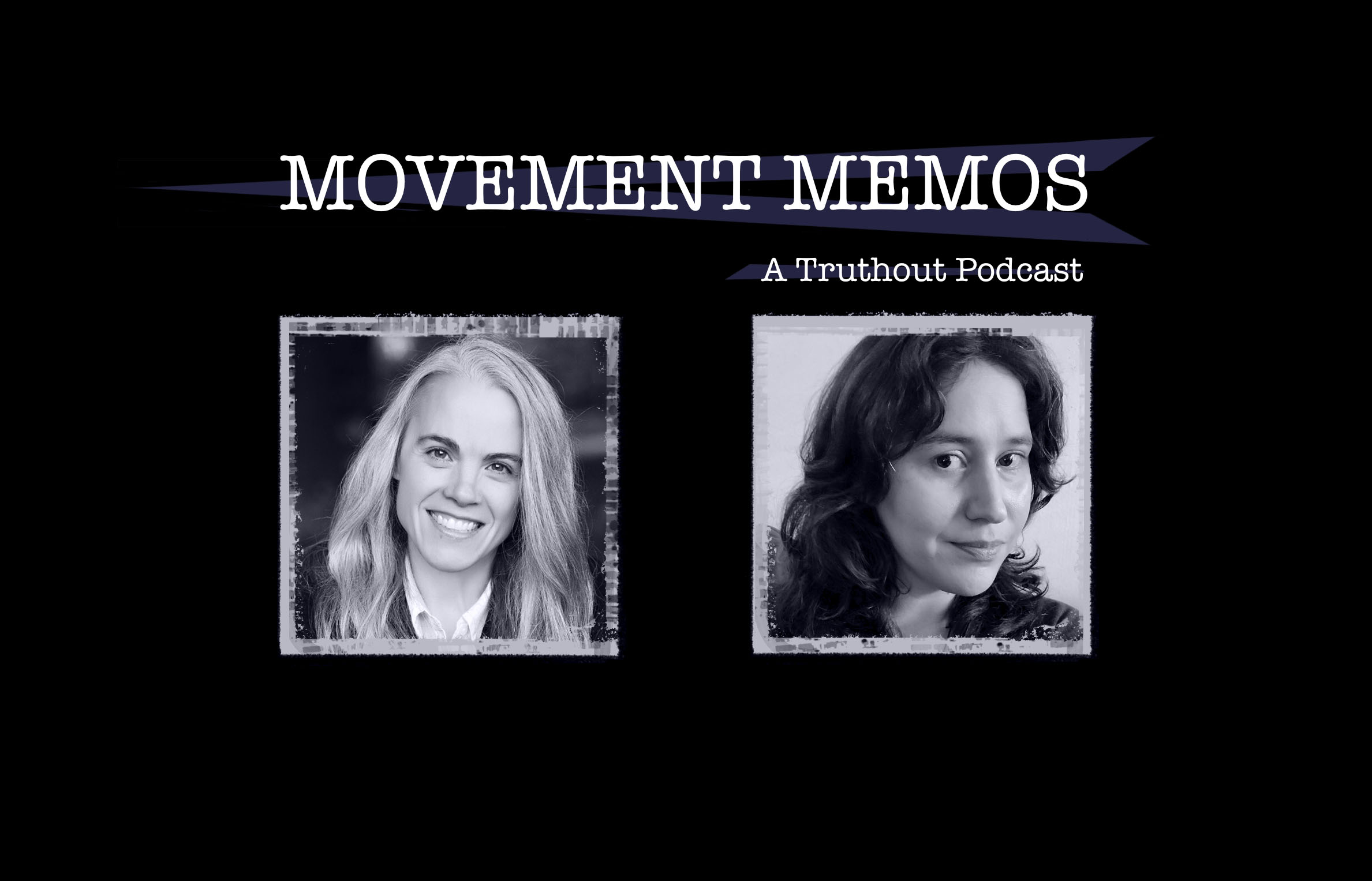
If you want a deeper dive into the logistics, here is a detailed report by Marisa Kabas:
 Marisa Kabas
Thank you for offering your sustained attention. It is worth the effort to reclaim our time. Focusing with intention can help ease us out of fight or flight mode. It can be part of how we take care and take action.