Post 47: Tugging at a Strand, Untangling a Tale

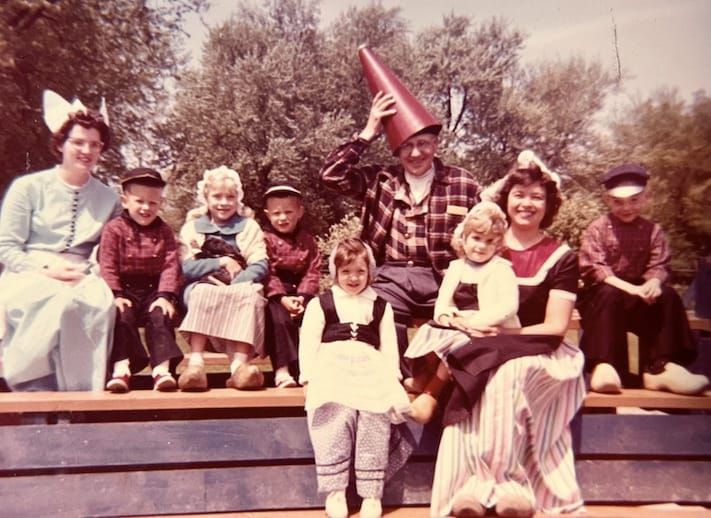
Picture a classroom at a Big Ten university in the early 1980s. It's Spanish class, and the professor has just asked a question about Native Americans. The exact question is lost to my memory, but a student's response is not:
"They're all gone. They're dead," declares a young African American student a couple of rows over from me. The professor's eyebrows edge up. The student reiterates her statement. She's not backing down. I'm so surprised, I don't even hear what the professor says next.
All these years later, I still wonder where she grew up, and what specific feelings drove her to make her claim so adamantly. And I'm learning that native people —young and old—still report hearing such statements. An example jumps out at me in a recent PBS interview, in a comment from a Meskwaki teenager.
In previous posts, I've mentioned how Gregg Castro, a Salinan/Ohlone man interviewed in We Are the Middle of Forever, experienced being told his people were extinct when he was young. To further complicate the picture, it wasn't only white people who assumed this: "Lakota in-laws came to California and showed how deep the erasure of his people was. 'Even they didn't realize at first that we were still around'"(18).
It's part of the irony of assertions that everything has become so "woke" these days. We're now far into the so-called information age, but the public's general knowledge still seems extremely spotty. Our education is a patchwork affair, our collective database an idiosyncratic hodge-podge of impressions.
Here's the assignment I've given myself this week: to work on mapping out the elements of my personal story as they relate to immigration and indigeneity in the United States. I want to better understand my individual and national history, and to clarify what I need to learn more about.
I'm also hoping that by sharing my explorations here, I might encourage other people of settler lineage to embark on a similar journey.
When I wrote Retracing Our Steps last month, there were only two posts to list under the Settler history category of my Learn, Imagine, Act project. I have much to learn. The prospect is daunting: there's so much deep time to account for and the last 500-plus years have been obscured and rewritten by multiple colonial narratives. There are so many distinct tribes and cultures. So many different settler-native interactions, as well as complex and contentious state, federal, and tribal interactions to disentangle. Countless unjust arrangements, false promises, and broken treaties.
So I'm starting small, tugging at a strand of this story. I'm going back to look at the place I grew up, in Pella, Iowa. I want to learn more about the one tiny reference point I had, back in the '80s, when that student declared the extinction of all Native Americans.
That day, I knew she was mistaken because I knew a bit about the Sac and Fox. The tribe is also known as the Meskwaki, living near the small town of Tama. The Big Ten university I attended was less than two hours away.
My parents had taken me to a powwow there once—this year will be the 109th—even before we ever visited the Dickson burial mounds in Illinois. It was one of those typical childhood events where the grown ups pack you into the car, and you don't exactly know where you're going or even what's going to happen.
It was a dusty, humid day at the end of summer, probably just after my 8th or 9th birthday.
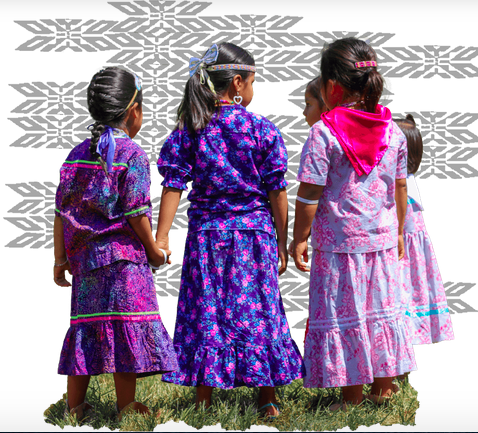
All I have is a hazy memory of hanging out along the edges of an arena with a young native girl I'd just met. We talked about being pen pals, but I don't think that happened. The flood lights were beginning to come on, and my parents were about to scoop me up for the trip home.
I don't remember learning anything about the Meskwaki in school, but from that point onward, I knew they were still here. That was about the extent of my knowledge of the tribe, until pretty recently when I started wondering about different regions' land acknowledgements.
With its early 17th-century Dutch heritage, the part of New York where I now live has its own particular history with native peoples. Curious about how that history has been constructed and conveyed to modern New Yorkers, I also began to wonder what 19th-century Dutch settlers found when they got to Pella.
Two different ministers, Reverend Van Raalte, and Reverend Scholte, led their immigrant flocks to Michigan, and Iowa, respectively, in 1847. According to Pieter Hoevens in "Dutch Pioneers and Native Americans," Michigan had only become a state in 1837; by 1845 the Ottawas there had been pushed onto the reservation. They had been hit, first by smallpox, and then by dysentary. What happened when Van Raalte's group arrived reads like the quintessential early American story:
In the spring and summer a large contingent of Dutchmen arrived and took up residence in the area, some even occupying vacant Indian wigwams and cabins. A smallpox epidemic struck the Dutch colony that very first summer, and the Indians suffered great losses. Relations with the local Ottawas became especially strained: the Dutchmen's cattle and hogs were left roaming through the woods, plundering and destroying the corn, potato, and melon fields of the Indians, while sugar-making equipment was repeatedly destroyed by roaming livestock as well" (Four Centuries of Dutch-American Relations, 308-9).
Reverend Scholte had been informed that there were no more Meskwaki in Marion county, as they had been ordered to remove to Kansas. This was not actually the case: "Groups of Indians had stayed behind and tried to survive without any recognized title to land by traditional hunting, fishing, and the gathering of wild foods . . . . the small-scale horticulture from which they had derived part of their staple food became virtually impossible."
The same pattern of encroachment and disease played out: "the influx of white settlers into Marion County immediately had its tragic consequences when a flu epidemic broke out in the winter of 1847-48 and many Indians died."
The Dutch settlers felt some trepidation when they "realized they were settling on former Indian lands, and that the previous occupants had been forced to accept unilaterally dictated treaty stipulations and removal. In some cases, they had even been defeated in armed encounters" (310).
These were the "gunpoint treaties" that present-day Meskwaki, Leah Slick-Driscoll, refers to in her description of how the tribe was treated, and how they eventually reclaimed part of their land (https://youtu.be/1jEZyL-QmMc?si=1t-b_IYB8WZysLgp).
Despite ample reasons to suspect or shun the newcomers, the remaining Meskwaki began to carry on a practical trading relationship with the Dutch settlers. Hoevens characterizes it as "peaceful intermittent contact."
Their determination to continue their lives in Iowa is a unique story. The Meskwaki went on to establish a settlement, which is very different from a reservation. The modern day results are well-illustrated by the Meskwaki Nation's website: https://www.meskwaki.org/
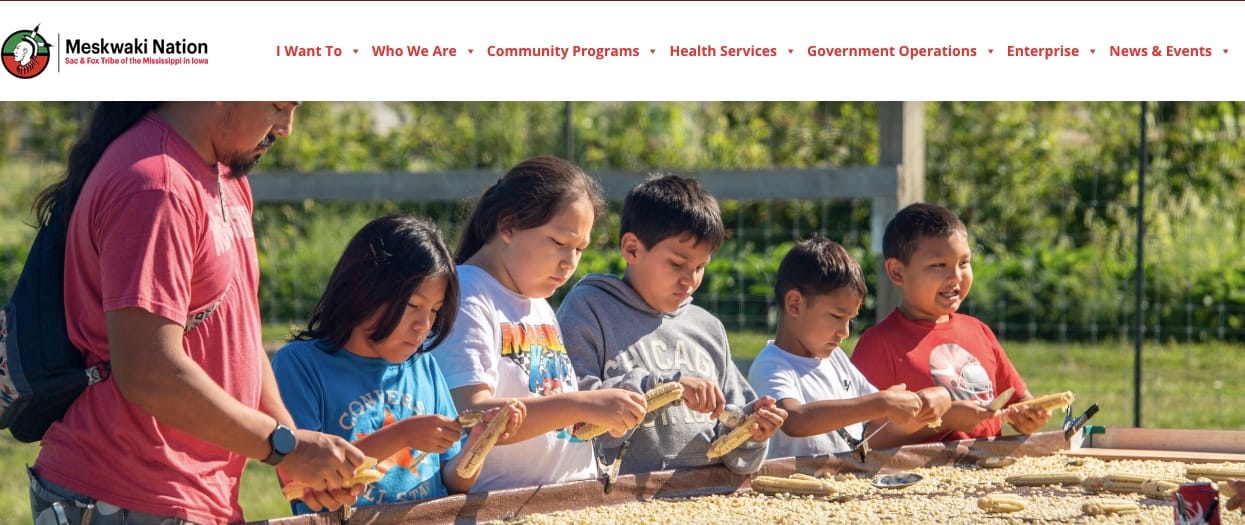
In the 1850s, some members of the tribe continued to stay in, or make trips back to Iowa. They formed relationships with other white settlers and farmers, and petitioned to be allowed to purchase land.
Within 10 years of Pella's founding, the Meskwaki succeeded in buying back 80 acres of their original territory. According to Slick-Driscoll, of the more than 1,000 who had been removed in the 1840s, about 300 initially returned to that settlement.
After decades of slowly and steadily purchasing more land, the Meskwaki Nation now owns more than 8,000 acres. The tribe has a well-developed farming and business base, with a food sovereignty project and a buffalo refuge area. They run many tribal programs for preserving their language and history, and are at work on repatriation efforts through their cultural museum. They are major employers in the area, with a casino and hotel.
If I hadn't embarked on the Finding Throughlines project, there's a good chance I would never have known this history.
If you come from settler stock, what do you know about the indigenous people your relatives might have encountered or displaced, or who may actually still live nearby? Lots of us alive today were not taught about how the government's removal efforts were followed by attempts at eradication-through-forced-assimilation that lasted well into the twentieth century. For example, prohibitions on native ceremony weren't removed until the late 1970s. What unexamined stereotypes or misperceptions might we be carrying?
It's hard to say what a typical white resident of "any state U.S.A." thinks they know about Native Americans today. Many communities are still having heated debates around "Indian mascots." Some might be aware of a regional casino, or have heard a smidgen about the residential schools. I hope the following resources might offer readers a helpful starting point.
The Carlisle Indian School resource center offers a substantial online archive of photographs and other records from that institution (one of over 300). The early twentieth century portraits of children from many tribes are stunning and disturbing, especially showing them "before and after." Numerous teaching kits are also available.

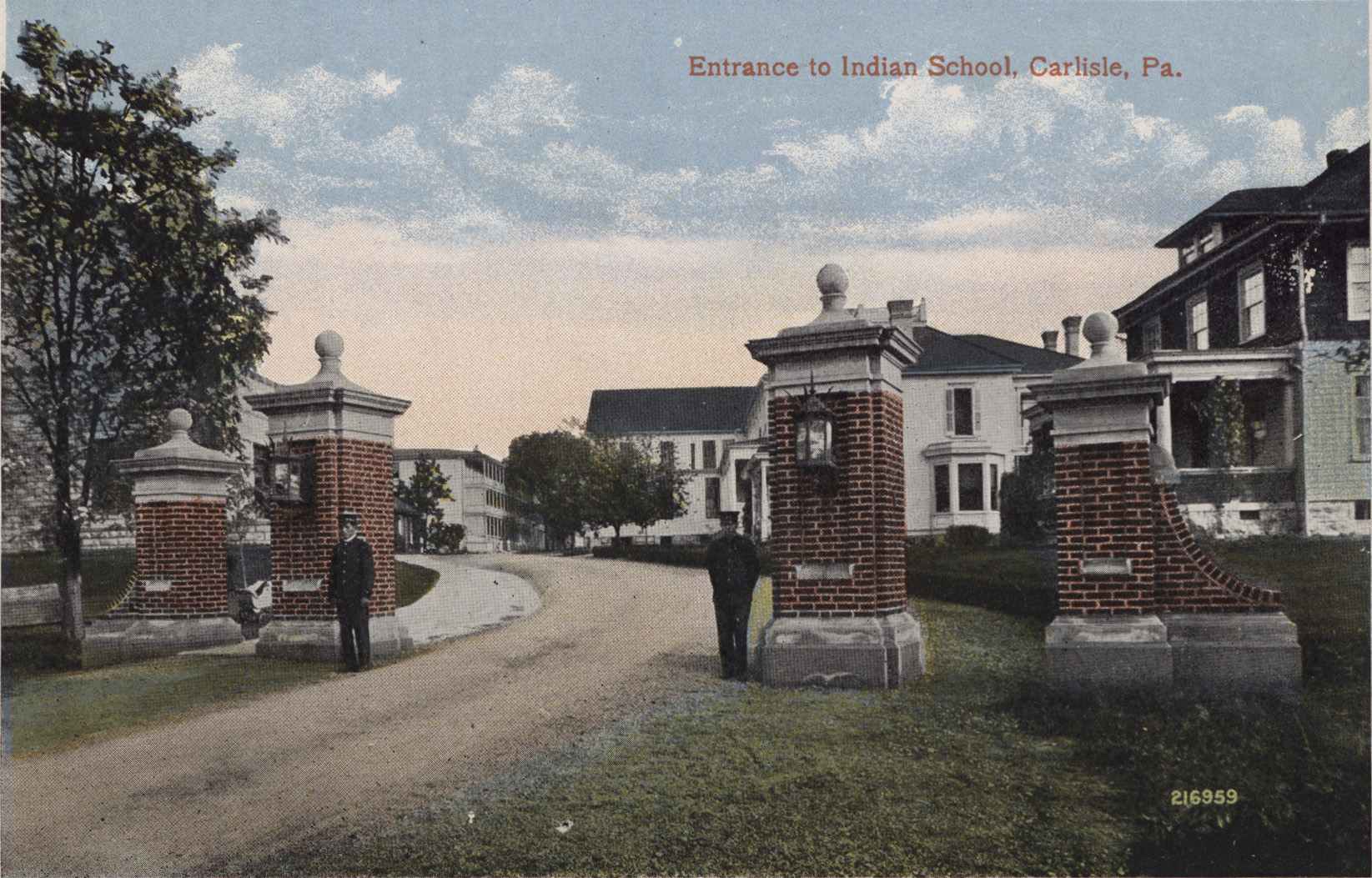
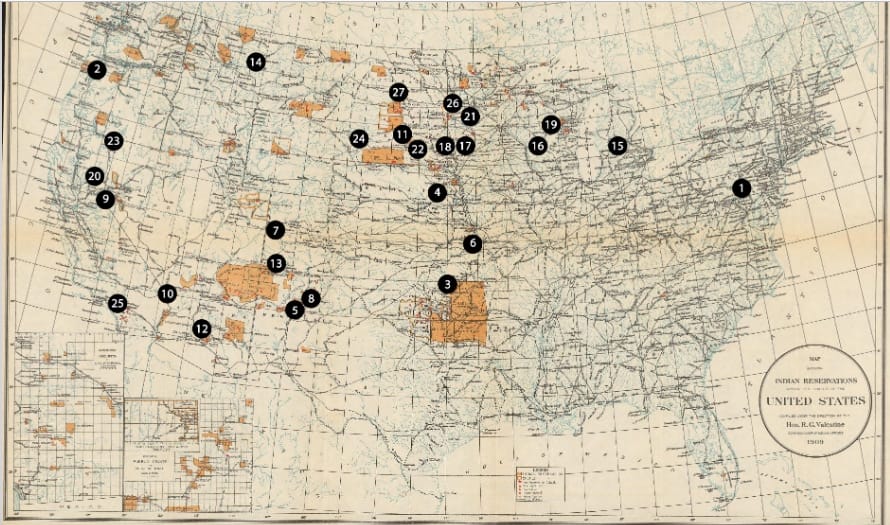
One includes this map that "shows the locations of off-reservation Indian Boarding Schools throughout the United States, numbered in the order in which each began operations under government auspices." Here it is in interactive form, to more easily see the schools in relation to the reservations, which appear in orange: https://carlisleindian.dickinson.edu/sites/default/files/docs-resources/Locations_IndianBoardingSchools_US_Map-Extra.pdf
It is interesting to compare it with this map of native casino locations today.
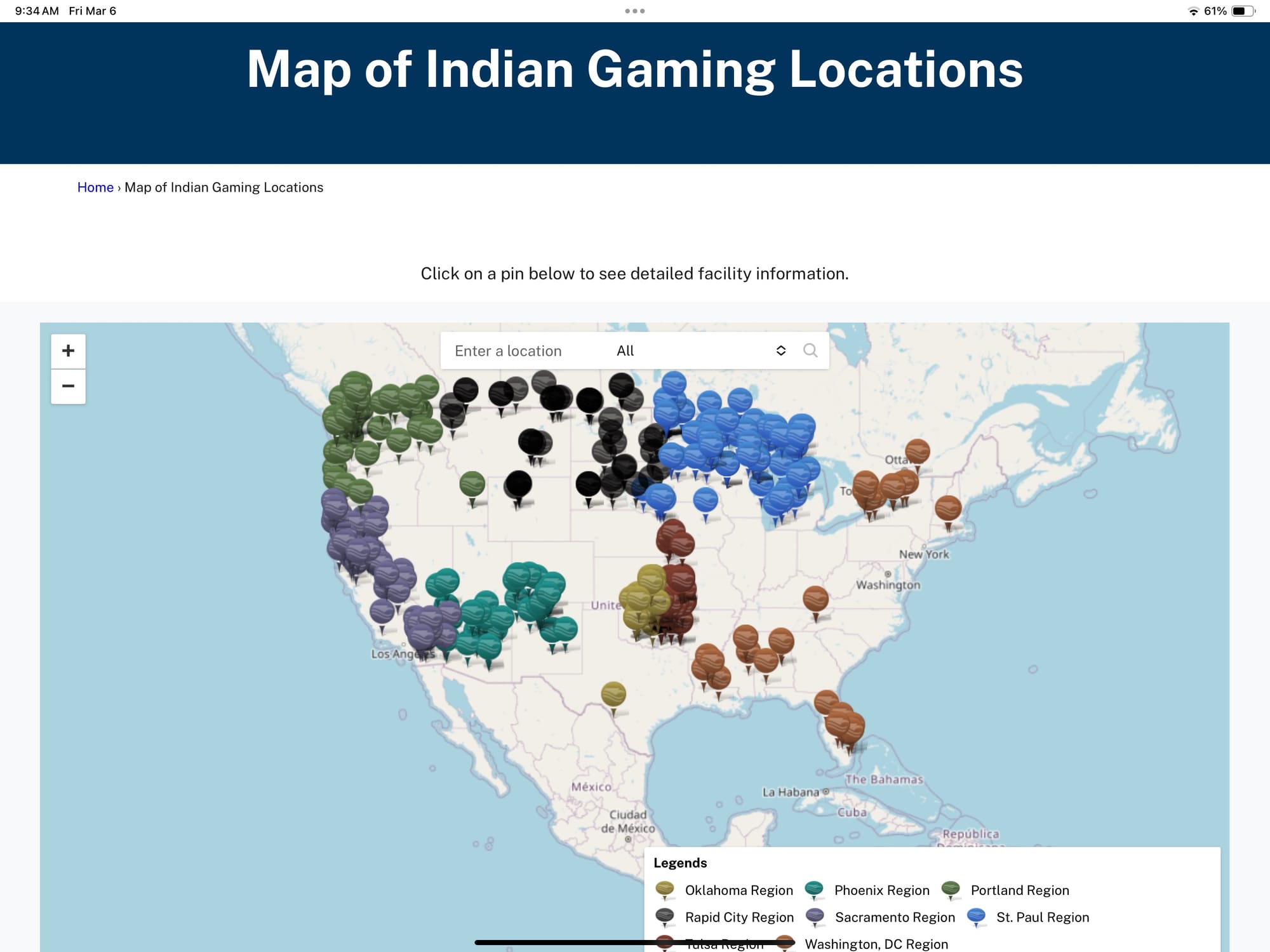
Many natives still deal with the generational effects of the cultural and familial devastation caused by these schools.
Many white people live within driving distance of a casino. When I hear non-native people express negative stereotypes—about tribes supposedly getting unfairly rich from their casinos—I have to wonder whether they are trying to deflect guilt and avoid facing harder truths.