On Listening to the Elders: Democracy, Progress, and Duress

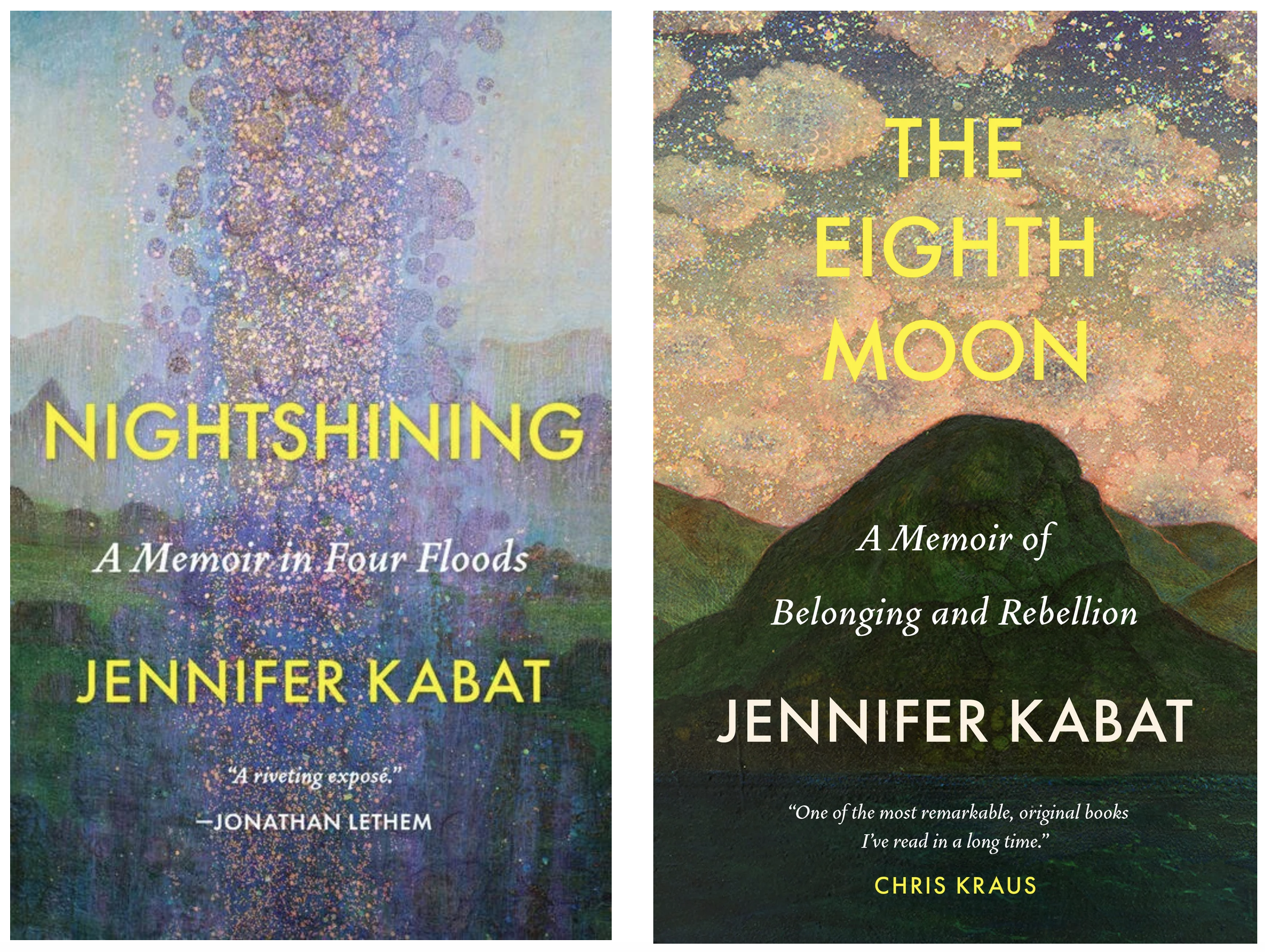
This week, after finishing the second volume in Jennifer Kabat's memoir diptych, I am sitting with the resonances and ripple effects. Kabat engages deeply with history and the landscape as spaces for understanding our experiences, on both personal and collective levels.
I'm not typically drawn to memoirs, but found these expansive and thought-provoking. Kabat's evanescent prose and her intensely thoughtful approach to her material are difficult to describe. Two blurbs, though, seem to manage it incisively:
"Jennifer Kabat’s Nightshining sifts a riveting exposé of the Cold War technocratic fantasy-state through lyrical family memoir.”—Jonathan Lethem
“Beautifully written, The Eighth Moon uses a very light touch to probe the most essential, unresolvable questions of belief, kinship, fidelity, history, and identity.”—Chris Kraus
The Eighth Moon interweaves Kabat's research on the mid-19th century Anti-Rent Rebellion by tenant farmers surrounding some Catskill land she's purchased, with her search for insights into her parents' lives in the mid-20th century. Her father's dedication to establishing rural electric co-operatives frequently took him away from home. His vision for collective good thus became both an inspiration and a source of tension in the family.
In Nightshining, Kabat continues to uncover aspects of her father's political work, interlacing it with research into the 1970s cloud-seeding experiments of two New York scientists. Her findings raise questions about the modernist idealization of progress. Who and what did these men leave out of the picture in this pursuit? How were the fruits of this progress put to destructive uses, and even weaponized?
Near the end of Nightshining, Kabat sits with Sakokwenionkwas, or Tom Porter, a Mohawk elder. He relates experiences which impel me to find out more, so central are they to the history of colonialism and our continuing myths of American identity.
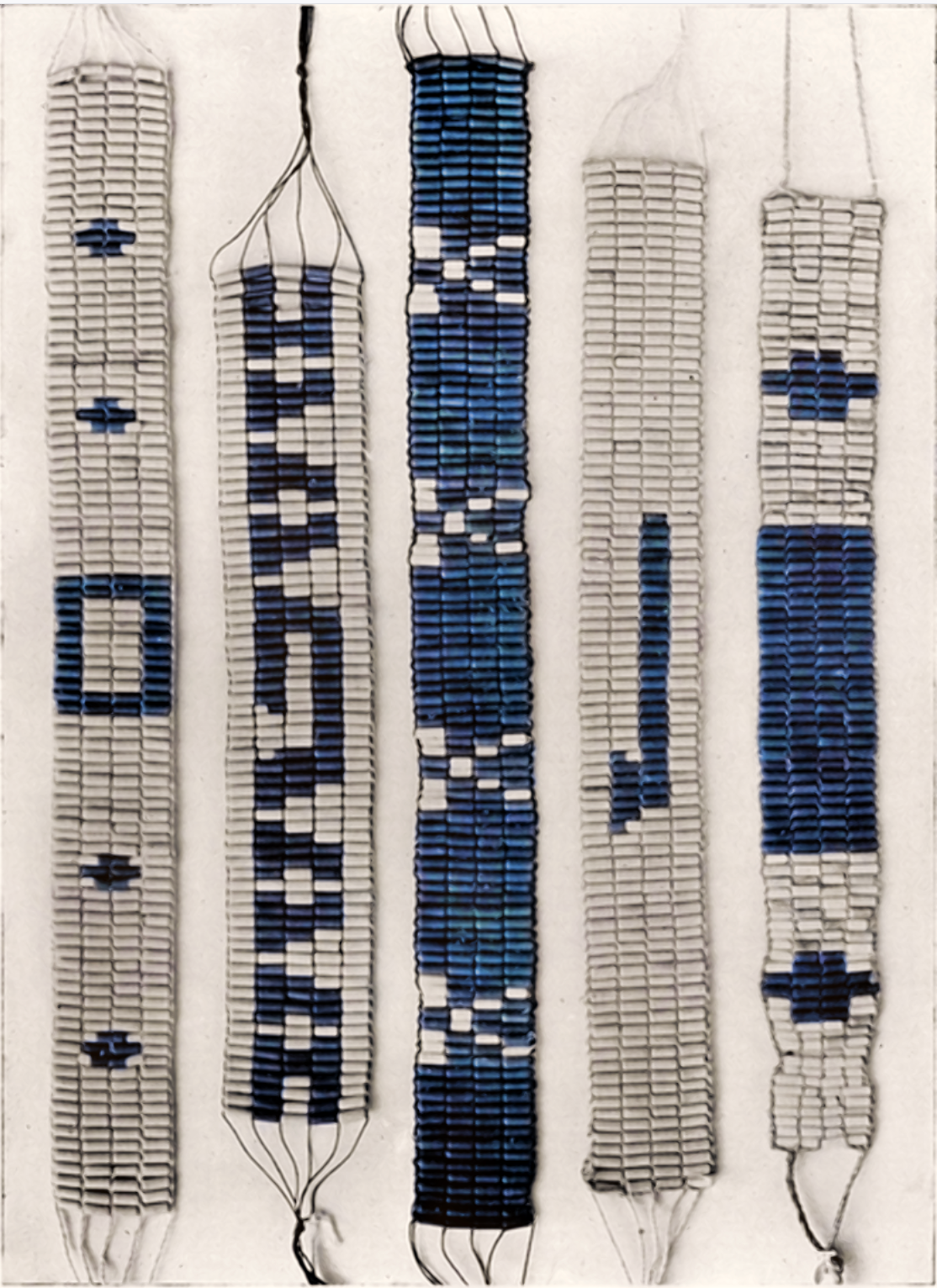
Porter describes his visit to the University at Albany in the late 1960s with a group of other natives. After a tour of the education building, their guide decided to "break the rules" and take them down to the basement. There Porter was shocked to see "the old wampums," beaded treaty documents of the Haudenosaunee.
"We grew up knowing they had been stolen, and we knew who stole them," Porter said. "There'd been fifty, sixty years of litigation to get them back."
Then they are taken to another part of the building for another revelation:
"a painting from 1754, and right away I knew what it was—what I'm looking at: Ben Franklin and Thomas Jefferson and Indian chiefs and wampum on our arms explaining how our government works" (274).
Along with the wampum discovery, the painting has a profound effect on Porter. As a child, he'd heard his great-grandfather talk about the time in 1754, when his "great-great-great grandfather explained to Ben Franklin and Thomas Jefferson in Albany about democracy" (273). He hadn't really believed that story before being confronted with this evidence, held by a white institution.
He tells Kabat, "I was so sorry not to trust my elders."
His encounter with the painting is multi-layered:
"This valley here is the cradle of democracy, the doorway of democracy. This is also part of how they take your culture; you're raised and taught in school not to listen to what your elders say" (275).
The impacts are far-reaching. Later, Porter describes how tribal infighting at Awkwesasne in the late 1980s illustrated the ongoing effects of colonization:
"You sabotage yourself. Your power is taken, stolen with your language and traditions and this way of battling each other. We sabotaged our own efforts, and one of the ways colonization succeeds is the self-destruction of our own thoughts. It's like they take everything: your language, your beliefs, your religion, and keep you alive" (276).
Known as the Mohawk Civil War, this situation, and the history of the wampum belts, are subjects I want to know more about. Also, according to Kabat, the 1754 painting of the chiefs with Franklin and Jefferson is now in the New York State Museum. I foresee a visit in the near future.
Here's an introduction to three important wampum belts.
 Katie Doreen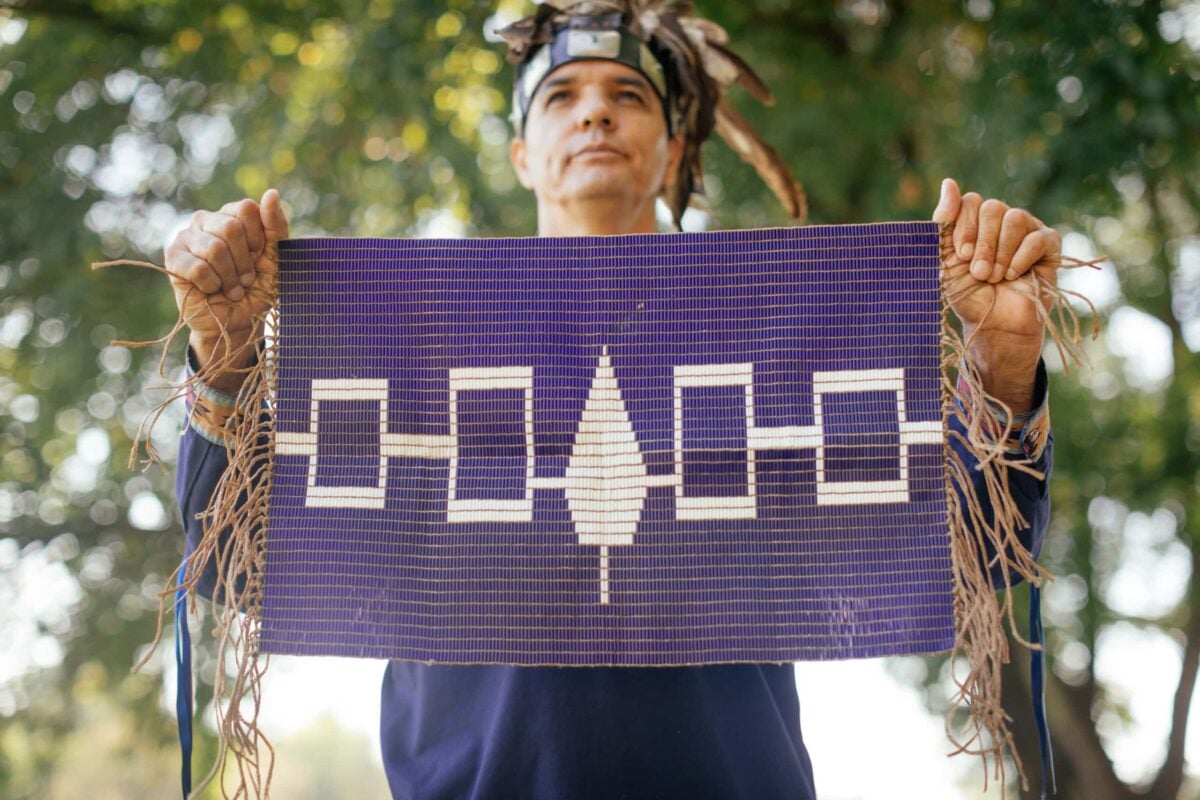
It tells of the thousand year old history of Peacemaker and the Great Law of Peace, that Franklin and the founders cribbed parts of, including certain imagery. You can find out more about how the U.S. constitution compares with this indigenous governance structure here:

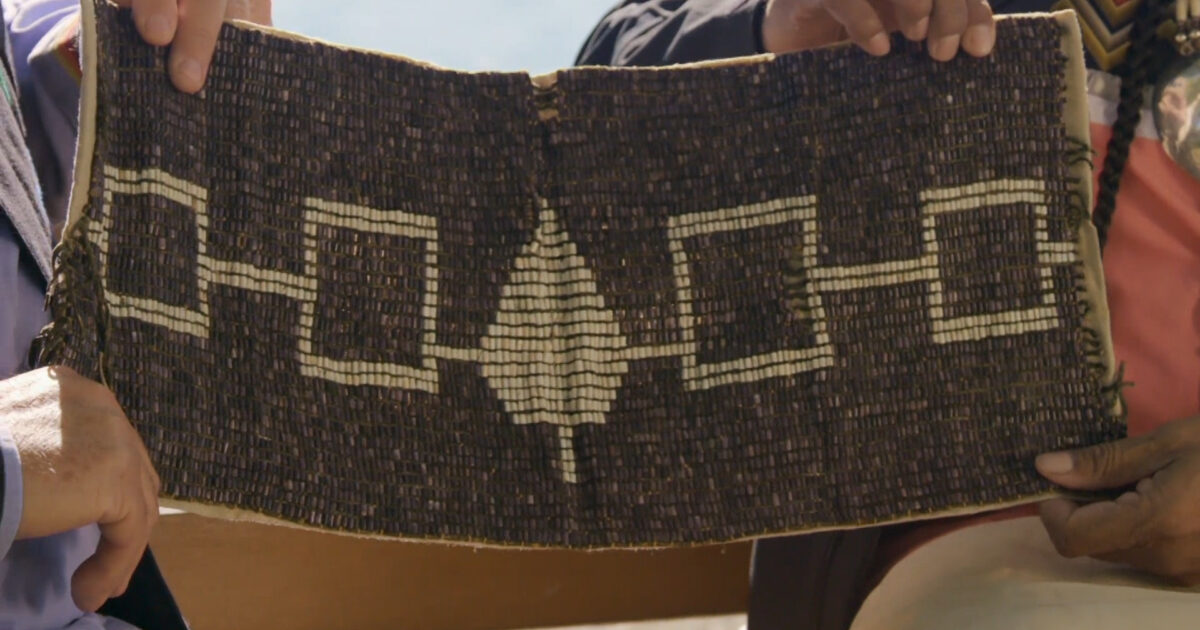
So far, I've only found this more recent coverage of stolen wampum:
 Chris Bolt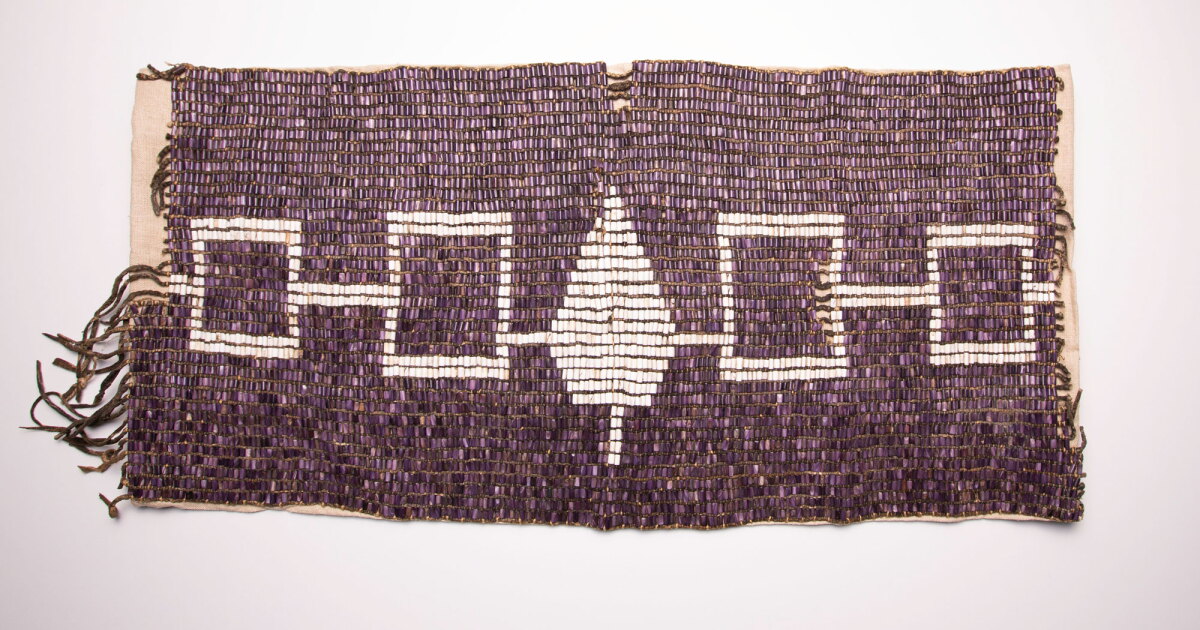
But this passage from a wampum exhibition at Montreal's McCord Stewart Museum raises some highly pertinent questions about their acquisition. Even when collectors have purchased these items, consent to sell may have taken place under "duress:"
"According to the Moved to Action report by the Canadian Museums Association (p. 53): 'The presence of duress calls into question the voluntariness of an acquisition. Duress is defined by one of the participating parties of any trade of goods or intellectual property being forced to act against their will or better judgement due to threat, violence or societal constraint.' This notion of duress must therefore be taken into account when considering the ownership of museum objects."


This reminds me of the Meskwaki educator I quoted in an earlier post, who referred to her tribe having been subjected to "gunpoint diplomacy" in their treaty agreements.
The McCord Stewart document further explains:
"Many cultural goods have been legally acquired by collectors. However, given the context in which Indigenous people lived at certain times, it’s important to ask whether selling objects of great spiritual value to collectors was not simply a question of survival. There are several examples of wampums that were pawned by their guardians and subsequently not recovered for lack of funds" (emphasis mine).
They include a startling reference which makes me want to know more:
"wampums have been seized by law enforcement agencies. In 1924, on behalf of the federal government, the RCMP seized the wampums kept by the Six Nations of the Grand River."
What is this about? I hope to find out. I have plenty of interesting leads to follow up on.
But I can't leave this notion of duress without emphasizing its pertinence right now. Under this administration, the leveraging of "threat, violence, or social constraint" is integral to immigrant detention and deportation.
Current policy is to create duress for noncriminal immigrants who as-yet lack documentation, but are otherwise law-abiding and have been attending required court appearances. The point is to make them flee the country to avoid detention.
Duress is also being implemented inside detention centers. Through mistreatment, overcrowding, poor food and sanitary conditions, and even the withholding of necessary medical treatment, agents attempt to induce detainees to "self-deport."
And, I'd argue that those "certain times" for indigenous people have been "almost always" in U.S. history. In our current context, as I've discussed before, Native Americans continue to be caught in the crosshairs of ICE.
Right now I am looking for mainstream coverage of last week's violent detention of a native woman in Sacramento, which included a taser attack that left the barb embedded in her wrist bone. This is the account I've seen:
 Eyes On Ice
If you come across anything other than social media-based coverage, please let me know.