How to Keep Reality From Being Memory-holed

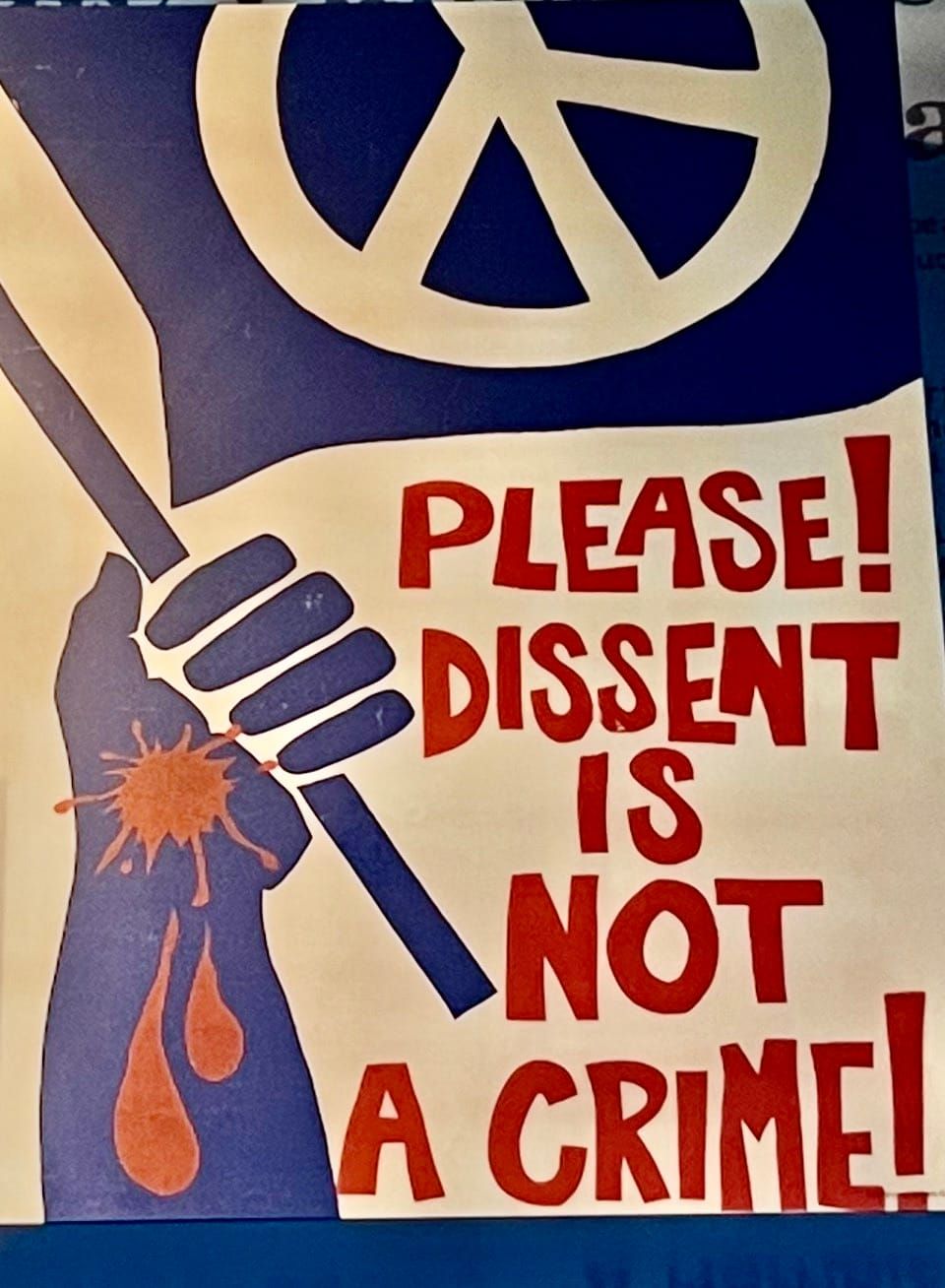
"In the walls of the cubicle there were three orifices. To the right of the speakwrite, a small pneumatic tube for written messages; to the left, a larger one for newspapers; and in the side wall, within easy reach of Winston's arm, a large oblong slit protected by a wire grating. This last was for the disposal of waste paper. Similar slits existed in thousands or tens of thousands throughout the building, not only in every room, but at short intervals in every corridor. For some reason they were nicknamed memory holes. When one knew that any document was due for destruction, or even when one saw a scrap of waste paper lying about, it was an automatic action to lift the flap of the nearest memory hole and drop it in, whereupon it would be whirled away on a current of warm air to the enormous furnaces which were hidden somewhere in the recesses of the building." George Orwell, 1984
So much of daily reality, not to mention the past, is at risk of disappearing down memory holes. As Orwell's character Winston experiences it, "All history was a palimpsest, scraped clean and reinscribed exactly as often as necessary." Of his own work of reinscription, it "was not even forgery" Winston thinks, "it was the substitution of one piece of nonsense for another."
In her letter for Thursday, May 7, Heather Cox Richardson refers to a ProPublica report on "79 children injured by tear gas or pepper spray during immigration encounters." This is probably "a vast undercount." The DHS, however, has responded by blaming "agitators" and "parents who put their children in harm's way."
 Anna.Donlanpropublica.org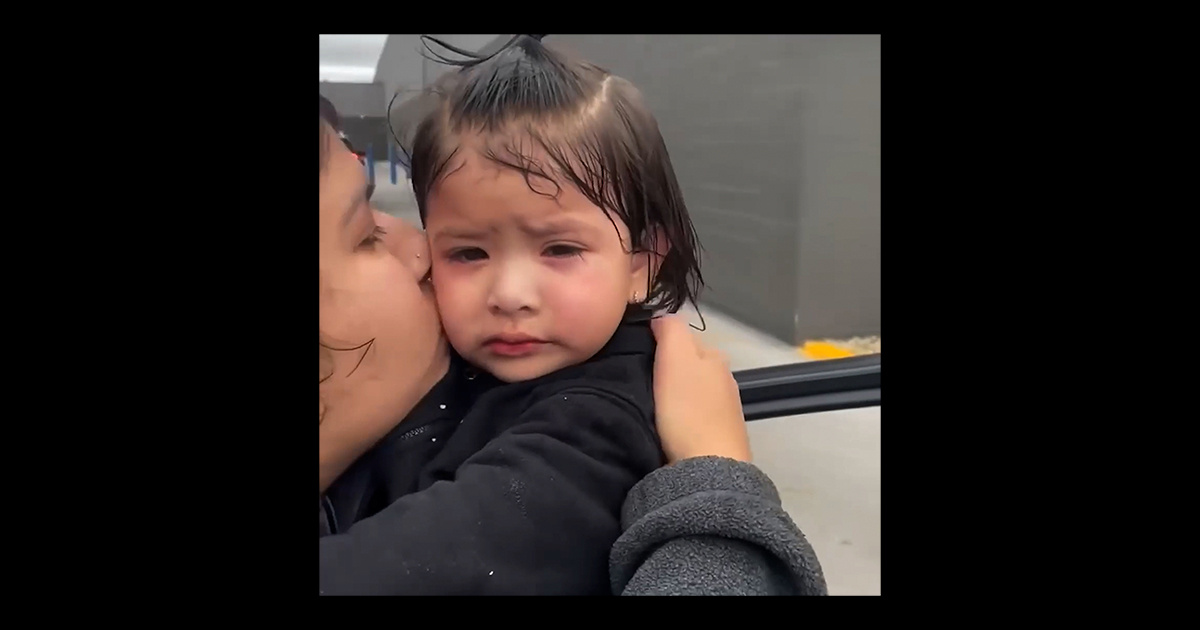
Video footage of these incidents, especially of events in Minneapolis, clearly shows that children—simply moving through the normal spaces of their daily life—have had harm sent toward them by DHS agents. As ProPublica points out:
"The children were walking to school in Broadview, Illinois, or leaving a shopping center in Columbus, Ohio. They were at home in Minneapolis, or sitting in a stroller in Chicago, or at an afternoon protest in Portland, Oregon, alongside dogs on leashes and older people pushing walkers.
They were mostly going about their days when federal immigration agents shot tear gas or fired pepper spray near their homes and schools and into their family cars.
The chemicals blew through the air, sometimes for blocks. They seeped into bedrooms, forcing an asthmatic teen to gasp for air. They stuck to the skin of a young girl, who cried, “It burns!” They caused an infant to stop breathing."
And what if some of the children did happen to be present at something we could agree was a protest? Tear-gassing there can't be justified either. Given its toxicity, any use in civilian settings is, frankly, difficult to justify. It is basically chemical warfare on citizens, and has ugly precedents. "Such scenes of billowing gas and tear-stained faces" the article notes, "have prompted some historians to liken the scope and intensity of the agents’ deployment of chemical munitions to brutal crackdowns by Southern law enforcement during the Civil Rights Movement."
The Substitution of One Piece of Nonsense for Another
It's all part of an old playbook: rationalize deploying brutality against dissent by labeling people as "agitators." Respond with disproportionate force, then blame everyone in the zone of violence you've created, simply for existing there. Scrape clean the palimpsest of history and reinscribe it.
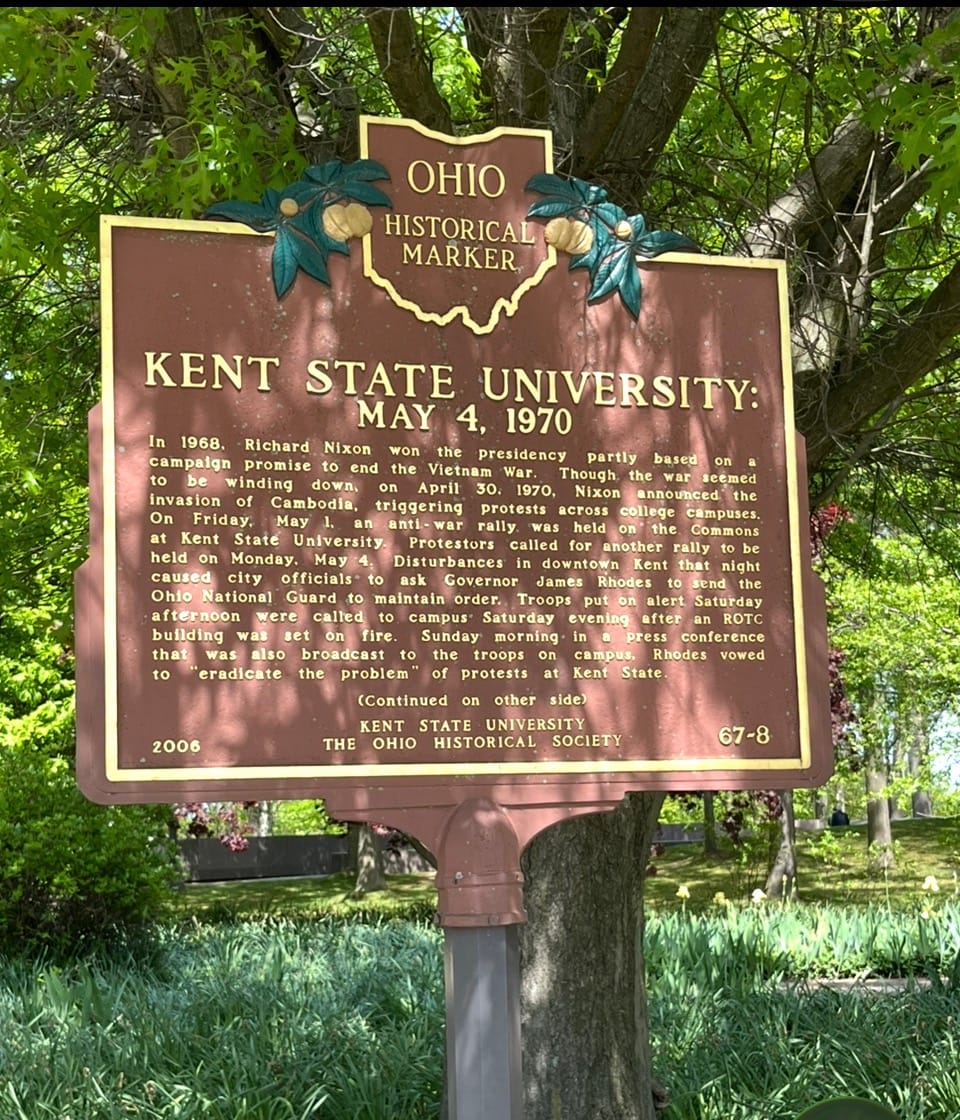
This played out at Kent State in May of 1970, and just over a week later, at Jackson State.
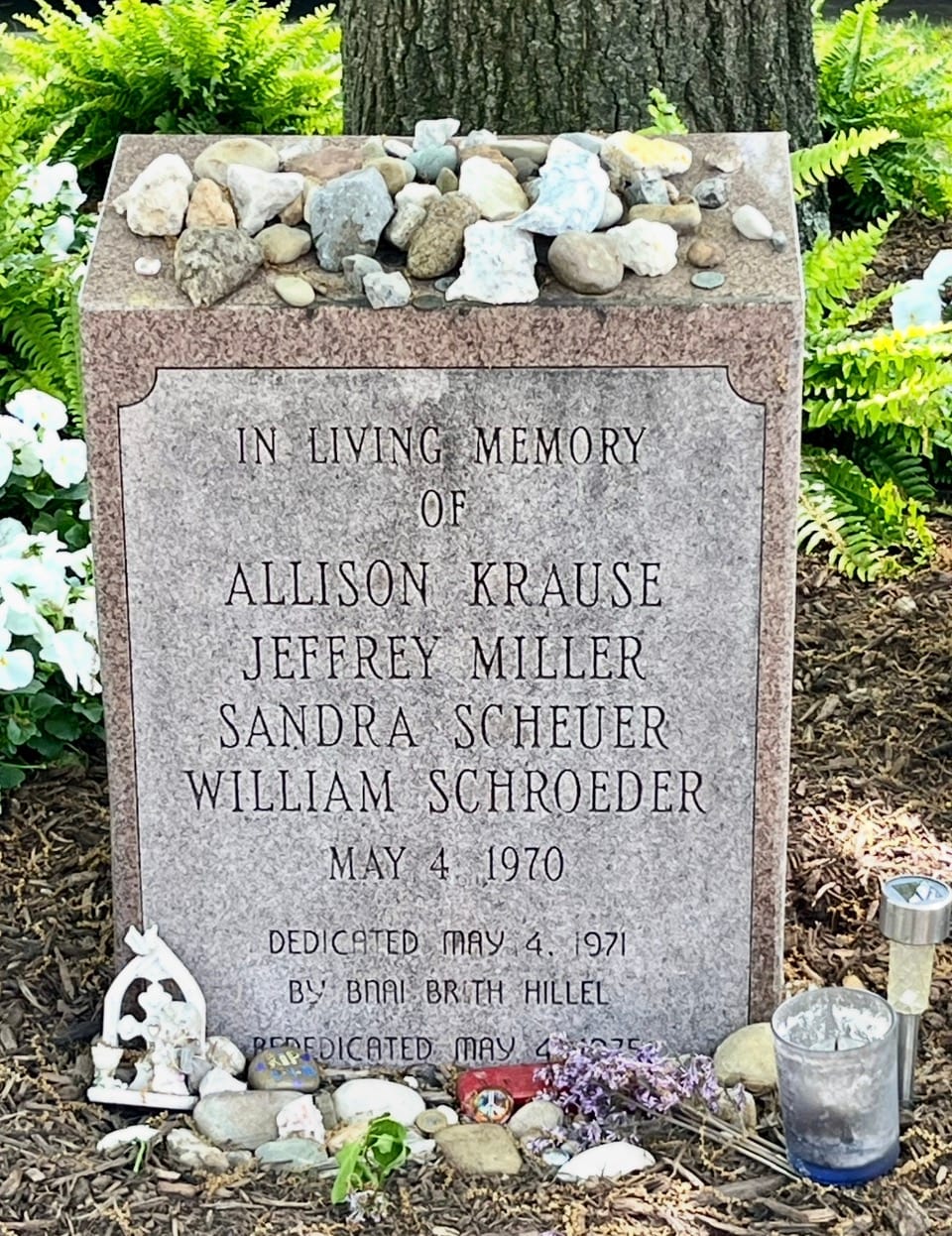
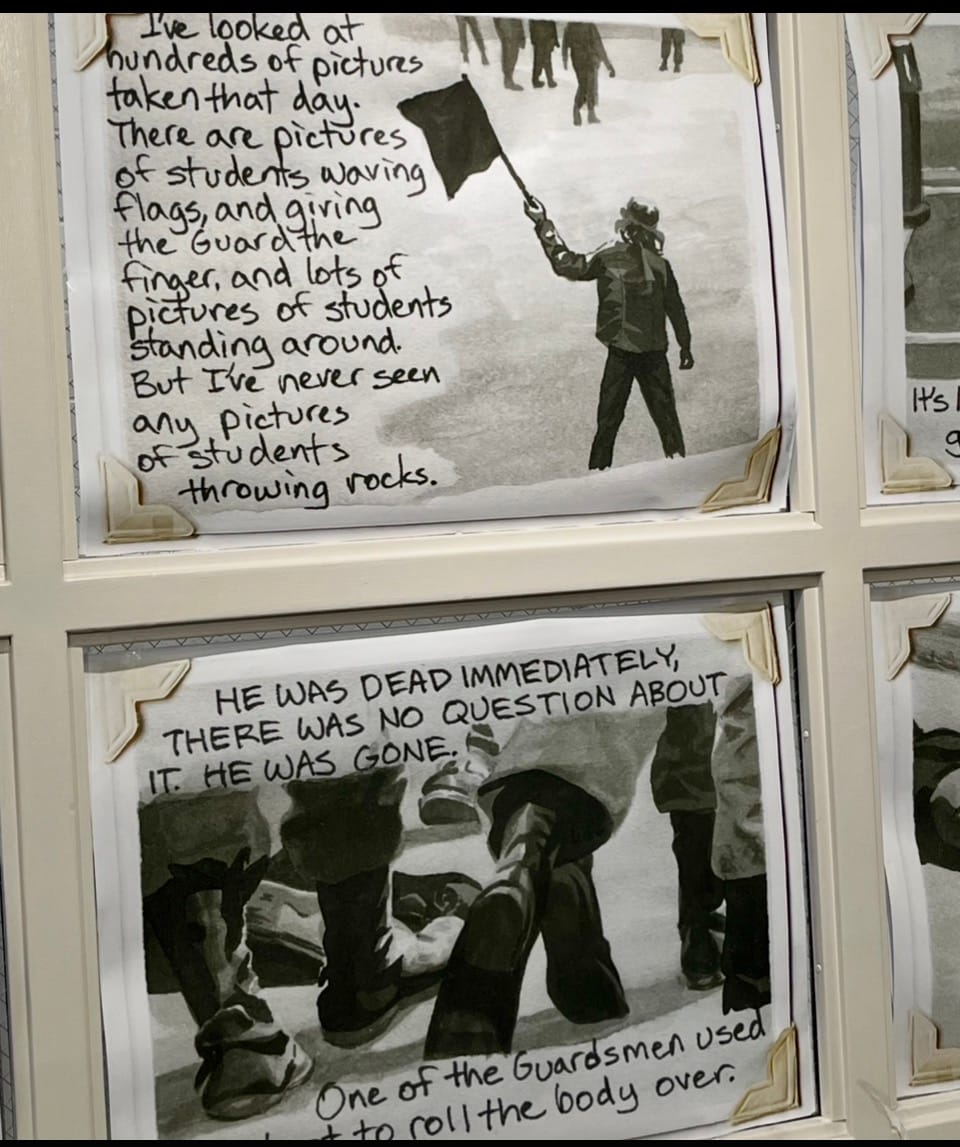
Even now, it is common to see the four Kent students who were killed loosely referred to as "protestors." In fact, 19-year-old William Schroeder, shot in the back, and 20-year-old Sandra Scheuer, shot in the neck, were not taking part in the demonstration. They were walking through campus between classes. Both were gunned down in the campus parking lot, more than a hundred yards away from any guardsman. None of those shot (nine others were wounded) were closer than twenty-three yards away from the guards.
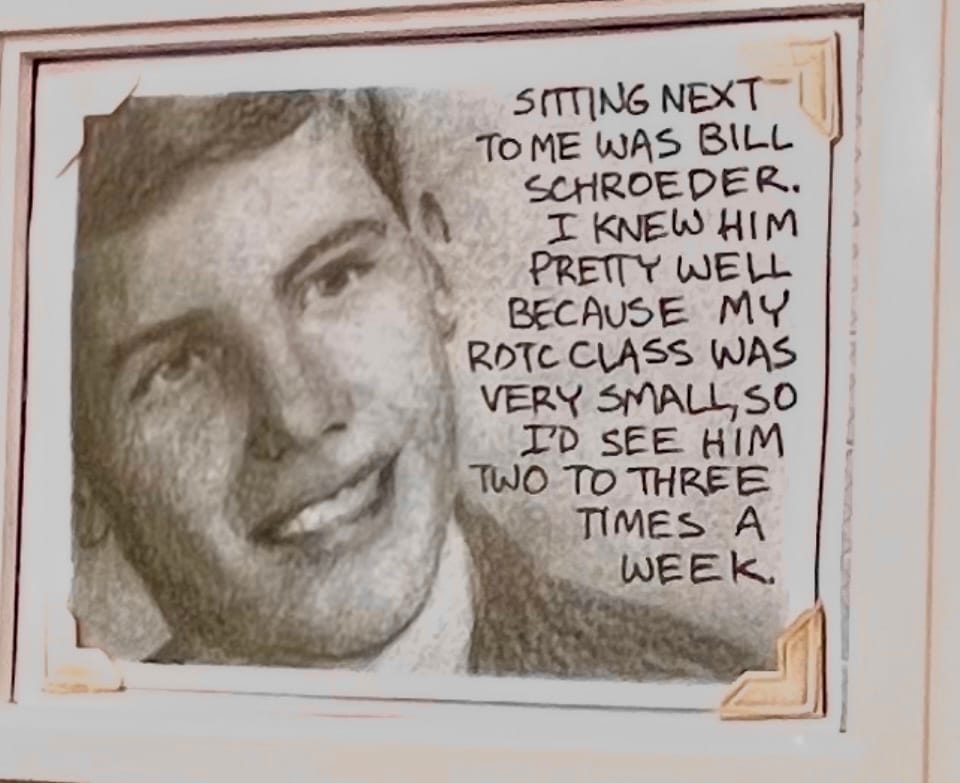
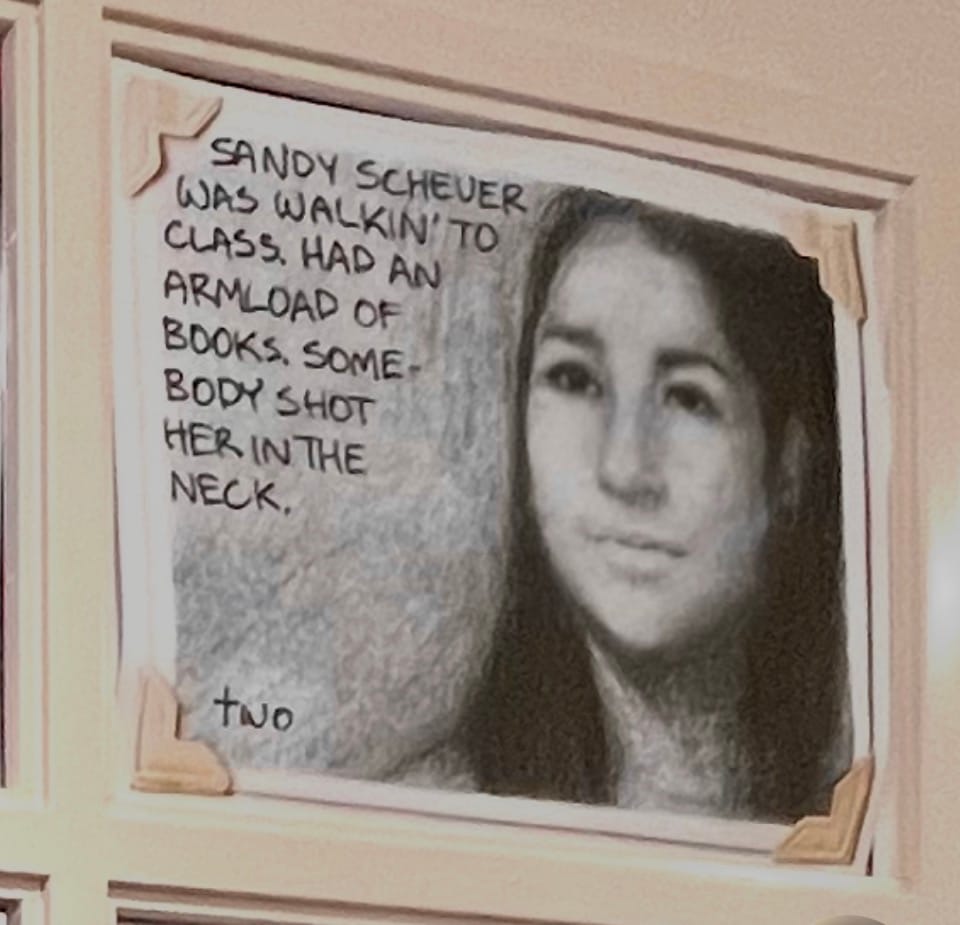
Two panels from Katherine Wirick's massive graphic novel installation on display at the Kent State Memorial Visitor Center
For the reinscribers, it doesn't matter that protestors and non-protestors alike did not deserve to be shot. Their strategy is to dehumanize and dismiss. Followed by promoting public scorn—encouraging everyday people to devalue the life of anyone present at a scene of dissent. Get people saying the victims "deserved it." Scare others so they won't step out of line.
A big motivation for my Learn, Imagine, Act project is to keep events from being disappeared into memory holes. To make sure that history doesn't get falsely reinscribed. That means paying attention. Recollecting. Re-collecting. This week, while I've been learning more about the history of Ireland, the famine, my ancestry, and the connections between immigrants and indigenous people, I've also been recalling what I was doing during this week two years ago.
I was on the road for a different research project that spring, when we decided to make a quick side trip to see Kent State. Campus protests were making the news; students all over the country were expressing their dissent over military actions against Gaza. Administrators and politicians were reacting in a range of mostly dysfunctional ways. It all felt too familiar.
When the Kent State killings happened, I was a 10-year-old, living across the street from another small, mid-western campus. Old enough for it to make a deep impression when I saw the photo of 14-year-old runaway, Mary Ann Vecchio, distraught over the prone body of Jeffrey Miller. Young enough to have no comprehension of the political scene that made this massacre possible.
I thought that visiting the Kent State campus shortly after their 2024 annual memorial could deepen my understanding of history. I didn't anticipate how moving the experience would be.
We parked in the lot where students died.
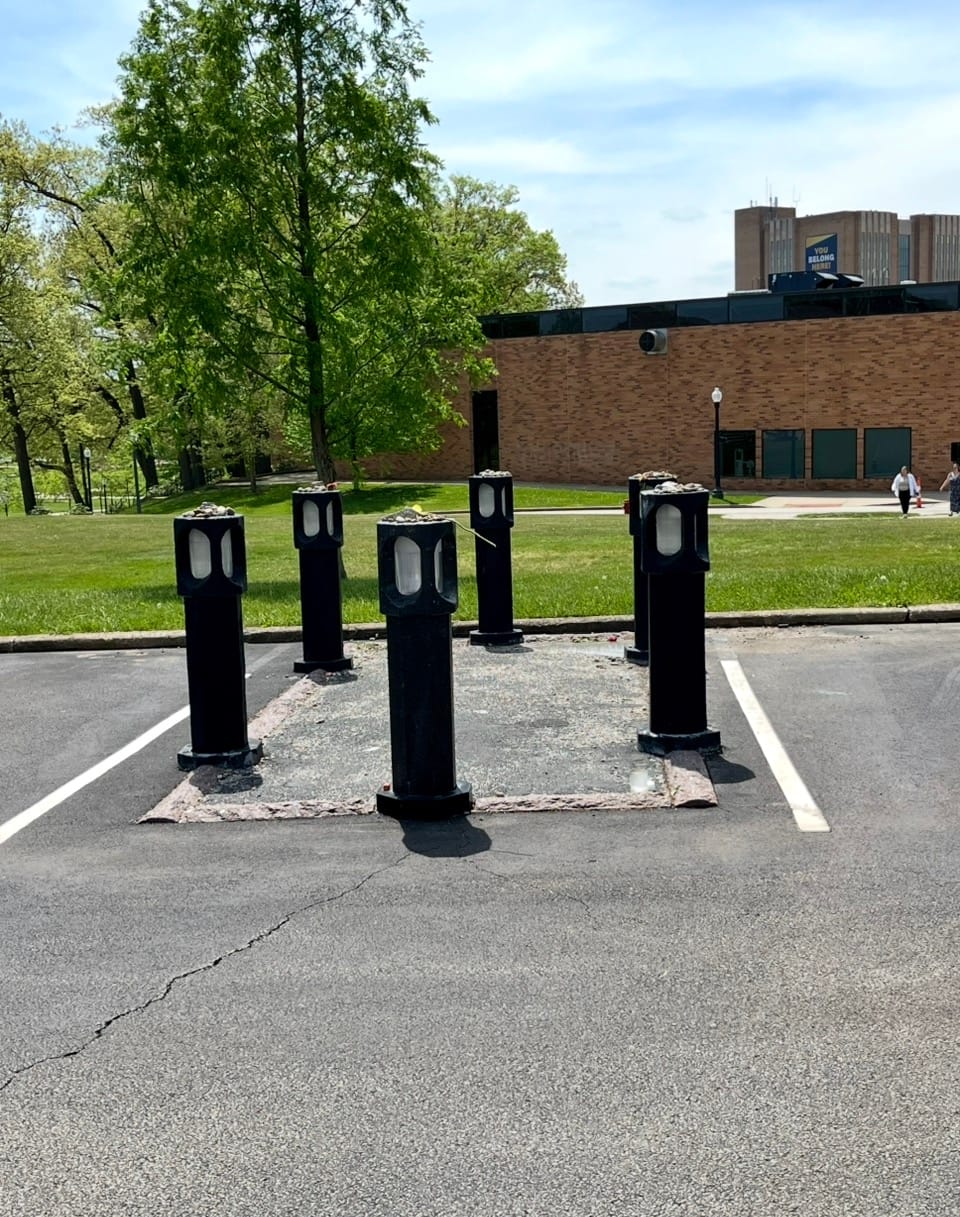
I found the juxtaposition of cars and the memorial tokens disorienting. It was strange to think that for years, before the lamps were installed, people just parked on these spots.
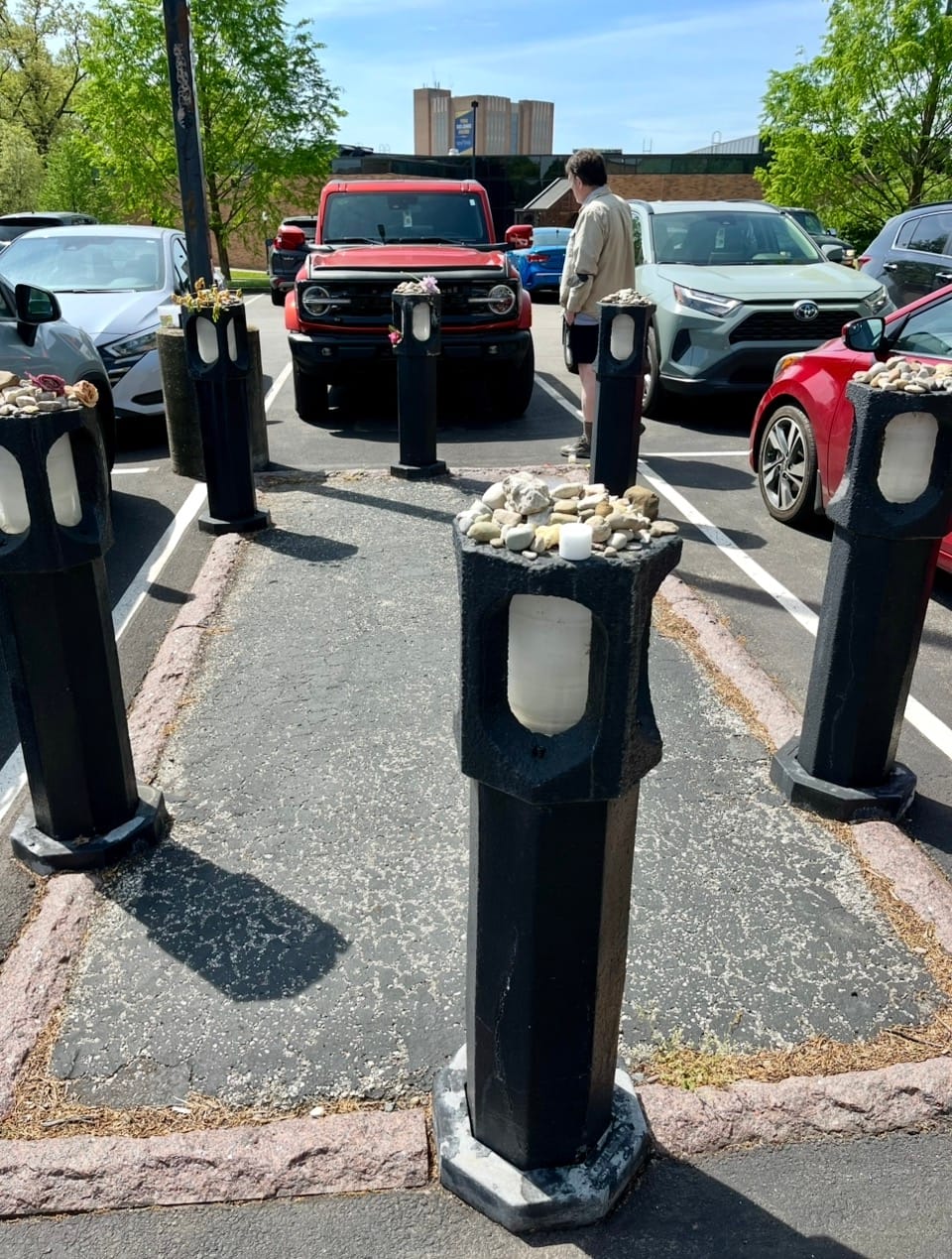
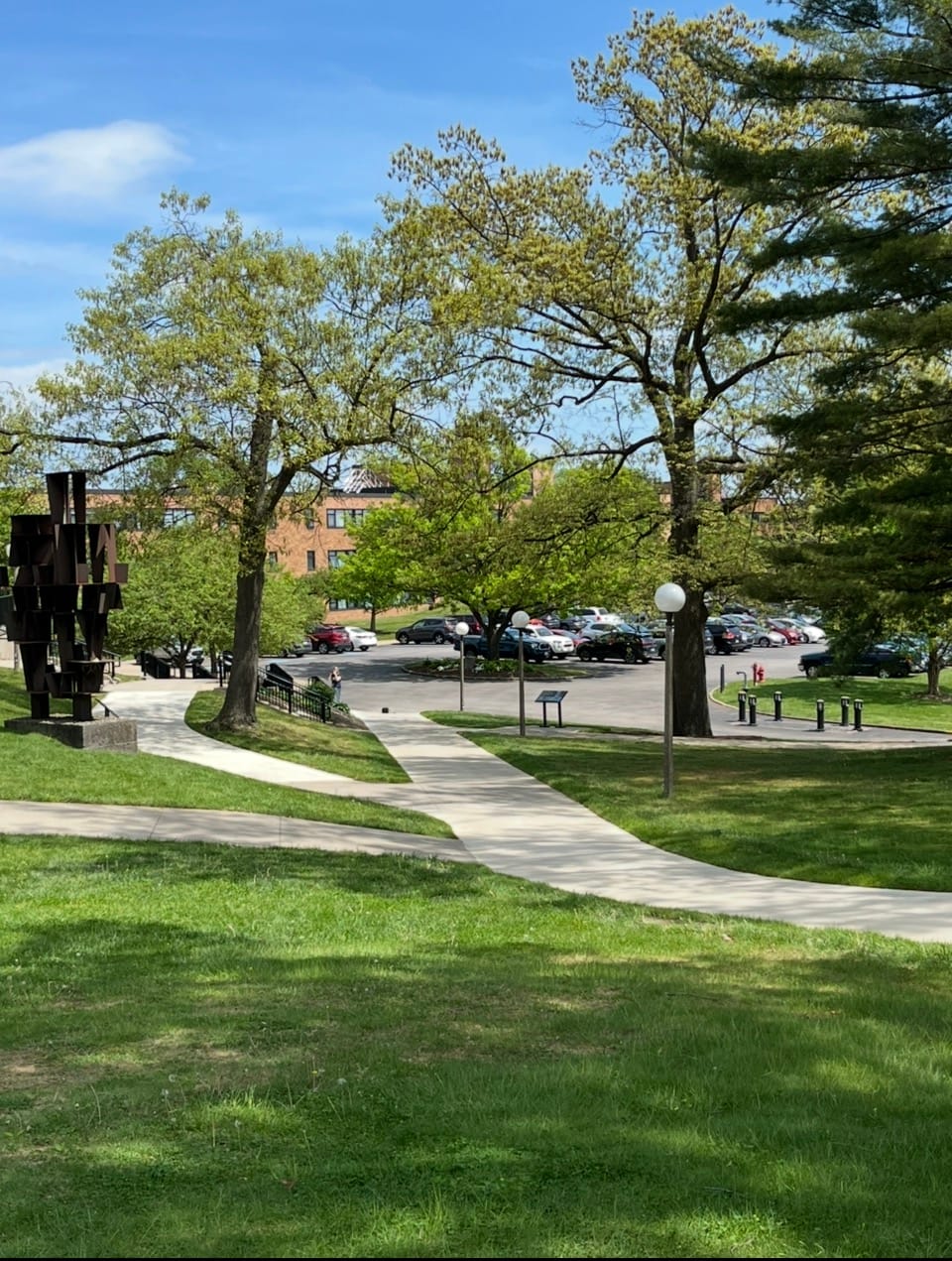
This is a view into the lot from the top of the small hill, where the twenty-eight National Guard soldiers stood when firing on the students.
And below, a nearby sculpture bears a bullet hole from the onslaught: 67 rounds of shots fired in a 18 second period. What has it been like for students, faculty, and staff to walk past these scenes over the ensuing years? What stories have they told themselves about the geography of sudden death in this place? In this country?
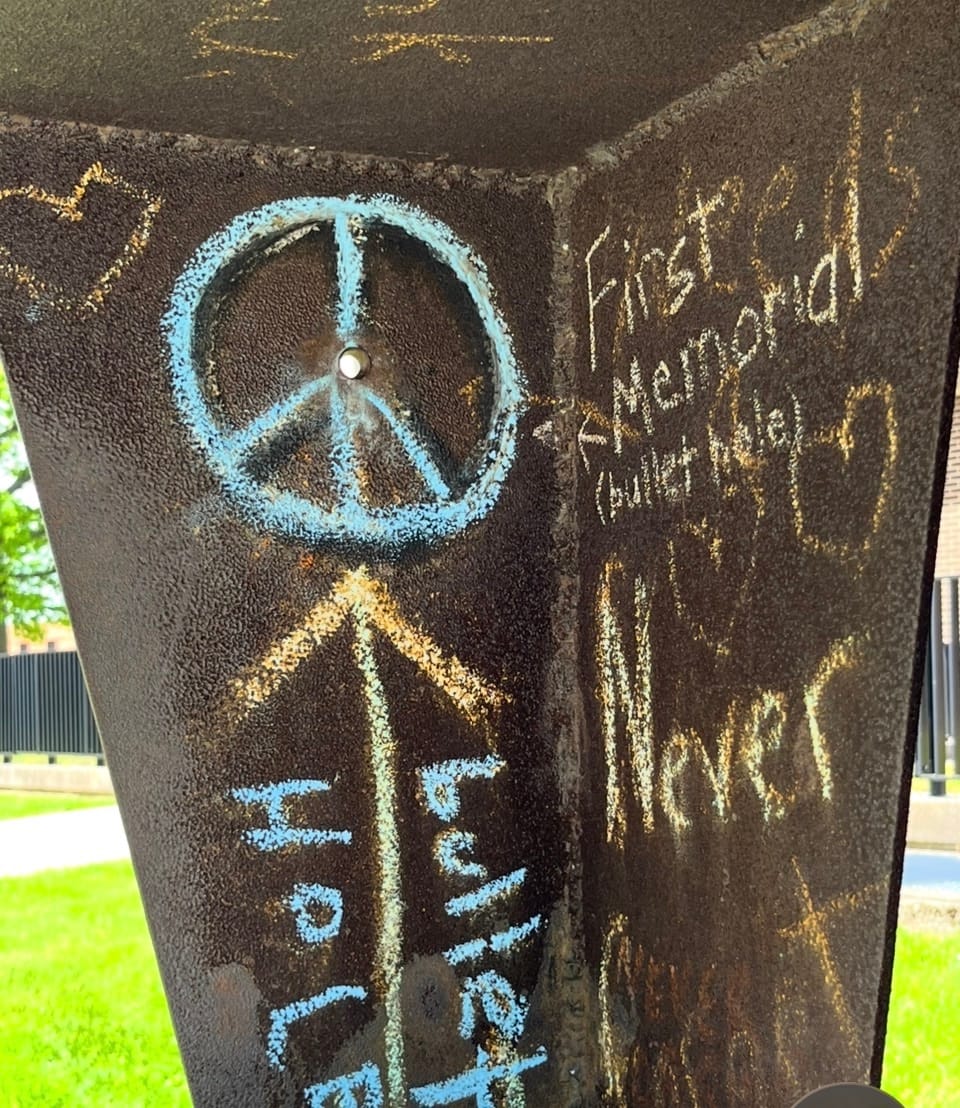
The efforts to memorialize and contain the event's many meanings started early, but are bound to be forever incomplete.
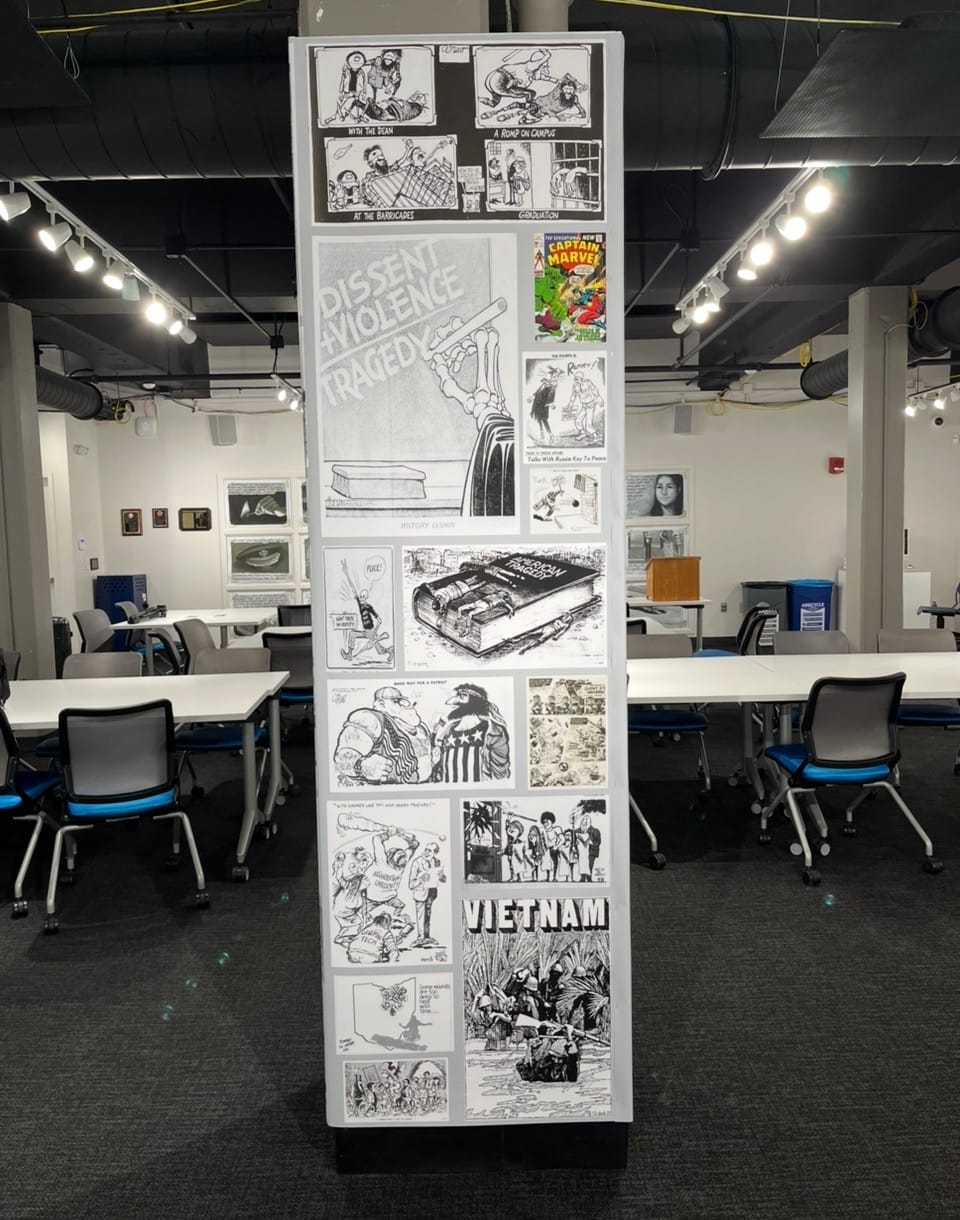
We made our way over to the visitor center. There, the time is evoked through photos, posters, film, and narrative. A special exhibit of cartoon art joined the other items on display.
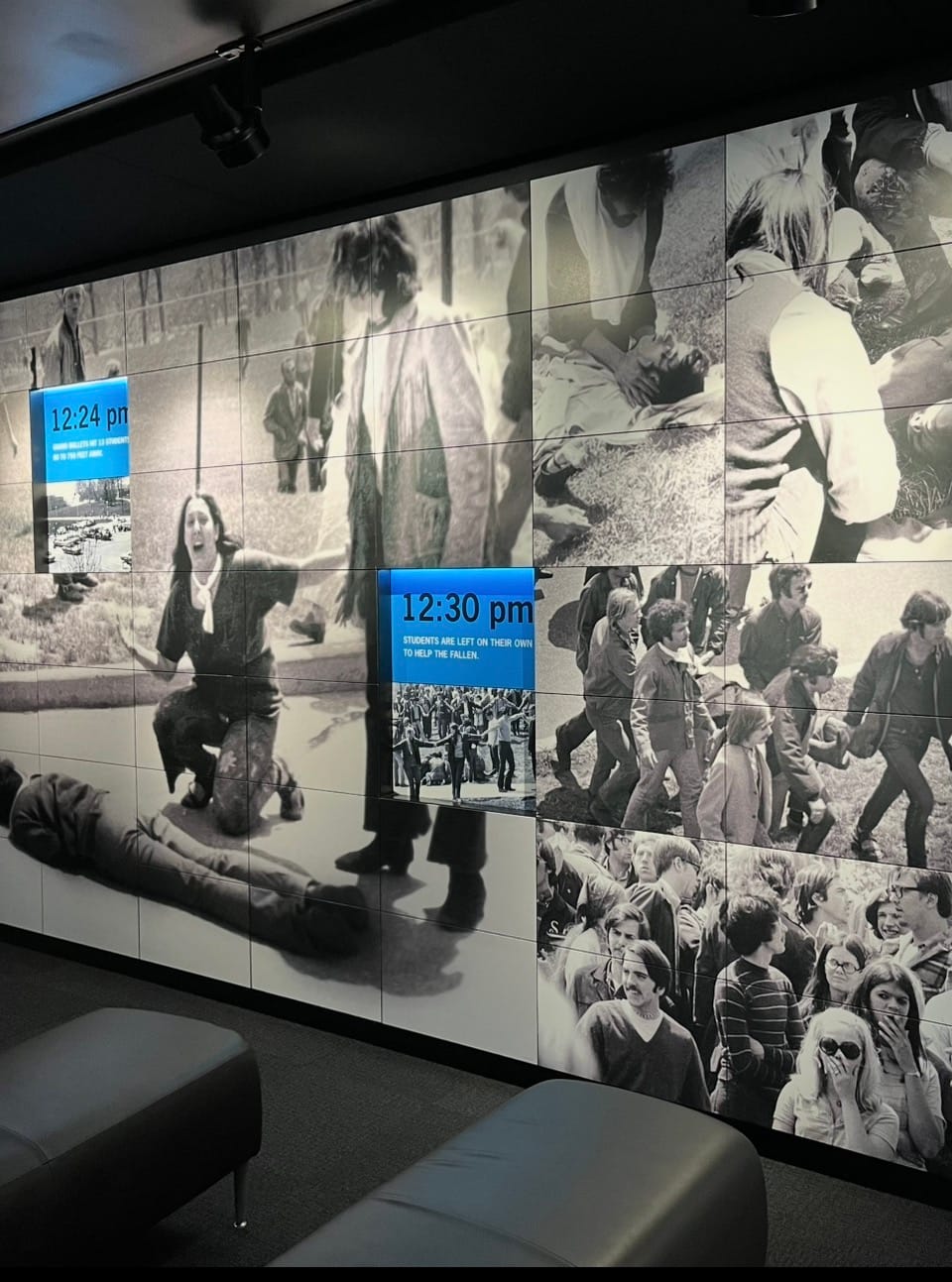
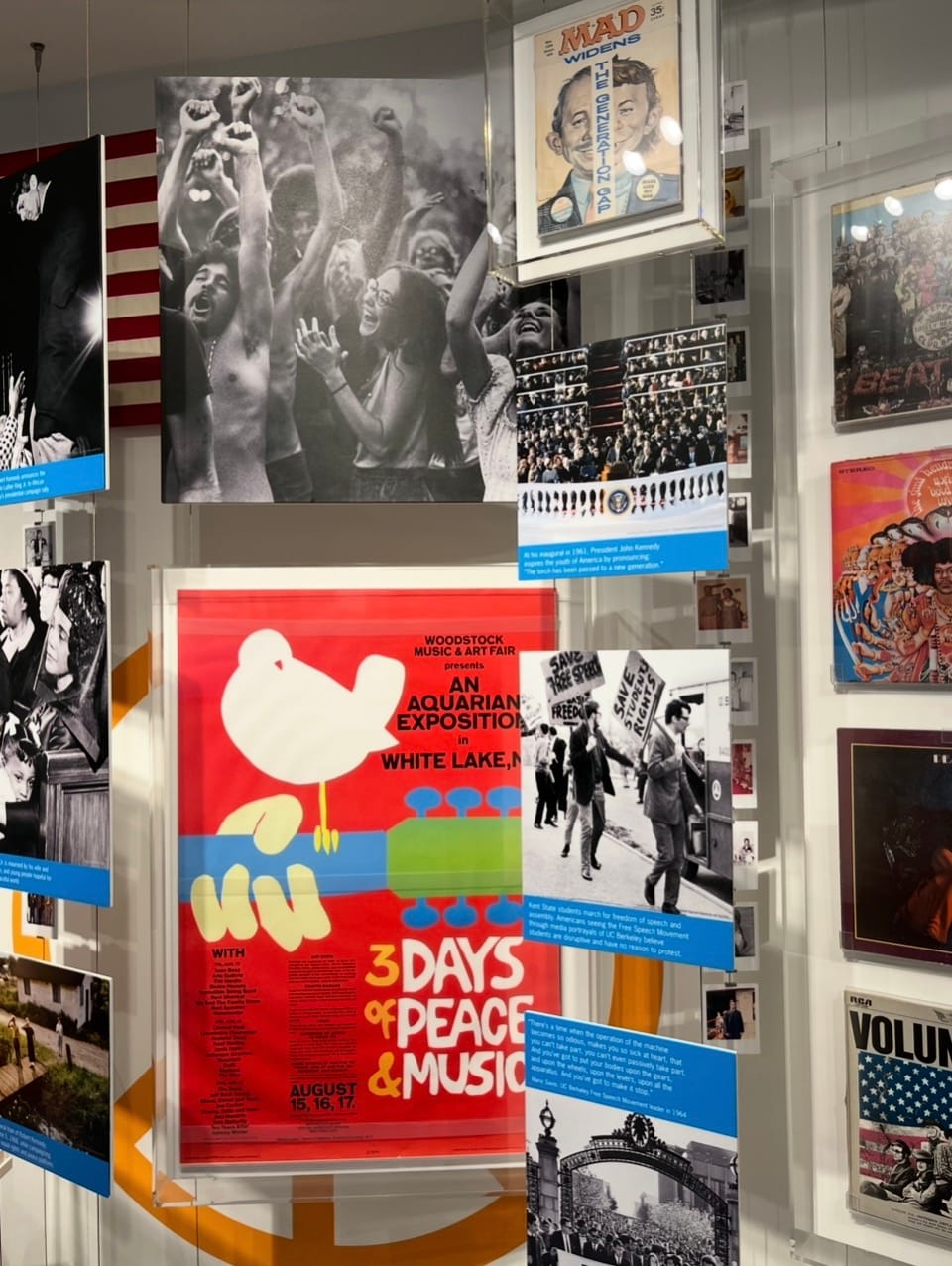
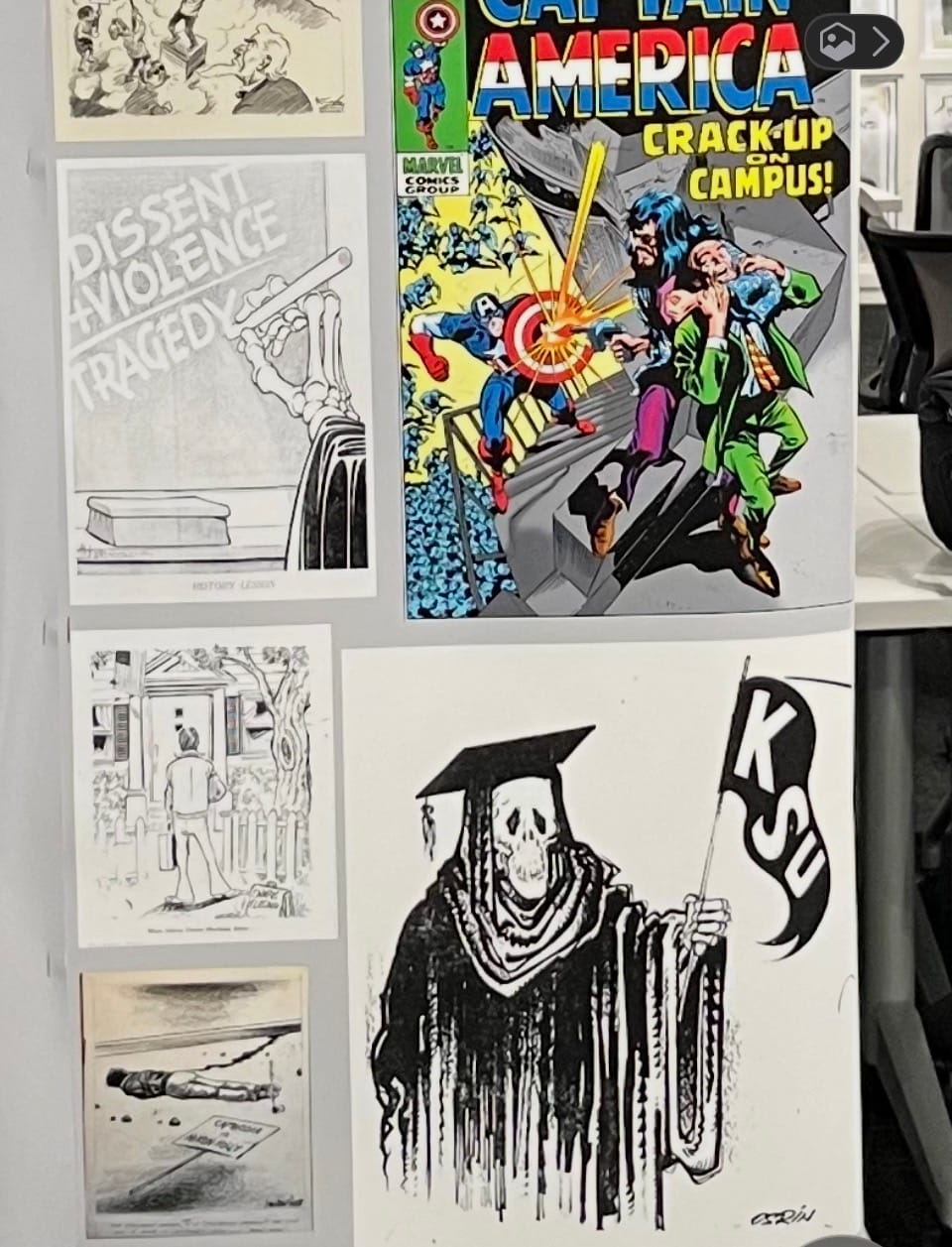
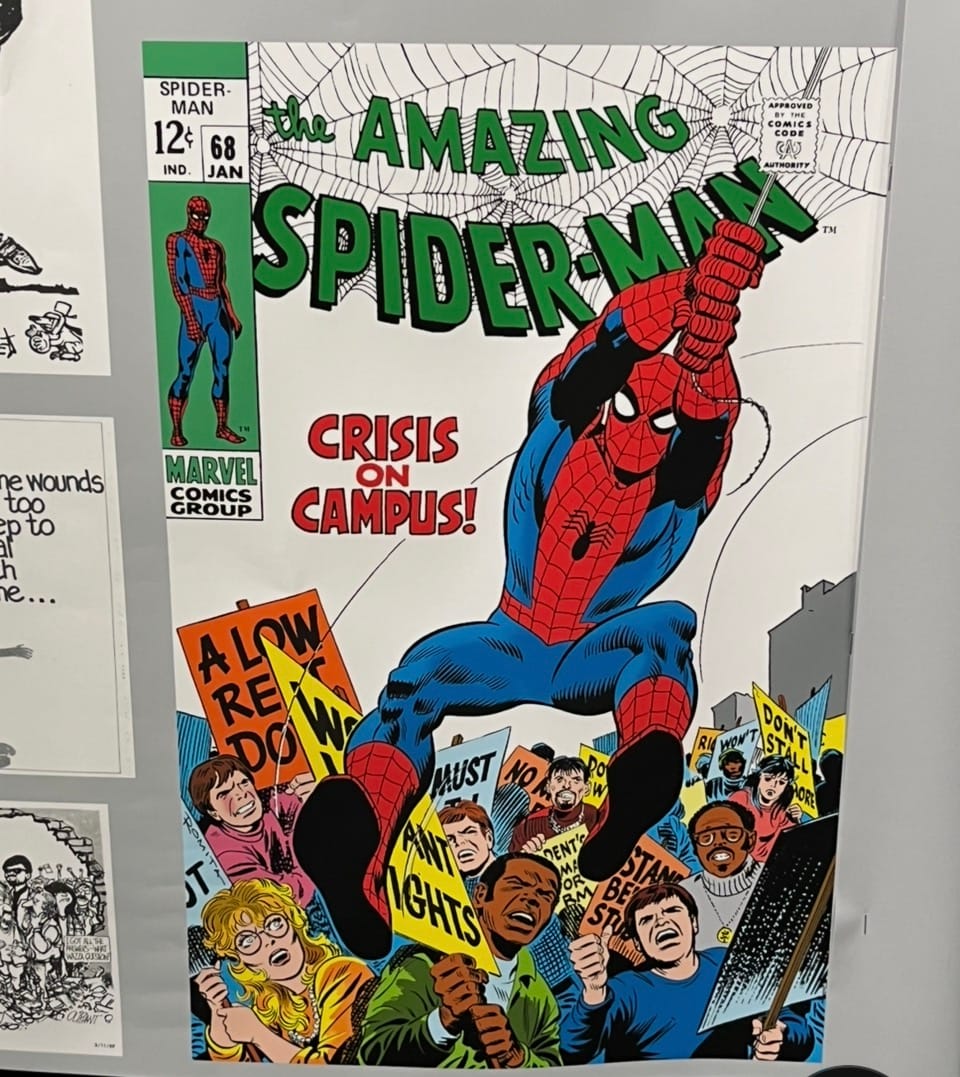
Such large, site-specific installations are profound repositories—affecting vehicles for preserving the many facets of the event and illustrating their impacts on the culture. I'm glad I got to see them and can share some of them with you.
More details about the cartoonists can be found here:
 WRITTEN BY: Phil B. Soencksen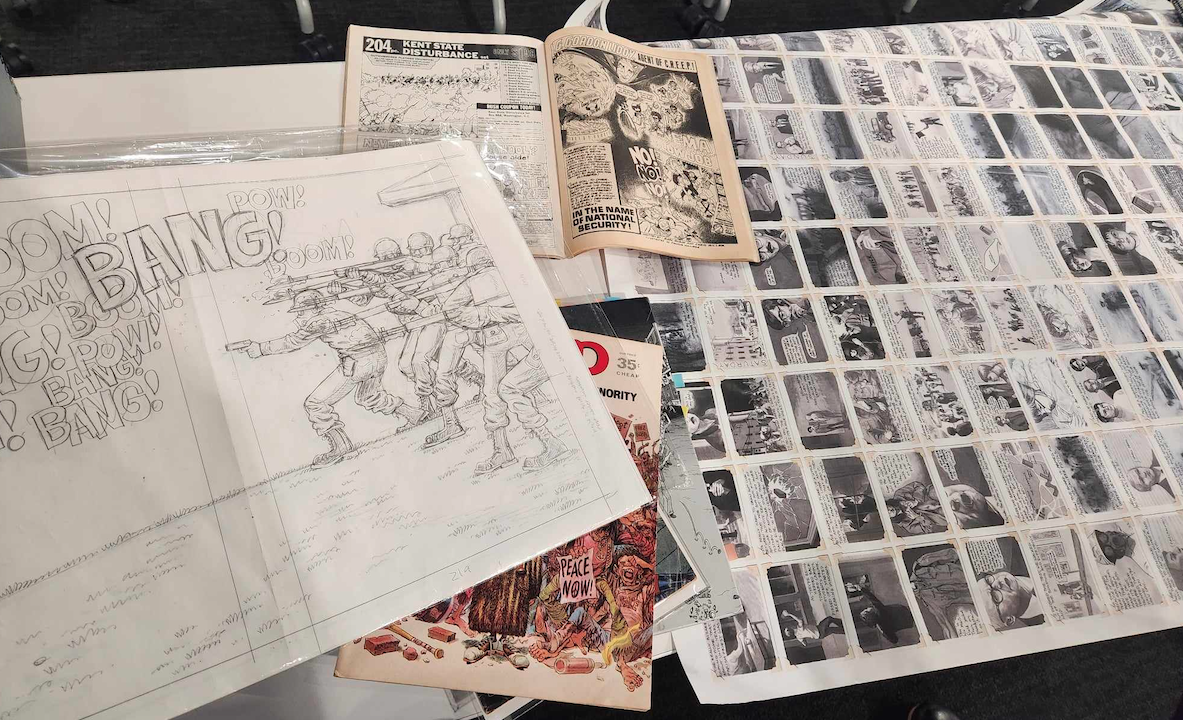
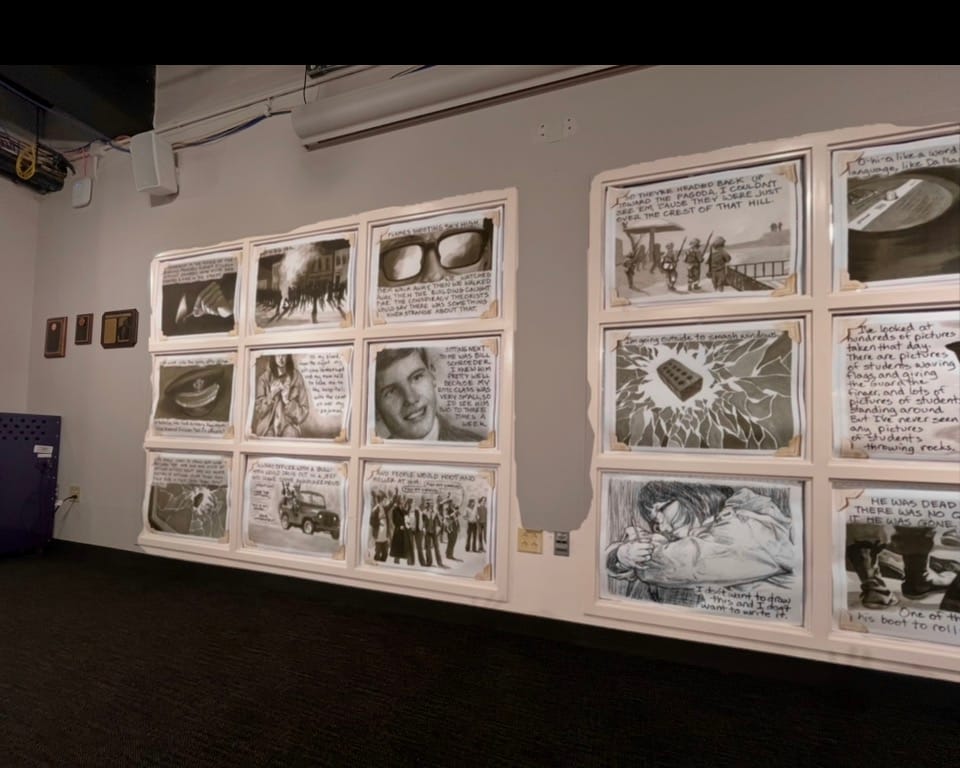
Times and events such as these don't lose their relevance. Art and other forms of documentation are essential to preserving them from political memory holes, and from our human tendency to forget the past. Indeed, the desperate attempts now being made to remove information that casts a critical eye on U.S. history? They are actually a testament to just how powerful these records are.
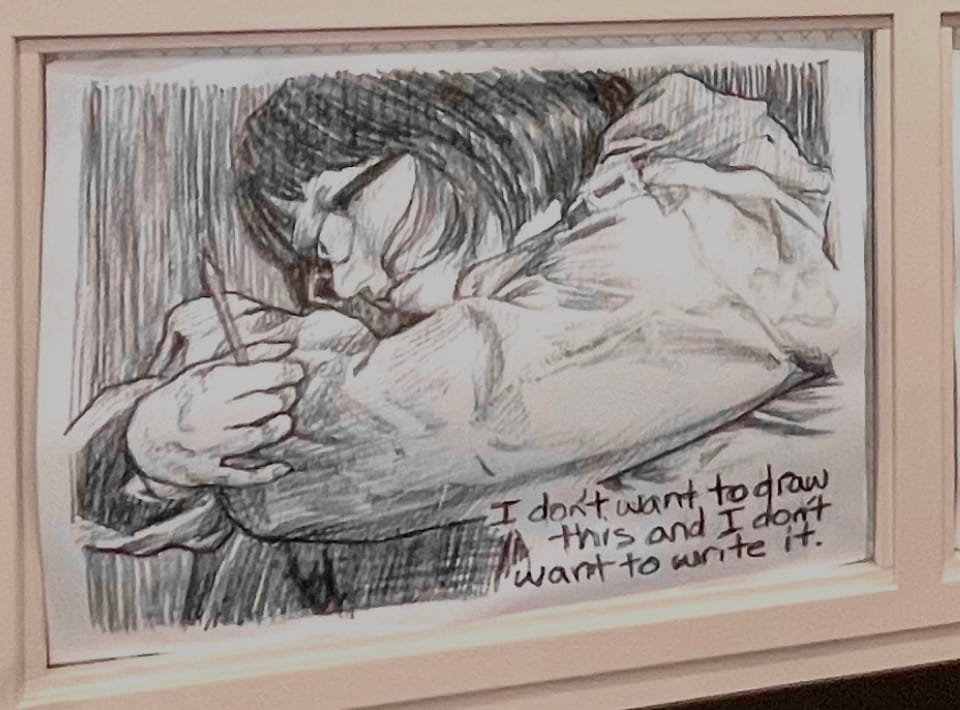
As I learn and write about so many painful historical moments, I can relate to this panel from artist Katherine Wirick's Kent State graphic novel: "I don't want to draw this and I don't want to write it."
But these are necessary, even heroic, acts in themselves. So is sharing the evidence. I hope you will.