Eviction and Sovereignty

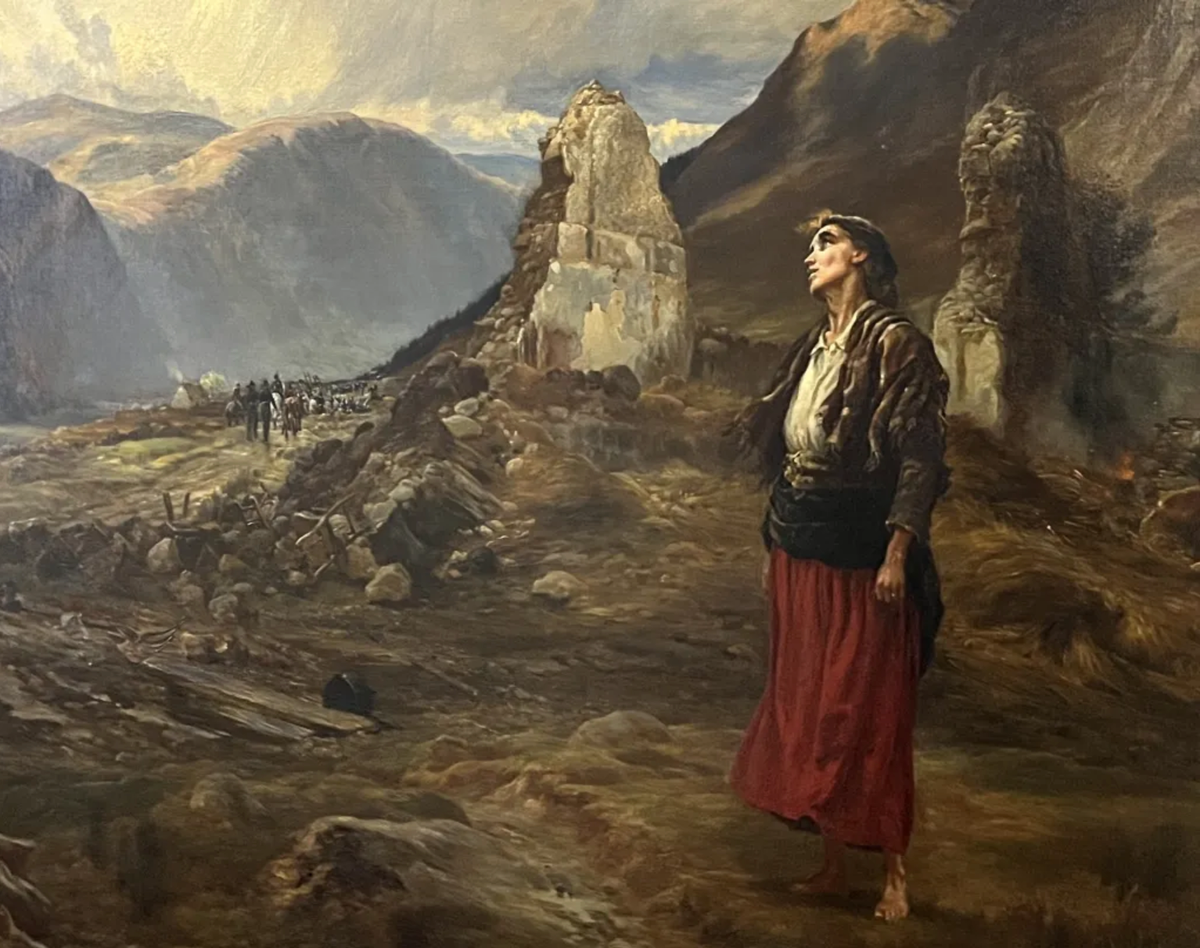
"They don't look often enough at context, past or present. Instead, they seem to see each moment as an independent crisis—or a recent one—often missing how many times the same dynamics have played out or indicators of how to proceed have already appeared." Andrea Pitzer, "You Don't Have to Swallow Frogs" (https://degenerateart.beehiiv.com/p/you-don-t-have-to-swallow-frogs)
" . . . the rent system but was one form of the ever recurring problem created by the efforts of men of parasitic habits to divert the labor and earnings of other men to their own profit." John Duncan Monroe, The Anti-Rent War in Delaware County, 1940 (qtd in Newman's Songs and Sounds of the Anti-Rent Movement in Upstate New York)
By this sixty-third post in my Learn, Imagine, Act project, I can say that for non-historians like myself, looking at past and present context is hard work. Fascinating but laborious. I understand why well-intentioned, educated people (like Ezra Klein and others, to whom Pitzer is referring) get distracted by the stream of "breaking" news, at the expense of a longer view.
Context is complex. There are usually multiple and opposing ways to interpret it. There's a seemingly endless amount of it! It feels overwhelming. It's challenging to organize it into a coherent framework for analyzing the present.
But I agree with Pitzer that when we look, it's not hard to find "the same dynamics." And as we try to get a handle on where we are now, recognizing the "ever recurring problem created by . . . men of parasitic habits" that Monroe pinpoints strikes me as crucial.
This week I continue exploring indigeneity and immigration, and the fundamental issue of having bodies that require food and a place to live. Much of the historic struggle for freedom has been based on the drive for individual bodily autonomy and for the collective sovereignty of cultural, ethnic, and religious groups. Unfortunately, power structures often pit these freedom seekers against each other.
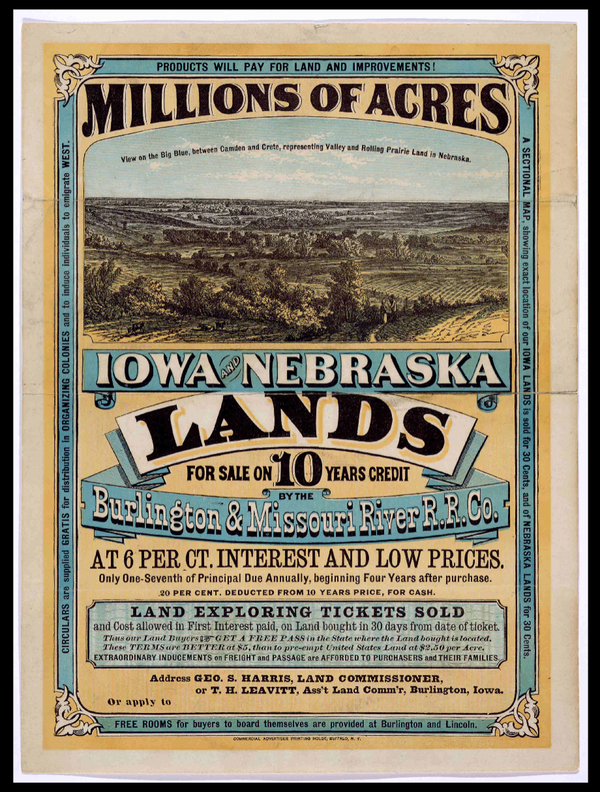
I'm building here on topics I've broached since post forty-five: the Stockbridge Munsee being driven out of Massachusetts and New York despite serving in George Washington's army; the opening of western New York (1788) to white settlers after Washington's scorched earth campaign against the Haudonosaunee (1779); the semi-feudal conditions of tenant farmers in upstate New York and famine in Ireland in the 1840s; the Pella Dutch settling in Meskwaki territory in 1847; and my Irish great-great-grandfather and Dutch-descended great-great-grandmother's participation in westward settlement. So many intertwined strands. Honestly, it's daunting to keep track of so much context.
The Past
So, this week I'm working to juxtapose snapshots of these recurring dynamics, starting with Ireland. I've spoken of starvation and disease, but ejection was also a major compounding feature of the famine. Changes to the Poor Laws in the 1830s worsened the situation.
By late 1849, an Illustrated London News correspondent began a series of eye-witness reports.
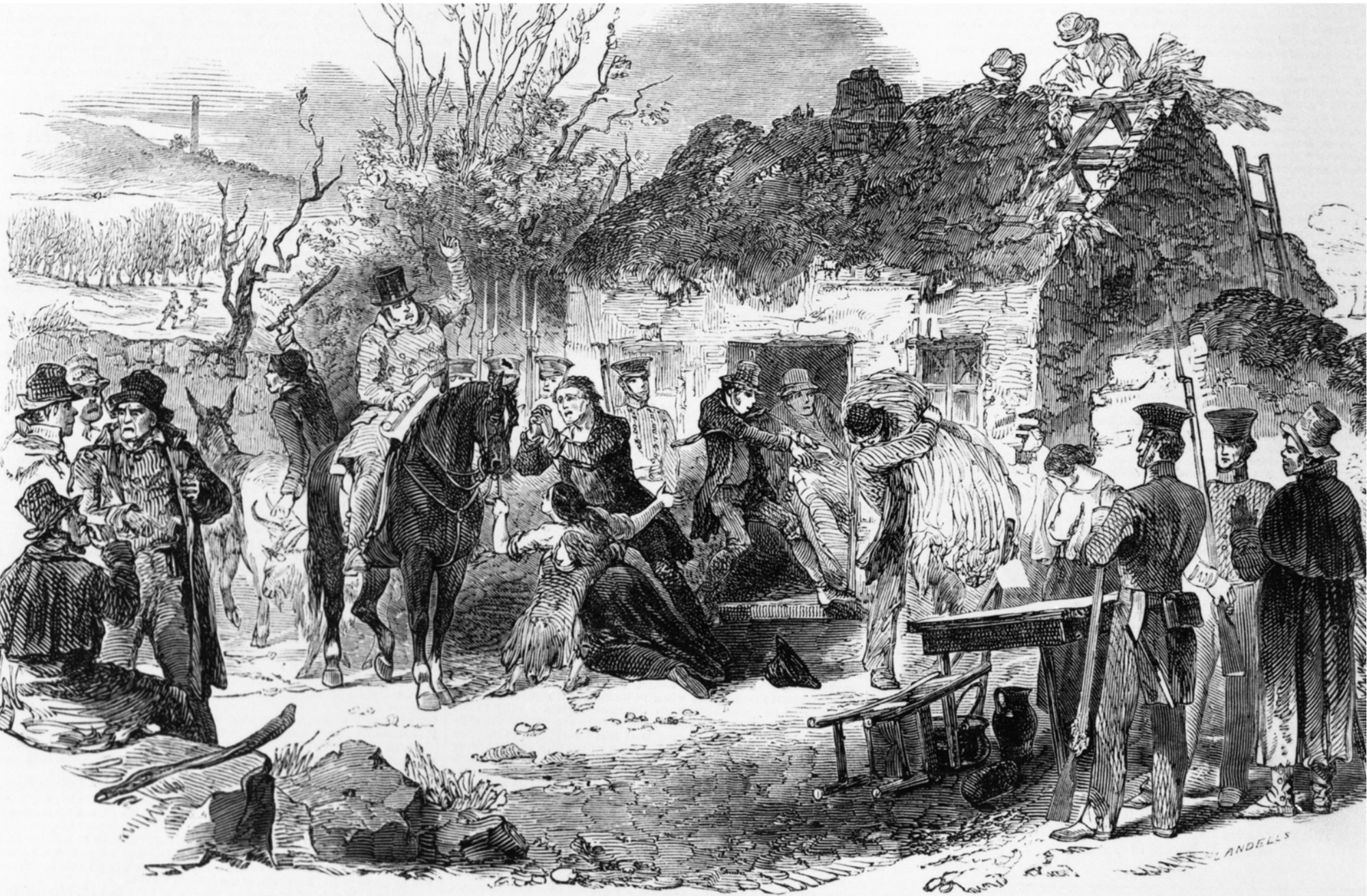
Bridget O'Donnel's horrifying testimony brings together all three elements:
"I was at this time lying in fever. Dan Sheedey and five or six men came to tumble my house; they wanted me to give possession. I said that I would not; I had fever, and was within two months of my down-lying (confinement); they commenced knocking down the house, and had half of it knocked down when two neighbours, women . . . carried me out. . . . I was carried into a cabin, and lay there for eight days, when I had the creature (the child) born dead. I lay for three weeks after that. The whole of my family got the fever, and one boy thirteen years old died with want and with hunger while we were lying sick. Dan Sheedey and Blake took the corn into Kilrush, and sold it. I don’t know what they got for it. I had not a bit for my children to eat when they took if from me.” "Condition of Ireland. Illustration of the New Poor Laws," December 22, 1849
This form of eviction was common. Sometimes the thatched roofs were set ablaze, along with cottage furnishings. Unhoused people sometimes created "scalpeens" as shelters within the broken remains, using sticks and straw. Worse were the shelters called "scalps." These were actual holes in the ground, covered with sticks. Here is the full ILN series with engravings:
 Clare Libraries Local Studies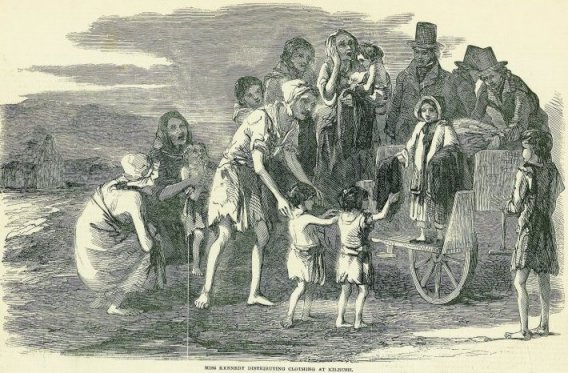
Such evictions went on long after the end of the potato blight.
By 1890, Englishwoman Elizabeth Butler, married to an Irish landlord who decried such practices, painted this eviction on site. You can find out more here:
 ucdculturalheritagecollections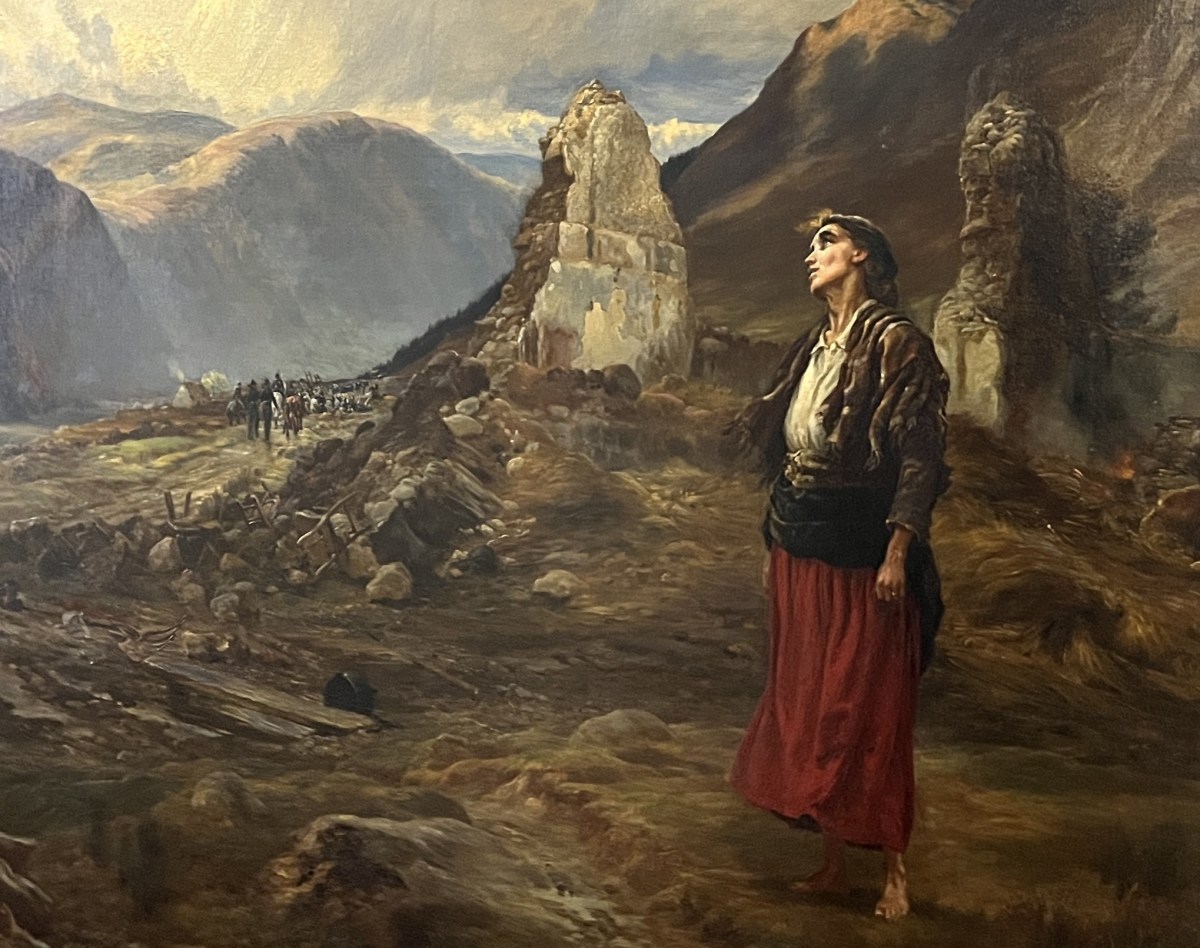
Henry Thaddeus Jones' eviction painting offers a striking perspective, from inside the dwelling:
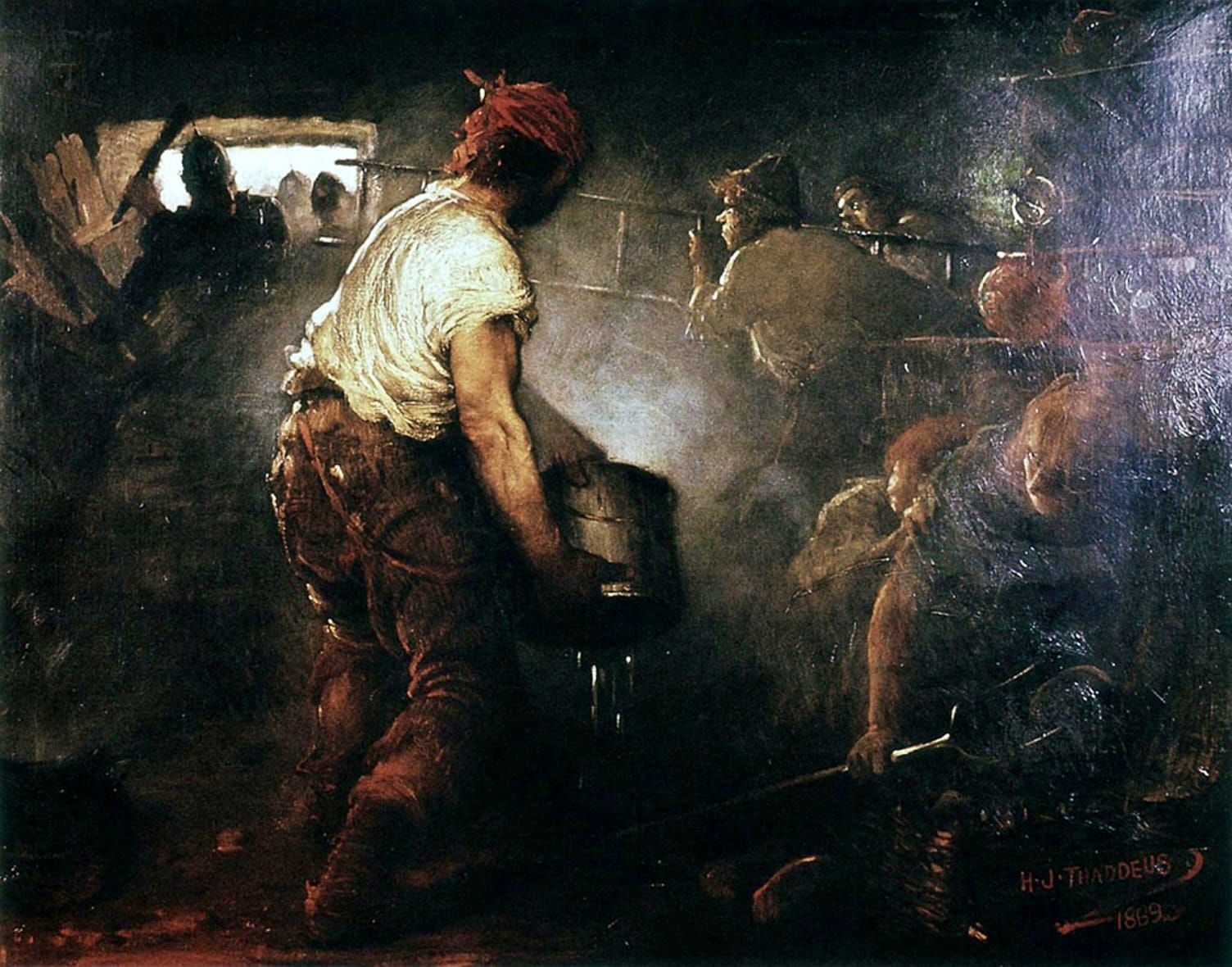
In today's terms, such landlords often hoped to encourage their tenants to "self-deport." Others paid their passage on ill-equipped "coffin ships," just to get them off their land.
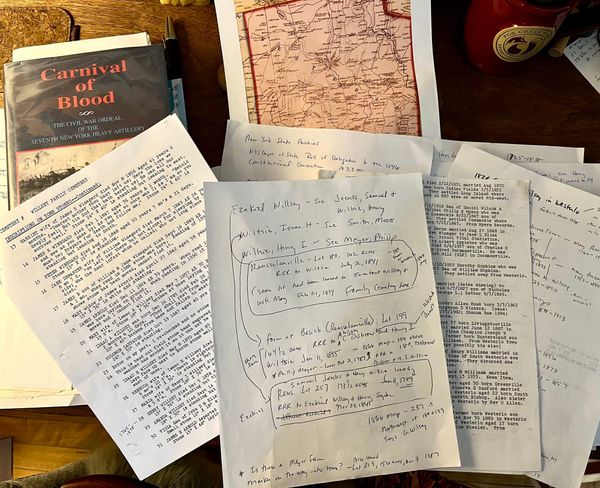
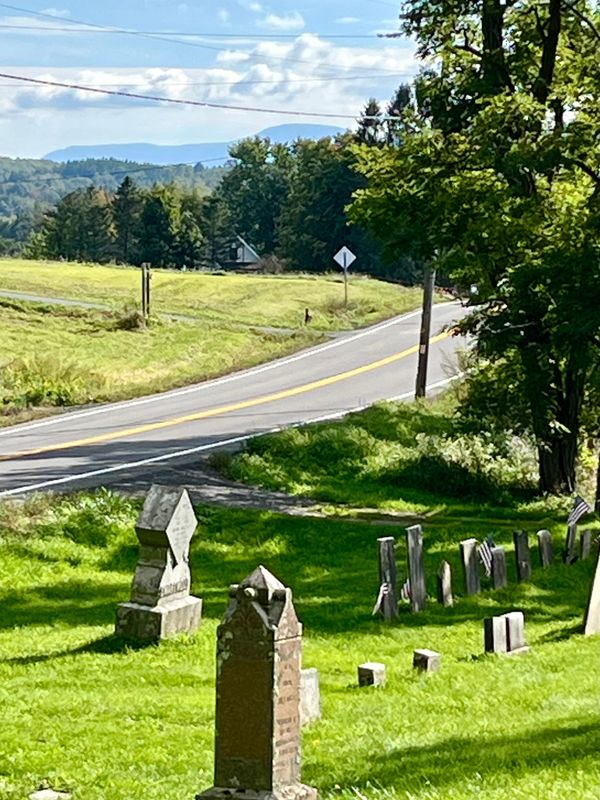
Meanwhile in the 1840s and '50s, my great-great-great-great uncles and aunts in upstate New York were experiencing the Anti-Rent Wars and their long aftermath; my Irish great-great-grandfather was finding his footing in New York; and the Stockbridge Munsee nation (displaced to Wisconsin) and the Meskwaki (forced into Kansas) were still struggling for access to their homelands.
By 1852, some white settlers petitioned on behalf of the Meskwaki in the Marion Resolution:
“To the Honorable The Congress of the United States of America the Undersigned, Your Petitioners, respectfully represent that they are citizens of the State of Iowa and residence on the lands formerly held and owned by that tribe of Indians called Musquaque, composed of the Sacs and Fox Tribes. That, many of the Indians since they were removed by the government have returned to their old hunting grounds among us, that they are fast wasting away, that their children die off rapidly, that they have not sufficient force to sustain themselves against their more powerful neighbors by which they are surrounded, and they represent also that they are disposed to turn their attention to agriculture, and are particularly anxious to be allowed a grant of land sufficient for that purpose . . ." Marion Petition, (emphasis mine, qtd in https://www.meskwaki.org/wp-content/uploads/2021/03/Meskwaki-A-Narrative-of-Chronology-and-Perspectives.pdf)
On July 4, 1854, Chief John Wannaucon Quinney addressed a large audience in Anti-Renter territory. I wonder whether my ancestors, or the Irish activist, Thomas Ainge Devyr were in attendance (see post of 6/26).
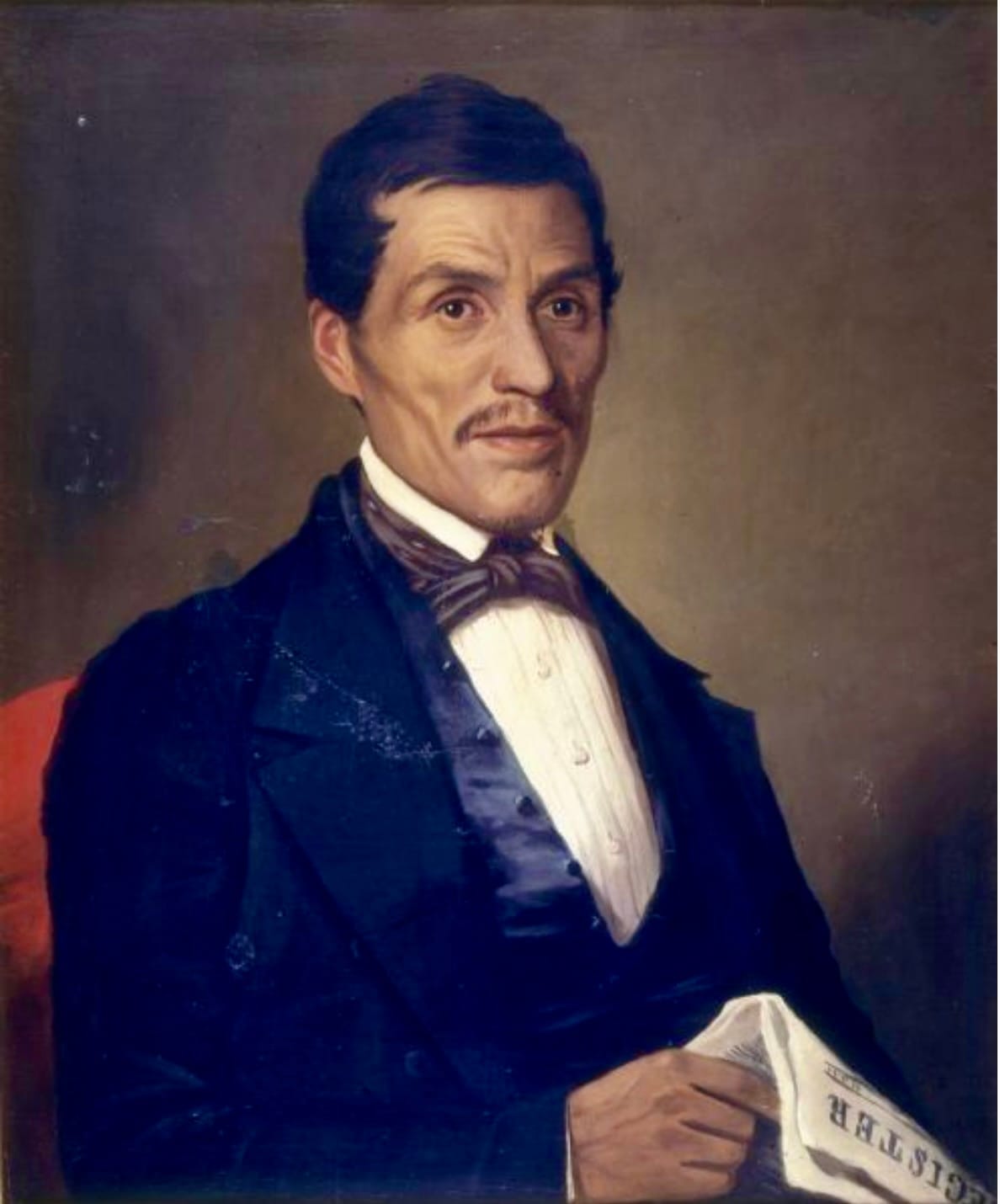
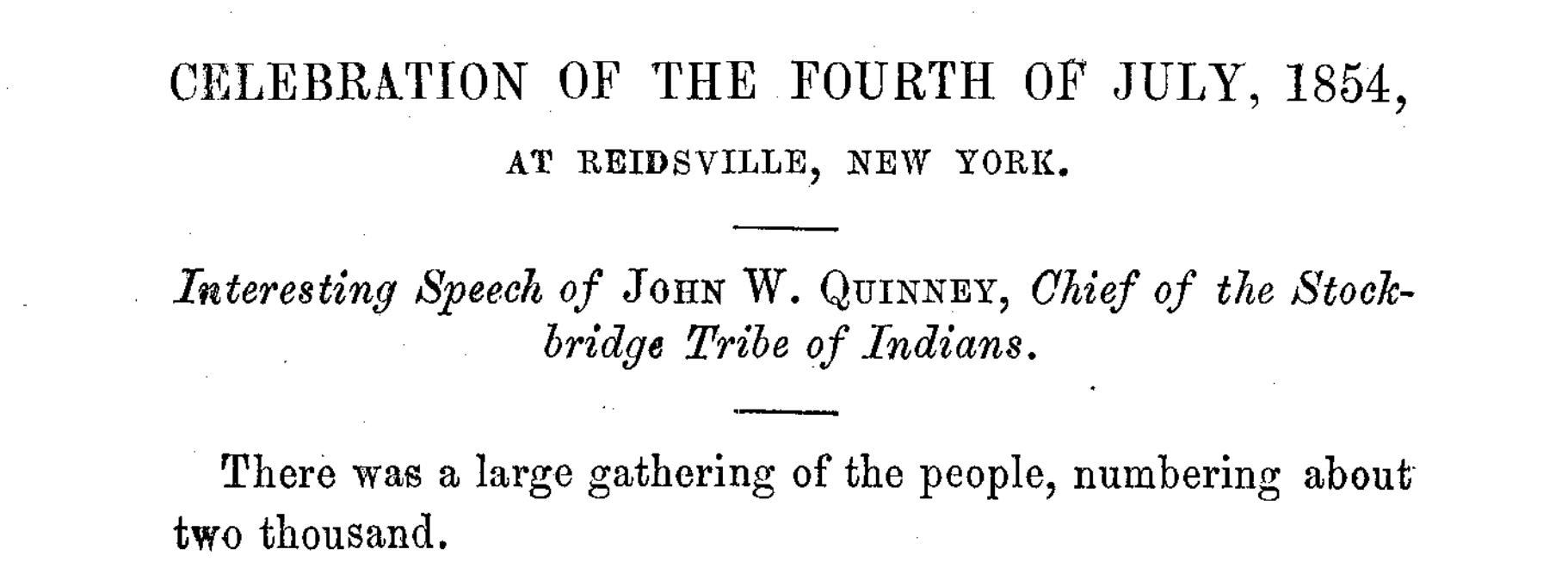
"Let it not surprise you, my friends, when I say, that the spot on which we stand, has never been purchased or rightly obtained; and that by justice, human and divine, it is the property now of the remnant of that great people from whom I am descended. They left it in the tortures of starvation, and to improve their miserable existence; but a cession was never made, and their title has never been extinguished." (emphasis mine)
Albany Freeholder, July 12, 1854 (https://www.wisconsinhistory.org/record/multi/W01C9C2)
A few years later, a small group of Stockbridge tribal members would join Anti-Renters, returning to occupy vacant farms in their home territories in an attempt to bring a court case about falsified deeds. That story is astonishing on its own merits, and is described in detail here: "Strange Partners in Land Equity: Mohicans and Tenant Farmers “Invade” Upstate New York in 1859" Warren F. Broderick, Hudson River Valley Review (https://www.hudsonrivervalley.org/documents/112999/216283/HRVR+35.2%2C+Spring+2019.pdf/72e87be1-0533-31e4-acb4-78d32c47a8d3?t=1729690882114)
Disputes over rent and control of property continued for decades, even after 1840s legislation altered certain aspects of leaseholding, and hereditary landholders sold off much of their land.
Some farmers were finally able to purchase their plots, but other land was bought up by speculators. Some of those, such as Walter Church, sent eviction posses that stopped just short of the conflagrations by Irish landlords.
As Christman details in Tin Horns and Calico, beyond the end of the Civil War (and into the 1880s), evictions could result in violence, including gunfights and deaths when farmers were determined to fight back. These raids sometimes had a questionable legal basis. Nonetheless, farm families and any subletors or household help were removed, bodily. Men carried them outside in any weather and dumped them on the road with their furniture. Even if they had offered to settle outstanding debts.
The Present
These stories of starvation, eviction, and displacement—the forceful disregard for the bodies and sovereignty of the dispossessed—bring to mind this year's scourging of the Twin Cities by immigration agents.
A week after agents killed Renee Good, Aliyah Rahman, a disabled U.S. citizen, underwent a harrowing experience while driving across town to a medical appointment. Agents dragged Rahman from her car without cause and removed her to a detention center.
Interviewed only days later, she says, "I hear the sound of the word bodies . . . that word is in my head right now." The dehumanization she was subjected to was intense. Starting at minute 9:52, Rahman elaborates on "bodies." I recommend watching it yourself, as I can't do justice to her haunting presentation:
"The word bodies . . ." she says, "that is the word that is exclusively used in my experience, to refer to us, by the ICE agents."
She is mocked on the way to detention, and the driver radios in: "We're bringing in a body." On arrival, she hears "ICE officers yelling: where do I put 'em? They're bringing in bodies seven and eight at a time." They look for a room to put her in. Repeatedly, she hears "there's already a body in that one."
Lastly, Henry Thaddeus Jones' eviction painting reminds me of a video from inside a Twin Cities home.
Agents had killed Renee Good the previous day. The video starts after agents pull a DoorDash driver out of his car. The woman carrying the delivery runs inside the home, owned by a Native American family and their baby. A dramatic scene ensues as the native woman calls 911. She moves through several phases of emotion while navigating her fears about personal safety, her own humane values, and the conflicting demands of the officials.
For more background, the following newscast covers indigenous responses to the Minnesota scourge which threatened natives, targeting people on the basis of color:
Today
With the federal agents' fatal shooting of Salgado Araujo on Tuesday, this country's body count has risen again while I was putting together this post.
The unjust exercise of lethal power over the bodies of others is a recurring dynamic. It's one of our foundational, persistent throughlines, often subsidized by wealth and men of parasitic habits. But we don't have to accept it as a forever feature. Those of us who can do so need to seek even more ways to help alter the present course. As Pitzer suggests, history offers many indicators of how to proceed.