United, We Won't Unravel

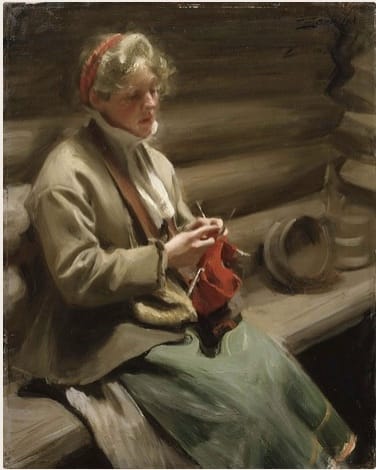
Unless, of course, we do so in order to create something entirely new.
I meant (and failed) to keep it short and sweet this week so I could get back to finishing up the Norwegian resistance hat I'm knitting. Maybe you've heard about them? Traditionally associated with the pointy hats of Norwegian gnomes or "nisse," and even Santa, these red wool hats (often with a tassel) became a sign of Norwegian resistance against the Nazis. Of course, the Nazis banned them.
Red hats, or les bonnets rouges, were also worn during the French Revolution in 1789 (and even before that in a regional anti-tax revolt in Brittany, in 1675). And here's a fun throughline: in 2019 I bought one of these on a visit to France, without knowing its historical background. I became very attached to that hat, and not simply because it was absolutely the best hat I had ever worn. It was also because the hat had been made in the small village of St. Pierreville, at an inspiring, cooperatively-governed enterprise called Ardelaine.
Ardelaine was the site of a disused spinning mill in a declining rural village. A small group of young people discovered and recovered the mill in the nineteen-seventies, and went on to revive local wool production. Ardelaine now includes a bookstore, a cafe and restaurant, and a shop selling their locally-made wool products, including mattresses and hats. Looking back, it makes perfect sense to me that an enterprise like this would be selling a red hat.
If you've read this post, you'll know that co-operatives are close to my heart, especially in this age of multinational corporations and billionaire-owned businesses. We need co-operatives more than ever.
 Ruth Ann Smalley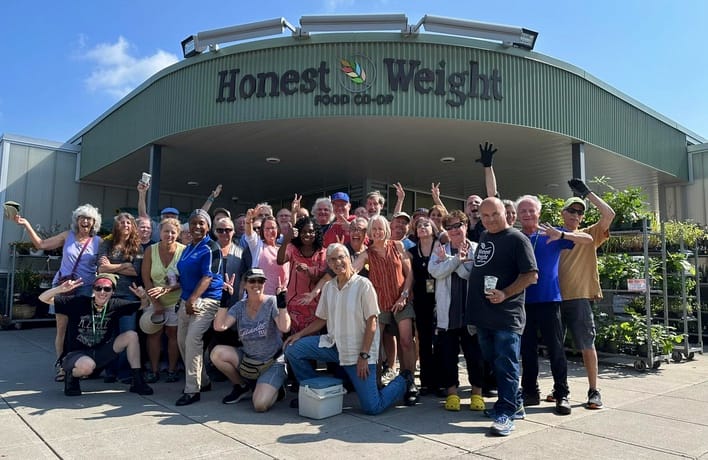
Until 3 weeks ago, I'd managed to keep tabs on my bonnet rouge. Then it mysteriously disappeared. So, I was sadly hatless at the very moment the Norwegian resistance hats began to appear.
When I learned more about their background, I was intrigued. Especially as so many of my discussions here have described how the making of handcrafted items—fiber art and fabric of all kinds, embroidery, special garments—has been a means of symbolic, cultural, and political representation throughout history.
For example, in this post, I talk about Mies Boissevain-van Lennep, who rallied post-war Dutch women to make over 4,000 patchwork skirts that she called the "magic skirt of reconstruction."
 Ruth Ann Smalley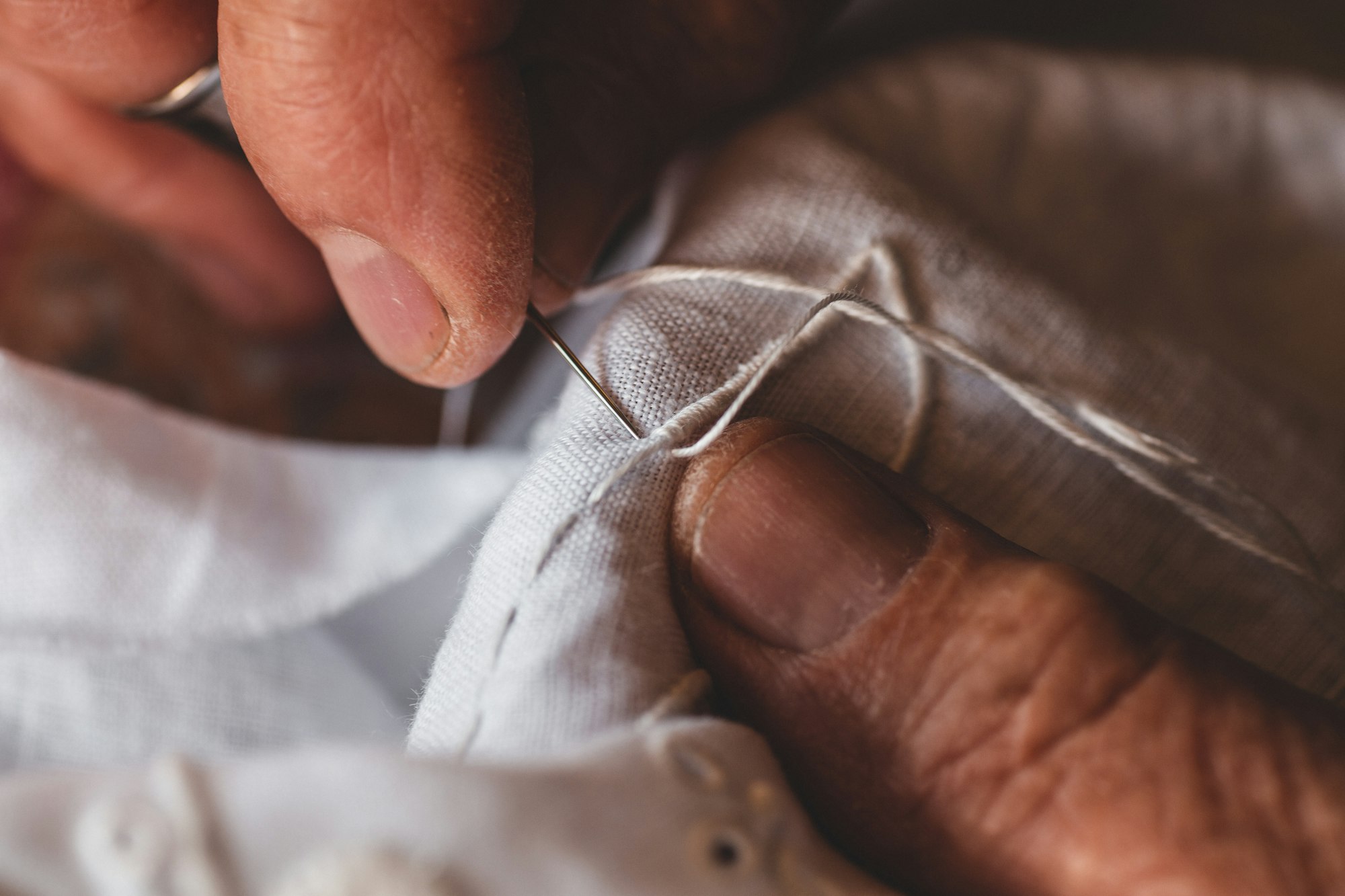
In post #7, I talk about The Ribbon made in 1985, for the 40th anniversary of the bombing of Hiroshima and Nagasaki. Led by Justine Merritt, its peace panels were embroidered by over 25,000 participants. Stretching 15 miles long, it wrapped around the Pentagon.
 Ruth Ann Smalley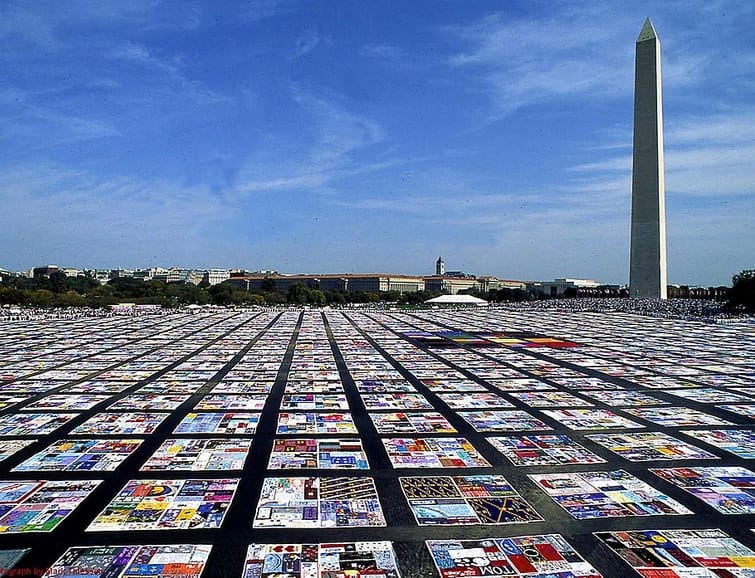
In post #10, I write about Esther Nisenthal Krinitz's remarkable embroidered Holocaust panels; the meaning of Vyshyvanka Day in Ukraine; and projects such as the Transgender Quilt and the Social Justice Sewing Academy.
 Ruth Ann Smalley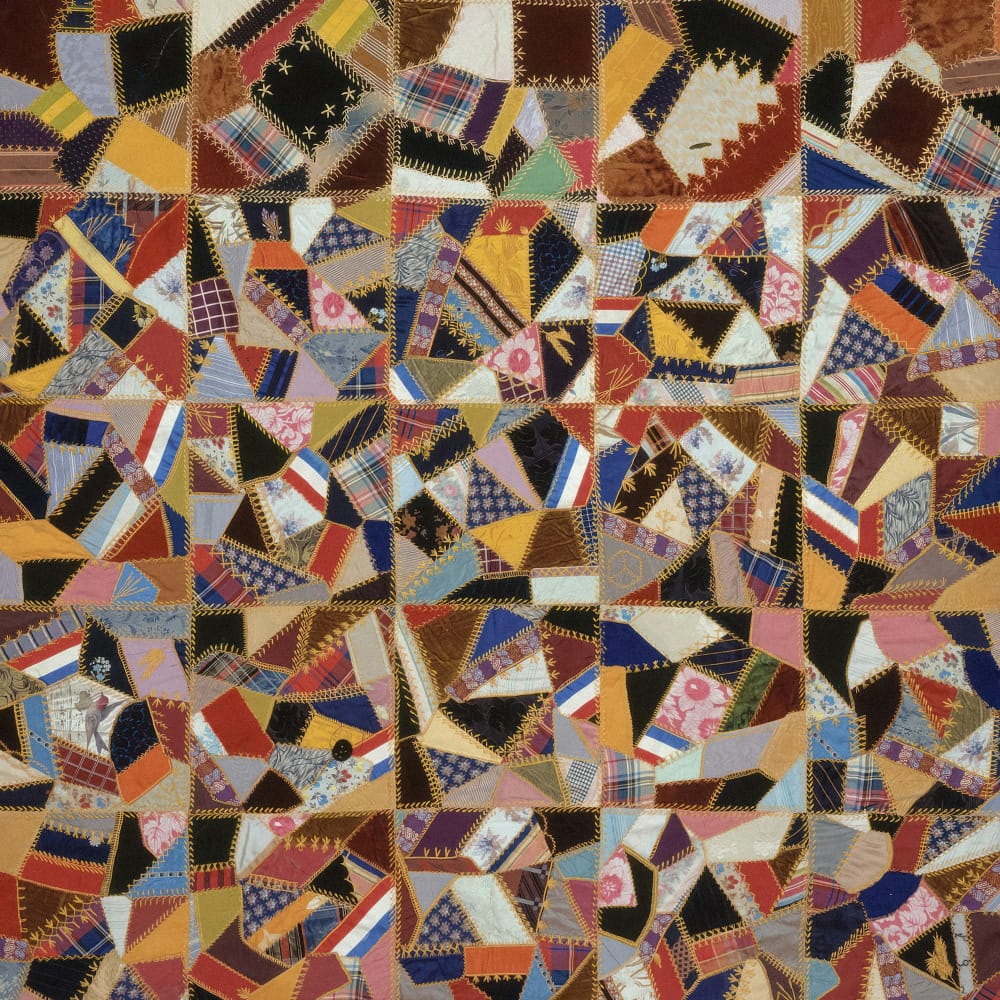
I highlight additional projects in "Making It Up Out of Whole Cloth," "Handcrafted Healing," and "Engaging With Other Minds." These forays into fiber art history primed me to take note when the resistance hats began popping up in the news.
But if you live outside Minnesota, don't knit, or aren't online a lot, you may not have heard of them. At my local yarn store, a copy of the pattern and a pile of red yarn greet you the moment you step in the door. To my surprise, though, when I popped in to my co-op's knit-and-stitch group today, noone was making them. I asked a few people, who didn't seem to be familiar.
So, despite pattern orders from 43 other countries, and a viral online presence, the symbol still has room to spread.
To find out more, check out this fascinating article:
 Eldrid Borgan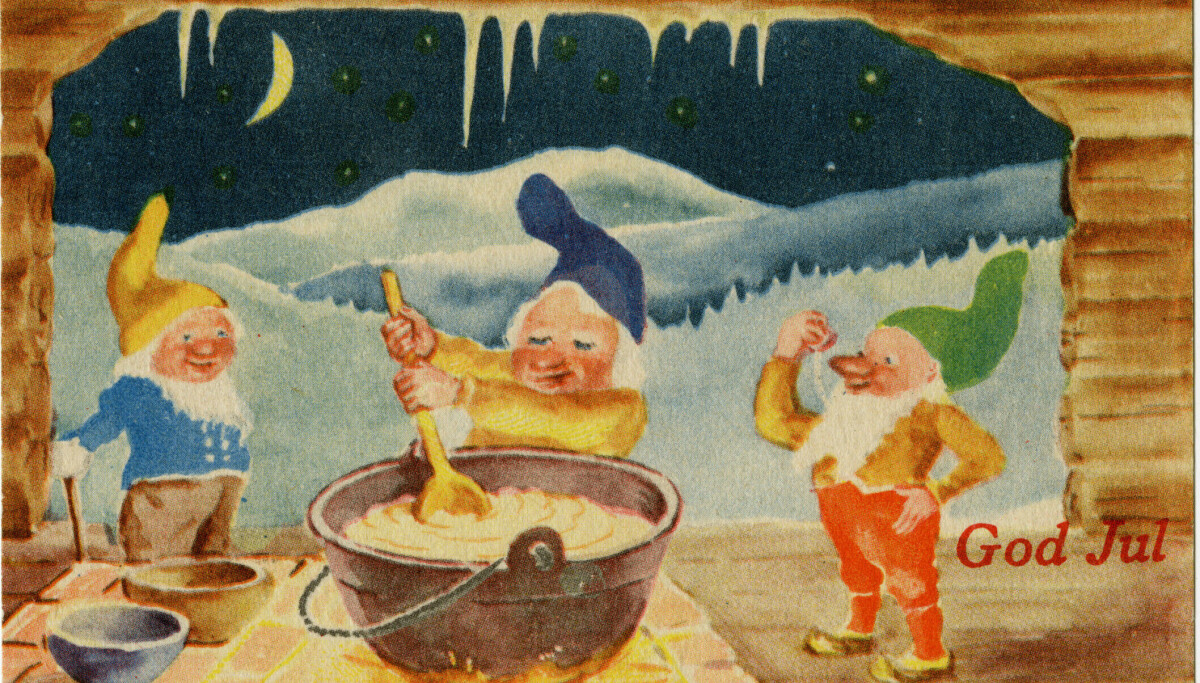
You can also follow the link to learn about the "rowdy, drunk Christmas gnomes!"
Here's an excellent short discussion to listen to:
Here's a video about Needle and Skein, the yarn shop that launched it all (story starts at :43):
According to Michigan Public Radio, the shop owner, Gilah Mashaal, "typically avoids discussing politics" at her shop, "but as a Jewish woman and an immigrant herself, she felt she had no other option that to find a way to protest" (https://www.michiganpublic.org/2026-01-31/a-red-hat-inspired-by-a-symbol-of-resistance-to-nazi-occupation-gains-traction-in-minnesota).
"I cannot sit by and watch really good people literally be torn apart by the actions of the federal government" Gilah Mashaal
There are multiple reasons why it has taken off so quickly, besides the fact that about a third of Minnesotans have Norwegian ancestry.
The main one seems to be that people all over the world are looking for ways to engage, support, and show solidarity with the Minneapolis residents (as well as all the people targeted in other communities across the country) who are being traumatized by this federal occupation.
Buying a pdf of the pattern online is a simple, fast way to donate. Wearing a hat is super easy for those for whom street protest is difficult, and sends message if you do happen to be taking a stand out in the streets. Don't knit? You probably know someone who does. That person might be willing to make you a hat! Crafters and craftivists love what they do; many will jump at the chance to knit a symbolic hat or two, or five.
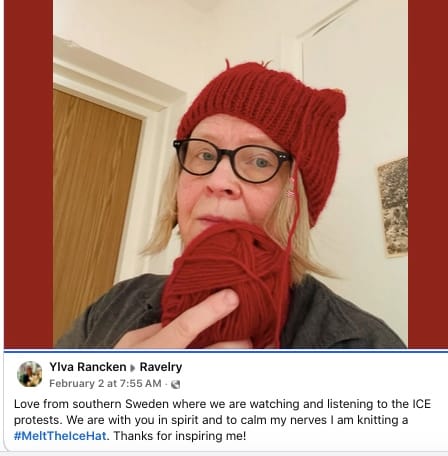
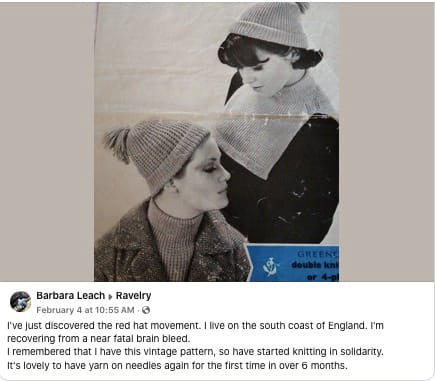
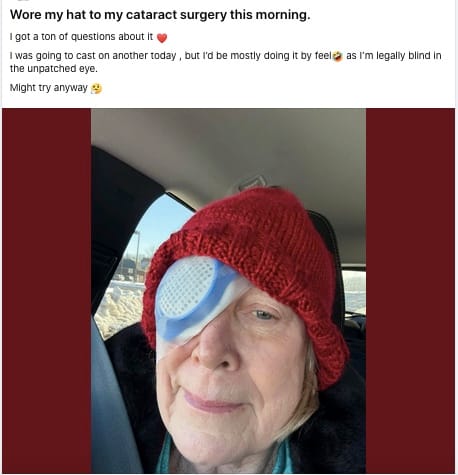
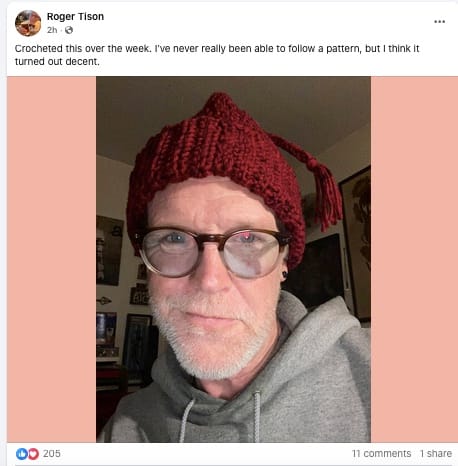
The world is watching, so it is no surprise that Ravelry, the site where the patterns can be purchased, is filling up with supportive posts from all over. It is heartwarming to see photos pouring in of all the work-in-progress as well as finished hats.
Ditto for all the clever adaptations people are finding to suit their skills: crochet versions, sewn versions, and other design innovations (like tiny pins, doll hats, and earrings). Some are learning to knit, simply in order to make this hat. People with injuries, health issues, or in one case, recovering from a life-threatening brain bleed are being drawn to trying the project. Many are delighted to reclaim red headwear.
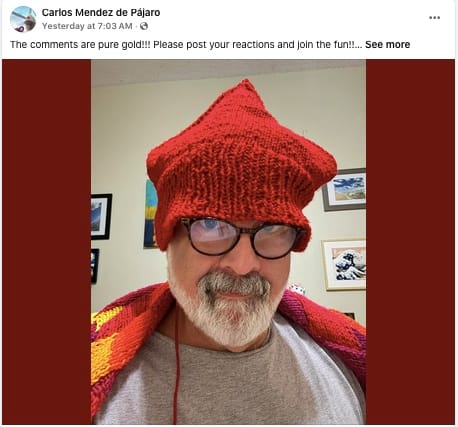
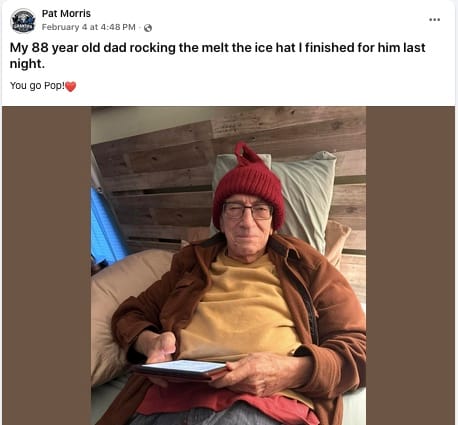
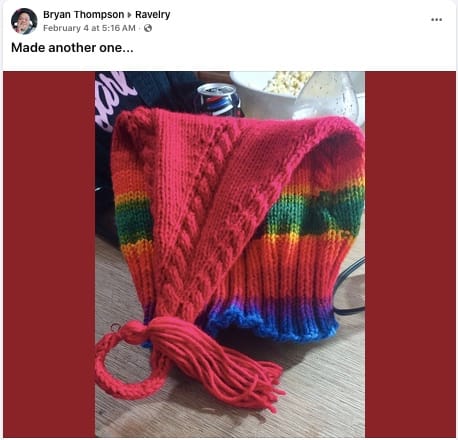
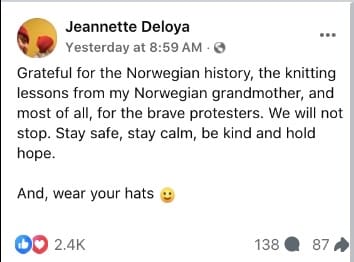

In terms of impact? Well, the yarn shop that created the pattern has so far donated $600,000 to local organizations. Yarn shops all over have been selling out of red yarn, repeatedly.
Knitters are going into their stash, or unraveling old sweaters to recycle red yarn. People are helping each other work with the pattern online. Learning about the Norwegian resistance has no doubt helped people think more about historic parallels.
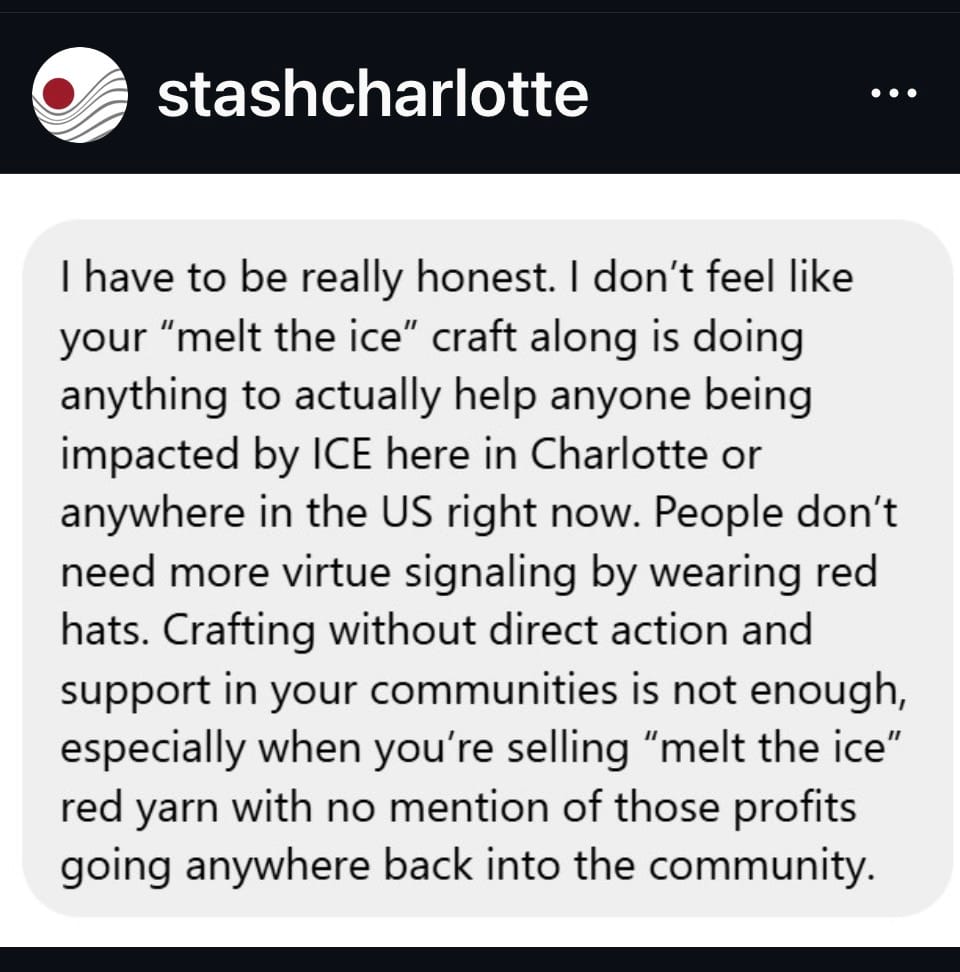
Not everyone is happy about all this talk of resistance. Some don't like that a hat pattern has been named "Melt the Ice." One yarn shop even posted that "political discussion" is prohibited.
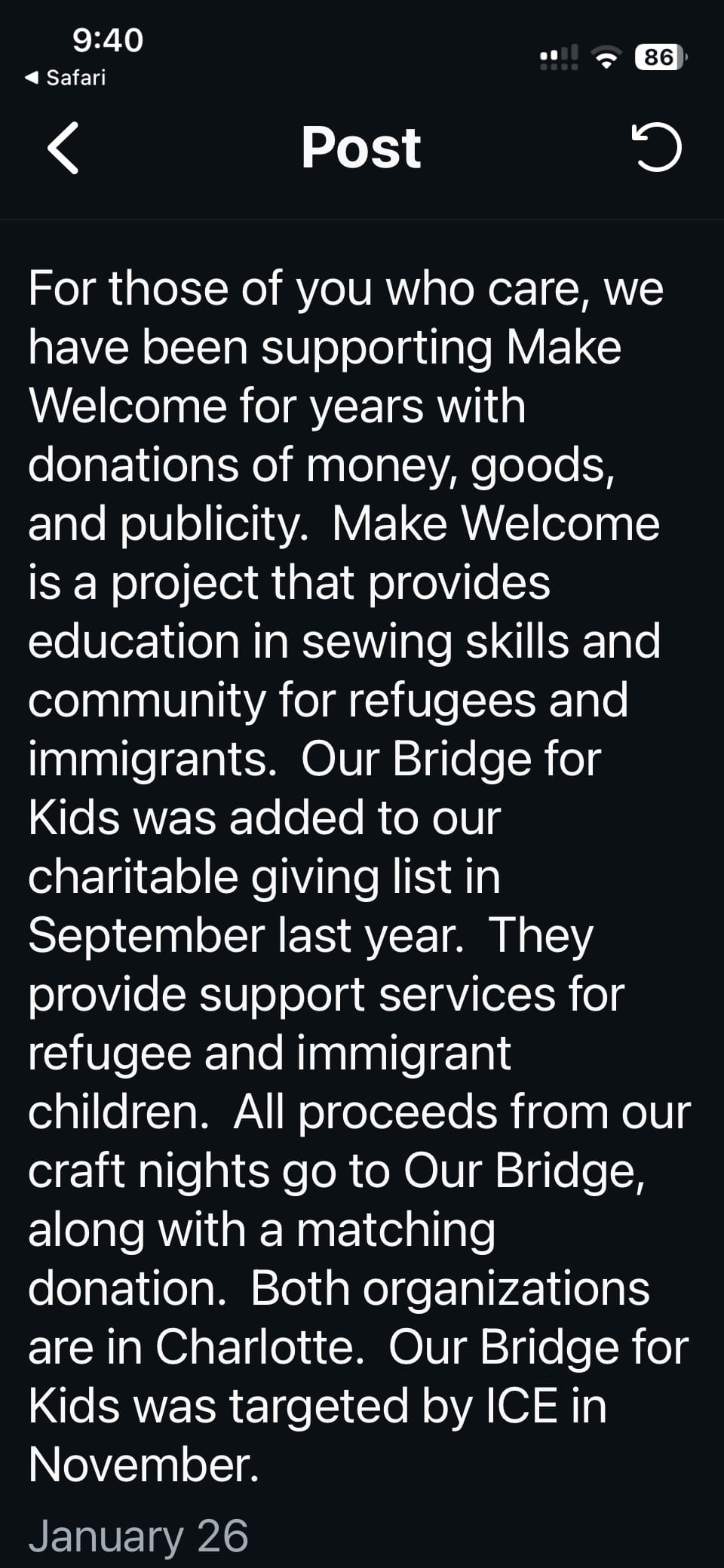
And something so visible, becoming so popular, will invariably be criticized for being "performative." Here's how one yarn shop has explained their perspective on that:

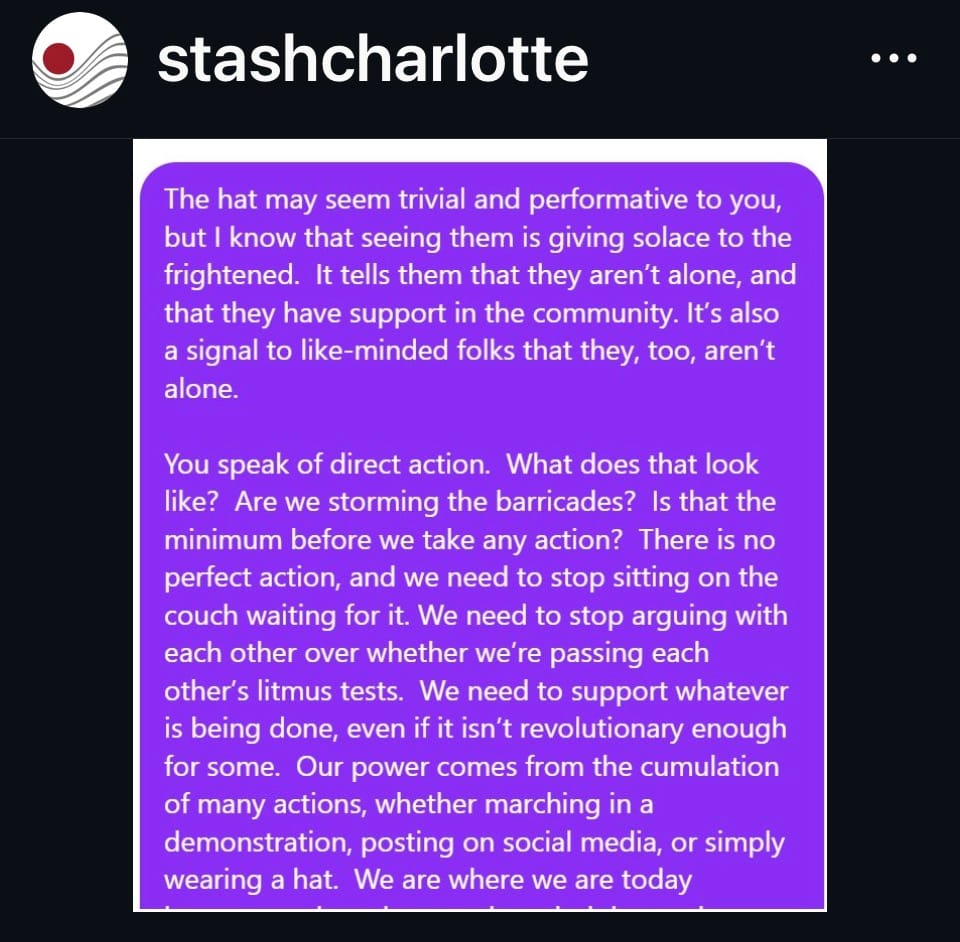
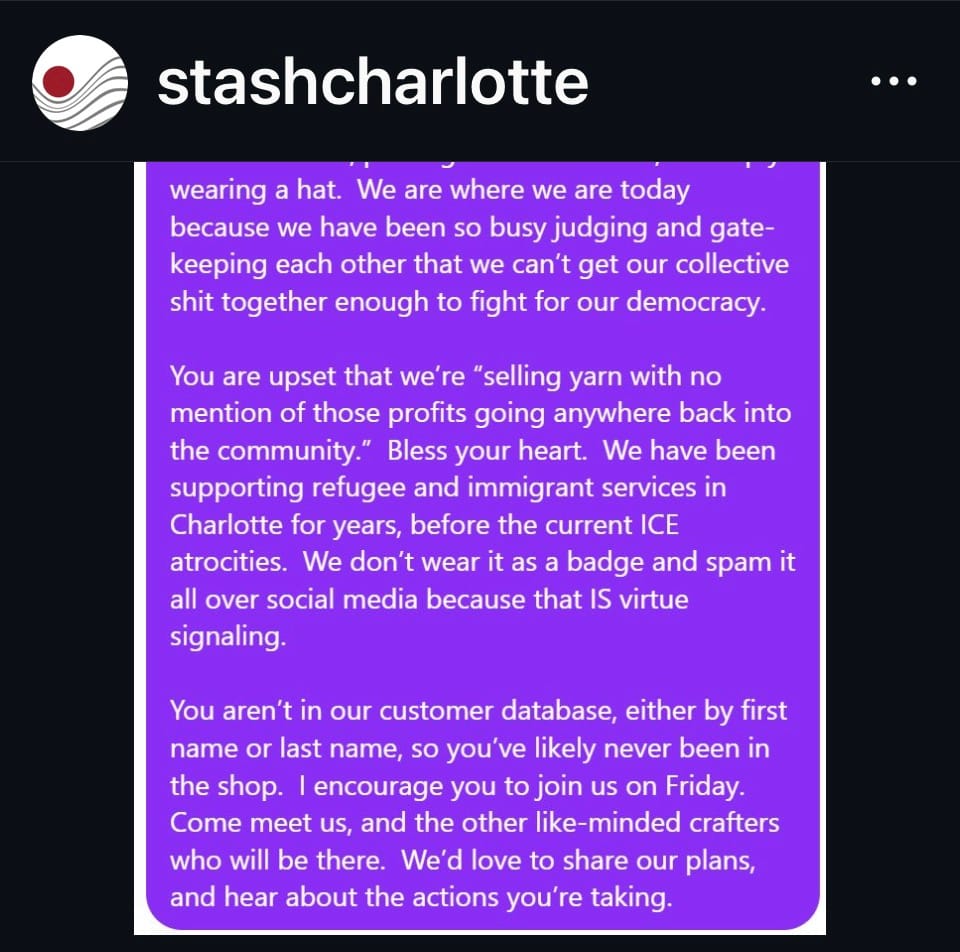
Power from the accumulation of many actions. That definitely makes sense from a knitting perspective, where the whole piece is the result of small, repeated actions accumulating. This recent Guardian piece looks at the red hats as part of a variety of forms of resistance:
 Julia Carrie Wong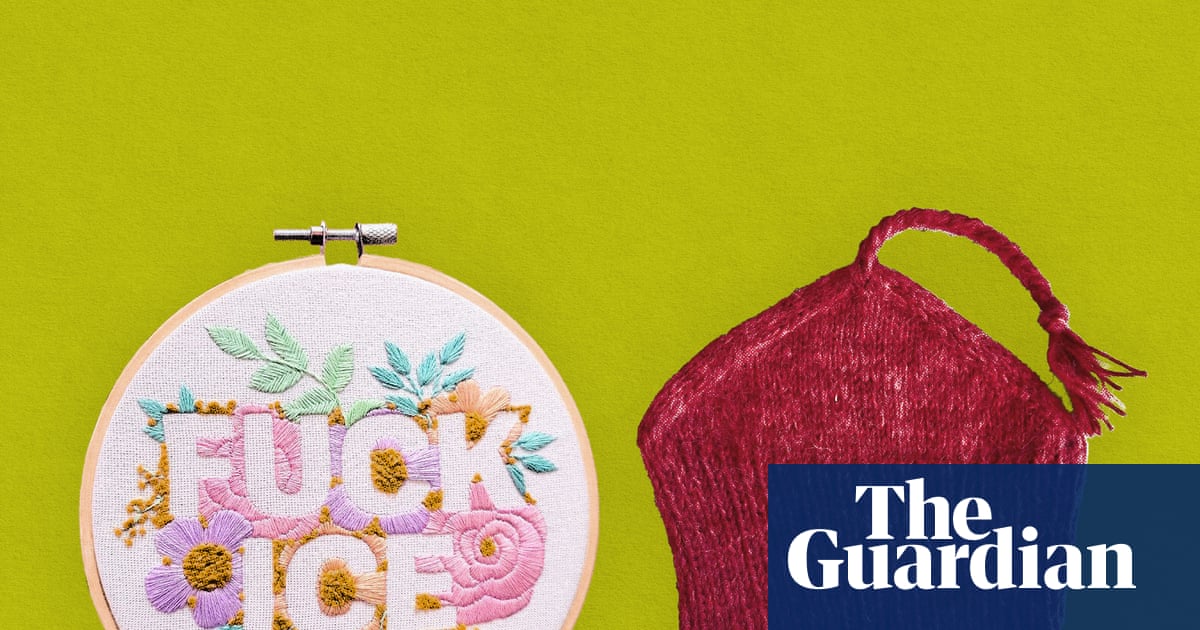
I will just add: let's not underestimate how many mental health benefits are being conferred to the makers by the process of creating these hats. Okay, heading for my knitting!