Against Abandonment


"The moment we cease to hold each other, the moment we break faith with one another, the sea engulfs us and the light goes out." James Baldwin, Nothing Personal
I've been slow-reading Let This Radicalize You: Organizing and the Revolution of Reciprocal Care ever since I began my Learn, Imagine, Act project. Authors Kelly Hayes and Mariame Kaba are seasoned organizers, bringing their combined wisdom to the table to help us create communities activated around caring for each other.
Part of the reason I'm reading it slowly is there's so much to digest; I have been ignorant of so much of what they discuss. Their work shows me the gaping holes in my own knowledge, as it pertains to the Prison-Industrial complex or PIC. To help explain this term, they cite an organization called Critical Resistance. PIC is "used to describe the overlapping interests of government and industry that use surveillance, policing, and imprisonment as solutions to economic, social, and political problems" (250).
Published in 2023, their book reflects on the ravages of the early stages of the pandemic on the communities they serve. Hayes and Kaba share stories of the people whose lives have been unjustly and tragically impacted by the prison-industrial complex. They describe examples of the organizing work being done to address the harms and change the system. They also acknowledge the need to prevent burnout among those who care.
As of 2026, viral waves have continued to harrow the population for years. Some people have, I believe, become desensitized to mass death and disability as a result, especially if they believe it will mainly affect people of color. Governmental mishandling of public health policy across two administrations has compounded the problem. And now, vast amounts of money and manpower are being funneled into the detention, incarceration, and deportation system. Given this government's increased demand to meet impossible deportation quotas, the immediate results are drastic, and the implications for our future are terrifying.
I went back to their chapter, Hope and Grief Can Coexist, back in mid-October when we were seeing so much brutal treatment of protestors at the Broadview ICE detention facility near Chicago. It became part of my discussion in my post On Grief and Hope, along with Kelly Hayes' podcast conversation with two other activists, called Holding the Line Through Tear Gas and Censorship. One of the predictions in this conversation is being borne out.
 Negin Owliaei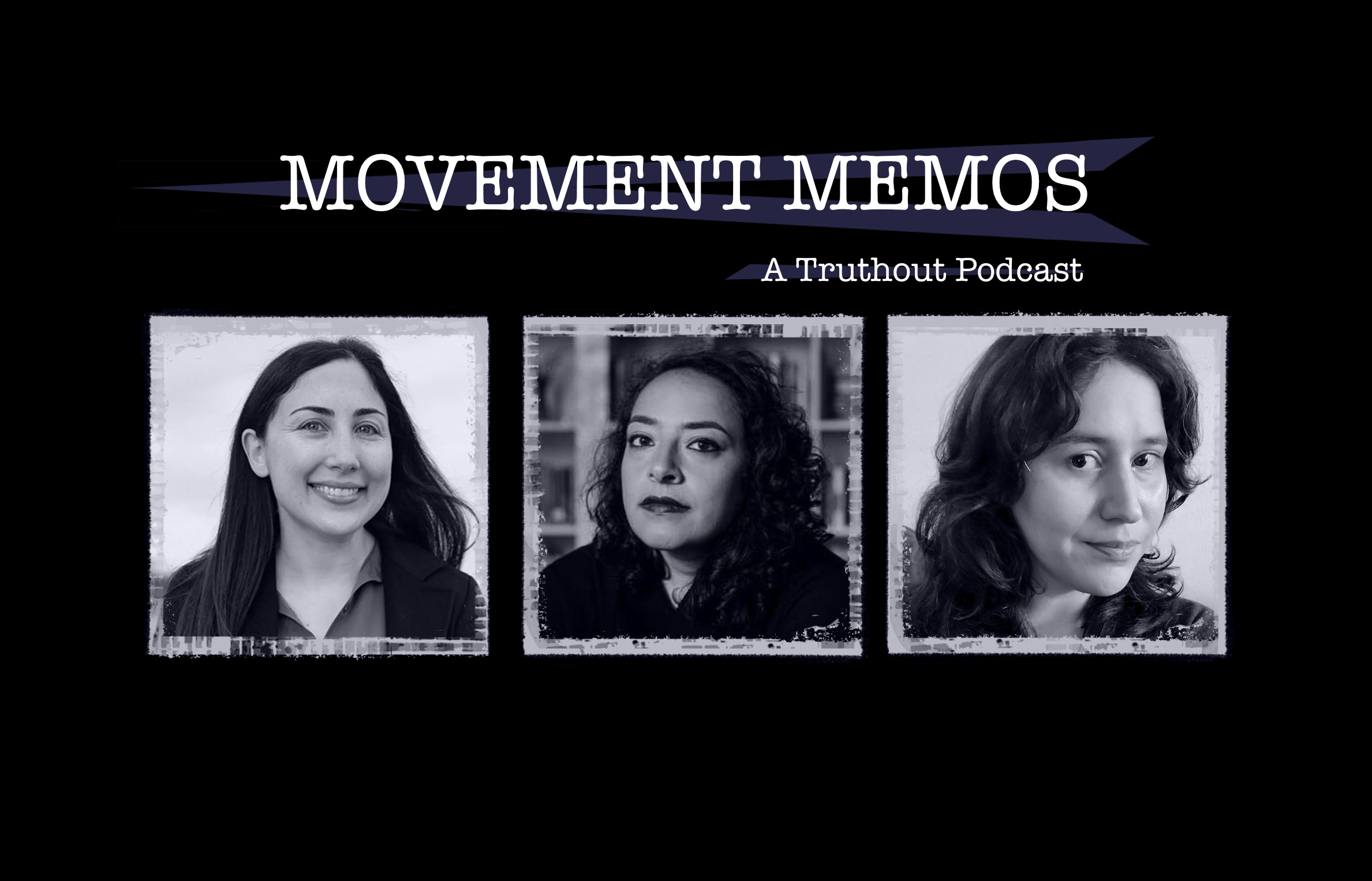
Describing the experience of protesting at Broadview, Emen Abdelhadi said,
There’s no doubt in my mind that those officers at Broadview would’ve shot things that were much more lethal at us if they could. And the question becomes: When will they be authorized to do so? And everything that this administration has been doing suggests that it’s only a matter of time. And so I think that for me, Broadview yesterday represented this new world that we’re facing – a world in which populations like our immigrant neighbors, our undocumented neighbors, are rendered disposable."
As I need to keep saying: I'm trained as a literature professor, not a historian or political scientist. I'm doing this project because I lack expertise—and I have no problem admitting that I've been naive about many things, for sure. But it's my sense that this "new world" has long been in the making. Rendering people disposable has always been part of it.
Having amassed enough money, power, and influence, this regime is no longer bothering to hide the fact that they will try to dispose of anyone who gets in their way. In fact, in his most recent interview with the Times, the president has asserted that the only limit to his powers are from "my own morality. My own mind." And it's all too clear by now what those are made of.
From what I'm gathering from my readings on social media, there are many (not all are bots, though some are) out there who are still trying to hide this fact from themselves, by parroting the government's talking points about the murder of Good. They attempt to portray a world of desirable order and control, in which anyone beaten, kidnapped, or killed by officials must have deserved it. They're saying things like this:
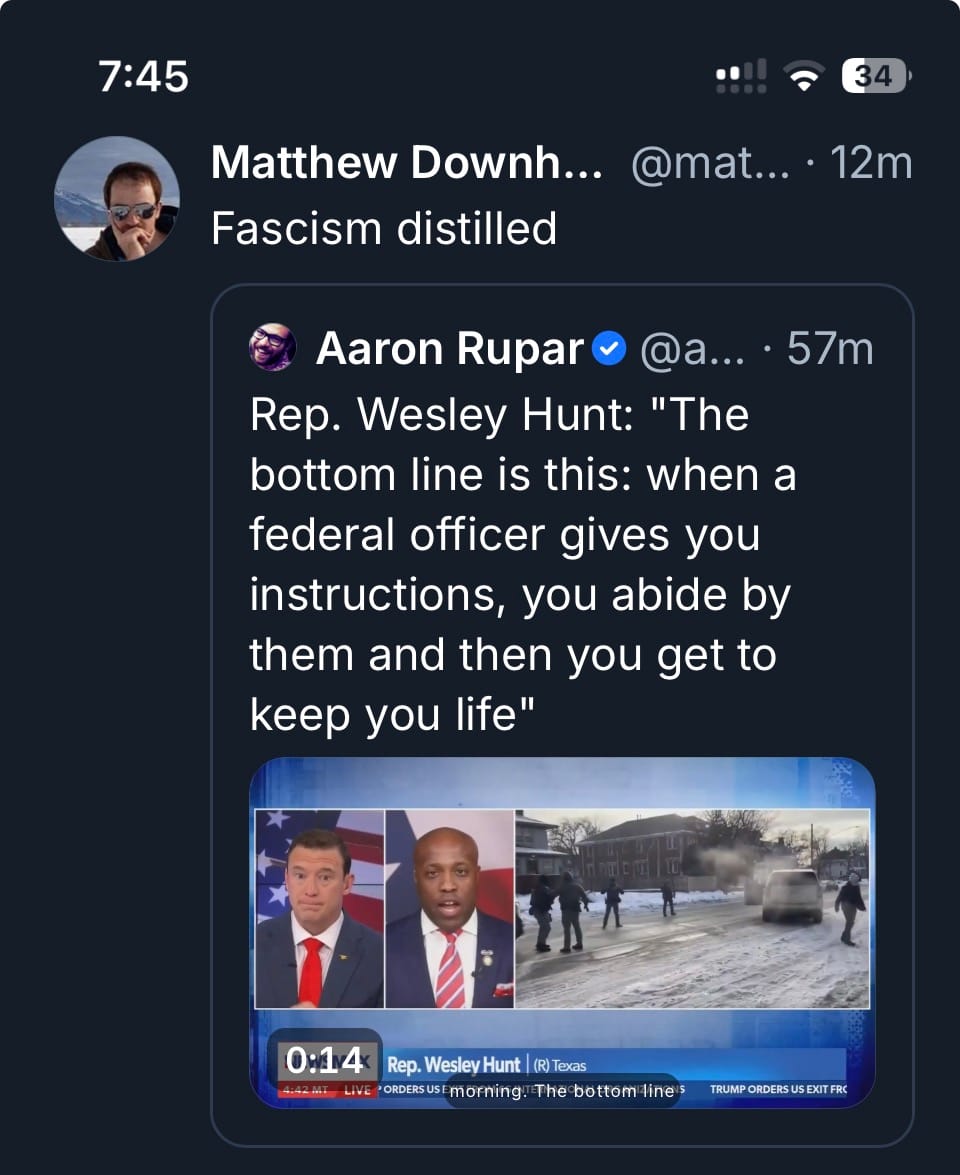
Some even express happiness about these atrocities and look forward to more, similar to those who approved of the slaughter of Kent State students and thought more young people should have been shot. Even though I was aware of Kent State as a child, I had heard the statements by defenders of the massacre, and I visited the memorial at the university just last spring, such cold-blooded attitudes still shock and dishearten me.
I will probably never stop being shocked at extreme expressions of inhumanity. But I need to make sure these don't stop me.
"Making art and preserving stories are essential, particularly in this era of overnight erasure, when atrocities are washed away in a single news cycle" Hayes & Kaba, 177.
I didn't feel equal to the task of writing anything today, let alone writing about this subject. But then I realized—what I was feeling was, in fact, an intended effect of what they are subjecting us to.
Let's not submit. Let's not abide by their instructions to be quiet. We can't let them wash away these atrocities. I saw a political cartoon today that nailed it: a masked agent stood outside a car window, gun outstretched, ordering, "Quiet, Piggy!" For an updated list of armed officer incidents, see https://www.wmur.com/article/ice-immigration-shooting-data/69948697
In whatever way we can, we must keep the record, preserve the stories, make art, and be the memory-bearers. That's my intent in writing these Finding Throughlines essays. In case you missed the related one from October, here it is:
 Ruth Ann Smalley
Kelly Hayes was a speaker last night at a vigil in Chicago. Her statement here is part of a longer speech that is well-worth reading:
We grieve for Renee, her family, and her community, but even before we knew anything about Renee — including her name — many of us were shaken by her violent death, because a moment that feels inevitable can still be shocking.
Even though we know ICE has killed before — and will again — even though they shot a woman in Chicago and told lies like the lies they are telling now, even though they are fascist purveyors of violence — their brutality has not hardened or corrupted us. We are still shaken and heartbroken by their violence. That is the cost of staying human in inhuman times — and it’s a cost we pay in defense of our neighbors and in defense of our own humanity. We feel what they would have us ignore, and we grieve the violence that their cultish followers applaud.
There is power in grief, because grief draws us together in moments when our enemies would tear us apart. Trump, Miller, Bovino, and DHS want us to believe their violence is inevitable. They want it to become the background noise of our lives — not something we respond to with love, tears, and action. They want us to give up on what the world could be, abandon our decency, and abandon each other. They want us to submit to their violence, and to accept that the cost of disrupting their attacks on our communities is death. And if we refuse to forget our neighbors — if we refuse to become dead inside — they want us to live in fear. They want us terrorized, afraid to show up for each other the way the people of Minneapolis have shown up — and the way Chicago has shown up.
 Kelly Hayes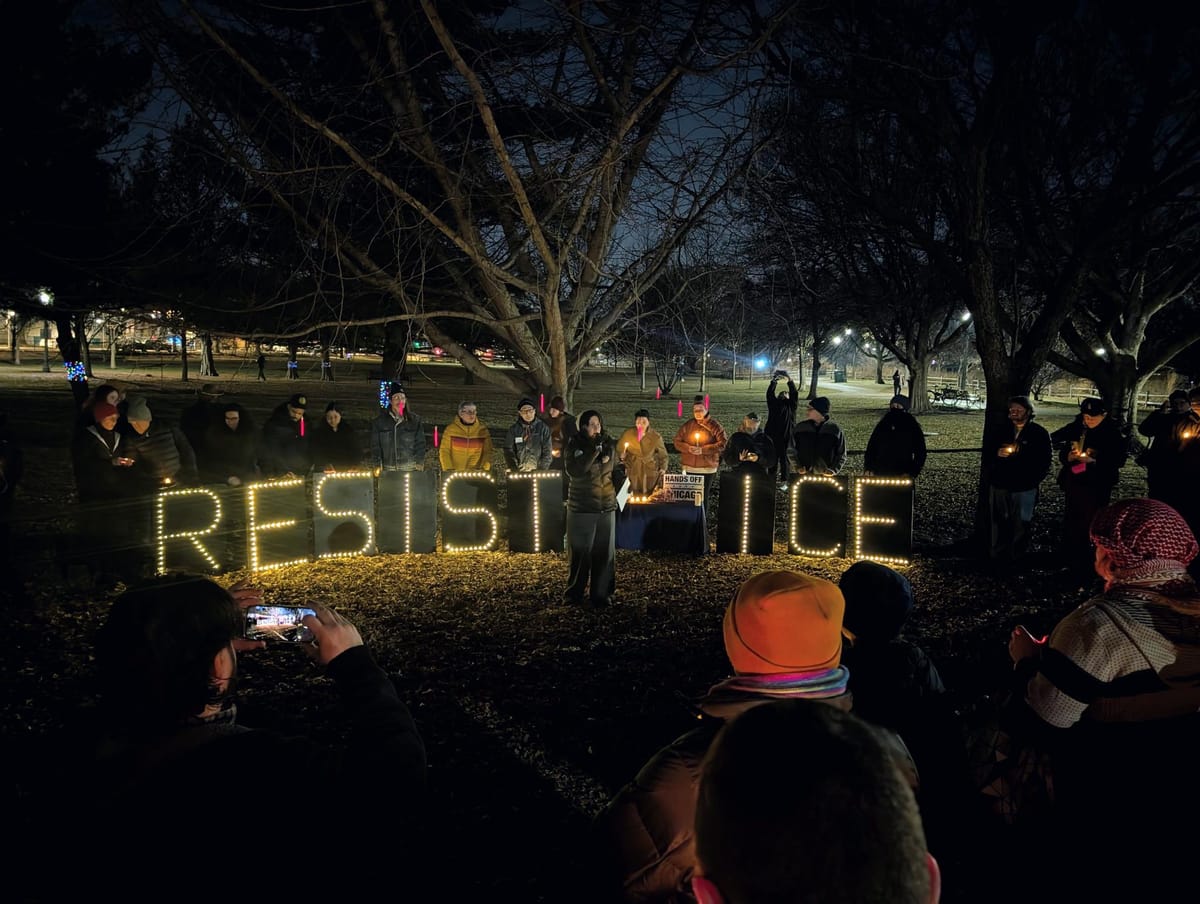
As painful as grief can be, as Hayes says so eloquently, it is part of the "cost of staying human." We can't allow this violence to be "the background noise" in our lives, as it already has for too long—for most of this country's history, in fact.
We can find our power in grief. We can find our ways to show up.